How to Choose a Commercial HEPA Vacuum
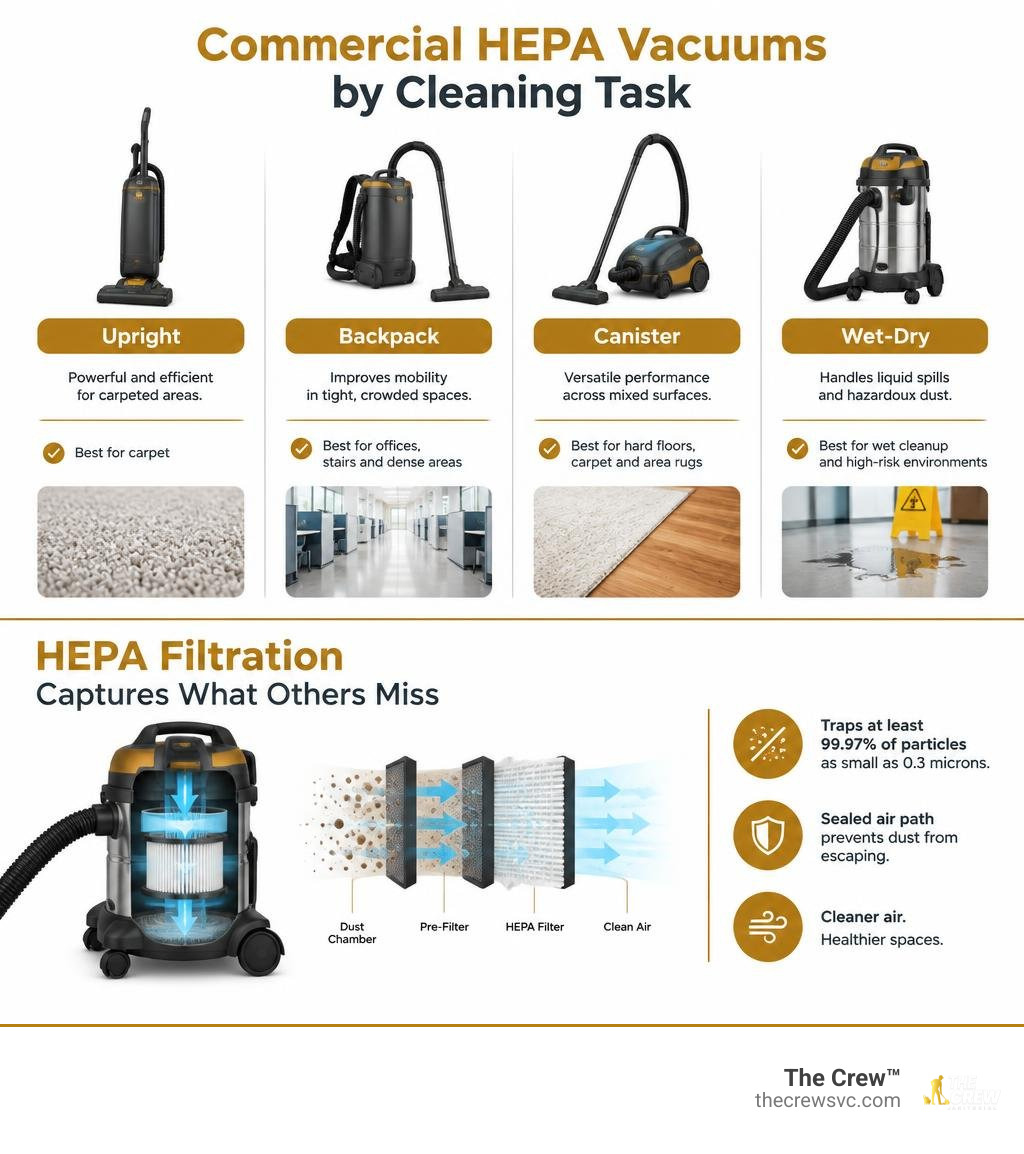
For routine office cleaning, compare commercial HEPA vacuums by the work they need to do: uprights suit carpet, backpacks make it easier to move through crowded spaces, and canisters work well across mixed surfaces. Look for a sealed air path, not just a HEPA filter, so dust cannot escape around the filter. For wet cleanup or hazardous dust, choose equipment specifically rated for that task.
I'm Carlos Castillo II, owner of The Crew™ in the Denver Metro Area. My hands-on experience leading commercial cleaning teams shapes how I approach commercial hepa vacuum selection for busy facilities.
Understanding HEPA Filtration in Commercial Environments
When keeping commercial properties clean, not all air filtration is created equal. Standard commercial vacuums often trap large debris and visible dust, but they frequently exhaust microscopic particles straight back into the breathing zone. High-Efficiency Particulate Air (HEPA) filtration changes that dynamic by capturing at least 99.97% of airborne particles as small as 0.3 microns.
To put 0.3 microns into perspective, a human hair is roughly 50 to 70 microns in diameter. Particles around 0.3 microns are known in fluid dynamics as the Most Penetrating Particle Size (MPPS). Because these tiny particles easily evade standard mechanical filters, industrial standards use 0.3 microns as the benchmark to test true filtration efficiency. In high-traffic commercial environments, trapping particles of this size prevents dirt from circulating back into the HVAC system and settling across freshly sanitized desks.
True HEPA vs. Sealed HEPA Systems
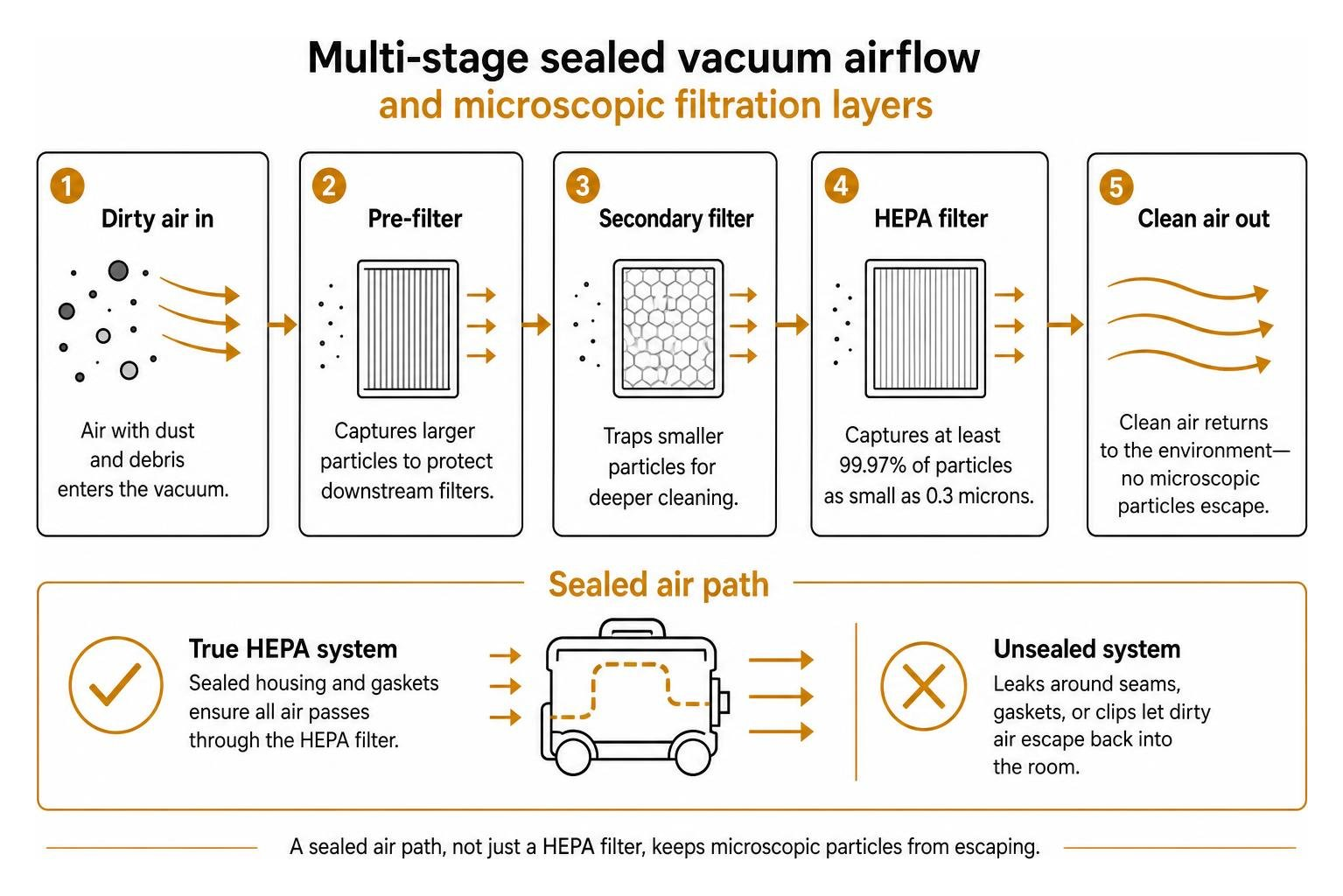
One of the most common pitfalls facility buyers encounter is purchasing a machine advertised as having a "HEPA filter" without realizing that the machine body itself is not sealed. If a vacuum draws air across a HEPA-grade filter but contains unsealed seams, loose motor gaskets, or weak housing clips, dirty air takes the path of least resistance. It escapes around the edges of the filter and vents straight into the room.
A fully sealed HEPA system ensures that 100% of the intake air must pass through the primary filtration media before being exhausted. Professional cleaning crews look for completely airtight construction when reviewing industrial HEPA vacuum systems because loose seams compromise indoor air quality.
To protect the main HEPA filter from premature clogging, high-grade units use multi-stage filtration:
- Stage 1 (Filter Bag): Captures large debris, hair, and bulk dust.
- Stage 2 (Secondary Motor Pre-Filter): Traps medium-sized dust particles down to 1–5 microns.
- Stage 3 (True HEPA Media): Captures fine particulate matter down to 0.3 microns at 99.97% efficiency.
- Stage 4 (Exhaust Diffuser): Traps carbon motor dust and softens exhaust airflow to reduce noise.
Indoor Air Quality and Regulatory Compliance
Maintaining high indoor air quality (IAQ) is more than just keeping surfaces looking tidy—it is a cornerstone of regulatory compliance and building occupant wellness. When managing commercial buildings, schools, and medical clinics, using certified equipment ensures compliance with OSHA standards and EPA lead safety rules.
Under the EPA Renovation, Repair, and Painting (RRP) rule, any commercial work involving lead-based materials requires independently certified HEPA filtration capable of retaining 99.97% of particulate at 0.3 microns. Similarly, OSHA's standard for respirable crystalline silica requires dedicated dust containment solutions during concrete, stone, or drywall cleanup.
From an everyday operational standpoint, HEPA filtration also helps capture biological contaminants. Most common bacteria range in size from 0.35 to 10 microns, falling cleanly within the capture window of a certified HEPA filter. For a complete look at establishing cleaning protocols that meet health benchmarks, review our commercial vacuuming ultimate guide.
Comparing Commercial HEPA Vacuum Types and Configurations
Selecting the right vacuum configuration depends on your floor plans, square footage, noise requirements, and the physical demands placed on cleaning crews.
| Vacuum Form Factor | Airflow (CFM) | Static Water Lift (Inches) | Tank / Bag Capacity | Primary Application |
|---|---|---|---|---|
| Commercial Upright | 90 – 120 CFM | 70" – 90" | 3 – 5 Quarts | Low-to-medium pile carpets, open hallways |
| Ergonomic Backpack | 120 – 160 CFM | 90" – 130" | 6 – 10 Quarts | Multi-floor offices, tight spaces, stairwells |
| Commercial Canister | 95 – 130 CFM | 85" – 110" | 3.5 – 4 Gallons | Mixed hard surfaces, day cleaning, quiet zones |
| Heavy-Duty Wet/Dry | 110 – 345 CFM | 80" – 110" | 10 – 55 Gallons | Remediation, flood recovery, industrial shops |
Evaluating Commercial HEPA Vacuum Form Factors
Each vacuum configuration has specific strengths when deployed in daily commercial workflows:
1. Commercial Upright HEPA Vacuums
Commercial uprights remain a standard choice for expansive carpeted areas. Modern units often feature 15-inch cleaning paths, automatic brush-height adjustment, and multi-stage filtration. Uprights excel at agitating carpet fibers to pull deep-seated soils out of the pile. Look for models operating below 68 dBA to meet LEED acoustic criteria for daytime cleaning.
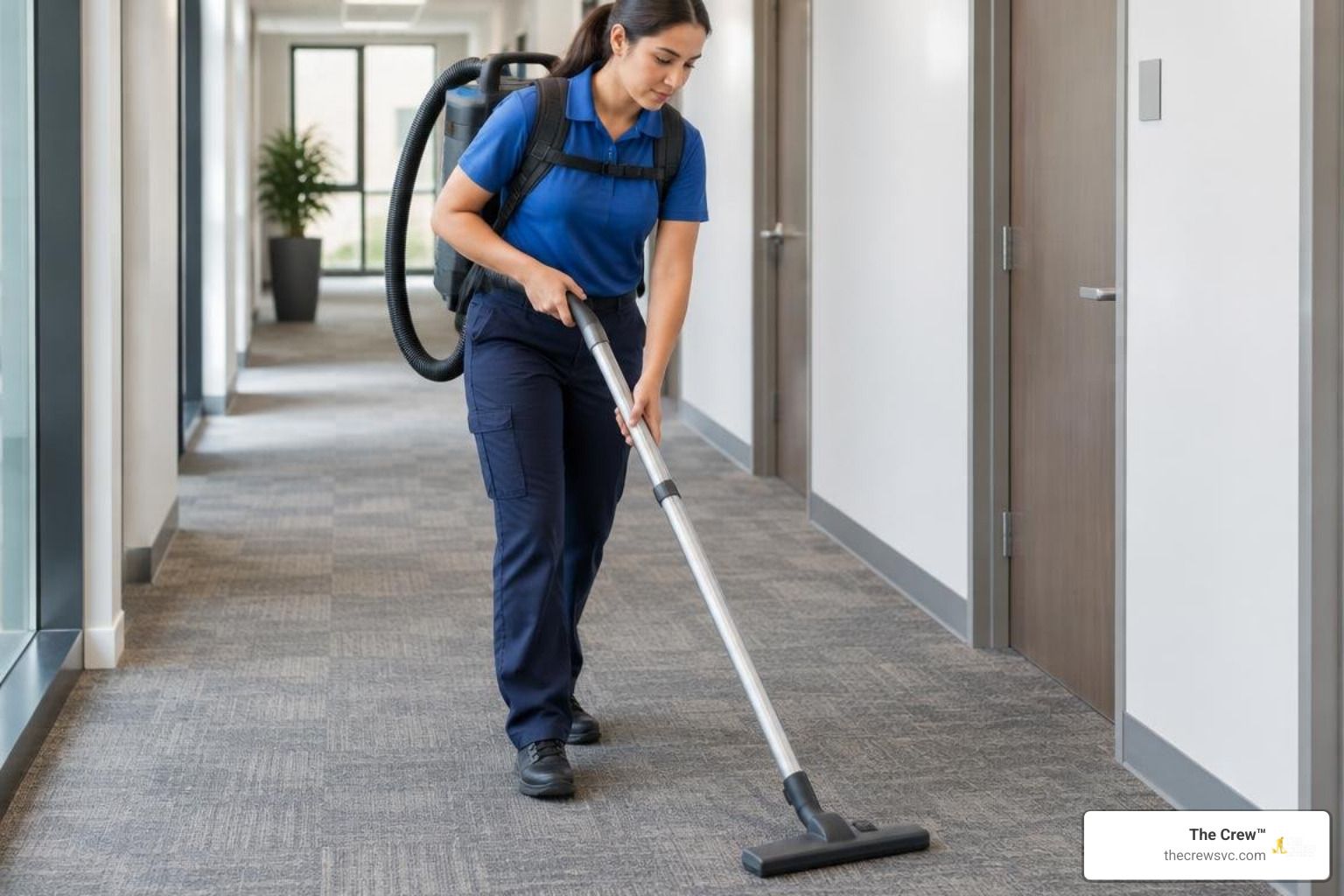
2. Ergonomic Backpack HEPA Vacuums
Backpack vacuums allow cleaners to cover significantly more square footage per hour than traditional upright units. Equipped with articulating harnesses that distribute weight across the hips rather than the shoulders, these 10-to-12-pound machines minimize physical strain during long shifts. High airflow (often over 150 CFM) allows quick clearing of cubicles, stairwells, and complex furniture layouts. For facilities seeking maximum speed without cord constraints, exploring battery powered commercial vacuum cleaners can eliminate trip hazards and speed up coverage. Many facilities also supplement team workflows by using commercial robotic vacuum units for broad, open corridors while cleaning staff tackle detailed edges and vertical surfaces.
3. Quiet Commercial Canister Vacuums
Canister vacuums provide low centers of gravity, large collection bags, and quiet operation. Premium canisters can operate at sound levels as low as 52 to 57 dBA. This makes them great for healthcare clinics, corporate headquarters, and day porter services where loud motors disrupt building occupants.
Heavy-Duty Wet-Dry and Critical Area Systems
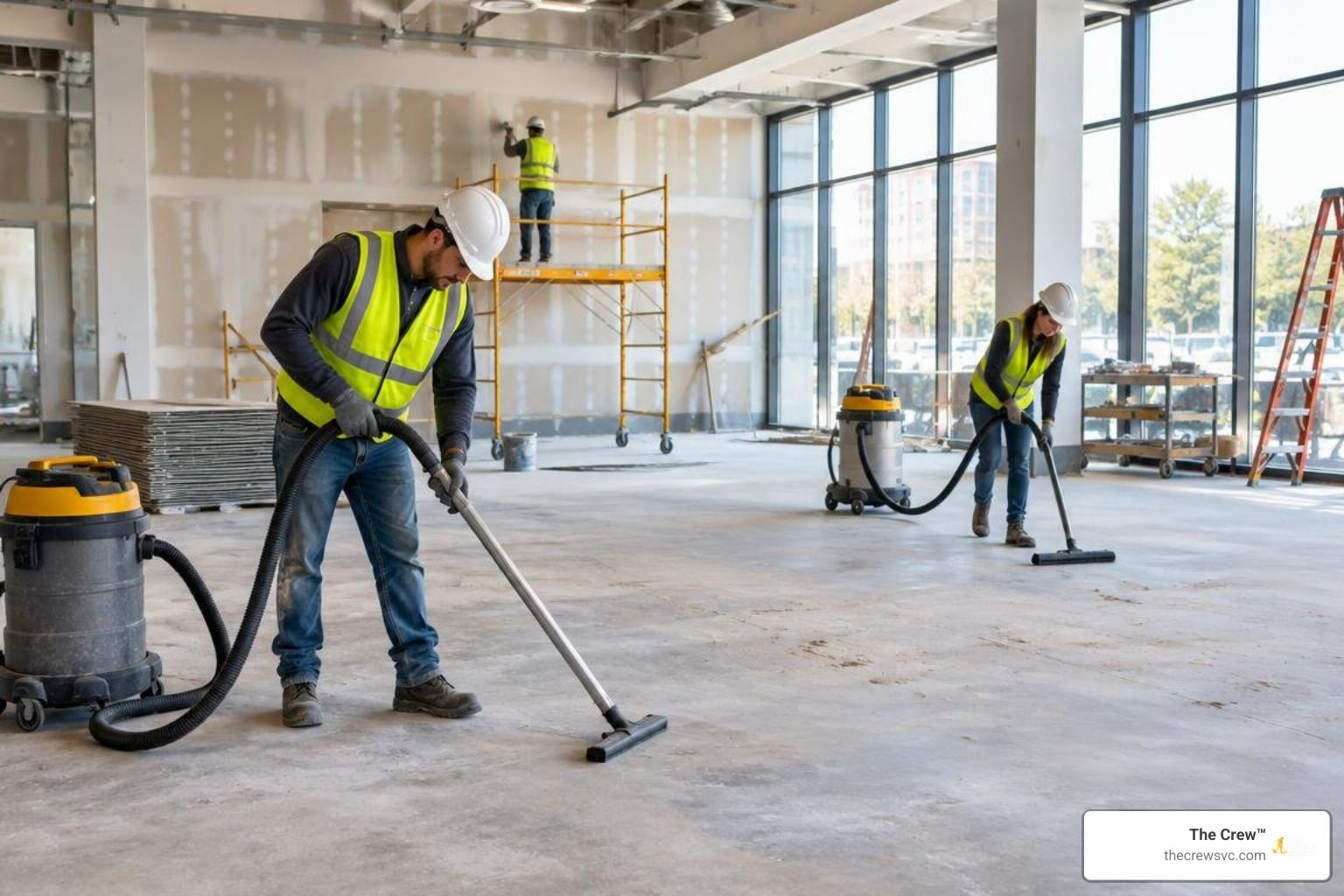
Certain environments require specialized machinery built for hazardous dust or moisture management. Standard commercial dry vacuums should never be used for liquid pickup, as moisture destroys paper and fiberglass HEPA filters.
- Industrial Wet/Dry HEPA Units: These systems use bypass motors that route cooling air around the motor rather than through the intake system, preventing moisture from entering electrical components.
- Cleanroom Vacuums (ISO Class 5 to 8): These units utilize multi-stage HEPA or Ultra-Low Penetration Air (ULPA) filters capable of capturing 99.999% of particles down to 0.12 microns. They often include electronic interference suppression to avoid disrupting sensitive laboratory hardware.
- ESD-Safe Vacuums: In electronics manufacturing and bench repair facilities, electrostatic discharge (ESD) can ruin delicate circuit boards. ESD-safe HEPA vacuums use conductive plastics, grounded hoses, and metal components to provide a safe static dissipation path to ground.
When selecting heavy equipment for continuous industrial operations, facility directors often evaluate professional-grade commercial vacuum machinery designed for tough industrial environments.
Essential Performance Metrics, Certifications, and Maintenance
To make an informed purchase, you need to understand the specifications listed on technical spec sheets.
Key Commercial HEPA Vacuum Specifications to Compare
- Airflow (CFM - Cubic Feet per Minute): CFM measures the volume of air moved through the vacuum per minute. Higher CFM (120+) is critical for moving fine particulate through wide cleaning wands and capturing dust on hard floors.
- Static Water Lift (Suction Power): Measured in inches of water, static lift indicates the vacuum motor's pure pulling strength against a sealed seal. High water lift (90"+) is required to pull heavy, dense soils out of thick carpet piles.
- Motor Power and Efficiency: Watts measure the electrical power consumed (watts = volts × amps). However, higher wattage does not automatically mean better suction—motor design and aerodynamic sealing play a much larger role.
- CRI Seal of Approval: The Carpet and Rug Institute (CRI) tests and evaluates commercial vacuums on soil removal, dust containment, and carpet fiber retention. Aim for CRI Silver or CRI Gold certified units.
- Acoustic Decibel Ratings (dBA): A vacuum operating at 73 dBA is twice as loud as a vacuum operating at 63 dBA due to the logarithmic nature of sound measurement. Selecting units rated under 68 dBA is essential for LEED compliance and day cleaning.
Operating a dependable vacuum cleaner business requires choosing machines that strike the right balance between suction performance, worker ergonomics, and low noise levels.
Long-Term Maintenance and Total Cost of Ownership
The purchase price of a commercial vacuum is only a fraction of its total lifecycle cost. Labor efficiency, replacement parts, and filter lifecycles make up the majority of your equipment investment.
To protect your equipment and keep suction high:
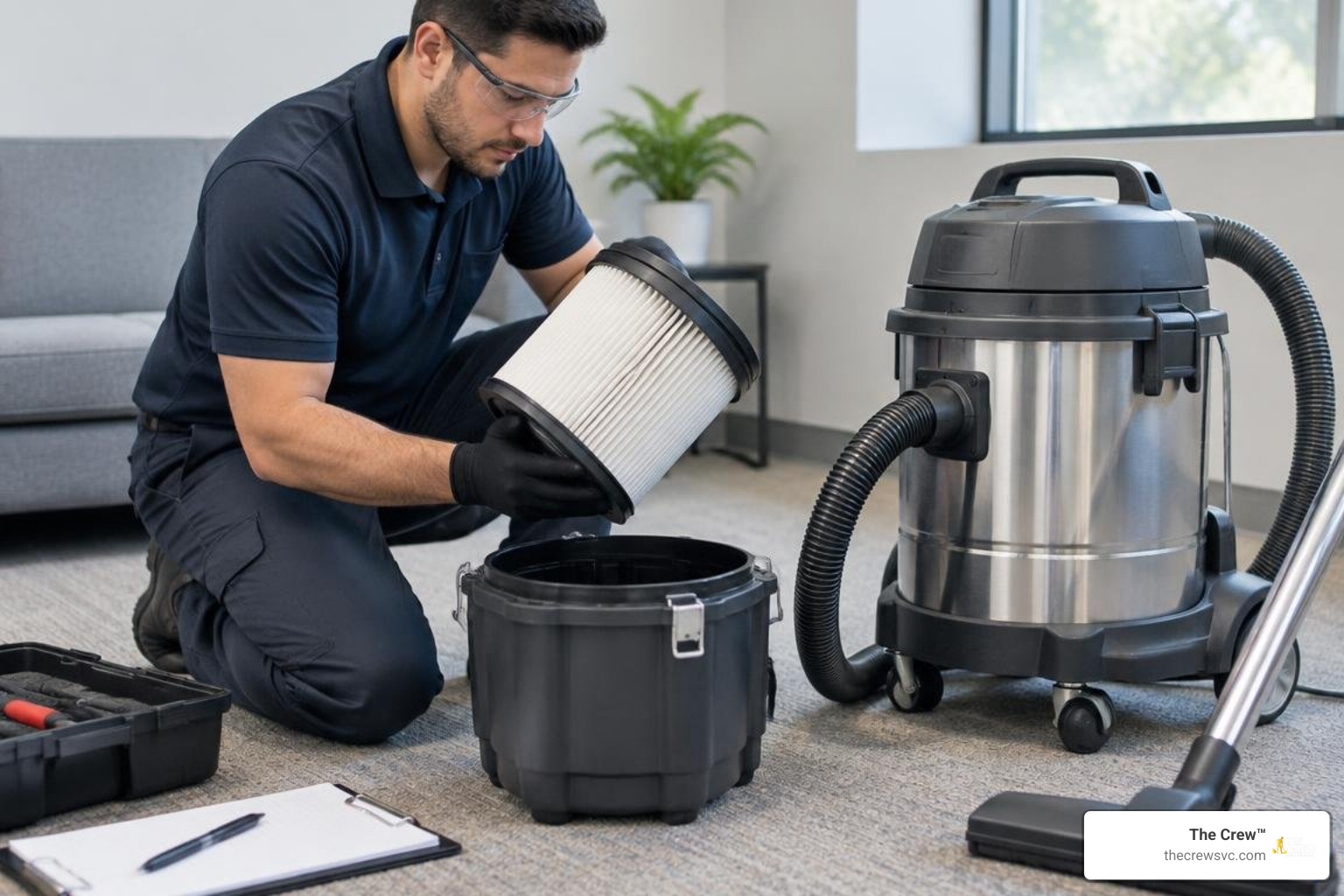
- Change Vacuum Filter Bags Early: Replace collection bags once they reach two-thirds capacity. Overfilled bags choke airflow, placing thermal stress on the motor and lowering water lift.
- Inspect Pre-Filters Weekly: Rinse or shake out foam and polyester pre-filters regularly to stop heavy dust from reaching the primary HEPA filter.
- Use Multi-Stage Fleece Bags: High-efficiency synthetic fleece filter bags trap fine dust before it reaches the main HEPA stage, significantly extending the life of expensive certified filters.
- Standardize Fleet Components: Standardizing your vacuum models across a facility allows your team to use interchangeable replacement filters, wands, and cords, reducing supply overhead.
Frequently Asked Questions About Commercial HEPA Vacuums
What is the difference between a standard HEPA vacuum and a sealed HEPA system?
A standard HEPA vacuum contains a filter made of HEPA-grade material, but the machine housing itself may have unsealed seams, loose latches, or unsealed motor compartments. This allows unfiltered air and microscopic dust to escape before reaching the exhaust filter. A sealed HEPA system is engineered so that 100% of the air drawn into the vacuum must pass through the certified HEPA filter before leaving the exhaust port.
Can commercial HEPA vacuums trap airborne viruses and bacteria?
Commercial HEPA vacuums are highly effective at capturing bacteria, which typically measure between 0.35 and 10 microns in size. However, most airborne viruses measure smaller than 0.03 microns—well below the 0.3-micron HEPA certification standard. While viruses attached to larger respiratory droplets or dust particles may be trapped by HEPA media, standalone viral particles can pass through mechanical filters.
How often should commercial HEPA filters be replaced?
In general commercial office settings, primary HEPA filters should be replaced every 6 to 12 months, provided that multi-stage pre-filters and collection bags are replaced on schedule. In critical environments, high-dust facilities, or hazardous dust remediation projects, HEPA filters should be replaced whenever a drop in airflow (CFM) is measured, when motor temperatures increase, or whenever the filter shows visible discoloration.
Conclusion
Choosing the right commercial HEPA vacuum comes down to matching the machine's filtration design, form factor, and performance metrics to the needs of your commercial space. Prioritizing fully sealed HEPA construction, high CFM, comfortable worker ergonomics, and low operating sound levels ensures cleaner indoor air and reliable daily cleaning.
At The Crew™, we provide comprehensive commercial cleaning and janitorial services throughout the Denver Metro Area, including Aurora, Denver, Commerce City, Lakewood, Brighton, Longmont, Westminster, Henderson, Broomfield, Centennial, Parker, Golden, Englewood, Wheat Ridge, Littleton, Arvada, Erie, and Highlands Ranch. We recruit and retain top, background-checked cleaning professionals with a 0% turnover rate, ensuring consistent, dependable service for every facility we maintain. To learn more about modern equipment options and commercial sanitation practices, explore our overview of commercial vacuum bagless and HEPA systems.