Key Evaluation Factors for Every Commercial Robotic Vacuum
Evaluating automated cleaning equipment requires looking past marketing claims to understand how a machine performs in active, populated environments. Modern facilities need high cleanliness standards without disruptions, and selecting the right autonomous unit depends on core engineering specifications: navigation reliability, power delivery, acoustic profiles, and air filtration.
In commercial facilities across the Denver Metro Area—from corporate headquarters in Denver and Centennial to medical office suites in Lakewood—integrating autonomous floor care into comprehensive commercial cleaning programs allows staff to focus on high-touch sanitization and detail work. Utilizing quiet, automated floor care is a cornerstone of stealth cleaning strategies for a spotless office with zero downtime.
Navigation Technology and Obstacle Detection
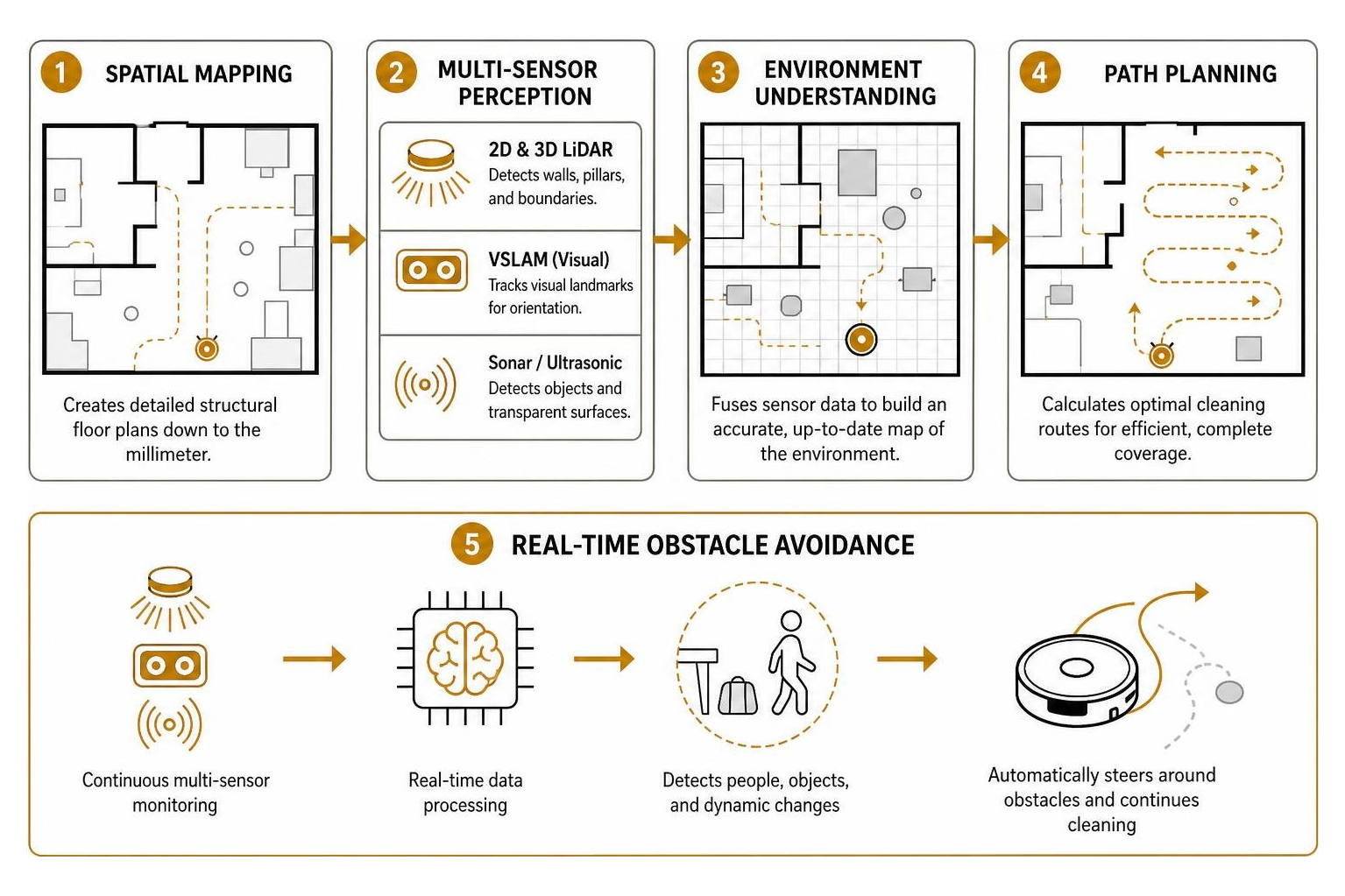
The navigation stack determines whether an autonomous cleaner operates seamlessly or constantly requires human intervention. Early consumer robotic units relied on random-bounce patterns, but modern commercial-grade equipment employs sophisticated spatial computing to map facilities down to the millimeter.
- 2D and 3D LiDAR (Light Detection and Ranging): LiDAR pulses millions of laser beams per second to create detailed structural floor plans. This allows the unit to pinpoint walls, structural pillars, and architectural boundaries across expansive footprints.
- VSLAM (Visual Simultaneous Localization and Mapping): Optical depth cameras complement laser systems by tracking visual landmarks on ceilings and upper walls. This visual layer keeps the robot oriented in open spaces where laser pulses can scatter or fail to register boundaries.
- Sonar and Ultrasonic Sensors: Transparent glass office partitions and polished chrome desk legs can reflect or distort optical signals. Sonar sensors provide an acoustic safety net, detecting physical objects through high-frequency sound waves.
- Real-Time Obstacle Avoidance: Advanced microcontrollers process sensor data in real time, steering the robot around stray laptop bags, unexpected pallet drops, and moving pedestrians without halting its cleaning cycle.
To ensure safety and reliability in busy facilities, businesses should follow professional cleaning robot installation, maintenance, and repair guidelines.
Power Efficiency, Battery Life, and Sound Profiles
Operating efficiency depends on how well a machine balances battery capacity, motor wattage, and noise output.
Brushless motors improve energy efficiency and thermal management over traditional brushed motors. Units like the i-team co-botic 1700 operate on just 50W of power, whereas less efficient commercial alternatives draw up to 1,000W. Efficient power use extends runtime and lowers long-term utility costs across a commercial fleet.
Sound management is equally critical. Vacuums operating below 65 dB can clean corridors during standard operating hours without disrupting meetings or phone calls. Lower noise profiles make daytime cleaning feasible, helping maintain a consistently clean office space without interfering with daily business operations.
Air Filtration and Indoor Air Quality
Beyond surface cleaning, commercial robotic vacuums play a significant role in maintaining indoor air quality. High-efficiency particulate air (HEPA) filters capture fine dust, allergens, and other airborne particles that conventional vacuums might recirculate into the environment. In facilities such as medical offices, schools, and corporate buildings, HEPA filtration is essential for reducing respiratory irritants and maintaining a healthy workspace.
Many commercial units feature sealed filtration systems that prevent dust from escaping during operation. This is particularly important in environments where air quality is closely monitored, such as healthcare facilities or buildings pursuing green certifications like LEED. By trapping particles as small as 0.3 microns, HEPA-equipped robotic vacuums contribute to a cleaner, healthier indoor environment while reducing the burden on HVAC systems.
When evaluating filtration, consider the filter's efficiency rating, replacement cost, and ease of maintenance. Some models include washable filters, while others require periodic replacement. Regular filter maintenance ensures optimal performance and prevents motor strain caused by clogged filters.
Top Autonomous Floor Care Units Compared
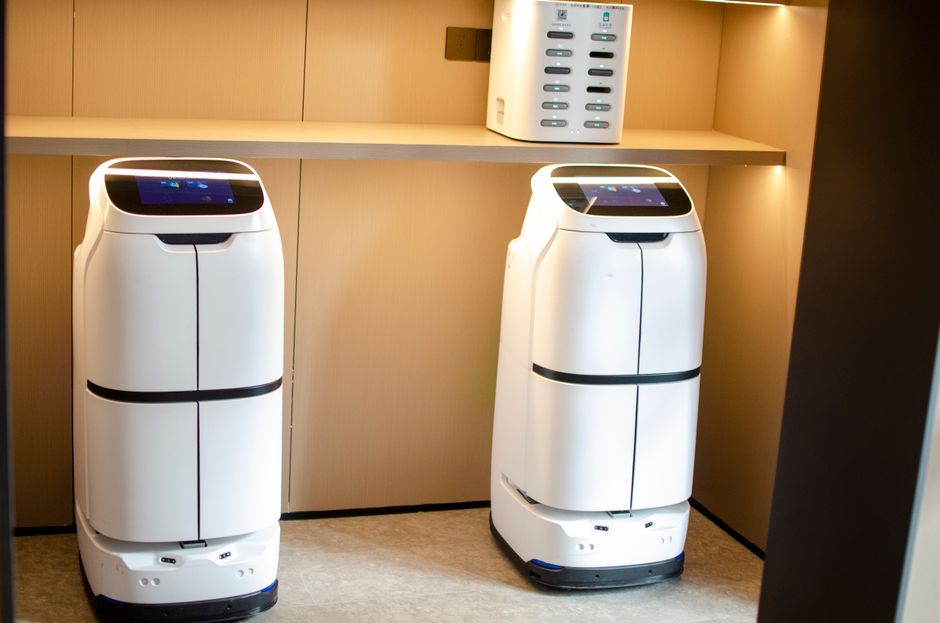
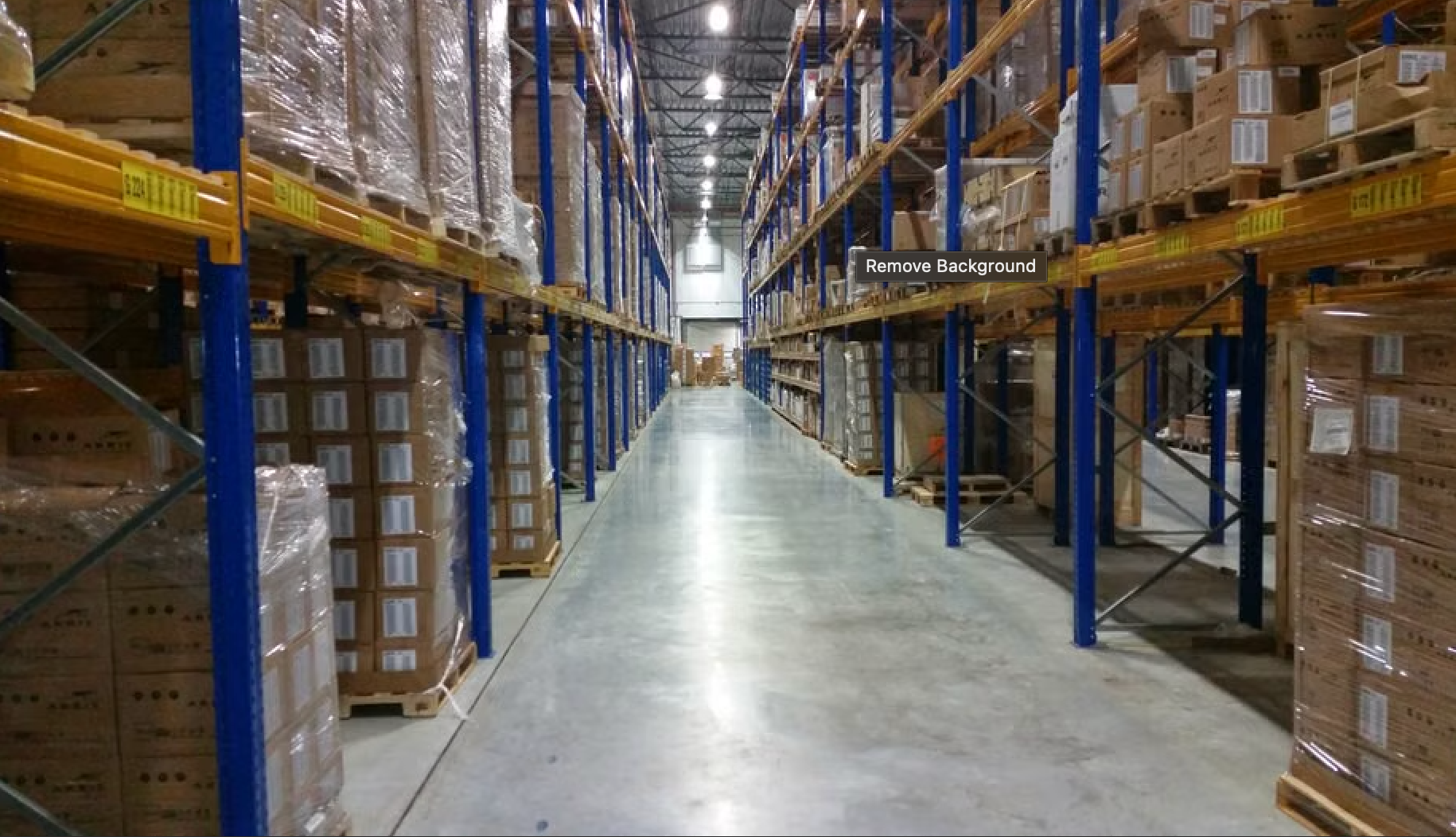
Commercial facilities vary widely in layout and floor care needs. A sprawling distribution warehouse in Commerce City demands high area coverage, whereas a multi-story law firm in Englewood requires maneuverability around tight office suites. Below, we compare leading commercial autonomous floor care systems across key performance benchmarks.
Mid-to-Large Facility Commercial Robotic Vacuum Comparison
High-capacity autonomous machines are designed for expansive open areas, long hallways, and large carpeted spaces. These units prioritize wide cleaning paths, extended battery runtimes, and high square-footage coverage per hour.
- Karcher Kira CV 60/1: Built for heavy-duty volume, this unit covers 1,672 square meters per hour (equivalent to an entire football field in three hours) with a 600 mm cleaning path.
- Whiz Sweeper: Built for autonomous commercial sweeping, it manages up to 1,393 square meters on a single charge at an average rate of 500 square meters per hour.
- i-team co-botic 1700: Designed for low energy use, it draws just 50W while delivering up to 270 minutes of continuous runtime.
- LeoVac: Built with an array of five sonar sensors, depth cameras, and LiDAR, it provides up to 600 minutes of continuous operation with a 450 mm cleaning path.
- Makita Brushless Robotic Vacuum: Powered by two 5.0Ah lithium-ion batteries, this compact unit cleans up to 500 square meters across 200 minutes of runtime, making it well-suited for industrial workshops and utility spaces.
Multifunctional and Compact Autonomous Cleaners
Compact and hybrid cleaners are built for facilities with mixed flooring types, narrow corridors, and tight spatial layouts.
The Phantas commercial cleaning robot integrates scrubbing, vacuuming, sweeping, and dust mopping into a compact 21-inch wide chassis. It navigates aisles as narrow as 23 inches while operating below 65 dB. Its handle features auto/manual mode switching and handles up to 1000N of force, allowing staff to quickly switch to manual spot cleaning when needed. It delivers up to 4 hours of vacuuming, 4.5 hours of scrubbing, and 14 hours of sweeping on a single charge.
For facilities with extensive hard floors and tile, all-in-one commercial cleaning robot systems like the iKitbot ONE combine sweeping, scrubbing, vacuuming, mopping, disinfecting, and self-cleaning. It cleans up to 1,197 square meters per hour in scrub mode and 1,368 square meters per hour in other modes, with up to 28 hours of battery life in dust mop mode.
Additional Considerations for Selecting a Unit
When comparing models, facility managers should also evaluate the total cost of ownership, including consumables like brushes, filters, and batteries. Some manufacturers offer service contracts that include preventive maintenance and software updates, which can reduce downtime and extend the machine's lifespan. Additionally, consider the availability of local support and training for custodial staff, as proper onboarding ensures the technology is used to its full potential.
Integration with existing building management systems is another factor. Advanced units can be programmed to clean during off-peak hours, automatically return to charging stations, and send alerts when maintenance is needed. These smart features contribute to operational efficiency and allow cleaning teams to focus on tasks that require human attention.
Integrating Autonomous Vacuums with Facility Workflows
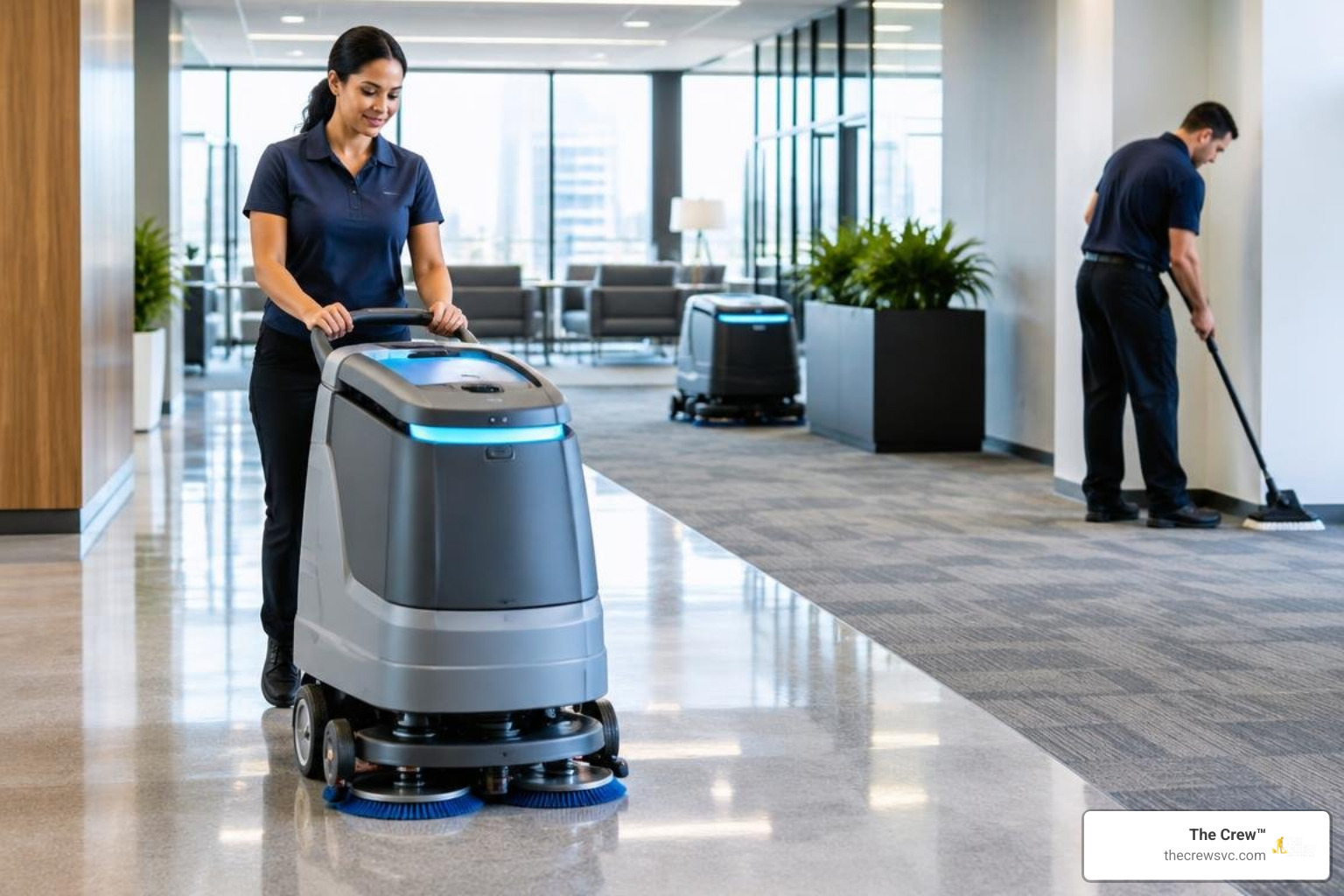
Autonomous cleaners deliver the best results when paired with skilled custodial teams rather than used as standalone tools. Robots excel at repetitive open-space vacuuming and sweeping, freeing cleaning professionals to focus on detailed tasks that machines cannot handle.
When planning comprehensive janitorial services for business, automated vacuums can manage central floor lanes while technicians handle baseboards, stairwells, glass surfaces, and vertical fixtures. In facilities with mixed hard surfaces and carpeting, deploying robotic vacuums alongside automated floor scrubbers ensures complete floor coverage across the entire building.
Calculating ROI and Labor Savings for a Commercial Robotic Vacuum
Calculating return on investment requires looking at total labor hours rather than machine purchase price alone. In typical commercial buildings, routine floor care accounts for 20% to 30% of all janitorial labor hours.
For a 50,000-square-foot corporate office cleaned five nights per week, automated sweeping and vacuuming can save 15 to 25 manual labor hours each week. Reallocating those hours eliminates cleaning overtime and lets staff focus on detail cleaning. To see how these numbers align with overall building expenses, review our detailed commercial cleaning costs guide 2026.
Maintenance Schedules and Deployment Challenges
Keeping an autonomous fleet running smoothly requires routine preventative maintenance:
- Daily Intake and Bin Clearing: Empty dust bins and clean intake ports at the end of each shift to prevent clogs and maintain suction.
- Weekly Brush and Roller Inspection: Remove tangled hair, threads, and debris from brush rolls to prevent motor strain.
- Bi-Weekly Optical Sensor Cleaning: Wipe LiDAR lenses, optical camera covers, and sonar sensors with microfiber cloths to prevent navigation errors.
- Monthly HEPA Filter Servicing: Tap out or replace HEPA filters to protect exhaust air quality and motor cooling.
- Quarterly Wheel and Drive Calibration: Inspect drive wheels for debris and verify alignment against digital floor maps.
Training and Change Management
Introducing autonomous cleaning technology requires a thoughtful change management strategy. Custodial staff may initially view robots as a threat to their jobs, but when positioned as tools that enhance their work rather than replace it, adoption becomes smoother. Training programs should cover basic operation, troubleshooting, and safety protocols. Emphasize that robots handle repetitive tasks, allowing staff to focus on higher-value activities like disinfection and customer service.
Regular feedback sessions can help identify workflow bottlenecks and optimize robot routes. Over time, teams can develop hybrid cleaning schedules that maximize efficiency while maintaining high cleanliness standards.
Frequently Asked Questions About Autonomous Cleaning
What are the primary benefits of using autonomous vacuums in commercial spaces?
Autonomous units handle repetitive, large-scale floor maintenance with consistent daily performance. They free custodial staff to focus on high-touch sanitization, restrooms, and detail work while reducing crew overtime. Many low-decibel models also make quiet daytime cleaning practical.
How do commercial robotic units navigate around complex furniture layouts?
Commercial units use a combination of LiDAR, visual SLAM, and sonar sensors to map spaces in real time. They detect moving people and relocated furniture instantly, re-routing around obstacles without losing their place on their mapped path.
Can autonomous vacuums handle both hard floors and commercial carpeting?
Yes. Multi-function commercial units feature adaptive brush rolls and adjustable suction that automatically transition between low-pile commercial carpet, vinyl tile, polished concrete, and hardwood floors.
What maintenance is required for commercial robotic vacuums?
Routine maintenance includes emptying dust bins daily, inspecting brushes weekly, cleaning sensors bi-weekly, and replacing HEPA filters monthly. Quarterly calibration of wheels and drive systems ensures accurate navigation. Following the manufacturer's maintenance schedule extends the machine's lifespan and maintains performance.
How do autonomous vacuums impact indoor air quality?
Many commercial robotic vacuums are equipped with HEPA filters that capture fine dust and allergens, preventing them from being recirculated into the air. This is especially beneficial in facilities with high indoor air quality standards, such as healthcare and educational buildings.
Elevating Facility Standards with Automated Cleaning
Autonomous vacuums are a powerful tool for modern commercial floor care, but long-term cleaning consistency still comes down to the team running the operation. A robot can handle the center of a hallway, but it takes a skilled cleaning professional to detail corners, sanitize desks, and maintain facility hygiene.
At The Crew™, we combine modern cleaning technology with a dedicated team of rigorously background-checked cleaners. Our zero-turnover model ensures your facility is maintained by the same trusted, vetted professionals every single visit across Denver, Aurora, Lakewood, Broomfield, and the surrounding metro communities.
To learn more about optimizing your facility's floor care program with commercial-grade equipment and expert custodial support, explore our guide to commercial vacuum bagless solutions and commercial floor care.
Partnering for Success
Implementing autonomous cleaning technology is not just about purchasing equipment; it's about integrating it into a comprehensive cleaning strategy. The Crew™ works with facility managers to assess their unique needs, recommend appropriate technology, and provide ongoing support. Our team stays current with the latest advancements in cleaning technology to ensure our clients benefit from efficient, effective, and sustainable cleaning solutions.
By combining robotic efficiency with human expertise, we help facilities achieve higher cleanliness standards, reduce operational costs, and create healthier environments for occupants. Contact us today to discuss how we can elevate your custodial operations.