What Is a Commercial Cleaning Rates Per Square Foot Calculator and How Does It Work?
A commercial cleaning calculator is a mathematical tool designed to turn physical building dimensions and operational requirements into an accurate price estimate. Rather than taking a wild guess, an estimator calculates the actual labor time, supply usage, and business overhead required to maintain a commercial facility.
A reliable estimating model relies on several distinct variables:
- Cleanable square footage: The usable floor area requiring regular maintenance, excluding mechanical rooms, dead storage, or inaccessible spaces.
- Production rates: The number of square feet an experienced cleaner can service in one hour based on space layout and task complexity.
- Service frequency: How many days per week or month our cleaning team visits your property.
- Loaded labor costs: The total hourly cost of cleaning technicians, including wages, mandatory payroll taxes, and worker protections.
- Operating overhead and margin: The administrative expenses, professional equipment, insurance, and sustainable business profit required to keep service standards high.
When you explore our comprehensive commercial cleaning pricing guide 2026, you will find that transparent pricing is built from operational data rather than arbitrary markup. Using an automated or spreadsheet-based tool provides a transparent breakdown, ensuring facility managers pay for the exact level of care their building demands.
The Core Mathematical Formula Behind Every Reliable Estimate
Commercial cleaning bids do not simply pull a number out of thin air. Professional contractors convert square footage into labor hours using established time standards, translate those hours into burdened labor costs, and apply overhead and gross margin percentages using standard financial formulas.
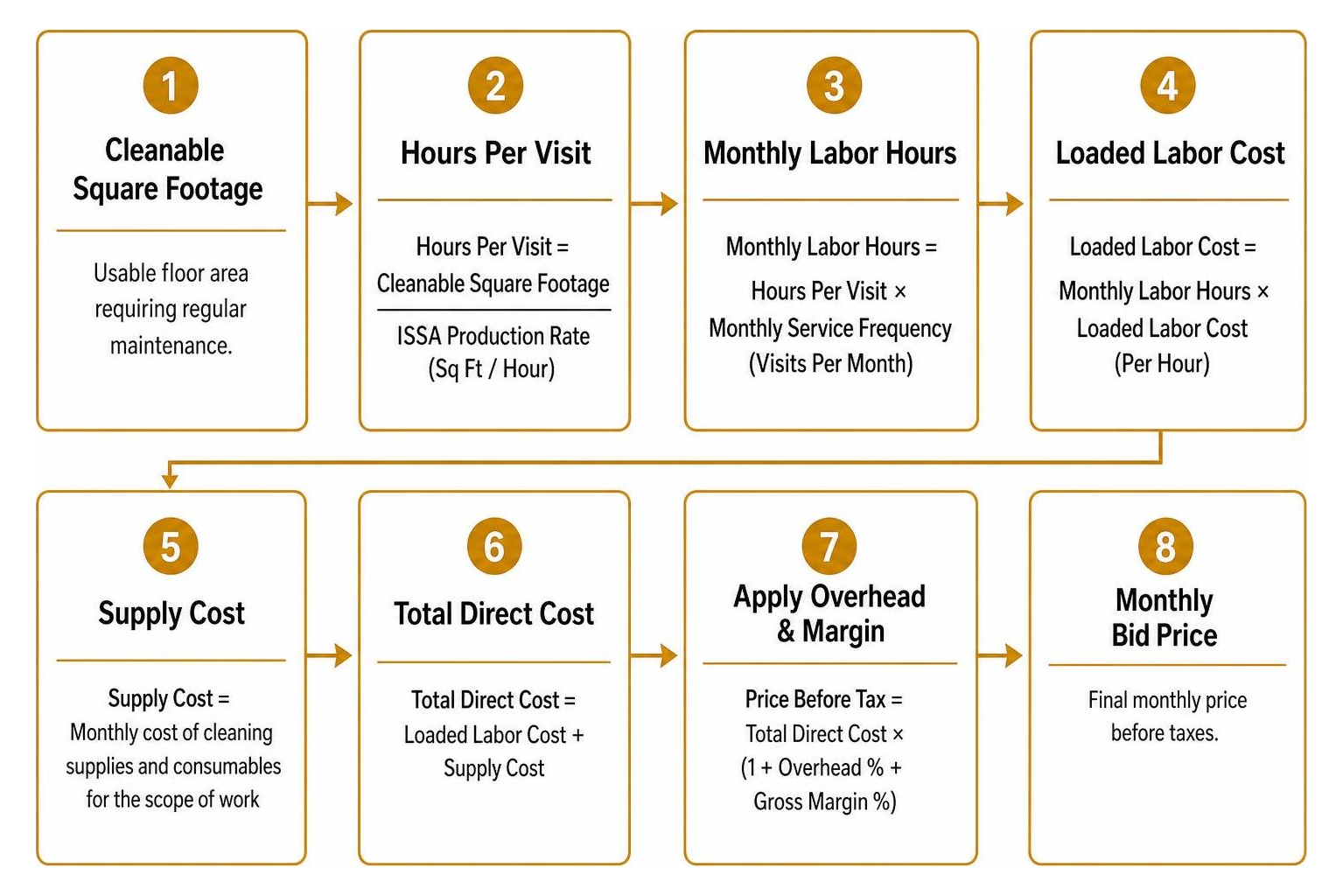
The foundational pricing equation follows a clear, multi-step structure:
-
Calculate Hours Per Visit:$$\text{Hours Per Visit} = \frac{\text{Cleanable Square Footage}}{\text{ISSA Production Rate (Sq Ft / Hour)}}$$
-
Calculate Direct Labor Cost Per Visit:$$\text{Labor Cost Per Visit} = \text{Hours Per Visit} \times \text{Burdened Hourly Wage}$$
-
Incorporate Direct Supply Costs:$$\text{Direct Cost Per Visit} = \text{Labor Cost Per Visit} + (\text{Cleanable Sq Ft} \times \text{Supply Allocation Per Sq Ft})$$
-
Calculate Total Monthly Direct Cost:$$\text{Monthly Direct Cost} = \text{Direct Cost Per Visit} \times \text{Visits Per Month}$$
-
Apply Overhead and Gross Margin:$$\text{Monthly Contract Price} = \frac{\text{Monthly Direct Cost}}{1 - (\text{Overhead \%} + \text{Target Gross Margin \%})}$$
Dividing by $(1 - \text{Total Markup \%})$ ensures that the overhead and profit margins are calculated against top-line revenue rather than marked up on costs alone. Benchmarking productivity against established ISSA 612 cleaning time standards grounds every proposal in tested, real-world execution speeds.
Why Fully Loaded Labor Rates Matter in a Commercial Cleaning Rates Per Square Foot Calculator
The single biggest calculation error in the janitorial industry is using an employee's base hourly wage instead of a fully loaded labor rate. A cleaner earning a base wage of $18.00 per hour costs an employer substantially more once mandatory employer expenses are factored in.
A fully loaded labor rate includes:
- Federal and State Payroll Taxes: FICA (Social Security and Medicare), FUTA, and state unemployment insurance.
- Workers' Compensation Insurance: Mandatory coverage protecting crew members working on commercial properties.
- General Liability & Bonding: Comprehensive policies shielding property managers from liability.
- Paid Time Off and Benefits: Essential compensation that helps attract and retain top talent.
Across established commercial cleaning businesses, labor burden multipliers add 30% to 50% on top of raw base wages. If an estimator uses a $18.00 base wage instead of a $25.20 burdened rate (a 1.40x multiplier), direct labor costs will be under-budgeted by nearly 30%. This leads to staffing shortages, rushed cleanings, and high employee turnover. At The Crew™, our zero-percent cleaner turnover across the Denver Metro Area is supported by fully burdened, fair-wage compensation models that keep our background-checked technicians committed to your facility.
2026 Benchmark Rates by Facility Type and Space Requirements
Cleaning rates vary significantly based on how a facility is used. A wide-open storage warehouse does not require the same time or specialized disinfection protocols as a multi-suite medical clinic.
When assessing commercial cleaning service costs, contractors look at fixture density, flooring types, sanitization standards, and foot traffic. The table below outlines 2026 industry benchmarks across standard commercial property types:
| Facility Type | Typical Rate Per Visit (Per Sq Ft) | ISSA 612 Production Rate (Sq Ft / Hr) | BSCAI Monthly Benchmark Band (Per Sq Ft) |
|---|---|---|---|
| Office & Corporate | $0.08 – $0.20 | 3,500 – 4,500 | $0.08 – $0.25 |
| Medical & Healthcare | $0.12 – $0.30 | 1,500 – 2,500 | $0.20 – $0.60 |
| Retail & Showrooms | $0.10 – $0.25 | 2,500 – 3,500 | $0.10 – $0.30 |
| Warehouse & Industrial | $0.05 – $0.15 | 5,000 – 7,000 | $0.04 – $0.14 |
Office and Corporate Spaces
General office buildings, corporate headquarters, and professional suites represent the baseline for standard commercial cleaning. In 2026, routine office maintenance typically ranges from $0.08 to $0.20 per square foot per visit, with ongoing monthly contracts averaging $0.08 to $0.25 per square foot per month depending on service frequency.
Routine office upkeep involves:
- Emptying personal and common area trash cans and recycling bins.
- Vacuuming carpeted corridors, open workstations, and private executive suites.
- Sanitizing shared touchpoints, door handles, light switches, and conference room tables.
- Disinfecting employee breakrooms, sinks, kitchen counters, and restrooms.
Because corporate layouts feature predictable arrangements of desks and standard hard floors, production rates remain steady at 3,500 to 4,500 square feet per hour. Reviewing our transparent breakdown of office cleaning charges provides additional context on how office square footage and workstation density influence monthly pricing.
Medical and Healthcare Facilities
Healthcare environments—including outpatient clinics, dental offices, surgical centers, and physical therapy practices—require rigorous cleaning protocols. Rates range from $0.12 to $0.30 per square foot per visit, with monthly benchmark bands settling between $0.20 and $0.60 per square foot.
Medical spaces demand strict regulatory compliance and slower, systematic cleaning workflows:
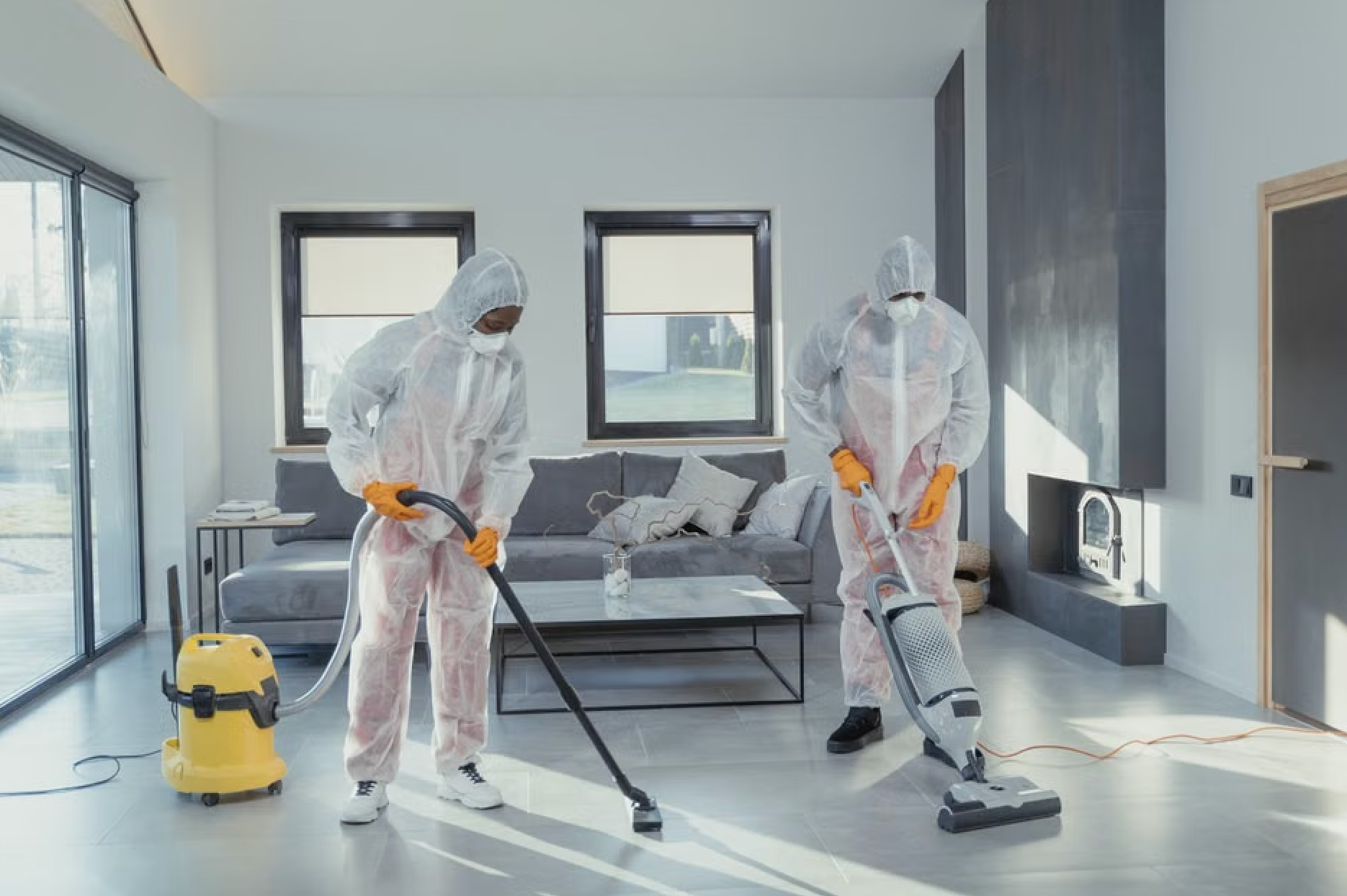
- Slower production rates of 1,500 to 2,500 square feet per hour to allow required disinfectant contact (dwell) times.
- Strict OSHA Bloodborne Pathogen Standard (29 CFR 1910.1030) compliance and specialized technician training.
- Hospital-grade, EPA-registered broad-spectrum disinfectants for exam tables and operatory sinks.
- Color-coded microfiber cleaning programs to prevent cross-contamination between clinical suites and waiting areas.
- Higher supply allocations ($0.010 to $0.020 per square foot) for medical-grade sanitizers and PPE.
Industrial Warehouses and Retail Stores
Industrial facilities, distribution centers, and retail storefronts have distinct operational needs:
- Retail Stores ($0.10–$0.25 per visit): Retail spaces experience heavy customer foot traffic, winter debris, and street dust. High-traffic display floors require continuous vacuuming, hard floor auto-scrubbing, display glass cleaning, and frequently serviced customer restrooms.
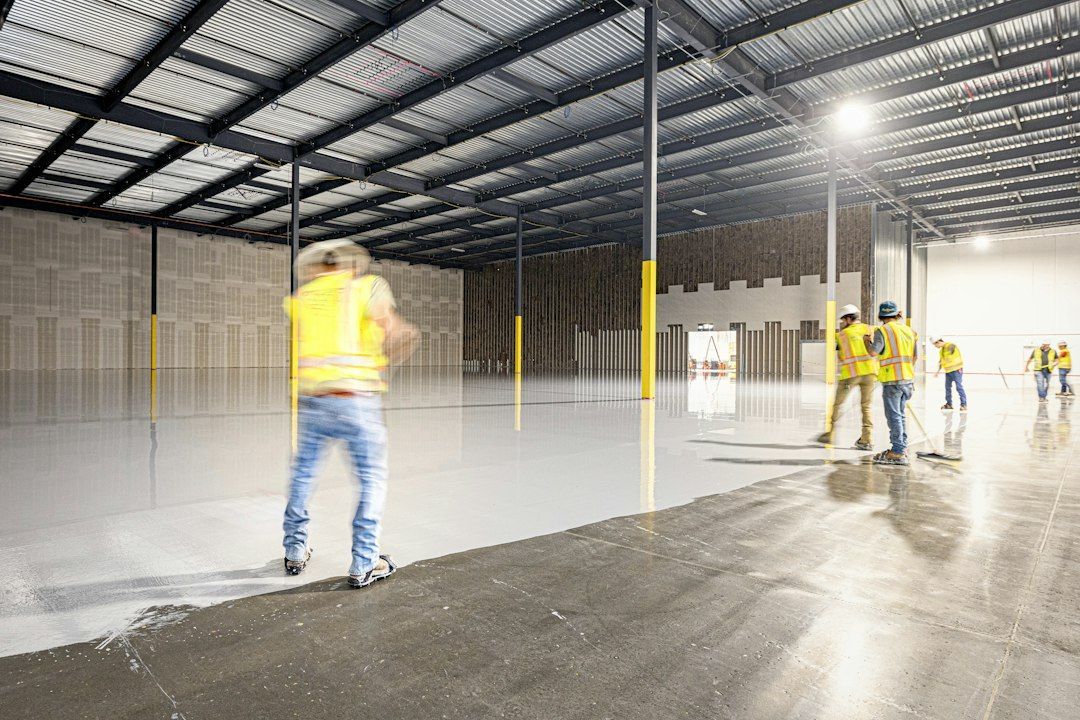
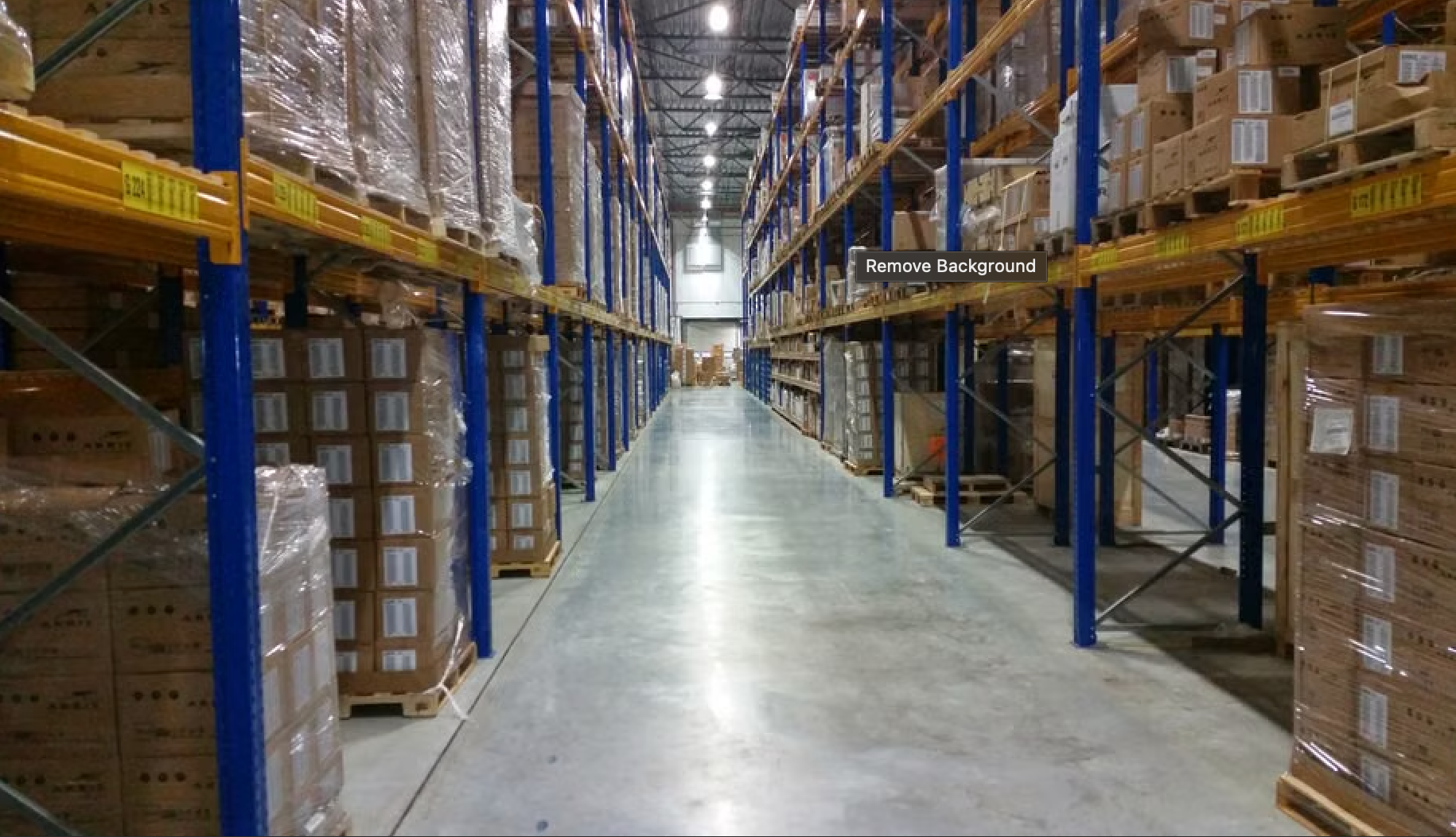
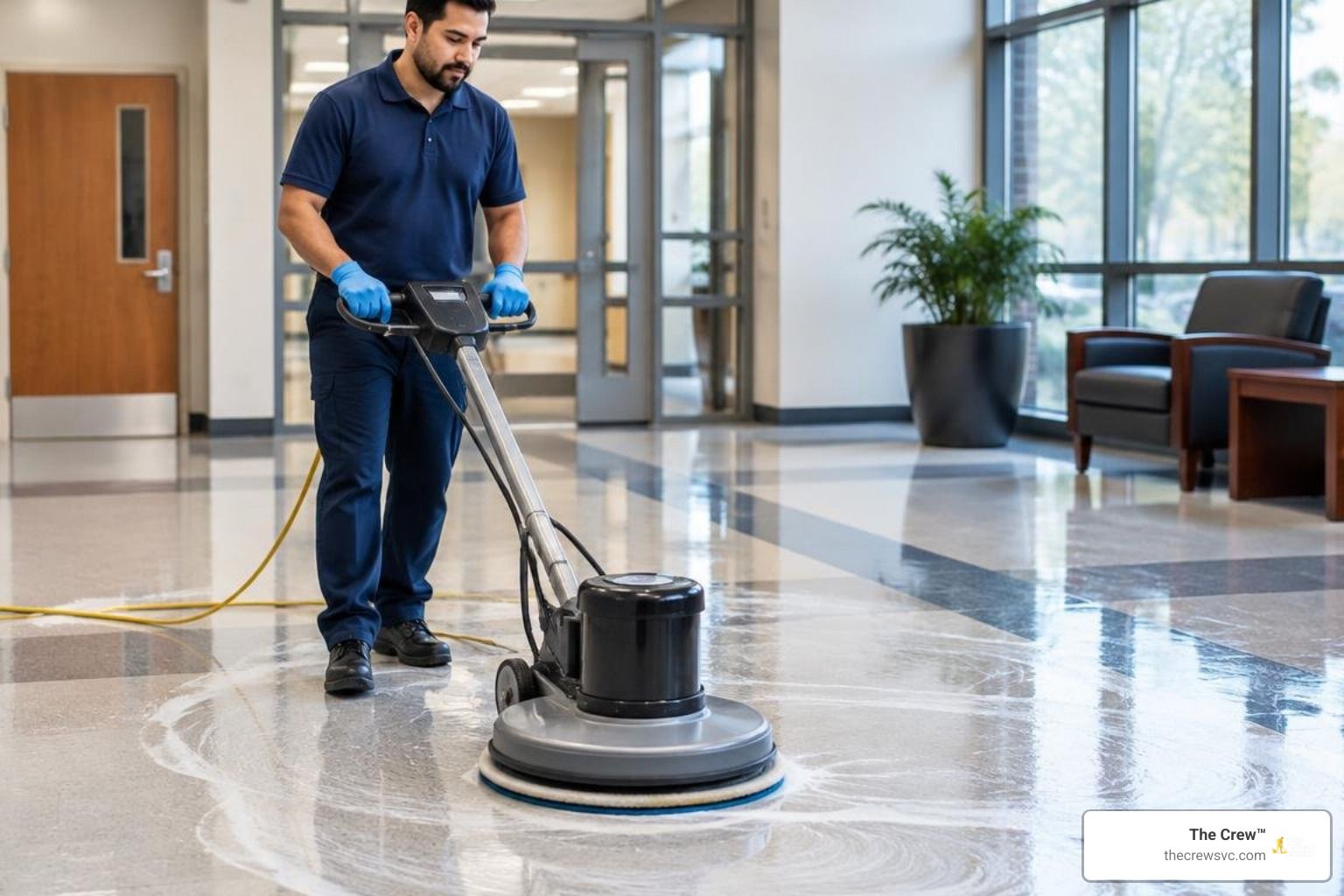
- Warehouses & Industrial ($0.05–$0.15 per visit): Large industrial spaces feature expansive open concrete floors. Using ride-on or walk-behind automatic scrubbers pushes production rates up to 5,000 to 7,000 square feet per hour, reducing the cost per square foot. However, higher dusting above 8 feet, dock door sweeps, and industrial grease removal require dedicated line-item pricing.
Key Factors That Influence Your Square-Foot Pricing
Square footage provides the canvas, but operational details dictate how long cleaning actually takes.
Understanding the factors outlined in our commercial cleaning charges guide 2026 helps facility managers evaluate where their cleaning budget is being spent:
- Soil Load and Foot Traffic: A building with 150 daily on-site employees accumulates dirt and restroom use much faster than a hybrid office with 20 occasional occupants.
- Fixture and Restroom Density: Restrooms take longer to clean per square foot than open hallways. A 10,000-square-foot office with eight individual stalls requires more labor than a warehouse with two fixtures.
- Floor Composition: Open carpeted rooms cleaned with wide-area vacuums take less labor than spaces mixing luxury vinyl tile, polished concrete, and grouted ceramic tile that need distinct chemical solutions.
Cleaning Frequency: Daily vs. Weekly Cost Impacts
Frequency serves as a major pricing lever for ongoing janitorial contracts. Many facility managers assume that reducing cleaning visits from five nights per week down to one night per week will cut their monthly bill by 80%. In reality, pricing scales non-linearly.
When a property is cleaned daily (5x/week), soil accumulation between visits is minimal. Technicians can move quickly through the building at peak production rates, lowering the cost per individual visit.
Conversely, when a building is cleaned only once per week, seven days of trash, floor grime, and soap scum build up. The cleaner must spend significantly more time scrubbing, spot-cleaning carpets, and dusting during that single visit, which increases the per-visit rate.
Structuring your schedule using our commercial cleaning contracts guide 2026 helps balance high sanitation standards with predictable monthly budgeting.
Routine Janitorial Maintenance vs. Deep Commercial Cleaning
A common source of billing confusion is the difference between recurring janitorial upkeep and periodic deep commercial cleaning:
- Routine Janitorial Service ($0.07–$0.20 per sq ft per visit): Ongoing, scheduled maintenance performed daily, multi-night, or weekly. Focuses on trash collection, vacuuming, surface wiping, breakroom sanitization, and restroom restocking.
- Specialized Commercial Cleaning ($0.25–$1.00+ per sq ft per project): Periodic, restorative project work performed monthly, quarterly, or semi-annually. This includes hot-water extraction carpet cleaning, machine scrubbing and waxing vinyl composition tile (VCT), high-dusting rafters above 8 feet, and exterior window pressure washing.
Bundling restorative project work into regular maintenance agreements without dedicated line items can obscure your true baseline costs. Separating project work from routine service keeps ongoing invoices transparent and controllable.
Consumables and Specialized Add-On Services
Consumables and specialized facility add-ons should be clearly identified in cleaning proposals:
- Paper and Soap Consumables: Paper towels, multi-fold towels, jumbo roll bath tissue, foaming hand soap, and heavy-duty trash liners are typically billed based on usage or handled through a fixed monthly inventory management fee.
- Day Porter Programs: On-site day porters keep busy facilities clean during core operating hours, continuously sanitizing common spaces and restocking high-traffic restrooms.
- High Dusting & Glass Care: Cleaning ceiling HVAC diffusers, overhead beams, architectural ledges above 8 feet, and exterior windows requires specialized safety equipment and dedicated labor allocations.
How to Calculate Your Own Janitorial Bid Step-by-Step
Evaluating or auditing your cleaning costs does not require proprietary bidding software. You can work through the math step-by-step using standard industry formulas.
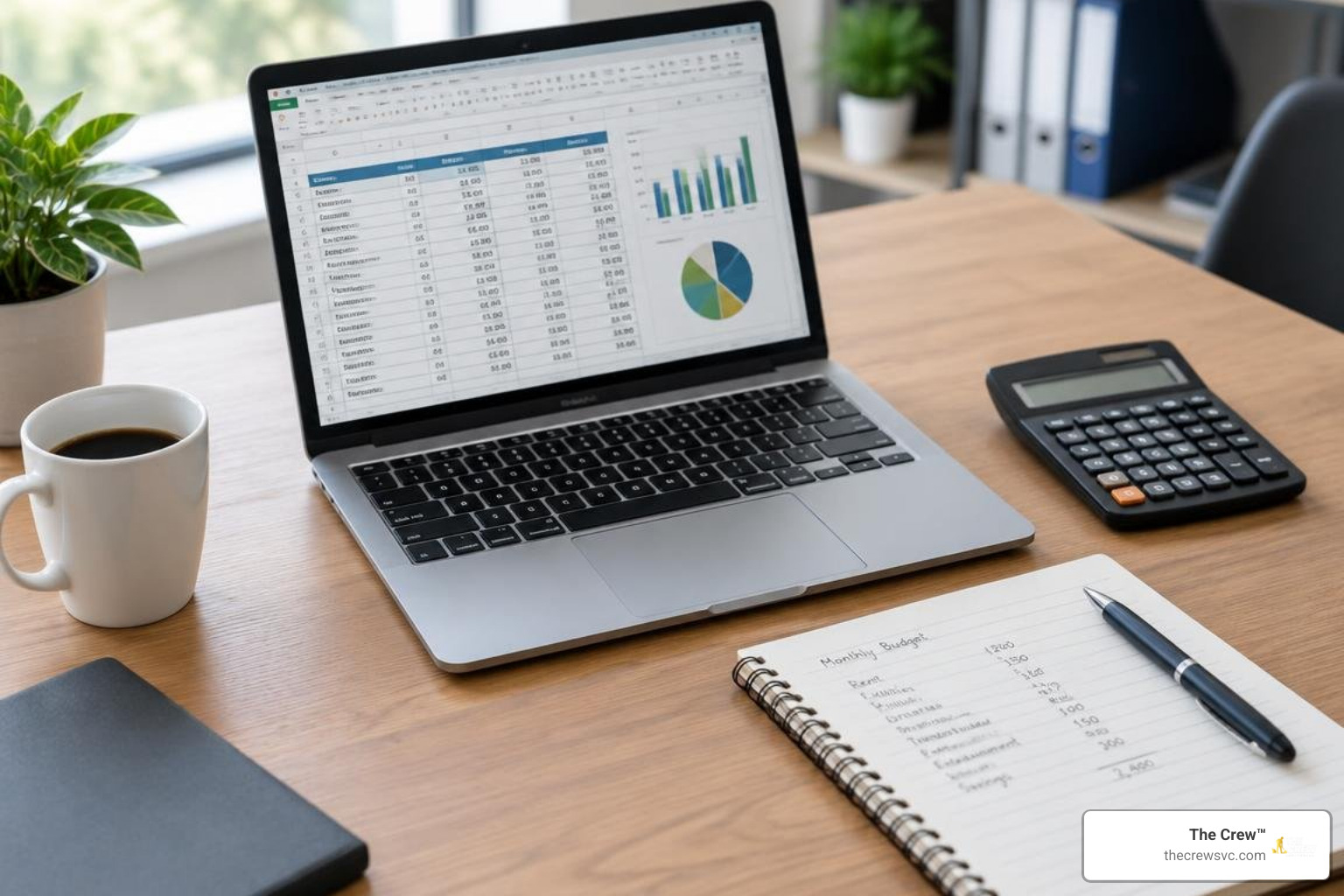
Before beginning, review our average commercial cleaning rates guide 2026 to establish your local baseline figures.
Step-by-Step Walkthrough: Building an Accurate Estimate
Follow this five-step walkthrough to calculate a defensible cleaning price for your facility:
Step 1: Determine Cleanable Square Footage
Walk your facility with architectural floor plans or a laser measuring tool. Subtract non-serviced storage closets, electrical rooms, and server rooms from gross square footage.
- Example: A 10,000 gross sq ft office building contains 8,500 cleanable square feet.
Step 2: Calculate Required Labor Hours Per Visit
Divide the cleanable square footage by the standard ISSA 612 production rate for your facility type.
- Example: 8,500 sq ft ÷ 4,000 sq ft/hour (standard office production rate) = 2.125 labor hours per visit.
Step 3: Compute Direct Burdened Labor and Supply Costs
Multiply total visit hours by your local burdened labor rate (base wage + 35% burden). Then add direct supply allocations ($0.005/sq ft for standard office chemicals and equipment amortization).
- Direct Labor: $2.125 \text{ hours} \times \$24.00/\text{hr burdened} = \$51.00$
- Direct Supplies: $8,500 \text{ sq ft} \times \$0.005/\text{sq ft} = \$42.50$
- Total Direct Cost Per Visit: $\$51.00 + \$42.50 = \mathbf{\$93.50}$
Step 4: Calculate Monthly Direct Operating Costs
Multiply the direct cost per visit by your scheduled visits per month (5 days/week = ~21.67 visits/month; 3 days/week = 13 visits/month).
- Example (3 visits per week / 13 visits monthly): $\$93.50 \times 13 = \mathbf{\$1,215.50 \text{ monthly direct cost}}$.
Step 5: Factor Overhead and Gross Profit Margin
Apply standard BSCAI operational benchmarks (15% general administrative overhead + 20% sustainable gross operating profit margin = 35% total markup).
- Formula: $\text{Monthly Price} = \frac{\text{Monthly Direct Cost}}{1 - 0.35} = \frac{\$1,215.50}{0.65} = \mathbf{\$1,870.00 \text{ per month}}$
- Benchmark Check: $\$1,870.00 \div 8,500 \text{ sq ft} = \mathbf{\$0.22 \text{ per sq ft / month}}$, falling squarely within the $0.08–$0.25 BSCAI office band.
How Facility Managers Use a Commercial Cleaning Rates Per Square Foot Calculator to Negotiate Bids
Equipped with structured pricing calculations, property and facility managers can approach vendor negotiations with clear, data-backed expectations:
- Audit Outlier Proposals: If a contractor quotes $800/month for that 8,500 sq ft office, their direct labor estimate assumes unachievable cleaning speeds of 8,000+ sq ft/hr, or they are misclassifying workers to avoid payroll taxes. Conversely, a bid of $3,500/month indicates excessive overhead markup.
- Standardize Work Scopes: Use your calculated hours per visit to ensure all competing vendors are bidding on the exact same cleaning scope, task frequencies, and square footage measurements.
- Unbundle Specialized Line Items: Request that carpet extraction, window washing, and consumable paper products appear as itemized options rather than rolled into an inflated flat monthly fee.
Common Pitfalls and Calculation Mistakes to Avoid
Watch out for these common miscalculations when building or evaluating cleaning estimates:
- Using Gross Instead of Cleanable Square Footage: Quoting an entire 20,000 sq ft footprint when 4,000 sq ft consists of unserviced racking or locked tenant storage inflates your monthly estimate by 20%.
- Confusing Base Wage with Fully Loaded Labor: Omitting mandatory payroll taxes, workers' compensation insurance, and benefits creates an unsustainable budget.
- Ignoring Layout Complexity: Applying open-office production rates (4,500 sq ft/hr) to high-density medical clinics (2,000 sq ft/hr) leads to understaffing and missed tasks.
- Forgetting Equipment Amortization: Commercial vacuums, auto-scrubbers, and microfiber systems require regular maintenance and replacement, which must be accounted for in direct costs.
Frequently Asked Questions About Commercial Cleaning Costs
What is the average commercial cleaning cost per square foot in 2026?
Across the United States in 2026, most commercial cleaning contracts cost between $0.08 and $0.25 per square foot per visit, which translates to an hourly labor billing rate of $30 to $75 per hour. For recurring commercial accounts, nationwide industry invoice data shows a median monthly charge of $580, with roughly half of all commercial invoices falling between $303 and $1,167 per month depending on facility size and visit frequency.
How does cleaning frequency affect per-visit rates versus monthly costs?
Increasing service frequency lowers your cost per individual visit while raising the total monthly invoice. Routine cleaning keeps dust, trash, and grime from building up, allowing cleaning crews to move through the space more efficiently on each visit. However, scheduling more total visits throughout the month increases the overall labor hours billed to your account.
What is the difference between janitorial services and commercial cleaning?
Janitorial service covers ongoing, everyday maintenance tasks—such as emptying trash bins, dusting accessible surfaces, sweeping, mopping, and sanitizing restrooms. Commercial cleaning refers to heavier, periodic deep-cleaning projects, including deep carpet extraction, tile and grout machine scrubbing, high-altitude dusting, and exterior pressure washing. Routine janitorial work typically costs $0.07 to $0.20 per square foot per visit, while specialized commercial deep cleaning ranges from $0.25 to $1.00+ per square foot.
Conclusion: Secure Transparent, High-Quality Cleaning for Your Facility
Accurate pricing models protect property managers from surprise price increases and poor service. Understanding how cleanable square footage, ISSA production rates, loaded labor wages, and operating margins interact gives you full visibility into your cleaning investments.
At The Crew™, we provide reliable, high-quality janitorial and commercial cleaning services across the entire Denver Metro Area—including Denver, Aurora, Lakewood, Centennial, Westminster, Broomfield, Thornton, Littleton, Arvada, Englewood, Wheat Ridge, Golden, Brighton, Longmont, Parker, Highlands Ranch, Commerce City, Henderson, and Erie. Our fully background-checked cleaning technicians operate with a 0% cleaner turnover rate, ensuring consistent, dependable care for your property every single day.
Ready for a clear, formula-based quote built around your facility's exact layout? Explore our transparent janitorial pricing and custom estimates to get started today.