Choosing Commercial Concrete Polishing in Denver
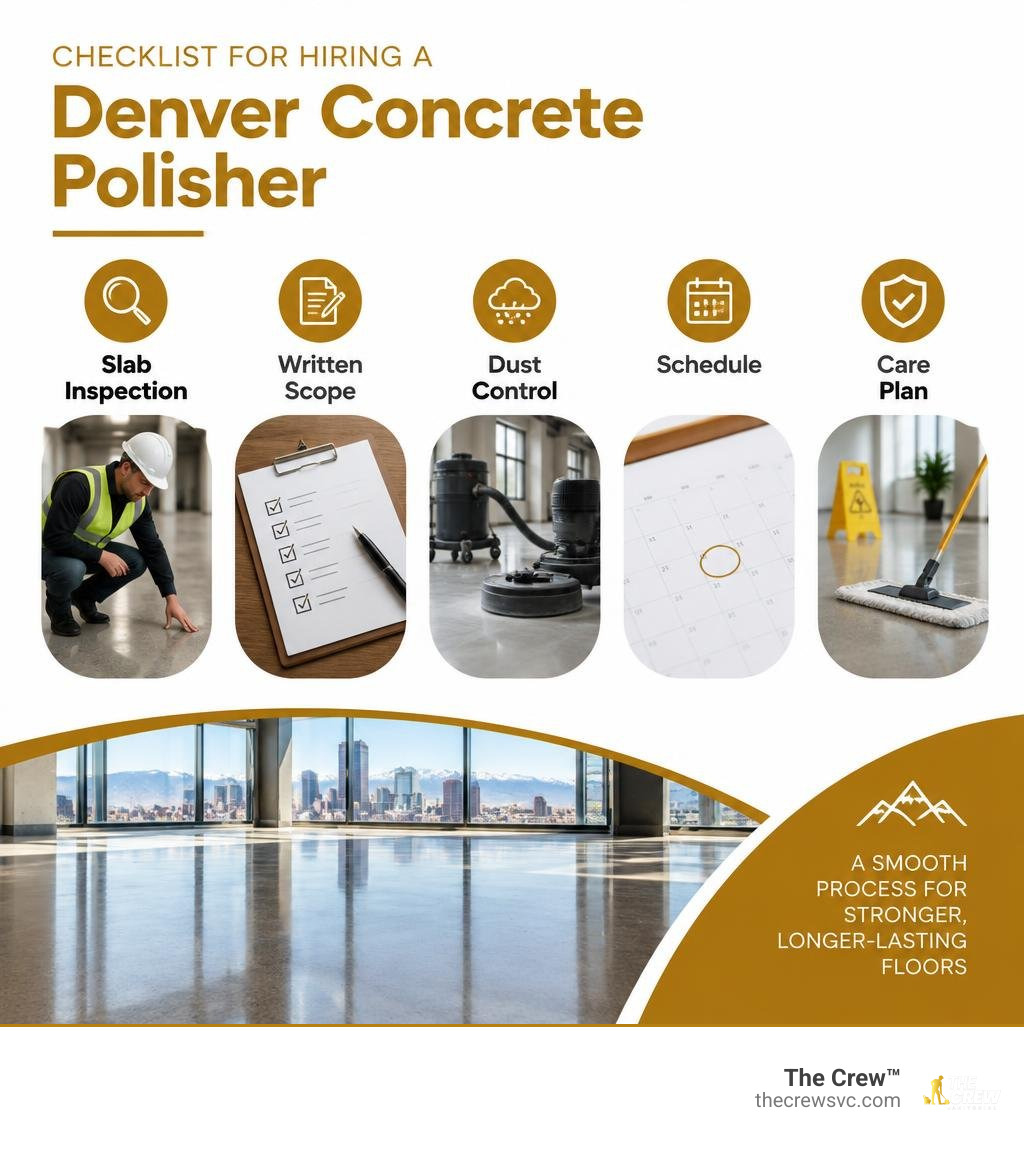
For commercial concrete polishing in Denver, start with a slab inspection. Ask a polishing contractor for a written scope that covers repairs, the finish you want, dust control, the work schedule, and floor care. Polishing is often a good fit for a sound slab in a busy, mostly dry facility. A badly damaged floor or one exposed to frequent chemical spills may need a different approach.
The appeal is simple: polishing refines the concrete itself rather than adding a coating that can peel. The right choice still depends on the slab beneath it and how your team will use and clean the floor.
I'm Carlos Castillo II, owner of The Crew, a family-run commercial cleaning company serving the Denver Metro Area. My experience managing floor care informs this guide to commercial concrete polishing Denver facility managers can use when planning a project and its upkeep.
What Is Commercial Concrete Polishing Denver Facilities Rely On?
Commercial concrete polishing is the mechanical refinement of a concrete slab using heavy planetary grinding machines equipped with diamond-impregnated abrasives. Rather than rolling a film or plastic layer over the surface, the process mechanically cuts away micro-fissures and opens the pores of the concrete.
During the process, a chemical densifier (typically liquid lithium, sodium, or potassium silicate) is applied. The densifier penetrates the porous concrete matrix and reacts chemically with free lime (calcium hydroxide) to create calcium silicate hydrate (C-S-H). This reaction permanently hardens the slab from within, locking up free lime and stopping concrete dusting at the molecular level.
Once hardened, technicians continue with progressively finer resin-bonded diamond abrasives to hone and polish the surface to the exact desired sheen. Partnering with a reliable commercial floor service ensures that once this refinement is complete, your facility preserves that high-performance surface for decades.
| Feature | Polished Concrete | Epoxy Coating Systems | Grind-and-Seal Systems |
|---|---|---|---|
| Material Build | None (Mechanical Refinement) | 10–30+ mil Resin Film | 2–5 mil Acrylic/Polyurethane |
| Moisture Vulnerability | Breathable (Unaffected by MVT) | High Risk of Delamination | Moderate Risk of Blistering |
| Lifespan | 20+ Years with Basic Care | 3–7 Years Before Recoat | 2–4 Years Before Reseal |
| Tire Mark Resistance | Extremely High | Moderate (Prone to Hot-Tire Pickup) | Low to Moderate |
| Maintenance Need | Routine Dust Mopping & Auto-Scrub | Stripping, Patching, Topcoats | Regular Resealing & Buffing |
Polished Concrete vs. Coatings and Grind-and-Seal Systems
When managing a facility in Denver, Lakewood, or Commerce City, choosing between mechanically polished concrete and topical floor coatings comes down to moisture tolerance and ongoing maintenance.
Topical coatings—such as traditional epoxy or polyurethane—form a solid synthetic film bonded to the slab surface. If subterranean moisture vapor transmission (MVT) occurs beneath an unvented slab, hydrostatic pressure builds up against the underside of the epoxy. Over time, this pressure forces the coating to bubble, chip, and delaminate. Furthermore, high-traffic commercial environments with hard-wheeled equipment cause film-based coatings to scratch and wear through, requiring complete shutdowns for surface stripping and re-application.
Grind-and-seal systems represent a middle-tier alternative. The slab is ground down to open the surface and then topped with a thin clear acrylic or polyurethane sealer. While grind-and-seal jobs provide immediate aesthetic improvement at a lower upfront cost, the topical sealer remains vulnerable to abrasion, tire marks, and wear patterns, demanding periodic resealing every few years.
Polished concrete eliminates the coating layer entirely. Because the slab itself is densified and polished, there is no topical plastic film to scratch, peel, or blister under vapor pressure. The floor breathes naturally, making it exceptionally durable for rigorous industrial use.
Levels of Aggregate Exposure and Gloss Finishes
Concrete polishing gives facility managers full control over aggregate exposure and gloss levels.
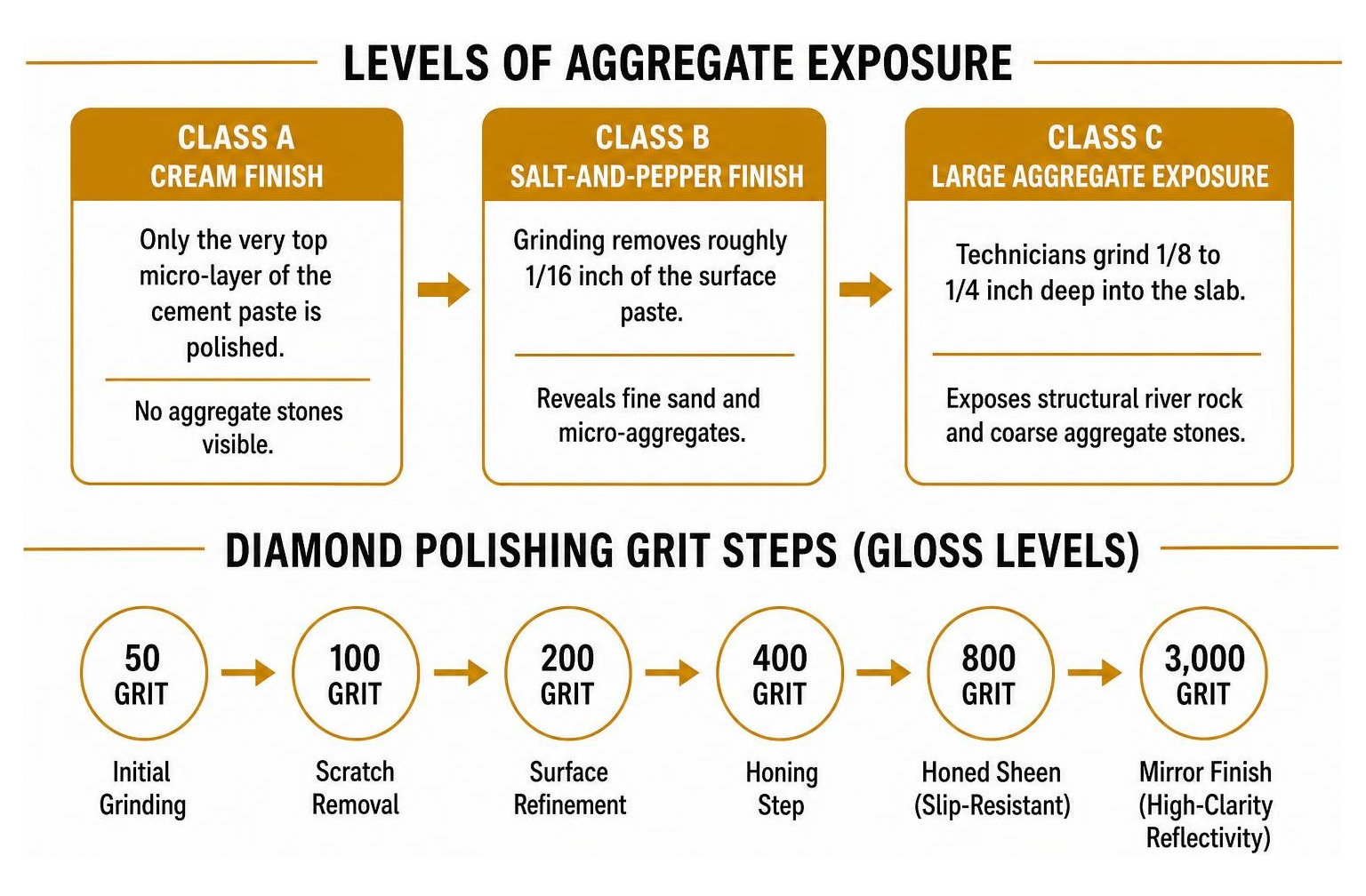
- Class A (Cream Finish): Only the very top micro-layer of the cement paste is polished, leaving a uniform, sleek finish with no aggregate stones visible. This is ideal for newly poured, pristine architectural slabs.
- Class B (Salt-and-Pepper Finish): Grinding removes roughly 1/16 inch of the surface paste, revealing fine sand and micro-aggregates. This is the most common specification for commercial retail and educational corridors because it masks minor surface repairs while providing an attractive visual texture.
- Class C (Large Aggregate Exposure): Technicians grind 1/8 to 1/4 inch deep into the slab to expose structural river rock and coarse aggregate stones, offering a rich, terrazzo-like appearance suitable for corporate headquarters and modern lobbies.
Once exposure is set, gloss levels are established through diamond grit progression. Facility managers can select an 800-grit honed sheen for slip-resistant utility spaces or learn how to get that mirror finish with floor polishing services by progressing up to 3,000-grit resin diamonds for high-clarity optical reflectivity.
Key Benefits for Denver Warehouses, Retail, and Industrial Spaces
Commercial facilities across Aurora, Centennial, and Brighton endure heavy seasonal wear, tracked-in gravel, and demanding forklift traffic. Polished concrete delivers several distinct operational advantages:
- Heavy Forklift and Wheel Traffic Resistance: Heavy warehouse forklifts and pallet jacks cause topical coatings to peel under shear forces. Polished concrete has no surface film to shear away, eliminating hot-tire pickup and tire scarring.
- Maximized Light Reflectivity: A high-gloss polished slab can increase ambient light reflectivity by up to 100% or more. This allows distribution centers and retail showrooms to lower their energy overhead by turning off lighting banks during day shifts.
- Elimination of Concrete Dusting: Unsealed concrete continuously sheds microscopic alkaline dust (efflorescence), which settles onto sensitive inventory, electrical panels, and retail shelving. Chemical densification permanently seals these pores, supporting our ultimate industrial cleaning guide protocols for spotless manufacturing.
- Environmental Sustainability: Polishing utilizes the existing structural concrete slab, eliminating the embodied carbon and VOC off-gassing associated with manufacturing and transporting synthetic vinyl, tile, or thick epoxy resins.
Cost Efficiency of Commercial Concrete Polishing in Denver
Across the Front Range—including Westminster, Broomfield, and Thornton—commercial concrete polishing generally ranges from $2.00 to $5.00 per square foot for open facilities over 2,000 square feet. Large distribution hubs and industrial warehouses exceeding 50,000 to 100,000 square feet often see even greater economies of scale.
Beyond the initial polishing, commercial joint filling is critical. Semi-rigid polyurea joint filler (typically costing around $1.75 per linear foot) stabilizes control joint edges to prevent spalling and wheel damage from hard-wheeled pallet jacks. When evaluating your overall facility budget, balancing initial prep against floor cleaning services cost proves that polished concrete delivers the lowest 15-year total cost of ownership of any commercial flooring system.
Dust Proofing and OSHA Silica Compliance
Crystalline silica dust generated during concrete grinding poses serious health risks. In commercial environments, contractors must strictly adhere to OSHA Table 1 silica dust standards.
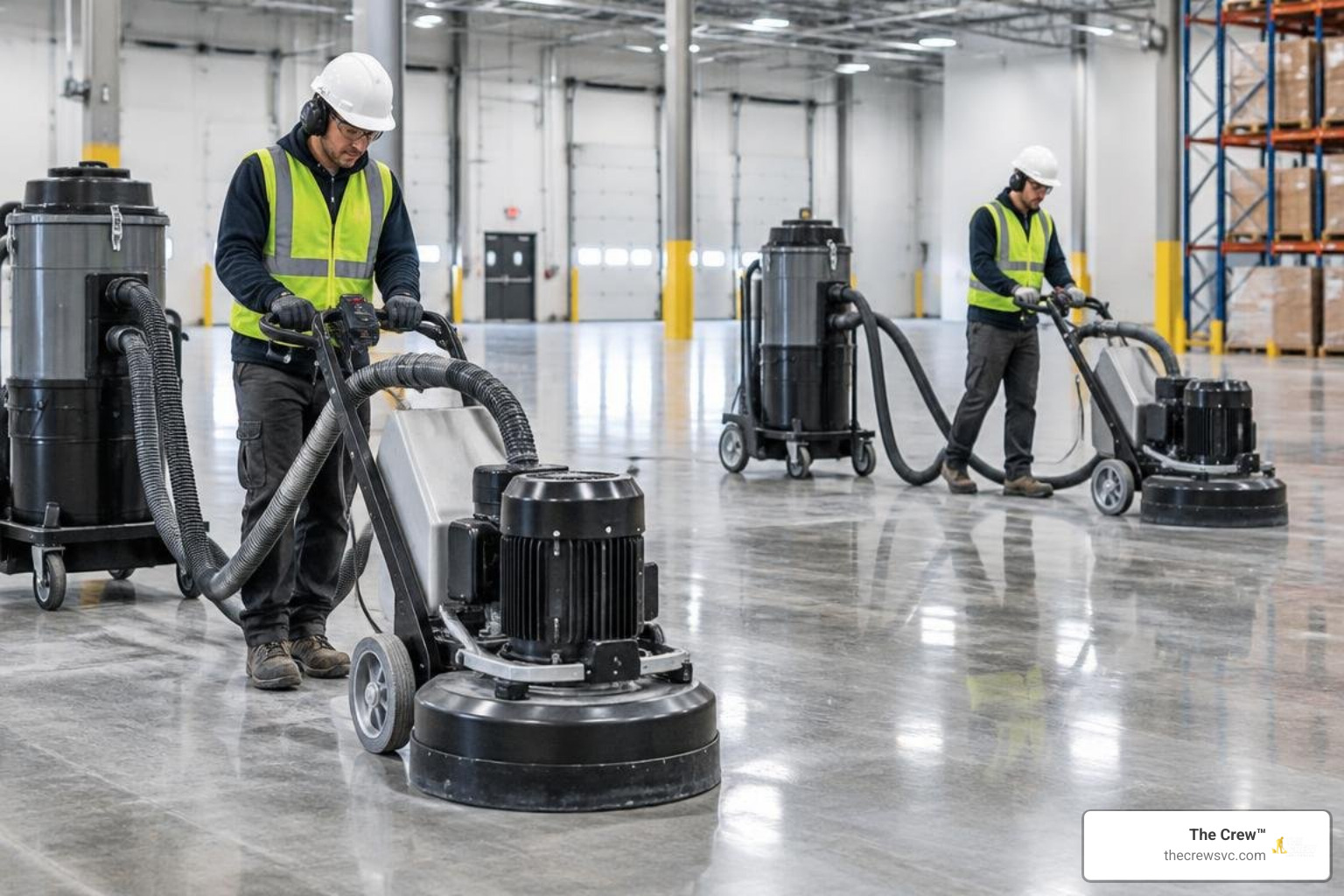
Professional polishing teams utilize heavy planetary grinders paired directly with industrial multi-stage HEPA vacuums. These vacuums capture 99.97% of airborne particulate down to 0.3 microns at the source of the cutting head. This allows grinding and honing to occur safely in occupied buildings without contaminating HVAC air handling units or putting personnel at risk.
The Step-by-Step Polishing Process: From Slab Assessment to Final Handoff
Transforming rough concrete into a refined commercial floor follows a rigorous sequence:
| Phase | Core Objective | Key Equipment & Tooling | Deliverables / Standards |
|---|---|---|---|
| 1. Site Assessment | Evaluate slab integrity, hardness, and moisture | Mohs Hardness picks, Tramex moisture meter | Documented hardness rating (e.g., Mohs 4–7) and repair plan |
| 2. Surface Prep | Remove coatings, open slab pores, level high spots | Coarse metal-bond diamond tooling (16–40 grit) | Uniform CSP profile; bare concrete base |
| 3. Joint Care & Repair | Fill control joints, stitch structural cracks | Polyurea joint pumps, rapid-cure repair mortars | Flush-shaved joints flush with the floor surface |
| 4. Honing & Densifying | Refine scratch patterns; harden concrete matrix | 100–400 grit resin diamonds, liquid silicate densifier | C-S-H chemical conversion; dust-free slab |
| 5. High Polish | Achieve specified reflectivity and gloss level | 800–3,000 grit diamond resin pads, burnishers | Measured gloss levels according to CPC standards |
| 6. Guard & Handoff | Provide stain protection and provide care protocols | Microfiber applicators, high-speed burnisher | Stain-resistant surface ready for foot traffic |
Professional contractors align their operational criteria with standards set by The American Society of Concrete Contractors Concrete Polishing Council to ensure reproducible gloss, distinctness of image (DOI), and surface smoothness.
Removing Existing Coatings and Slab Refurbishment
Many commercial projects in established Denver corridors like Englewood, Golden, and Littleton are remodels requiring old flooring removal. Failed epoxy, mastic, carpet adhesives, or urethane coatings must be fully removed using aggressive metal-bond diamond tooling or specialized carbide scraper inserts before polishing can begin.
Once the bare slab is exposed, deep crack stitching, spall repairs, and patching are completed using color-matched structural polymers. For retail storefronts, auto dealerships, or creative office spaces, custom solvent-based concrete dyes and CNC precision engraving can be incorporated into the grinding stages to embed permanent logos, walking lanes, or brand accent colors directly into the concrete matrix before final densification.
Project Timelines and Phased Execution for Commercial Concrete Polishing Denver
Downtime is costly for any operating business. Commercial concrete polishing projects are structured around phased execution:
- Mobilization & Setup (Hours 0–4): Dust containment barriers are built, floor transitions are masked, and heavy industrial machinery is powered up.
- Grinding, Joint Filling & Densifying (Days 1–2): Coarse grinding passes remove surface imperfections, joint fillers are injected and shaved flush, and chemical densifiers are applied to cure overnight.
- Honing, Polishing & Sealing (Days 2–3): Diamond refinement moves rapidly through grit progressions up to the final polish, followed by a breathable penetrating stain guard.
To prevent operational shutdowns in active retail and logistics facilities, work can be completed in barricaded overnight zones or over weekend windows. Because polished concrete does not rely on thick chemical resins that require days to off-gas and cure, floors can handle light foot traffic immediately and forklift traffic within 24 to 48 hours after final burnishing.
Long-Term Care: Maintaining Commercial Polished Concrete Floors
While polished concrete is remarkably durable, thinking it is entirely maintenance-free is a common misconception. Dirt, tracked-in deicing salts from Denver winters, and fine sand act like sandpaper under foot and forklift traffic, gradually dulling high-gloss floors if not properly managed.

A proper maintenance program includes:
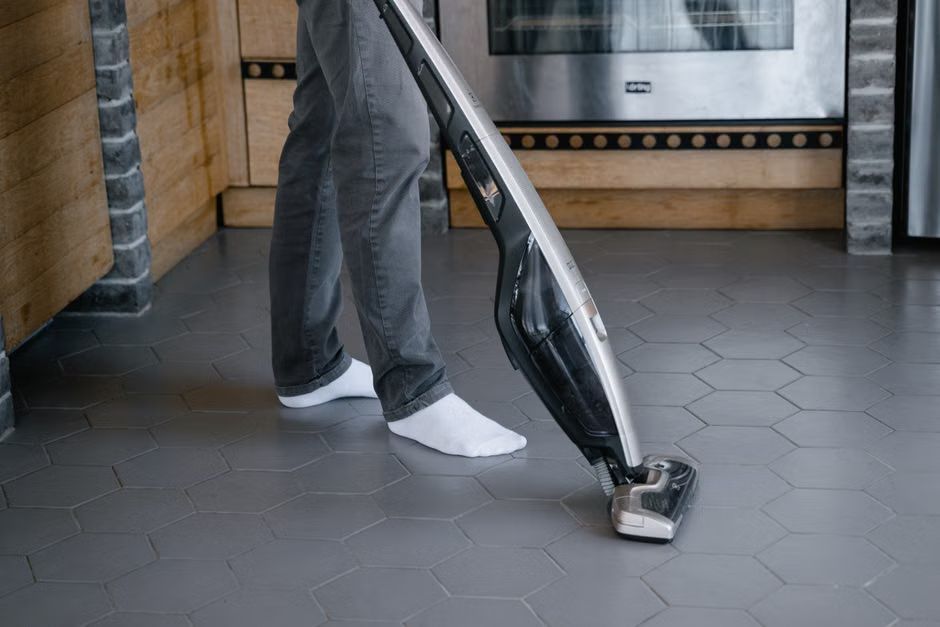
- Daily Dust Mopping: Use microfiber dust mops daily to remove abrasive grit and silica dust from the surface.
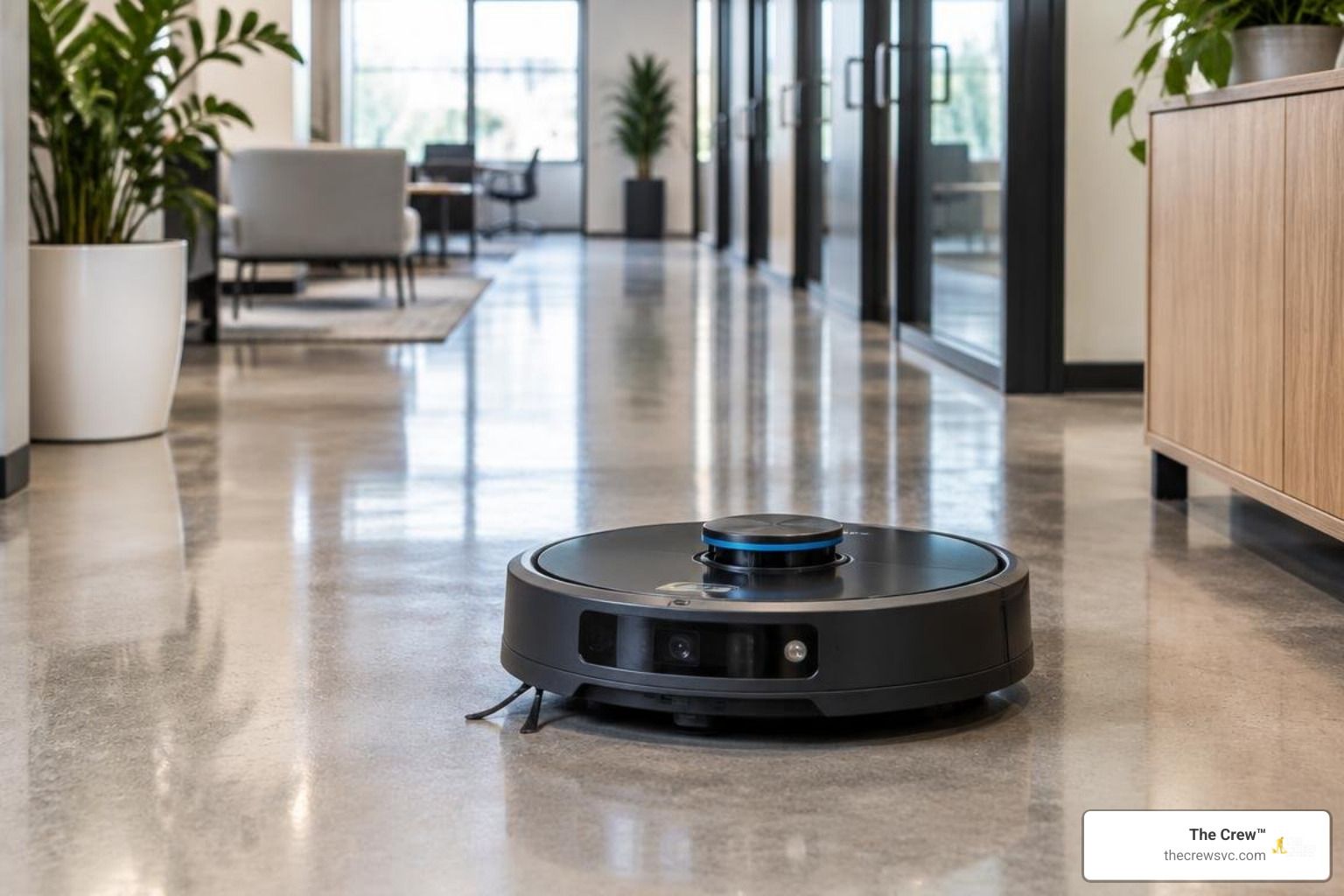
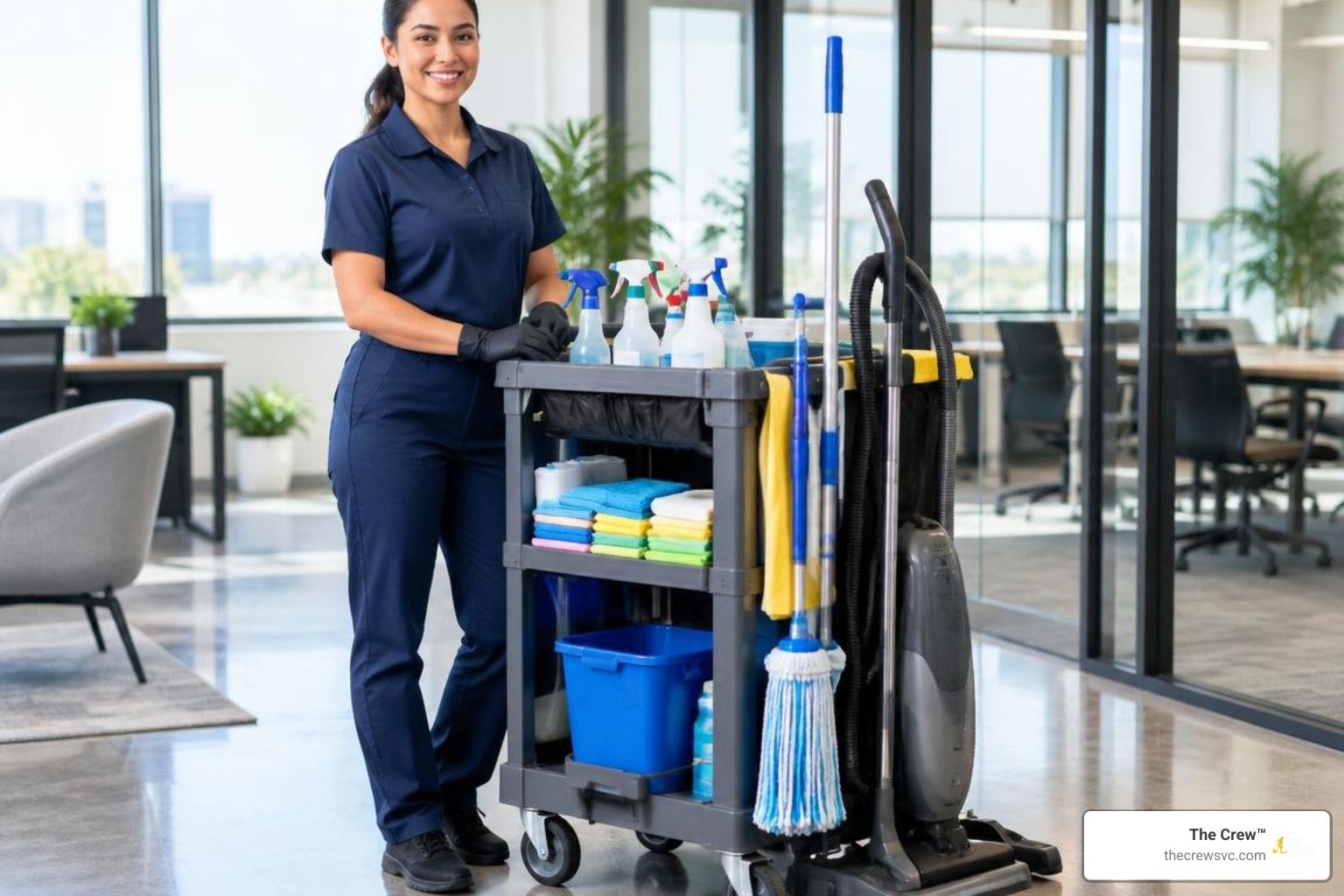
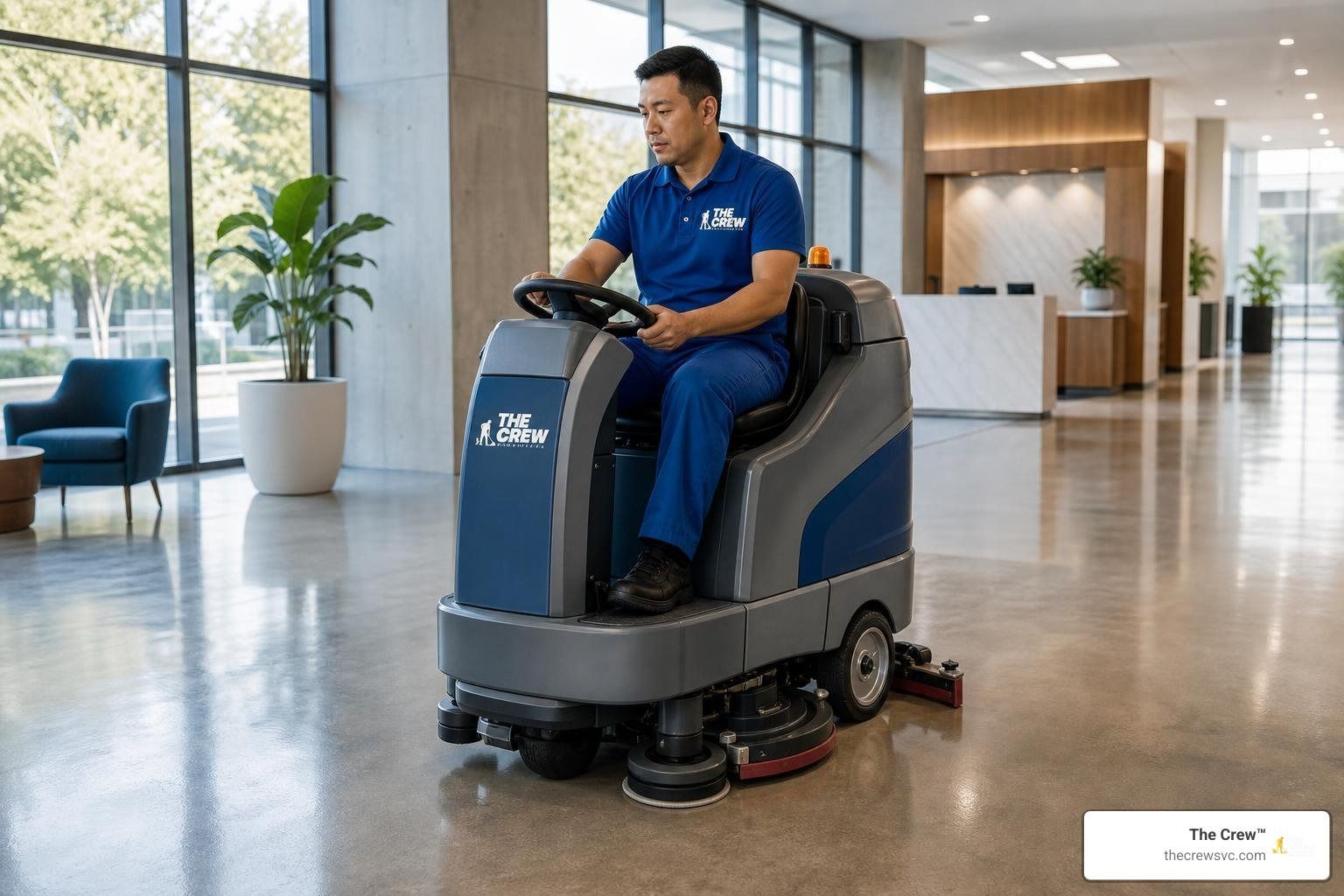
- Auto-Scrubbing with Neutral Cleaners: Clean the floor regularly using an automatic floor scrubber equipped with non-abrasive soft white brushes or microfiber pads. Always use a dedicated neutral-pH cleaner (pH 7.0–8.0). Harsh acidic or highly alkaline degreasers will etch the microscopic polish and cause the surface to haze.
- Periodic Diamond Pad Conditioning: High-traffic walkways can be restored using diamond-impregnated maintenance pads (1,500 to 3,000 grit) during routine cleaning cycles to naturally hone and maintain high reflectivity without chemical waxes.
Our comprehensive guide to professional concrete floor cleaning services covers these routine care procedures in full detail. You can also explore our ongoing Denver floor maintenance services to ensure your facility maintains its clean, professional appearance year-round.
Frequently Asked Questions About Commercial Concrete Polishing in Denver
Can any existing commercial concrete slab be polished?
Most structurally sound slabs can be polished, but a detailed site assessment is essential. If a slab has severe spalling, extensive structural cracking, or deep industrial oil and chemical saturation, those contaminants can interfere with densifier penetration. In such cases, self-leveling cementitious overlays, localized patch repairs, or specialized resinous coatings may be required before or instead of polishing.
How slip-resistant is high-gloss polished concrete when wet?
Despite its reflective, glass-like appearance, mechanically polished concrete is not inherently slippery. When kept clean and dry, polished concrete typically meets or exceeds OSHA and ANSI B101.1 standards for static coefficient of friction (SCOF > 0.5 or 0.6). The mechanical polishing process flattens the surface on a microscopic scale, increasing the total surface area contact for shoe treads. However, prompt spill cleanup is still necessary to prevent slip hazards from pooled liquids or oils.
How often do polished concrete floors need professional burnishing?
Burnishing frequency depends directly on traffic volume. High-traffic retail centers, grocery stores, and corporate lobbies in Denver, Arvada, and Parker typically benefit from monthly or quarterly high-speed burnishing using 3,000-grit diamond pads to restore high distinctness of image (DOI). Lower-traffic distribution warehouses often require burnishing only once or twice a year. For more information on scheduling facility care, review our Denver commercial cleaning guide for 2026.
Conclusion
Upgrading to polished concrete is one of the smartest long-term capital investments you can make for your commercial or industrial facility. By hardening and refining the slab you already own, you eliminate peeling coatings, reduce dust, cut lighting costs, and streamline your facility's daily maintenance routine.
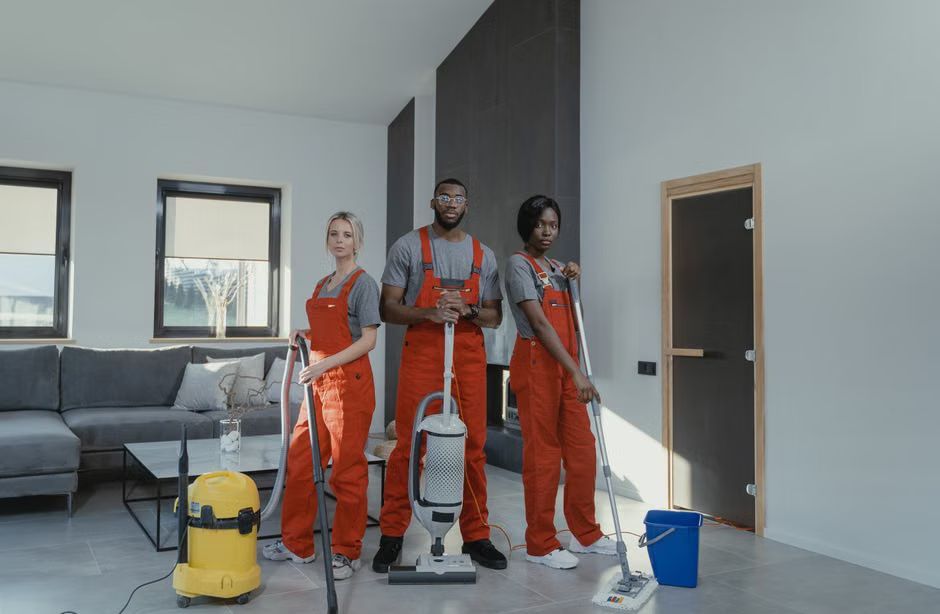
Protecting that investment requires a dedicated cleaning and floor care team that understands the chemistry and mechanical properties of polished slabs. At The Crew, we provide dependable commercial janitorial and floor care services across the Denver Metro Area—backed by our 0% cleaner turnover rate and background-checked cleaning professionals who ensure consistent quality on every shift.
Schedule your consultation for Denver commercial floor maintenance today, and let us help you keep your facility's floors performing at their absolute best.