How to Choose the Right Commercial Vacuum for Your Space
Match the vacuum to the floor and the mess. For commercial vacuuming, choose an upright for large carpeted areas, a backpack or canister for stairs and tight spaces, and a wet/dry unit for suitable liquid spills. Then check filtration, noise level, cord length or battery runtime, and capacity against your daily cleaning needs. Hazardous dust calls for equipment rated for that specific material, not a standard office vacuum.
The right choice helps a cleaning team cover the space without frequent stops, while keeping noise and dust in mind.
I'm Carlos Castillo II, owner of The Crew™, a family-run commercial cleaning company serving the Denver Metro Area. My hands-on work leading cleaning operations helps me assess how commercial vacuuming fits into reliable daily facility care.
Core Standards and Equipment Types for Commercial Vacuuming
Selecting the right machine starts with recognizing that no single design fits every square foot of a facility. Commercial properties feature diverse surfaces: long carpeted corridors, crowded cubicles, multi-story staircases, and hard-floor breakrooms. Matching the equipment category to the layout keeps teams productive and protects flooring investments.
| Vacuum Type | Best Applications | Cleaning Path / Capacity | Key Strengths | Key Tradeoffs |
|---|---|---|---|---|
| Upright | Open carpeted offices, hallways, conference rooms | 12 to 18 inches / 3 to 6 liters | Excellent brush agitation, deep pile extraction | Heavy on stairs, bulkier in tight cubicles |
| Backpack | Stairwells, crowded desks, auditoriums, classrooms | 12 to 14 inches / 6 to 10 quarts | High operator mobility, fast square-foot coverage | Requires careful harness fitting |
| Canister | Hardwood, tile, under low furniture, detail cleaning | 10 to 12 inches / 5 to 10 liters | Low handle weight, versatile attachments | Unit trails behind operator on wheels |
| Wet/Dry | Spills, workshops, entryways during snow, flood recovery | 6 to 20+ gallons / High CFM | Handles liquids, heavy slurry, and large debris | Bulky footprint, louder operation |
Upright and Wide-Area Vacuums for Carpet Coverage
Upright vacuums serve as the workhorses for commercial carpet maintenance. Unlike residential models that rely on single light-duty motors, commercial uprights often use dedicated dual-motor configurations: one motor powers the high-torque brush roll to agitate embedded grit, while a second motor generates powerful suction airflow.
For large halls and open floor plans, wide-track units expand productivity. The Sanitaire Tradition SC679K features a 16-inch cleaning path, providing 33% more coverage per pass than standard 12-inch units. When evaluating carpet care, look for Carpet and Rug Institute (CRI) Gold certification. This seal verifies that the machine effectively removes deep soils without damaging carpet fibers or releasing dust back into the air. Integrating these machines alongside effective commercial cleaning tips 2026 ensures commercial carpets achieve their full expected lifespan.
Backpack and Canister Vacuums for Ergonomics and Mobility
Backpack vacuums dramatically improve speed across complex floor plans. janitorial teams using backpack vacuums can clean up to twice the square footage per hour compared to traditional uprights in cluttered spaces. Modern units feature chiropractor-designed harnesses with padded waist belts and sternum straps that transfer the weight entirely to the operator's hips, preventing lower back strain.
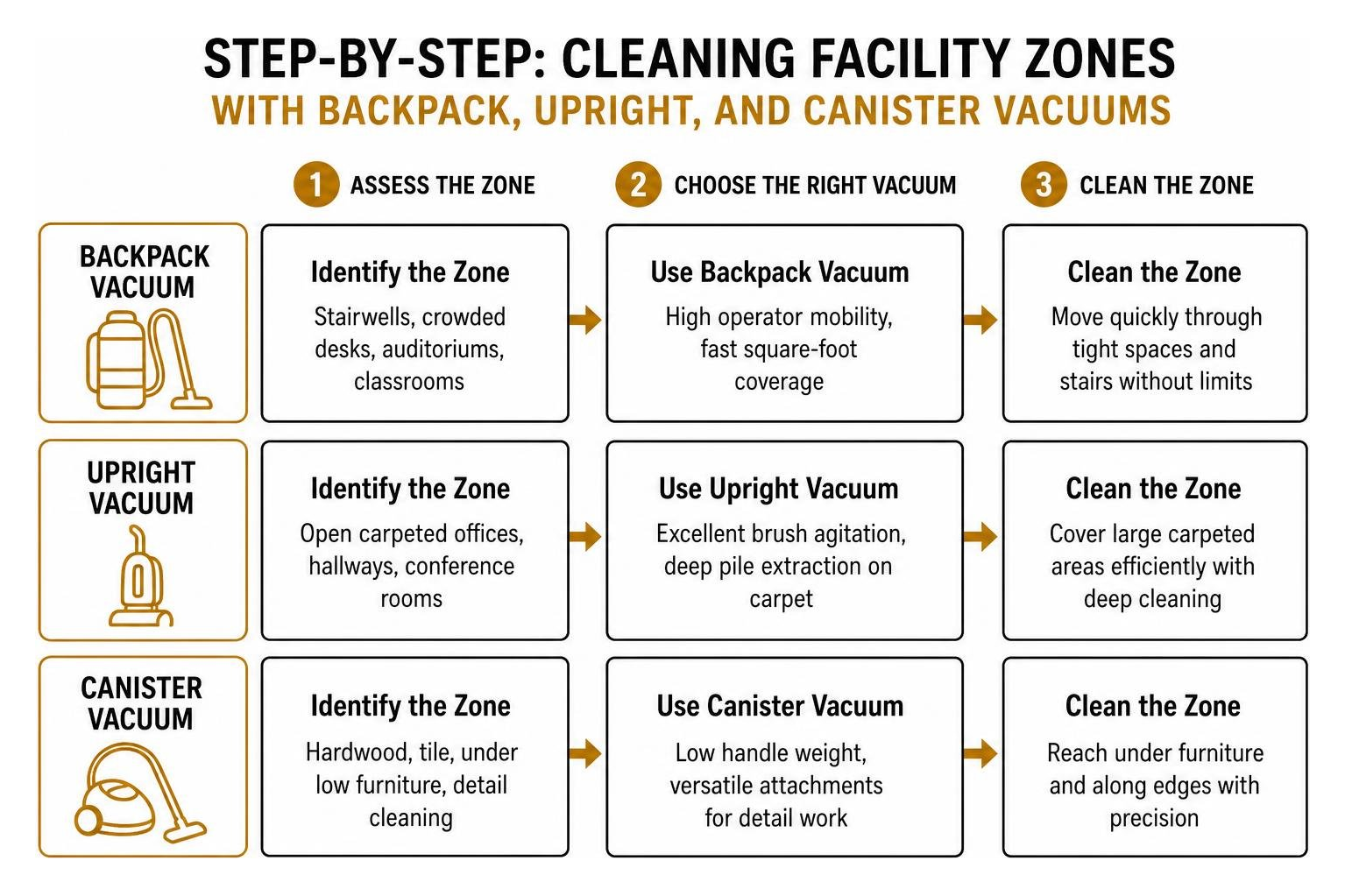
Backpack systems excel in stairwells, movie theaters, and crowded office spaces where an upright cord or chassis would get caught. Cordless models, such as the Sanitaire TRANSPORT, deliver around 70 minutes of continuous runtime on a single charge, completely eliminating outlet-hunting delays.
Canister vacuums provide a low-profile alternative, keeping the motor on the floor while placing only a featherweight wand in the operator's hands. They are ideal for dusting baseboards, reaching beneath low office furniture, and conducting detailed office cleaning and sanitizing without scuffing delicate architectural surfaces.
Wet/Dry and Industrial Vacuum Systems
When maintenance demands handling liquids, construction slurry, or damp soils from Colorado winter slush, dry-only vacuums must stay parked. Commercial wet/dry units utilize corrosion-resistant poly or stainless steel tanks ranging from 6 to 20 gallons.
Heavy-duty systems often incorporate positive hose connections, such as the Dayton Lock-On® system detailed in Industrial / Commercial Wet / Dry Vacuums, ensuring hoses do not disconnect under high suction or during rapid transport across job sites.
Evaluating Vacuum Power, Filtration, and Technical Specifications
Evaluating vacuum performance requires looking beyond motor horsepower. Understanding airflow, static lift, and particulate containment allows facilities to select machines that deliver genuine cleaning power without raising operating costs.
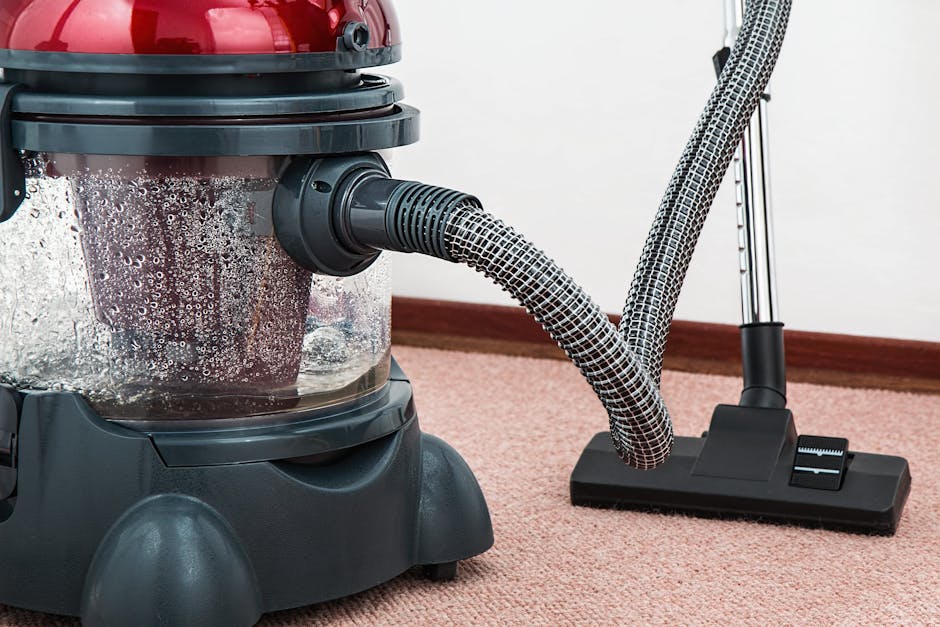
Essential Performance Metrics for Commercial Vacuuming Equipment
Suction performance depends on the balance between airflow (measured in cubic feet per minute, or CFM) and sealed suction (measured in inches of waterlift):
- Airflow (CFM): Represents the volume of air moved through the machine. Higher CFM (typically 90 to 150+ CFM in commercial units) carries light dust, lint, and dry particles across long hose distances.
- Waterlift (Static Pressure): Measures the motor's pulling force against resistance. High waterlift (70 to 100+ inches) is vital for pulling heavy grit, sand, and liquid up from carpet pile.
- Motor Wattage: Commercial vacuum motors range from 800 to 1,400 watts. For example, high-performance units like the dual-motor Versamatic 18 pair a 1,000-watt vacuum motor with an 80-inch waterlift and 105 CFM, delivering dependable deep-cleaning capability.
Pairing these technical specifications with regular commercial floor service keeps high-traffic flooring resilient and presentable year-round.
HEPA Filtration and Indoor Air Quality Standards
Standard vacuum bags often vent fine dust back into the facility, causing allergic reactions and settling on desks shortly after cleaning. True High-Efficiency Particulate Air (HEPA) media captures at least 99.97% of particles down to 0.3 microns in size, including pollen, mold spores, bacteria, and fine toner dust.
Commercial filtration systems often employ multi-stage designs:
- Primary Collection Bag: Traps large debris and coarse dust.
- Pre-Motor Filter: Protects the motor armature from grit.
- HEPA Post-Motor Exhaust Filter / ProLevel Filter Media: Captures microscopic particles (such as the ProForce 1500XP system capturing up to 98.73% to 99.97% of fine debris) before air returns to the room.
Facilities adhering to healthcare standards, educational wellness guidelines, or general commercial cleaning protocols depend on sealed HEPA filtration to maintain high indoor air quality.
Noise Levels and Daytime Cleaning Capabilities
As modern facilities adopt day-porter scheduling and occupied office cleaning, noise ratings become essential. Standard commercial machines operate between 75 and 82 dBA, which disrupts telephone conversations and meetings.
Engineered acoustic dampening systems reduce operational sound significantly. Models like the Hoover HushTone operate at 69 dBA or lower in quiet mode—comparable to normal conversational speech—enabling thorough cleaning during standard business hours without distracting occupants.
Residential vs. Commercial vs. Industrial Equipment Comparison
Deploying residential vacuums in commercial environments is a common operational mistake. Residential machines are built for 2 to 3 hours of weekly use, whereas commercial facilities require 4 to 8 hours of daily continuous runtime.
| Feature | Residential Vacuums | Commercial Vacuums | Industrial Vacuums |
|---|---|---|---|
| Typical Motor Lifespan | 300 – 800 hours | 1,500 – 2,500 hours | 5,000+ hours (Continuous TEFC) |
| Daily Duty Cycle | 30 to 45 minutes | 4 to 8 hours | Continuous 24/7 process use |
| Power Supply | Standard 15A residential cord | Heavy-duty 3-wire grounded / Li-ion | 3-Phase (460V) or Pneumatic |
| Chassis Durability | Standard ABS plastic | Polycarbonate / Chrome-plated steel | Stainless steel / Heavy cast aluminum |
| Hazardous Dust Class | Not rated | General nuisance dust / HEPA | NFPA 652 / Class II Div 1 & 2 compliant |
Motor Durability and Duty Cycles
Commercial uprights, such as the Sanitaire SC679K Tradition series, feature heavy-duty motors engineered for 2,000+ operational hours. Advanced industrial wet/dry models with brushless motors eliminate carbon brush wear entirely, reaching runtimes beyond 5,000 hours. Commercial units also include thermal overload protection, automatically shutting down the motor before heat destroys internal windings if an obstruction occurs.
Hazardous Material and High-Risk Environment Requirements
Standard commercial vacuums must never be used for combustible powders (flour, grain, fine plastics), chemical solvents, or heavy metal shavings. Industrial manufacturing facilities demand specialized equipment, such as those engineered by Industrial Vacuum Cleaners - Kärcher.
These environments require CSA-certified, explosion-proof units complying with NFPA 652 standards for Class II, Division 1 and 2, Groups F and G hazardous locations. In areas where electrical sparks present severe hazards, pneumatic (air-operated) vacuums running on compressed air provide reliable, spark-free suction. Integrating appropriate equipment into comprehensive floor service programs maintains both workplace safety and regulatory compliance.
Operational Strategy: Purchasing vs. Renting vs. Professional Service
Facility managers must balance equipment performance against the total cost of ownership (TCO). Calculating the complete financial footprint involves factoring in initial purchase price, routine consumables (bags, belts, filters), electrical infrastructure, and maintenance labor.
Reviewing a detailed commercial cleaning costs guide 2026 helps managers compare internal machine upkeep against contracted commercial cleaning.
Integrating Commercial Vacuuming into Daily Facility Upkeep
Maintaining clean facilities across Denver, Aurora, Lakewood, and surrounding communities requires consistent cleaning cadences. Daily day-porter routines capture salt, grit, and moisture at building entrances before particles grind into carpet fibers. Scheduled evening passes focus on thorough cubicle maintenance and unobstructed hallway runs. Coordinating daily cleaning with scheduled denver floor maintenance services ensures facility flooring remains attractive year after year.
Equipment Rentals and Fleet Management Economics
Purchasing an entire fleet of specialty vacuum equipment is not always the best use of capital. For seasonal post-construction cleanups, emergency water containment, or short-term projects, renting commercial units offers distinct operational advantages:
- No Capital Depletion: Preserves operating cash flow for core business operations.
- Zero Maintenance Overhead: Rental suppliers inspect, test, and replace wear parts between deployments.
- Application Flexibility: Access specialized tools (like truck-mounted extraction or heavy wet-vacs) without long-term storage overhead.
For businesses looking to optimize their janitorial investments, exploring the economics of the broader vacuum cleaner business provides practical perspective on lifecycle fleet management.
Frequently Asked Questions About Commercial Vacuum Options
What is the primary difference between commercial and residential vacuums?
Commercial vacuums are built with high-durability polycarbonate or metal housings, long commercial-grade grounded power cords (up to 50 feet), and motors designed to run 4 to 8 hours daily for several years. Residential units are engineered for intermittent household use and quickly overheat or suffer belt failures under heavy commercial workloads.
How do backpack vacuums improve cleaning productivity?
Backpack vacuums allow natural walking posture and arm movement without dragging a heavy canister or pushing an upright chassis. Janitorial studies show backpack units clean between 7,000 and 10,000 square feet per hour, compared to 2,500 to 4,000 square feet per hour for conventional uprights in cluttered spaces.
Why is HEPA filtration essential in commercial facility vacuuming?
True HEPA filters capture 99.97% of microscopic particulates down to 0.3 microns. In shared offices, schools, and medical facilities, HEPA filtration prevents the vacuum exhaust from recirculating fine allergens, toner dust, and respiratory irritants back into the breathing zone.
Conclusion
Selecting the right vacuum equipment protects flooring assets, improves indoor air quality, and keeps janitorial operations running efficiently. Matching motor strength, filtration ratings, and machine types to your specific facility layout prevents premature equipment failure and supports a healthier workplace.
At The Crew™, our family-run team provides dedicated commercial cleaning and janitorial services throughout Denver, Centennial, Westminster, Broomfield, Littleton, and the entire Denver Metro Area. By hiring background-checked cleaning professionals and maintaining a 0% turnover rate, we deliver reliable, spotless results on every shift. For facilities seeking hands-off floor care and janitorial expertise, learn more about our dedicated commercial vacuuming and facility maintenance programs today.