How to Choose a Commercial Floor Service
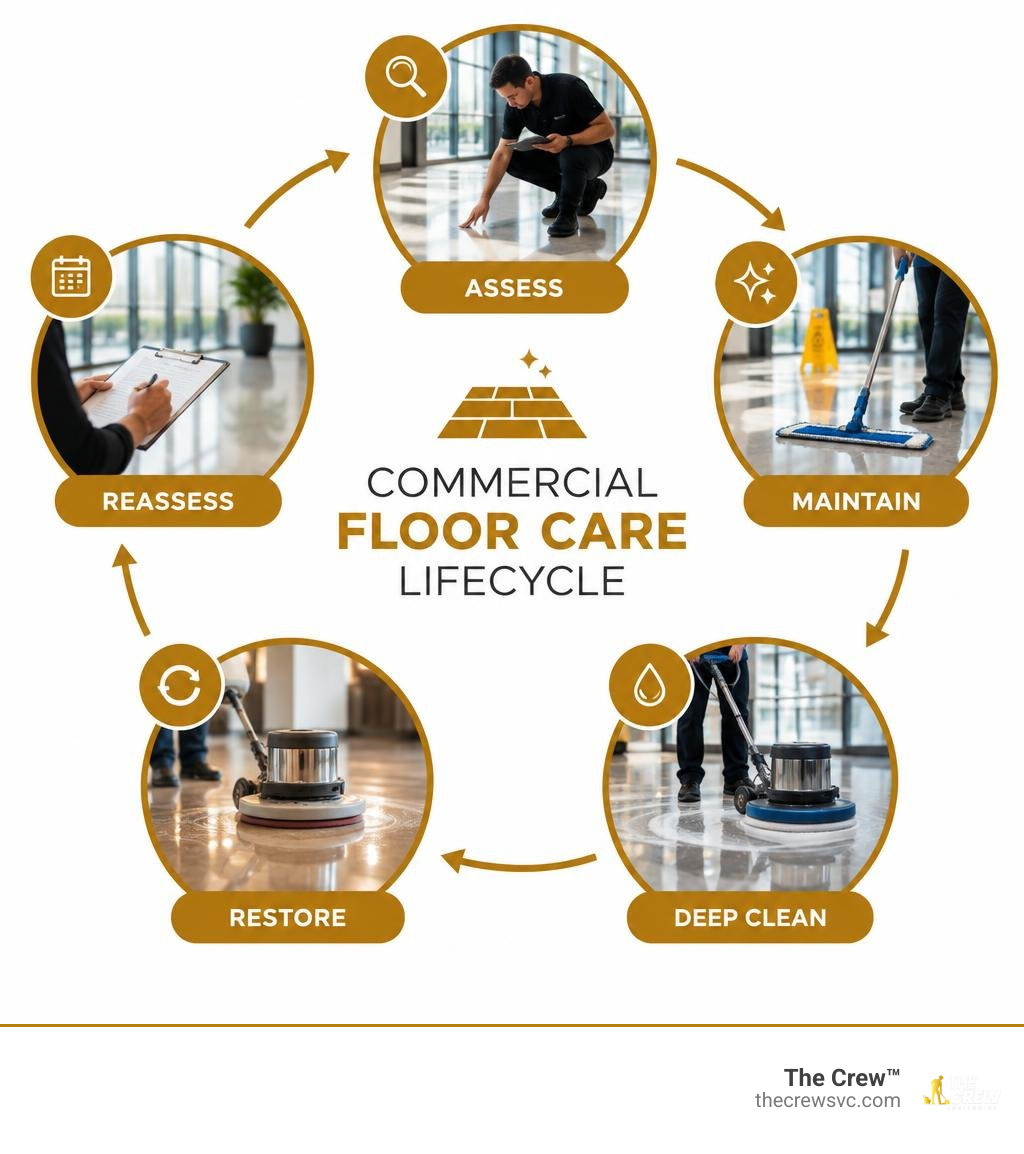
Choose a commercial floor service based on your floor material, foot traffic, and the work it needs: routine cleaning, deep cleaning, or restoration. Ask providers to inspect the space, explain their methods and equipment, and give you a clear scope and schedule. For a busy facility, that schedule should keep wet or closed areas away from employees and customers.
The right plan also accounts for Denver's tracked-in snow, grit, and seasonal mud. Regular care helps reduce slip hazards, keeps the space looking welcoming, and protects floors from avoidable wear.
I'm Carlos Castillo II, owner of The Crew™, a family-run Denver-area cleaning company founded in 1982. My hands-on work with commercial floor service has taught me to start with the floor's condition and the facility's daily needs; this guide will help you do the same.
Understanding Commercial Flooring Materials and Care Protocols
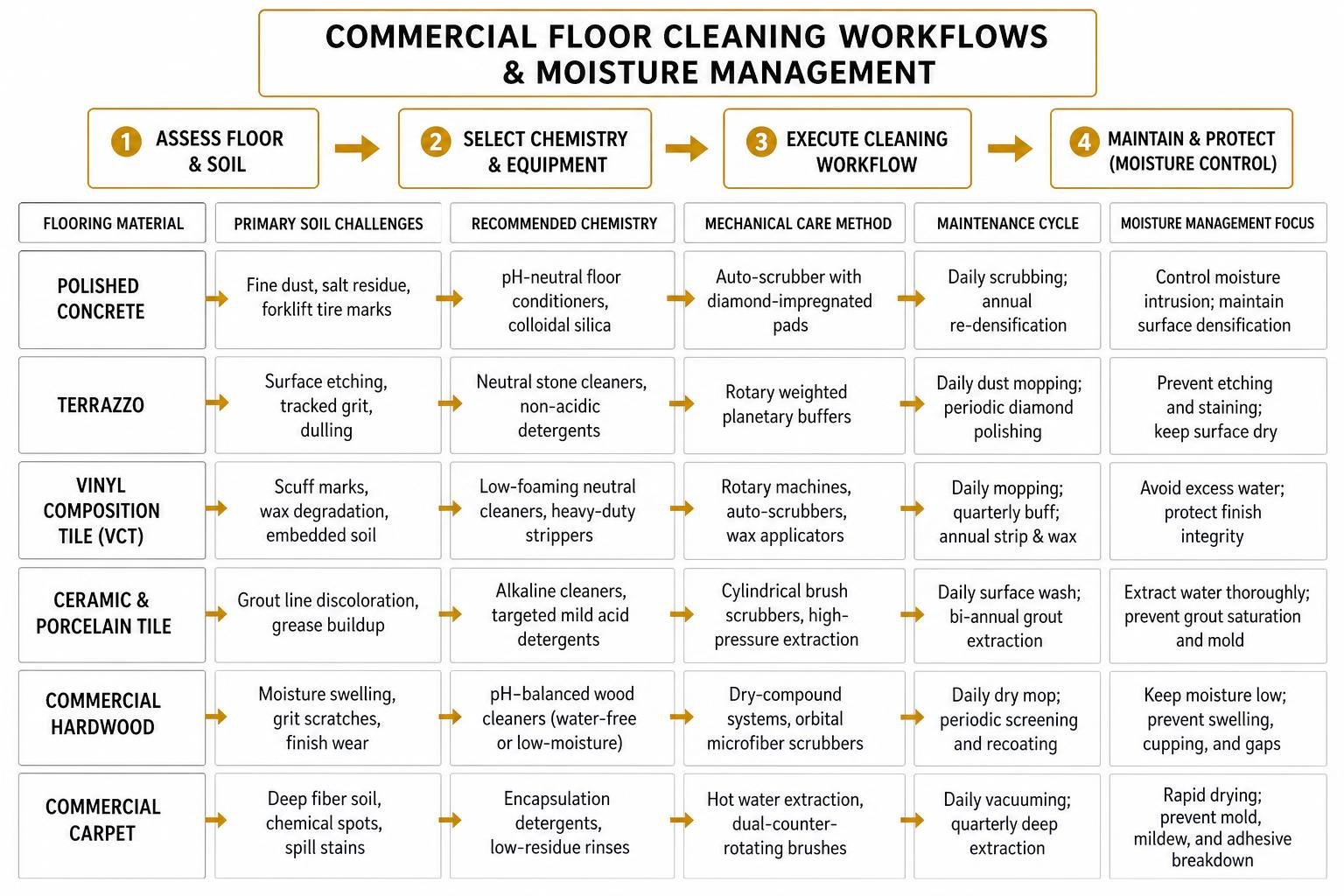
Every commercial flooring material presents a distinct chemical profile, hardness rating, and porosity level. Applying an aggressive, high-pH chemical degreaser to a sensitive natural hardwood or unsealed natural stone will degrade the protective finish instantly. Conversely, using a mild, neutral floor cleaner on an unsealed industrial concrete slab laden with forklift grease achieves virtually nothing.

Understanding the balance between soil load factors (dry particulate grit, moisture, oils, and chemical spills) and localized traffic patterns dictates the machinery and chemistry required to keep surfaces intact.
| Flooring Material | Primary Soil Challenges | Recommended Cleaning Chemistry | Mechanical Care Method | Maintenance Cycle |
|---|---|---|---|---|
| Polished Concrete | Fine dust, salt residue, forklift tire marks | pH-neutral floor conditioners, colloidal silica | Auto-scrubber with diamond-impregnated pads | Daily scrubbing; annual re-densification |
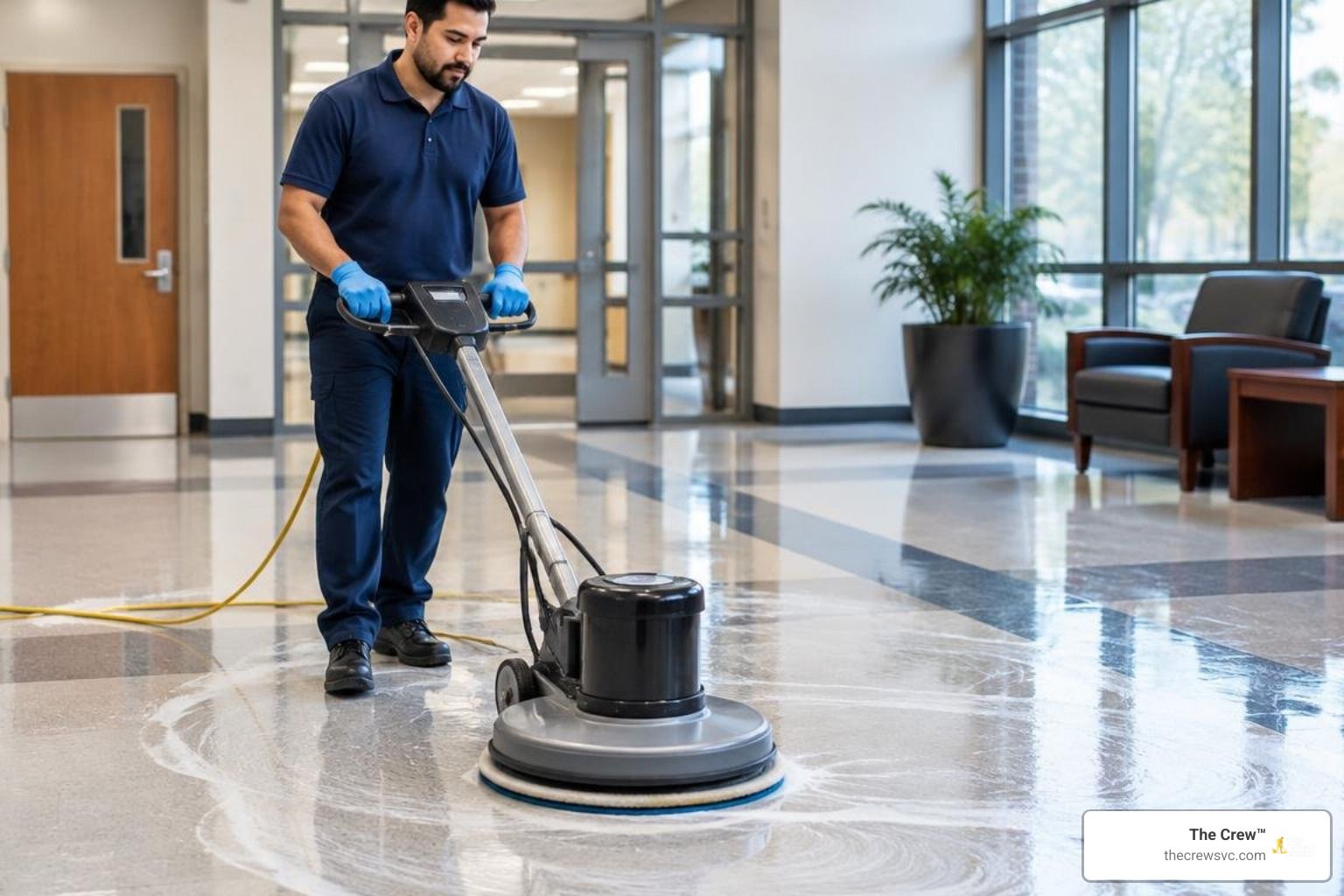
| Terrazzo | Surface etching, tracked grit, dulling | Neutral stone cleaners, non-acidic detergents | Rotary weighted planetary buffers | Daily dust mopping; periodic diamond polishing |
| Vinyl Composition Tile (VCT) | Scuff marks, wax degradation, embedded soil | Low-foaming neutral cleaners, heavy-duty strippers | Rotary machines, auto-scrubbers, wax applicators | Daily mopping; quarterly buff; annual strip & wax |
| Ceramic & Porcelain Tile | Grout line discoloration, grease buildup | Alkaline cleaners, targeted mild acid detergents | Cylindrical brush scrubbers, high-pressure extraction | Daily surface wash; bi-annual grout extraction |
| Commercial Hardwood | Moisture swelling, grit scratches, finish wear | pH-balanced wood cleaners (water-free or low-moisture) | Dry-compound systems, orbital microfiber scrubbers | Daily dry mop; periodic screening and recoating |
| Commercial Carpet | Deep fiber soil, chemical spots, spill stains | Encapsulation detergents, low-residue rinses | Hot water extraction, dual-counter-rotating brushes | Daily vacuuming; quarterly deep extraction |
Polished Concrete and Terrazzo Restoration
Industrial polished concrete and classic terrazzo offer incredible structural resilience, but they require precise mechanical maintenance to retain their shine and slip resistance. Heavy traffic wears down the top microscopic layer of densified concrete over time, opening pores to staining agents and moisture intrusion.
Restoring these hard surfaces demands heavy-duty planetary grinders equipped with progressively fine diamond abrasives. During complete resurfacing, technicians address cracks and expand joint filler materials to ensure a seamless plane. The process uses specialized wet slurry extraction to keep dust out of the facility's air handling systems before applying penetrating lithium silicates for concrete densification.
Facilities aiming to extend the service life of unsealed or polished substrates can consult our guide on professional concrete floor cleaning services to understand the technical steps involved in surface hardening. Meeting stringent architectural and durability benchmarks—similar to established terrazzo material standards —ensures your foundational stone surfaces withstand decades of foot traffic without spalling or micro-cracking.
Commercial Tile, Grout, and Resilient Surfaces
Vinyl Composition Tile (VCT), Luxury Vinyl Tile (LVT), and ceramic tile installations remain standard across educational institutions, medical practices, and retail spaces in Lakewood, Englewood, and Littleton. Because grout is inherently porous, mop water simply pushes suspended dirt into the grout lines if floors are cleaned with dirty water and string mops.
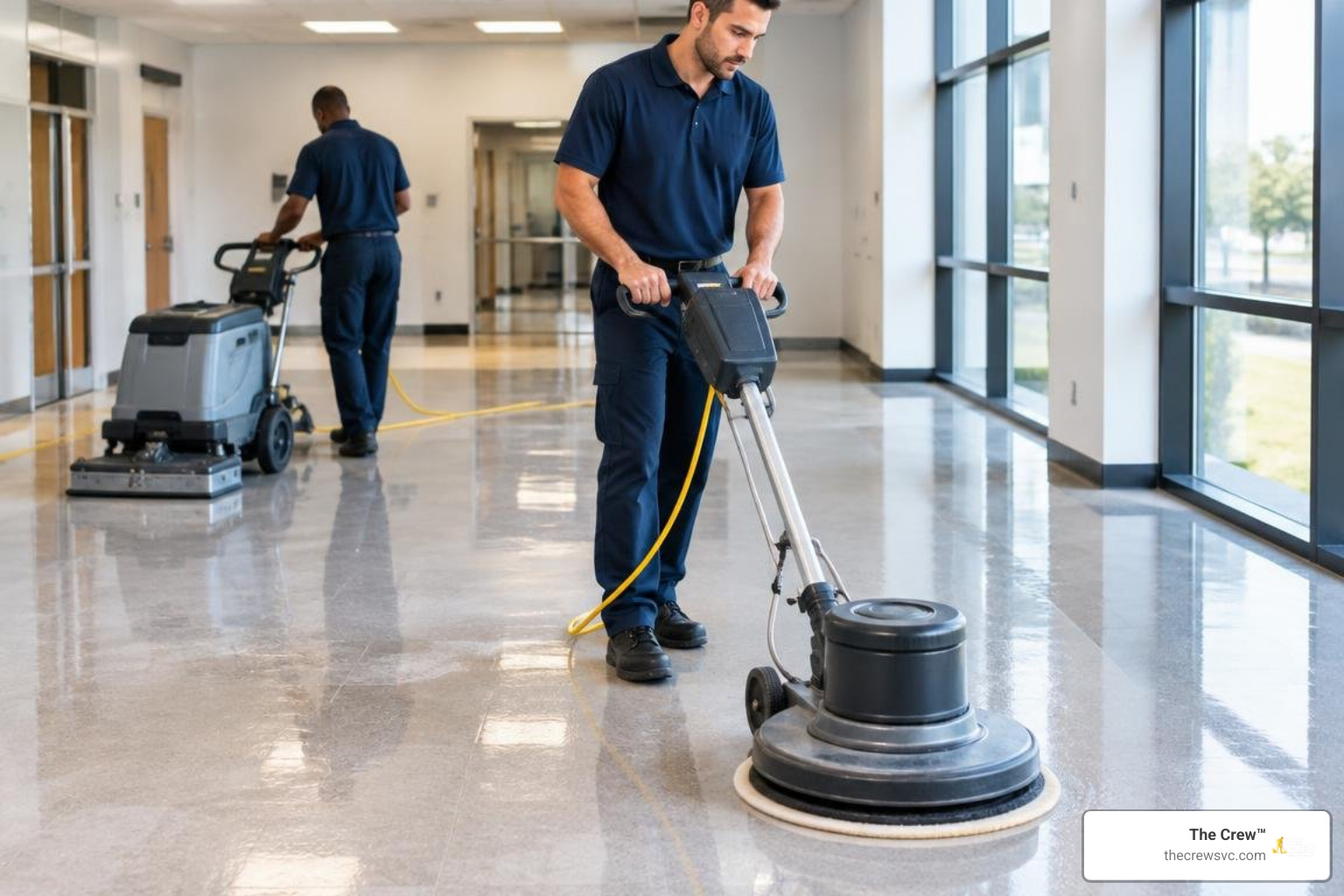
Auto-scrubbers with cylindrical brushes agitate tile texture, lifting grease out of the valleys while simultaneously vacuuming the dirty suspension away. Resilient surfaces like VCT require routine application of high-solid finishes to protect the substrate from direct abrasion. When wax begins to yellow, degrade, or trap soil, a systematic strip-and-wax cycle strips away old coatings down to the raw vinyl, followed by multiple coats of durable floor finish.
For facilities struggling with discolored walkways, implementing professional commercial tile and grout cleaning restores original grout lines, while utilizing specialized ceramic tile cleaners ensures long-term slip prevention and hygiene.
Hardwood and Low-Moisture Carpet Care
Commercial wood flooring and low-pile carpet tiles require strict moisture management. Saturated moisture causes hardwood planks to cup, warp, and split along the seams, while over-wet carpets develop mold, mildew, and adhesive breakdown beneath the backing.
For commercial hardwoods, low-moisture cleaning techniques paired with dry-compound orbital scrubbers remove surface grime without wetting the wood grain. When high-traffic lanes show minor surface scratching, mechanical screening removes micro-abrasions before applying a high-durability polyurethane topcoat.
Facility managers can learn how to polish hardwood floors correctly to avoid damaging factory warranties. When heavy wear appears in corporate boardrooms or boutique storefronts, scheduling dedicated hardwood floor cleaning services preserves the natural grain and extends the lifespan of the installation.
Core Levels of Commercial Floor Service: Routine, Deep Cleaning, and Restoration
A comprehensive floor care program is divided into three distinct operational tiers: routine daily care, periodic deep scrubbing, and restorative resurfacing. Understanding how these levels interact prevents premature floor replacement and controls operational budgets.
Daily and Weekly Routine Maintenance
The core goal of routine maintenance is soil containment. Fine sand, road salt, and particulate grit act like microscopic sandpaper under pedestrian foot traffic, grinding away top protective coatings.
- High-Performance Walk-Behind Scrubbers: Clean large square footages consistently with controlled water delivery and immediate vacuum recovery.
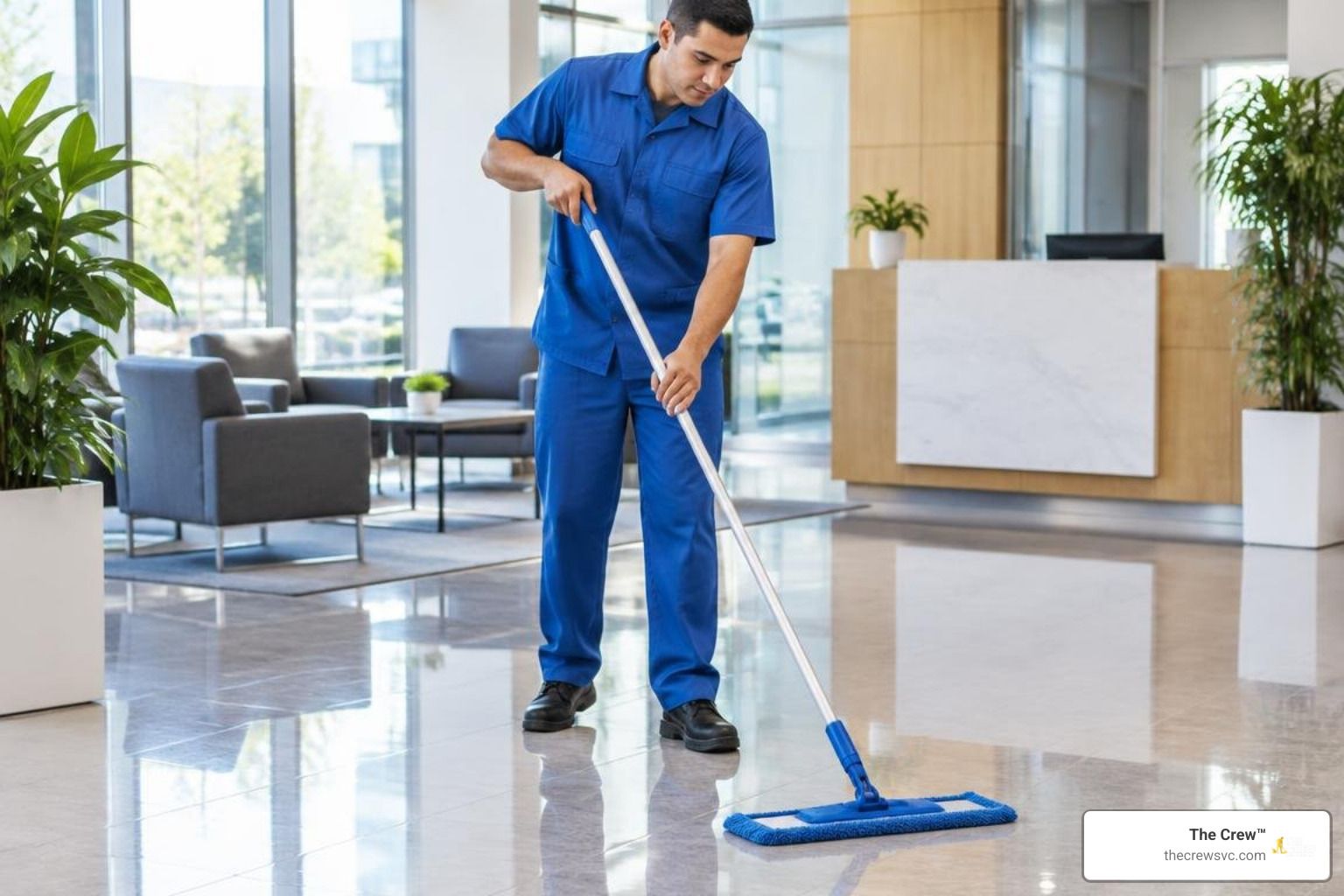
- Microfiber Dust Mopping: Traps fine dry particles using static electricity rather than scattering them into the air.
- High-Traffic Lane Sweeping: Keeps exterior dirt from penetrating beyond facility entrance zones.
- Preventive Matting Strategy: Placing 12 to 15 feet of scraper and wiper walk-off matting at every exterior entrance captures up to 85% of soil before it touches interior floors.
Periodic Deep Cleaning and Surface Scrubbing
Even diligent daily mopping allows microscopic soil layers to bond with floor finishes over time. Periodic deep cleaning utilizes heavy rotary buffing machines and aggressive low-moisture bonnet extraction to strip away embedded grime.
In industrial entries, food-service corridors, and loading docks, periodic chemical degreasing cuts through bonded oils and animal fats that auto-scrubbers miss. Pairing interior deep scrubbing with seasonal exterior commercial pressure cleaning eliminates the grease, salt brine, and grime tracked inside from walkways and parking structures.
Complete Restoration and Resurfacing
When the underlying substrate suffers physical damage, deep gouging, severe chemical etching, or years of neglected wax buildup, simple scrubbing is no longer sufficient. Complete restoration renews the structural integrity of the floor.
Restoration includes mechanical diamond grinding to level uneven concrete joints, applying heavy-duty 100% solids epoxy coatings, or laying down urethane topcoats designed for chemical resistance. In industrial logistics centers, this process includes warehouse aisle safety stripping to repaint faded safety pathways and staging markers, maintaining clear compliance with OSHA safety standards.
Industry-Specific Floor Care and Facility Protocols
Different operational environments face wildly divergent environmental hazards, sanitation rules, and operational schedules. A one-size-fits-all cleaning approach leads to ruined floors, failed health inspections, or slip-and-fall incidents.
For specialized spaces such as workout studios, sports complexes, and heavy assembly areas, following recognized commercial rubber flooring standards ensures high-impact surfaces remain resilient, odor-free, and slip-resistant.
Industrial Warehouses and Manufacturing Facilities
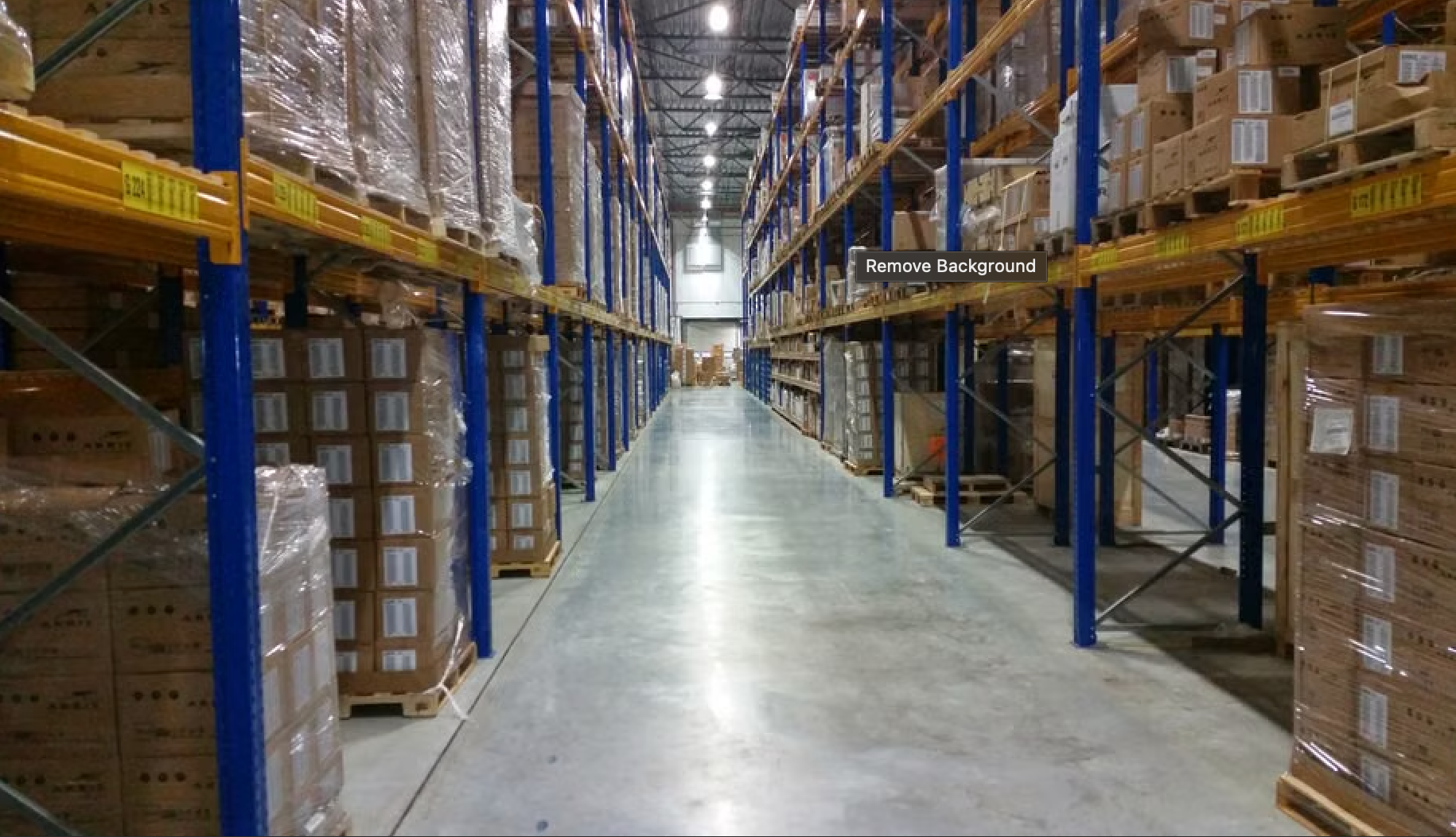
Distribution centers in Aurora, Commerce City, and Brighton experience non-stop friction from heavy machinery. Forklift tires leave stubborn black rubber marks, while internal combustion equipment and hydraulic lines deposit fine films of heavy oils.
Healthcare Facilities and Medical Suites
Medical clinics, surgical suites, and outpatient centers across Denver, Broomfield, and Centennial operate under strict infection control standards. Flooring in these settings must be completely non-porous, perfectly sealed at the baseboards, and chemically sanitized without leaving sticky, chemical-attracting films.
Technicians use EPA-registered, hospital-grade broad-spectrum disinfectants combined with single-use microfiber pads for each isolated zone. This prevents cross-contamination between patient exam rooms, waiting lounges, and sanitized procedure areas while complying with healthcare accreditation standards.
Retail Stores and High-Volume Restaurants
Restaurants, grocery stores, and high-foot-traffic retail spaces in Lakewood and Highlands Ranch face high slip-and-fall risks. Kitchen areas generate airborne cooking grease that coats nearby dining floors, while main retail corridors suffer severe surface dulling from grit tracked in by customers.
Technicians use enzymatic cleaners to digest animal fats and vegetable oils in kitchen zones. In customer-facing retail corridors, high-speed propane burnishing (2,000+ RPM) hardens the floor finish and produces a brilliant, high-gloss shine that makes merchandise displays pop while maintaining high static coefficient of friction (SCOF) ratings for customer safety.
Key Criteria for Evaluating Professional Floor Care Contractors
Selecting a reliable commercial floor service partner protects your property's valuable interior assets. Facilities should look for proven operational standards, verifiable safety compliance, and commercial-grade machinery.
Equipment Capabilities and Green Cleaning Options
A professional floor service provider must maintain equipment suited to diverse facility architectures:
- Propane vs. Electric Machinery: Propane planetary grinders provide high torque and self-contained power for massive distribution centers, while electric and battery-powered scrubbers eliminate fumes inside enclosed office suites and medical facilities.
- HEPA Filtration Dust Containment: Restorative dry grinding requires certified industrial vacuums with multi-stage HEPA filtration to capture 99.97% of silica dust down to 0.3 microns.
- Low-VOC & Green Chemistry: Environmentally conscious facilities benefit from Green Seal-certified detergents, zero-VOC penetrants, and bio-enzymatic degreasers that protect local indoor air quality without sacrificing cleaning strength.
- Low-Moisture Extraction: Modern equipment utilizes low-water delivery systems that shorten carpet and hard surface dry times to under an hour, dramatically reducing slip hazards.
What to Expect from a Full-Scope Commercial Floor Service
When hiring a comprehensive janitorial and floor care contractor, look for these quality assurance protocols:
- Initial Site Assessment: A complete walkthrough to inspect every floor substrate, measure square footage, map out high-traffic zones, and identify existing material degradation.
- Site-Specific Scope Documentation: A clearly written document detailing the chemical formulations, machinery, dwell times, and mechanical pad grits chosen for each area.
- Digital Work Order Tracking: Advanced facility management reporting that provides time-stamped proof of service, photographic before-and-after records, and immediate escalation channels.
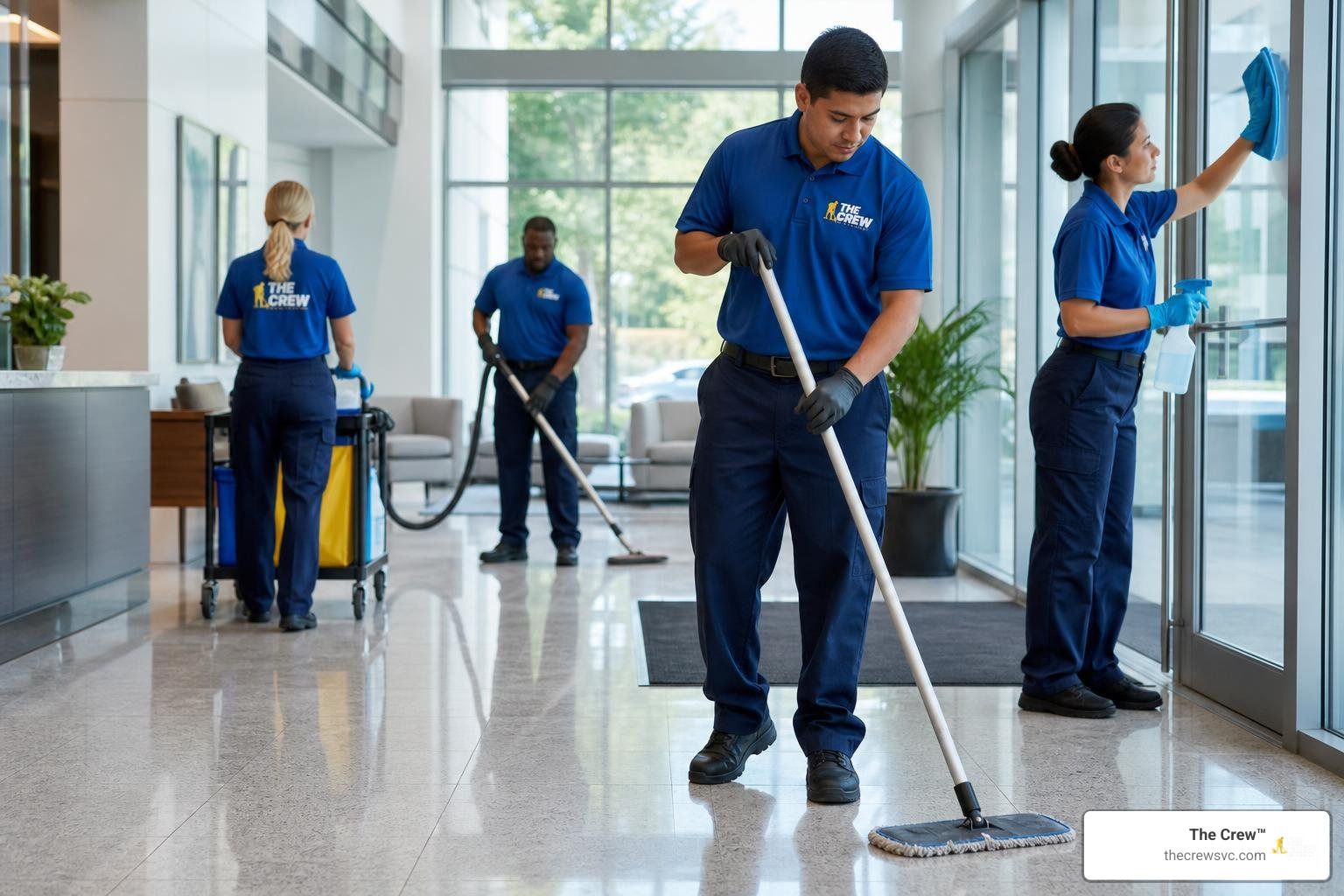
- Vetted, Background-Checked Staff: At The Crew™, we hire and retain top, background-checked cleaners and maintain a 0% turnover rate. This ensures the same trusted professionals service your facility week after week, providing consistent security and performance.
How to Request a Quote for Commercial Floor Service
To get an accurate, binding quote from a floor service provider, gather this information before scheduling a site review:
- Exact Floor Types: Specify your substrates (e.g., polished concrete, standard VCT, porcelain tile, low-pile carpet tiles).
- Square Footage per Substrate: Break down rough dimensions of main work corridors, private offices, storage areas, and restrooms.
- Historical Maintenance Records: Note when floors were last stripped, waxed, sealed, or deep-extracted.
- Facility Access & Scheduling Constraints: Determine if work must be completed during overnight shifts, weekends, or phased sections during operational hours.
- Current Problem Areas: Highlight deep scratches, chemical stains, cracked grout joints, or areas suffering from chronic moisture intrusion.
Frequently Asked Questions About Commercial Floor Services
How often should high-traffic commercial floors undergo deep cleaning?
High-traffic commercial floors should undergo professional deep cleaning every 3 to 6 months, while low-traffic areas can be serviced annually. However, high-volume retail entries, school hallways, and restaurant service paths in the Denver metro area often need deep scrubbing quarterly to remove tracked-in winter road salts and spring mud.
What eco-friendly options are available for commercial floor care?
Modern commercial floor care features extensive green options, including Green Seal-certified neutral cleaners, bio-based floor finishes, enzyme-driven grease removers, and zero-VOC concrete densifiers. Additionally, chemical-free mechanical cleaning using orbital diamond-impregnated pads allows technicians to clean and polish hard surfaces using only clean water.
How can a business schedule floor care without disrupting operations?
Providers maintain flexible off-hours service windows, including night and weekend execution. Contractors can also use phased sectioning—barricading one zone at a time while leaving alternative pedestrian corridors open—and deploy low-moisture cleaning technology with rapid-drying air movers so floors are ready for traffic in 30 to 60 minutes.
Conclusion
Well-maintained commercial floors elevate your brand image, improve employee productivity, prevent dangerous slip-and-fall injuries, and protect foundational flooring assets.
Whether you operate a warehouse in Commerce City, a medical office in Broomfield, or a retail boutique in Golden, working with a dependable janitorial provider ensures your surfaces stay spotless and safe throughout the year.
The Crew™ delivers consistent, high-standard floor care across Aurora, Denver, Lakewood, Brighton, Longmont, Westminster, Henderson, Centennial, Parker, Englewood, Wheat Ridge, Littleton, Arvada, Erie, and Highlands Ranch. With our permanent, background-checked cleaning staff, you can rely on dependable service every single visit.
Contact us today to review our complete commercial floor service programs and discover how our regional commercial floor maintenance keeps your facilities running safely and looking their absolute best.