Why Commercial Pressure Cleaning Matters for Your Business
Commercial pressure cleaning is the use of high-pressure water — sometimes combined with heat or cleaning solutions — to remove dirt, grime, mold, oil, and other buildup from the exterior surfaces of business properties.
Here's a quick snapshot of what you need to know:
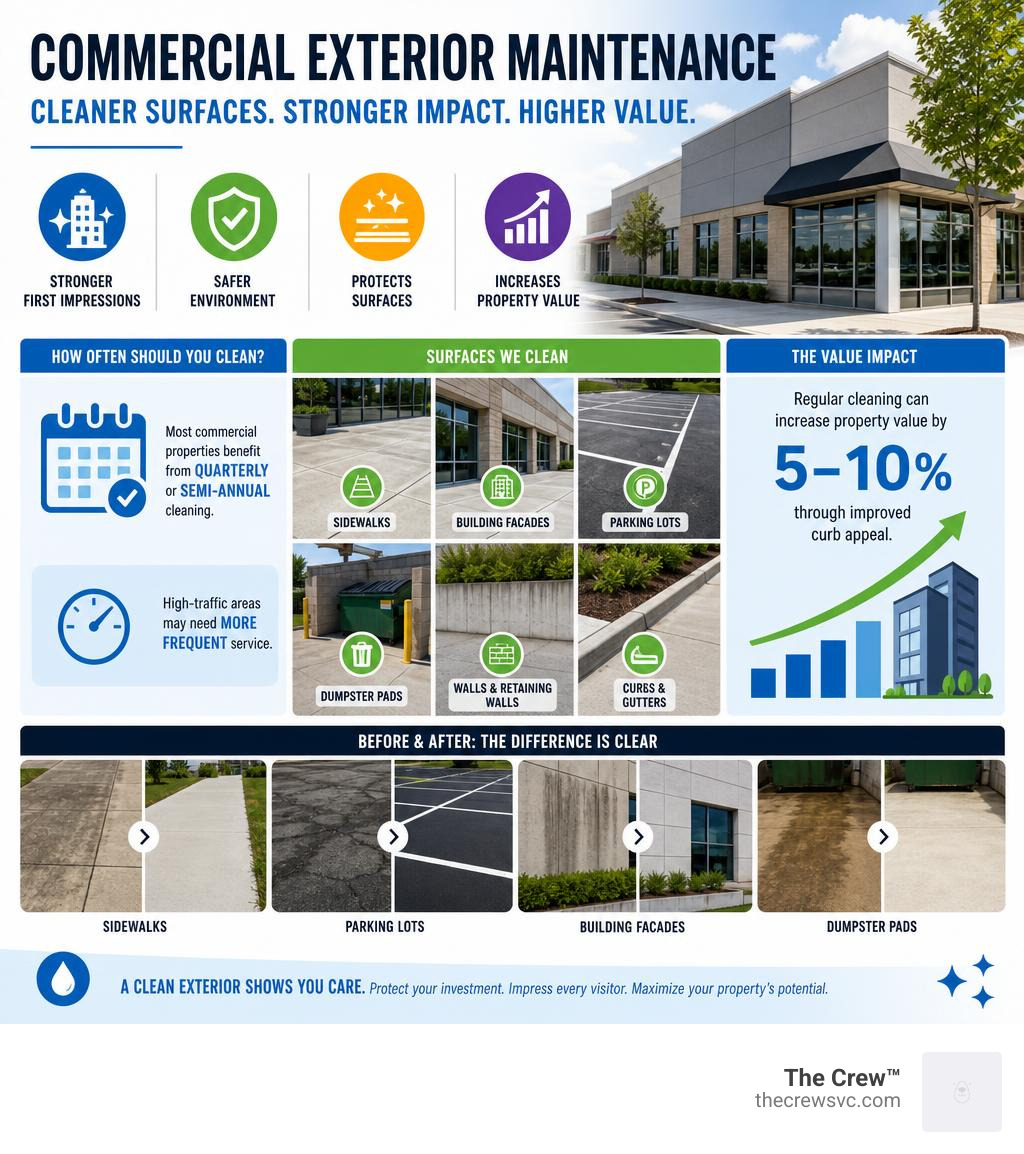
- What it is: High-pressure washing of exterior surfaces like sidewalks, building facades, parking lots, and dumpster pads
- Who needs it: Any business with customer-facing exterior surfaces — retail, restaurants, office buildings, and more
- Why it matters: Dirty exteriors hurt first impressions, create slip hazards, and can cause long-term surface damage
- How often: Most commercial properties benefit from quarterly or semi-annual cleaning, with high-traffic zones needing more frequent service
- Key benefit: Regular cleaning can increase property value by up to 5–10% through improved curb appeal
The exterior of your building is the first thing customers, tenants, and partners see. Before they walk through your door, they've already formed an impression. A grimy facade, stained sidewalk, or algae-covered parking lot quietly signals neglect — even if everything inside is spotless.
And in a climate like Denver's, with freeze-thaw cycles, spring mud, and summer dust, exterior surfaces take a beating year-round. That buildup isn't just ugly. Over time, it can damage surfaces, create safety hazards, and cost far more to fix than it would have to prevent.
My name is Carlos Castillo II, owner of The Crew Janitorial — a family-run commercial cleaning company serving the Denver Metro Area since 1982. While our roots are in interior facility cleaning, commercial pressure cleaning is a natural extension of what we've always believed: that a clean, well-maintained property protects your investment and reflects your professionalism.
What Is Commercial Pressure Cleaning?
To understand how this service keeps your property in peak condition, we have to look beyond a simple garden hose and spray nozzle. It is a highly engineered cleaning method designed to tackle the toughest industrial-grade pollutants that accumulate on commercial properties.
Defining Commercial Pressure Cleaning
At its core, commercial pressure cleaning is a specialized property maintenance service that uses mechanical sprayers to direct high-pressure water streams onto stubborn grime. It is the most efficient and cost-effective way to strip away years of accumulated dirt, atmospheric soot, bird droppings, oil stains, and organic growth like mold or mildew from hard exterior surfaces.
Unlike standard cleaning methods, professional exterior maintenance is engineered to cover massive surface areas quickly while ensuring deep cleaning penetration. This process is essential for maintaining building materials and preventing the decay of masonry, concrete, and metal structures. For a broader look at how this fits into your overall facility care strategy, you can read Everything You Need to Know About Professional Property Cleaning.
Whether you manage an office building in Westminster or a retail hub in Commerce City, hiring a professional commercial cleaning company to handle your exterior surfaces keeps your real estate investment secure and visually appealing.
Commercial vs. Residential Pressure Washing
Many business owners wonder if they can simply rent a home-use pressure washer or have their internal maintenance staff spray down the sidewalks. While that might work for a small backyard patio, commercial properties present entirely different challenges that residential-grade machinery cannot handle.
The difference lies in three key factors:
- PSI (Pounds per Square Inch) and GPM (Gallons per Minute): Residential pressure washers typically operate between 1,000 and 3,000 PSI with a water flow of 1.5 to 2.5 GPM. Commercial-grade equipment regularly operates at customized pressures up to 4,000 PSI or higher, combined with a flow rate of 4 to 8 GPM. Water volume (GPM) is actually what flushes away the dirt; low water volume simply moves the grime around slowly.
- Hot Water Capability: Most residential machines only use cold water. Commercial power washing systems feature heavy-duty, on-board water heaters that raise water temperatures to over 200°F. This heat is essential for melting away grease, chewing gum, and automotive fluids.
- Duty Cycle and Durability: Residential units are built for occasional use. Professional-grade commercial machinery is designed to run continuously for hours on end, featuring triplex plunger pumps and rugged engines that can handle large-scale parking garages, warehouse floors, and multi-story building envelopes without failing.
Key Benefits and Target Surfaces for Businesses
Investing in regular exterior washing yields measurable financial and operational advantages. It is not just an aesthetic luxury; it is a smart business decision.
Surfaces and Areas Included in Professional Cleaning
A comprehensive commercial exterior wash doesn't stop at your front doors. Professional services cover every inch of your property's exterior. Key target zones include:
- Sidewalks and Walkways: High-traffic footpaths quickly collect spilled drinks, discarded chewing gum, and mud. Keeping these areas clean is a vital part of The Complete Checklist of Commercial Cleaning Services that every facility manager should follow.
- Parking Lots and Garages: Oil drips, tire skid marks, and road salt accumulate fast. Regular maintenance prevents these contaminants from eroding asphalt or concrete binding agents. If your business is located in Brighton, booking professional commercial power washing and surface cleaning can keep your parking structures pristine.
- Dumpster Pads: The area surrounding your waste bins is a breeding ground for bacteria, pests, and foul odors. Regular hot-water washing is required to sanitize the concrete and wash away leaked liquids.
- Building Facades and Storefronts: From brick and stucco to metal siding and glass, building envelopes collect dust and pollution. For properties in the eastern metro area, scheduling professional pressure washing ensures your storefront remains bright and welcoming.
- Loading Docks and Entryways: Heavy machinery and delivery trucks leave behind soot, carbon buildup, and grease. Keeping these zones clean preserves safety and structural integrity, which is why property managers often rely on professional pressure washing services to keep their industrial zones spotless.
The Risks of Neglecting Exterior Maintenance
Skipping regular exterior cleanings might seem like an easy way to trim your monthly budget, but neglect carries steep consequences. Over time, dirt and biological growth act like sandpaper against your building's surfaces. Mold, mildew, and algae feed on minerals in concrete and brick mortar, slowly weakening the structural integrity of your walls and walkways.
Furthermore, neglected surfaces present serious liability risks. When algae, moss, or grease build up on walkways, they become incredibly slick when wet. A single slip-and-fall accident on your property can result in costly legal battles, rising insurance premiums, and damage to your brand's reputation.
To illustrate the financial impact, consider this comparison of proactive maintenance versus reactive repair costs:
| Maintenance Approach | Average Annual Cost | Potential Long-Term Consequences & Costs |
|---|---|---|
| Proactive Regular Cleaning | Low to Moderate | Preserves surfaces; extends paint life by 3–5 years; keeps slip-and-fall risks near zero. |
| Neglect & Reactive Repair | High (5x to 10x more) | Mortar decay, premature repainting, concrete cracking, dumpster pad odor fines, and slip-and-fall lawsuits. |
Equipment, Techniques, and Operational Safety

Operating heavy-duty washing equipment requires specialized training, strict adherence to safety protocols, and a deep understanding of surface chemistry.
Hot Water vs. Cold Water Power Washing
When it comes to shifting tough stains, water temperature is everything. Cold water pressure washing is excellent for removing loose dirt, sand, and peeling paint. However, when faced with petroleum-based oils, grease, or heavy organic buildup, cold water simply pushes the mess around.
Hot water pressure washing (often called power washing) is proven to be three times more effective than cold water on commercial grime. Operating at temperatures above 200°F, hot water breaks down grease and oils at the molecular level — much like hot water dissolves grease when washing dishes. Additionally, the extreme heat kills up to 90% of bacteria and biological spores during the cleaning process, sanitizing dumpster pads and food service areas without relying solely on harsh chemicals.
For facilities with heavy grease or industrial soot, hot-water washing is a cornerstone of deep sanitation. You can learn more about these heavy-duty methods in The Ultimate Industrial Cleaning Guide.
Eco-Friendly Solutions and Water Reclamation
We cannot talk about commercial pressure cleaning without discussing the environment. Blasting pollutants off a sidewalk means that dirty water has to go somewhere.
Professional cleaning companies must comply with strict local environmental regulations and Clean Water Act standards. Untreated wash water containing oils, heavy metals, and chemicals is legally prohibited from entering storm drains, which lead directly to local waterways.
To protect our Colorado environment, we employ several eco-friendly practices:
- Biodegradable, Citrus-Based Detergents: We use cleaning solutions made from natural citrus extracts. These detergents naturally break down mold, mildew, and moss while remaining completely safe for nearby landscaping, pets, and people.
- Water Reclamation Systems: For heavy industrial cleanups, we use specialized surface cleaners equipped with vacuum recovery systems. These systems capture the dirty wash water as we clean, filtering out solids and contaminants so the water can be safely discharged or recycled.
- Low-Water Techniques: By combining high heat with optimized pressure, we use far less water than untrained operators using cold-water systems.
If you are managing a facility in Henderson or surrounding areas, working with providers who understand these ecological balances ensures your business stays fully compliant with local environmental laws.
Scheduling and Choosing a Partner for Commercial Pressure Cleaning

Maintaining your property shouldn't come at the cost of your daily business operations. Managing the logistics of an exterior deep clean requires careful scheduling and the right professional partner.
Recommended Cleaning Frequencies by Industry
How often should you wash your property? There is no one-size-fits-all answer. The ideal frequency depends on your industry, foot traffic, and exposure to the elements.
- Restaurants and Food Service: High-traffic drive-thrus, loading docks, and dumpster pads should be pressure washed monthly or quarterly to control grease buildup, eliminate pest-attracting odors, and maintain health department standards.
- Retail Centers and Strip Malls: High-traffic entryways and main sidewalks benefit from quarterly or seasonal cleanings to wash away spilled drinks, gum, and seasonal mud.
- Office Buildings and Corporate Parks: Building facades, window frames, and main walkways typically need a deep clean semi-annually or annually, usually in the spring to remove winter road salt and grime.
- Industrial and Warehousing Facilities: Loading docks, heavy equipment zones, and shipping bays should be cleaned every few months to prevent oil and soot accumulation.
For property managers looking to build an efficient year-round maintenance plan, check out our Commercial Cleaning 101 for Property Managers guide.
If your business is located north of Denver, you can easily set up regular service schedules using local experts in Longmont or Westminster to keep your property looking sharp through every season.
How to Select a Reputable Service Provider
When hiring a pressure cleaning company, don't just look for the lowest bid. An untrained operator with a high-pressure wand can easily etch concrete, strip paint, ruin historical brickwork, or flood your building.
When evaluating potential service providers, keep this checklist in mind:
- Licensing and Insurance: Ensure the company carries comprehensive commercial liability insurance and worker's compensation. This protects your business from liability if an accident occurs on-site.
- Flexible, Off-Hours Scheduling: A reputable provider should offer night, early morning, or weekend shifts so that hoses and loud machinery don't disrupt your customers or employees.
- Local References and Proven Experience: Look for companies with established track records in the Denver Metro Area who understand our unique weather patterns and soil types.
- Comprehensive Site Prep and Care: Ask how they protect outdoor lighting, landscaping, and electrical outlets before starting the wash.
To help prepare your facility for a complete top-to-bottom clean, you can reference The Essential Denver Business Deep Clean Checklist to ensure no detail is overlooked.
Frequently Asked Questions
Is pressure washing safe for historic commercial buildings?
Yes, but only when using the correct techniques. Traditional high pressure can easily crumble old mortar, shatter historic bricks, and strip protective coatings. For delicate or historic structures, professional cleaners utilize a technique called soft washing. This method uses low-pressure water streams combined with specialized, gentle detergents to safely dissolve dirt, mold, and algae without putting physical stress on fragile building materials.
Can pressure washing help prepare a building for repainting?
Absolutely. In fact, it is a mandatory step for any successful commercial paint job. Paint requires a clean, stable surface to adhere properly. Pressure washing strips away chalking paint, loose debris, atmospheric dust, and mildew. Without this thorough surface preparation, your new coat of paint will bubble, peel, and fail prematurely.
Do professional cleaners work during off-hours to avoid disruption?
Yes, professional commercial cleaners understand that daytime operations are sacred. Most reputable providers offer highly flexible scheduling, including late-night, early-morning, and weekend shifts. This allows the cleaning crew to set up hoses, run loud machinery, and block off walkways when your business is closed or experiencing low-traffic hours, ensuring zero disruption to your daily operations.
Conclusion
A clean exterior is more than just a visual asset — it is a shield that protects your physical property, preserves your real estate value, and welcomes your customers with professionalism. From the sidewalks of Lakewood to the industrial parks of Commerce City, keeping your business's exterior pristine is an ongoing necessity.
At The Crew, we have spent over four decades perfecting commercial cleaning across the Denver Metro Area. We understand that consistency and trust are the most important things a cleaning partner can deliver. That is why we hire and retain top-tier, background-checked cleaners and maintain a proud 0% turnover rate. When you work with us, you get the same reliable, high-quality results every single time.
Ready to revitalize your property's curb appeal and protect your investment? Schedule professional business cleaning services with us today, and let our family take care of yours.