What to Look for in a Professional Office Cleaning Contractor
Finding the right vendor to maintain your facility requires looking past generic promises and examining daily operational habits. A quality service relationship rests on consistent execution, transparent communication, and dedicated personnel who take pride in their work. When reviewing potential commercial cleaning contractors, you want a partner who approaches your building with a structured management system rather than treating maintenance as an afterthought. Industry standards from organizations such as ISSA emphasize the importance of trained personnel and documented cleaning procedures in commercial environments.
A top-tier contractor establishes clear lines of accountability from day one. You should never have to spend your workday tracking down a supervisor to ask why a conference room was skipped or whether the lobby glass was wiped down. Look for service providers that offer fast communication channels—such as direct supervisor access or dedicated messaging tools with rapid response times—so any minor issue is corrected immediately.
Equally important is employee stability. High cleaner turnover is the single biggest cause of inconsistent janitorial quality in commercial spaces. When a company experiences constant churn, new workers are perpetually learning your building's layout, security codes, and specific preferences through trial and error. A contractor that prioritizes hiring, vetting, and retaining experienced staff ensures the same trusted professionals care for your office week after week.
Key Services Handled by an Office Cleaning Contractor
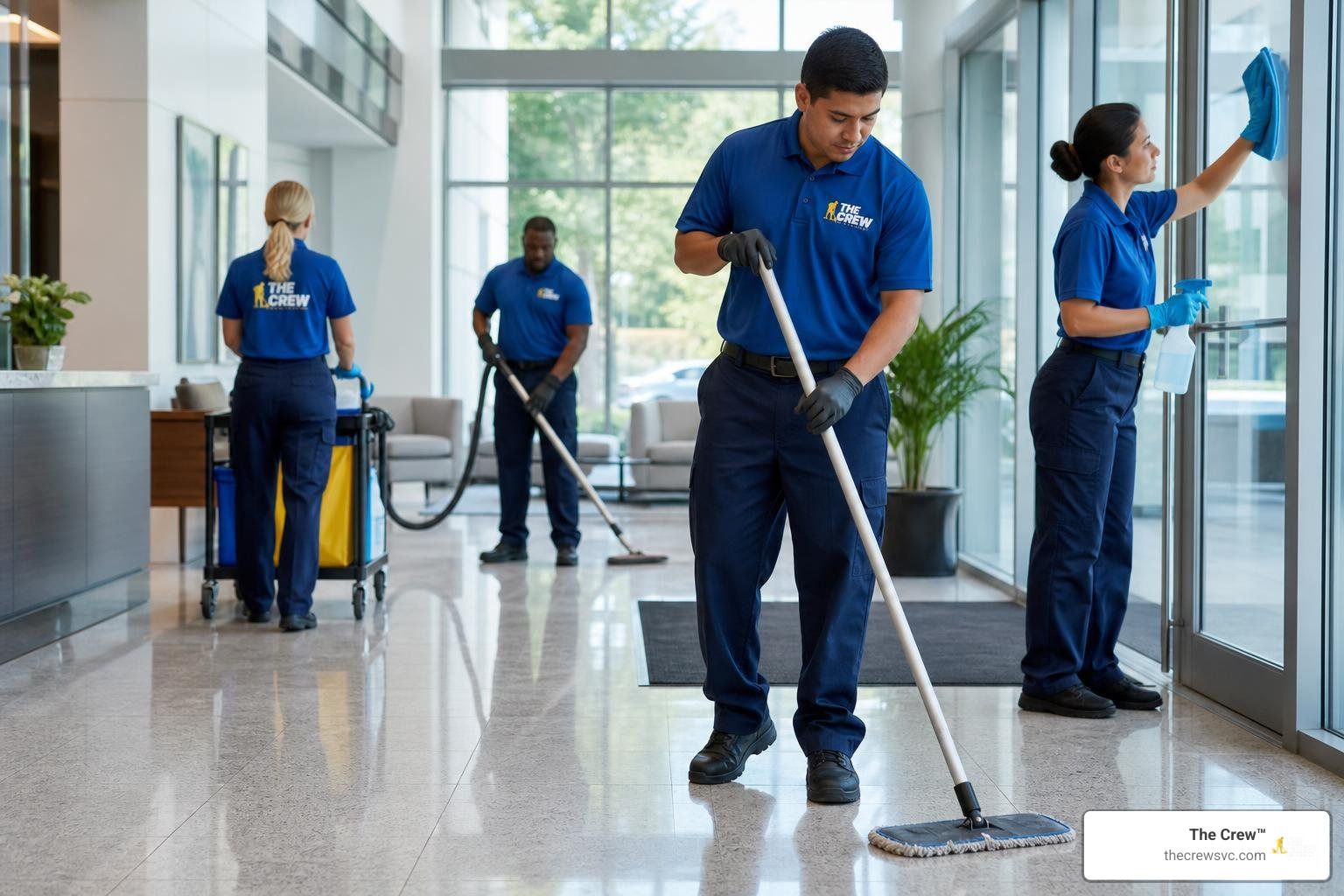
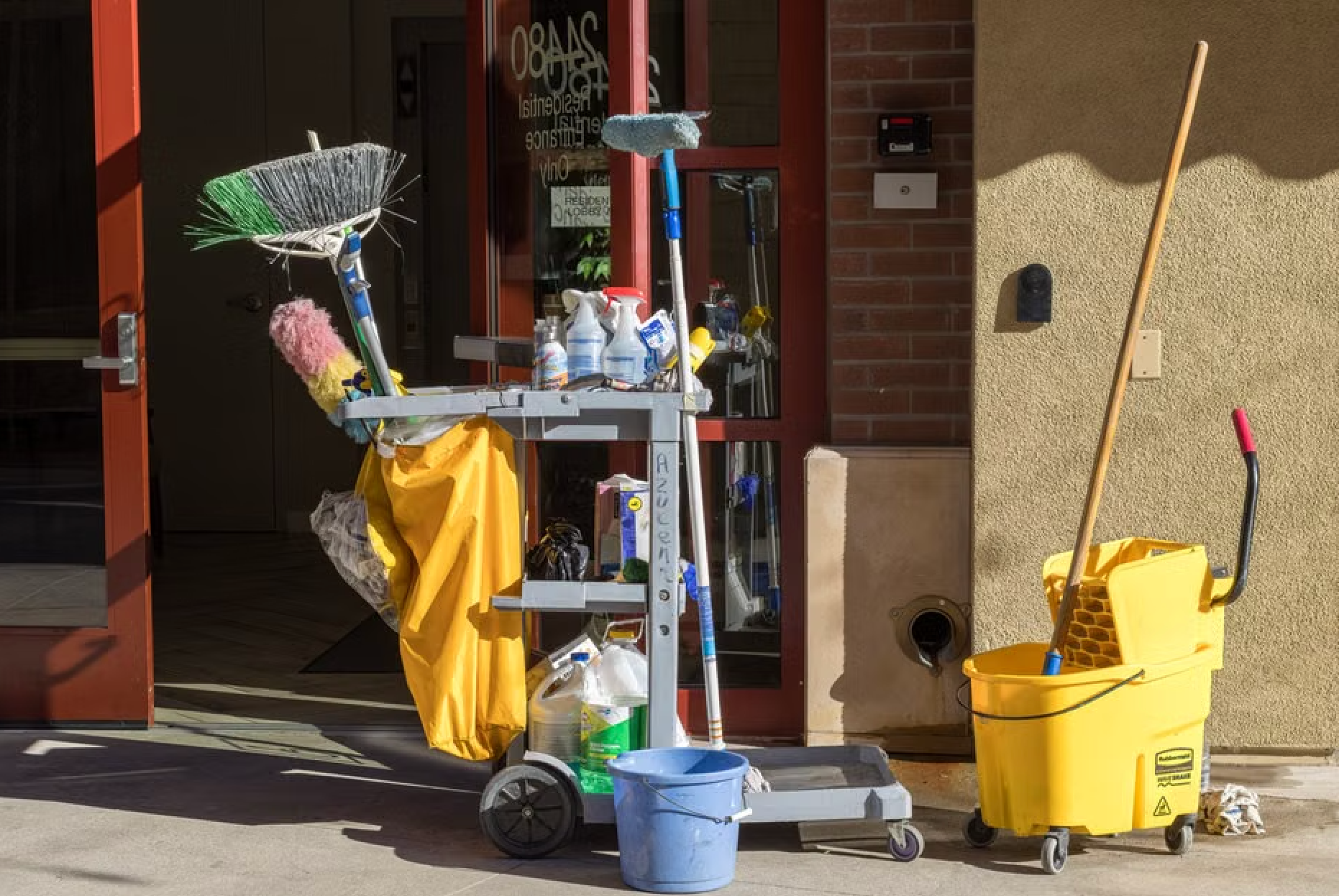
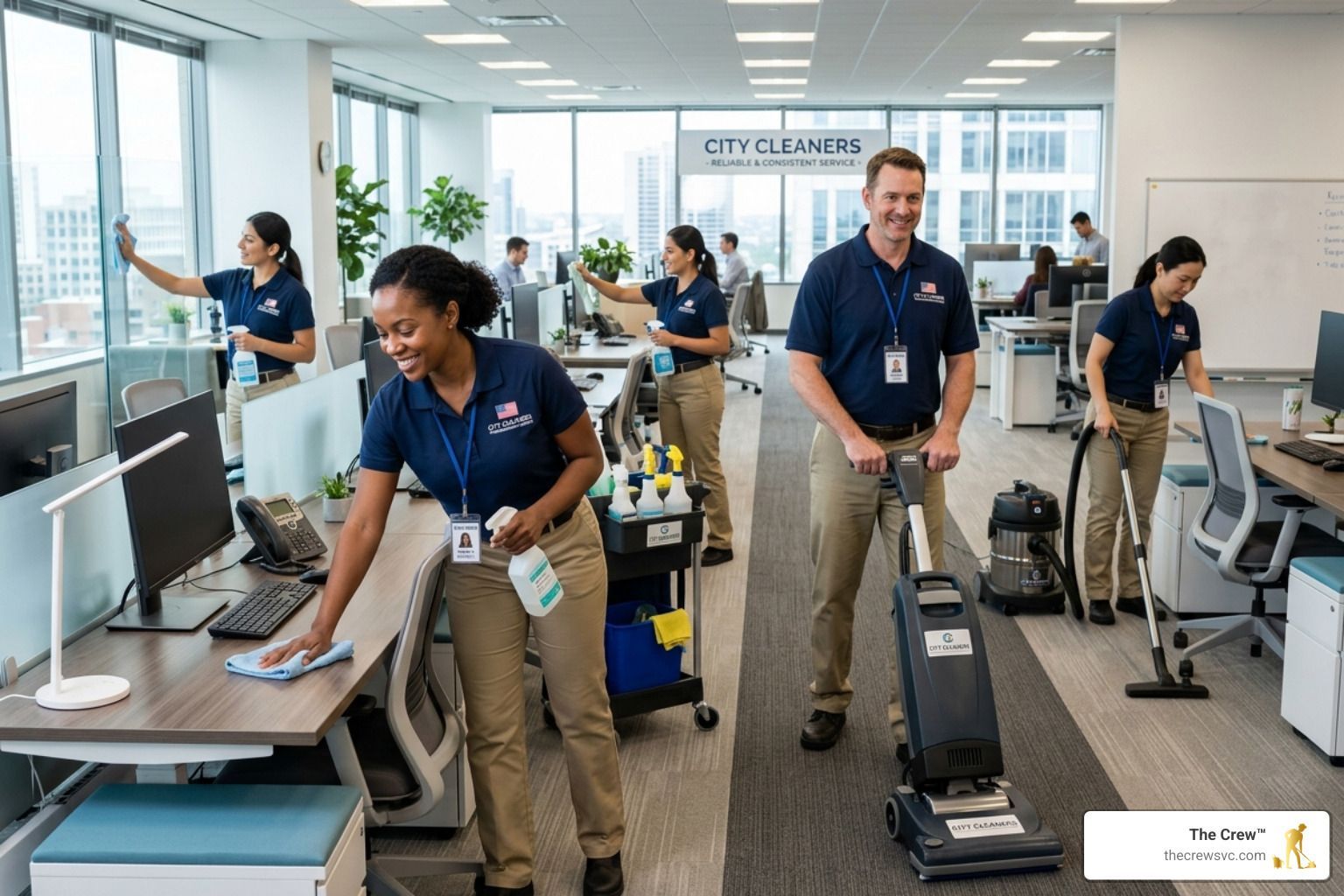
A complete maintenance program addresses every functional zone of your building to support employee health, safety, and brand presentation. Professional business cleaning goes far beyond emptying wastebaskets; it involves systematic hygiene protocols across diverse surfaces:
- Restroom Sanitation: Thorough disinfection of fixtures, sinks, stall partitions, mirrors, and door hardware, paired with the restocking of soap, paper towels, and sanitary supplies.
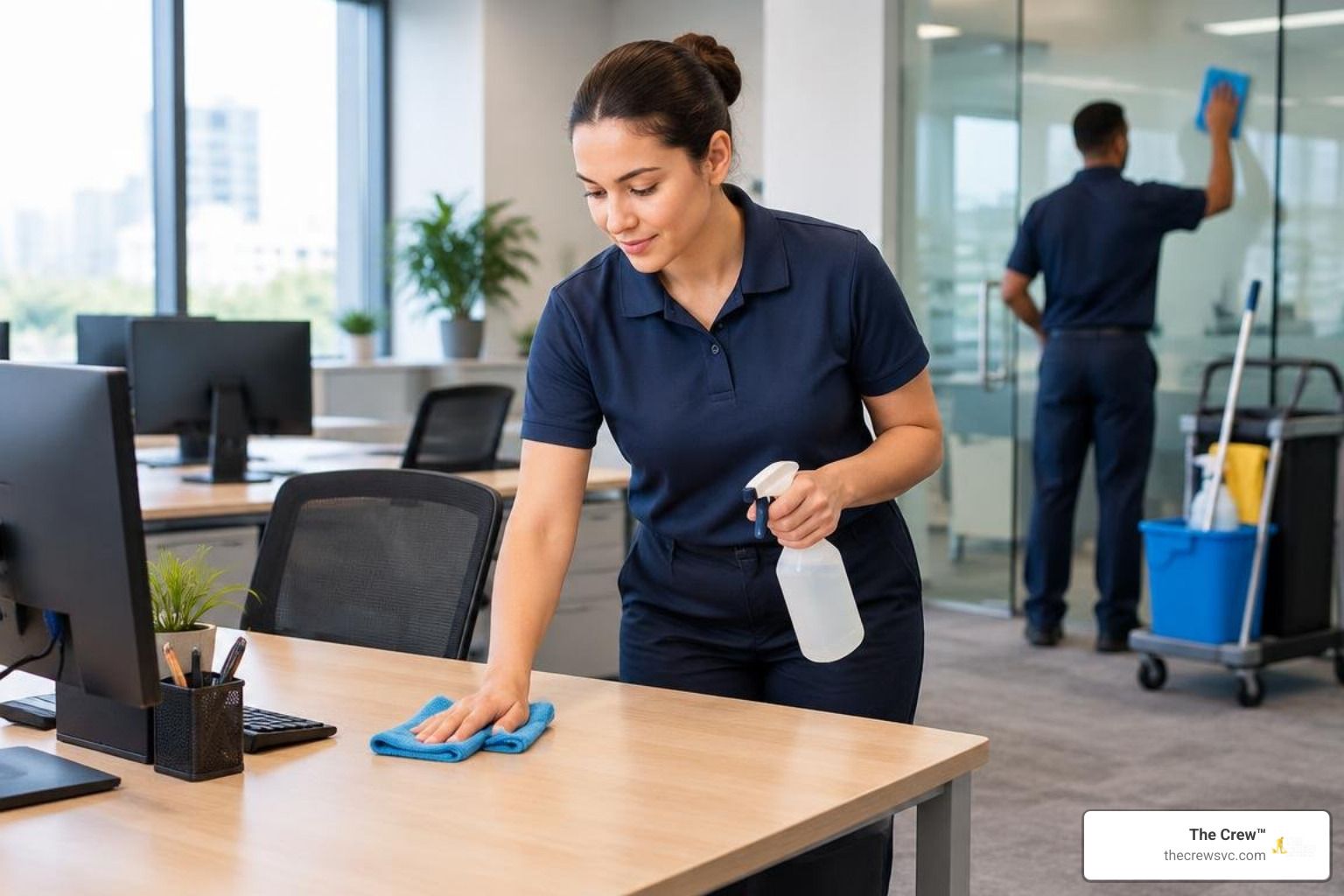
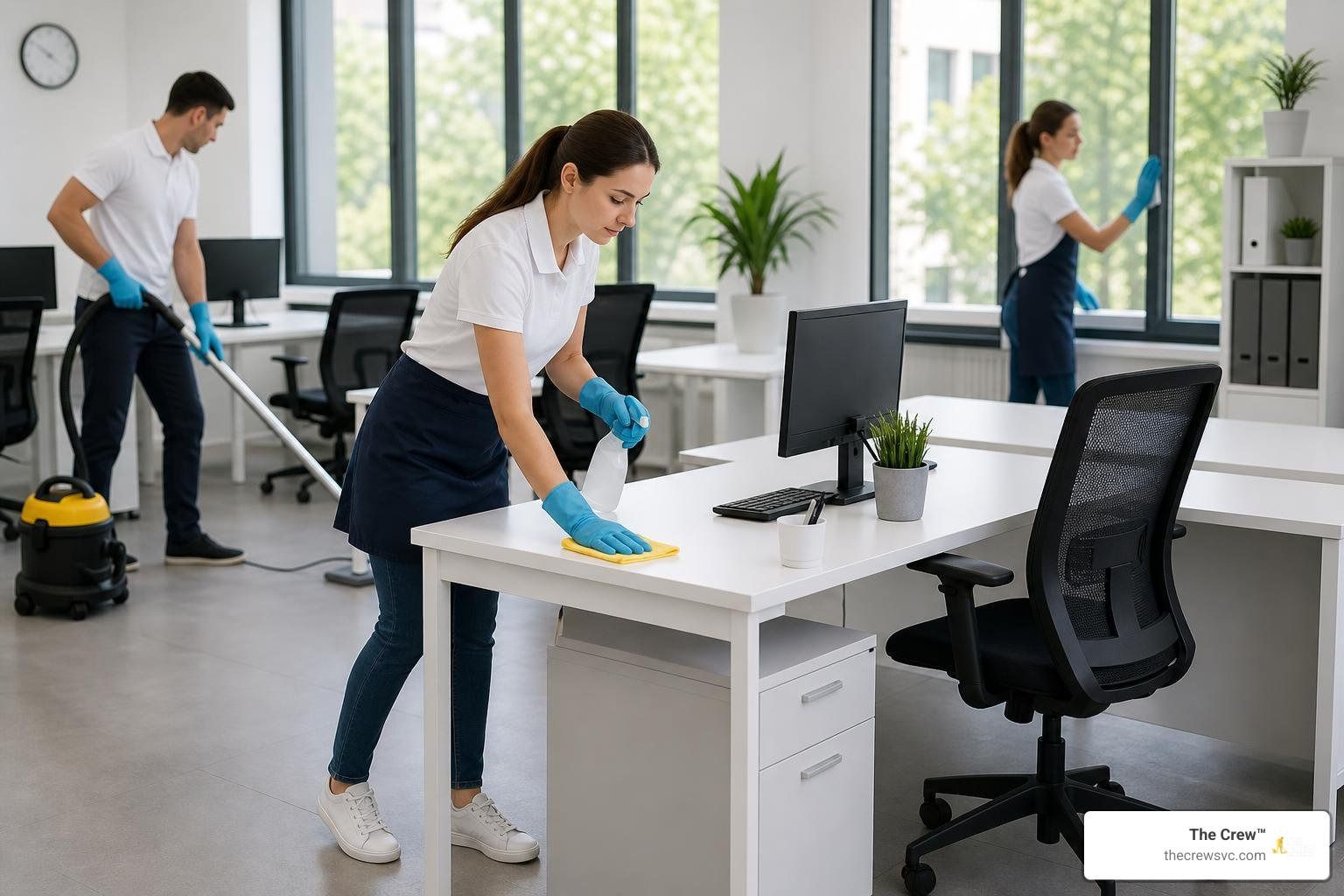
- Surface Disinfection: Wiping down desks, shared workstations, reception counters, and conference tables to control germ transmission.
- High-Touch Sanitization: Routine focus on light switches, elevator buttons, door handles, handrails, and kitchen appliance touchpoints.
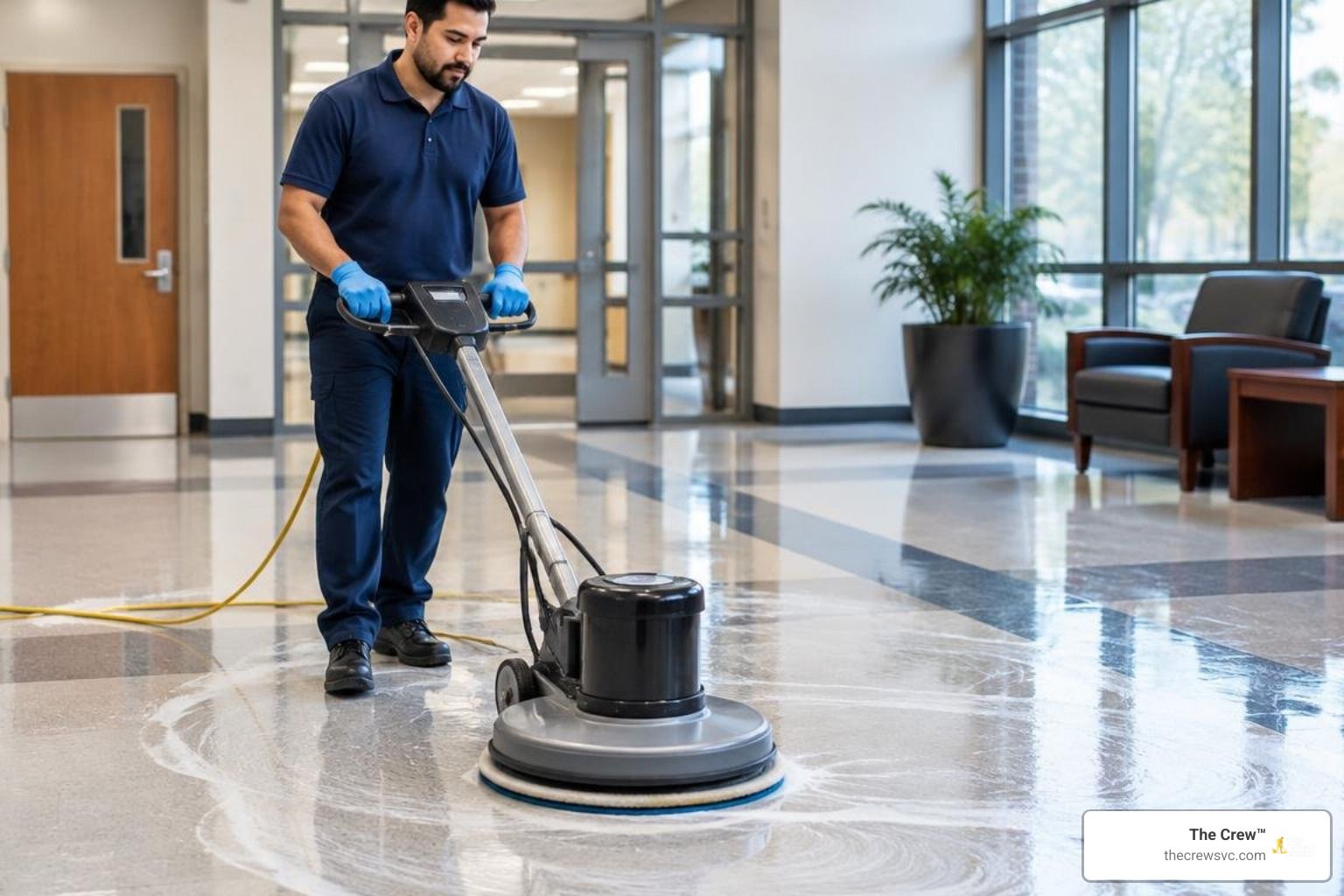
- Floor Care and Carpet Maintenance: Daily or scheduled vacuuming of carpeted spaces, edging, and sweeping, mopping, and periodic scrubbing of hard surfaces like tile, vinyl, or polished concrete.
- Waste and Recycling Management: Emptying all individual and communal bins, replacing liners, and transporting refuse to exterior collection points.
- Breakroom and Kitchenette Care: Sanitizing food prep counters, cleaning sink basins, wiping exterior appliance surfaces, and removing trash to prevent pests and odors.
Day Porter vs. Night Crew Operational Scheduling
Selecting the right schedule depends entirely on how your workplace operates during business hours. Commercial facilities generally balance two operational models—or combine them for maximum coverage through tailored commercial cleaning plans.
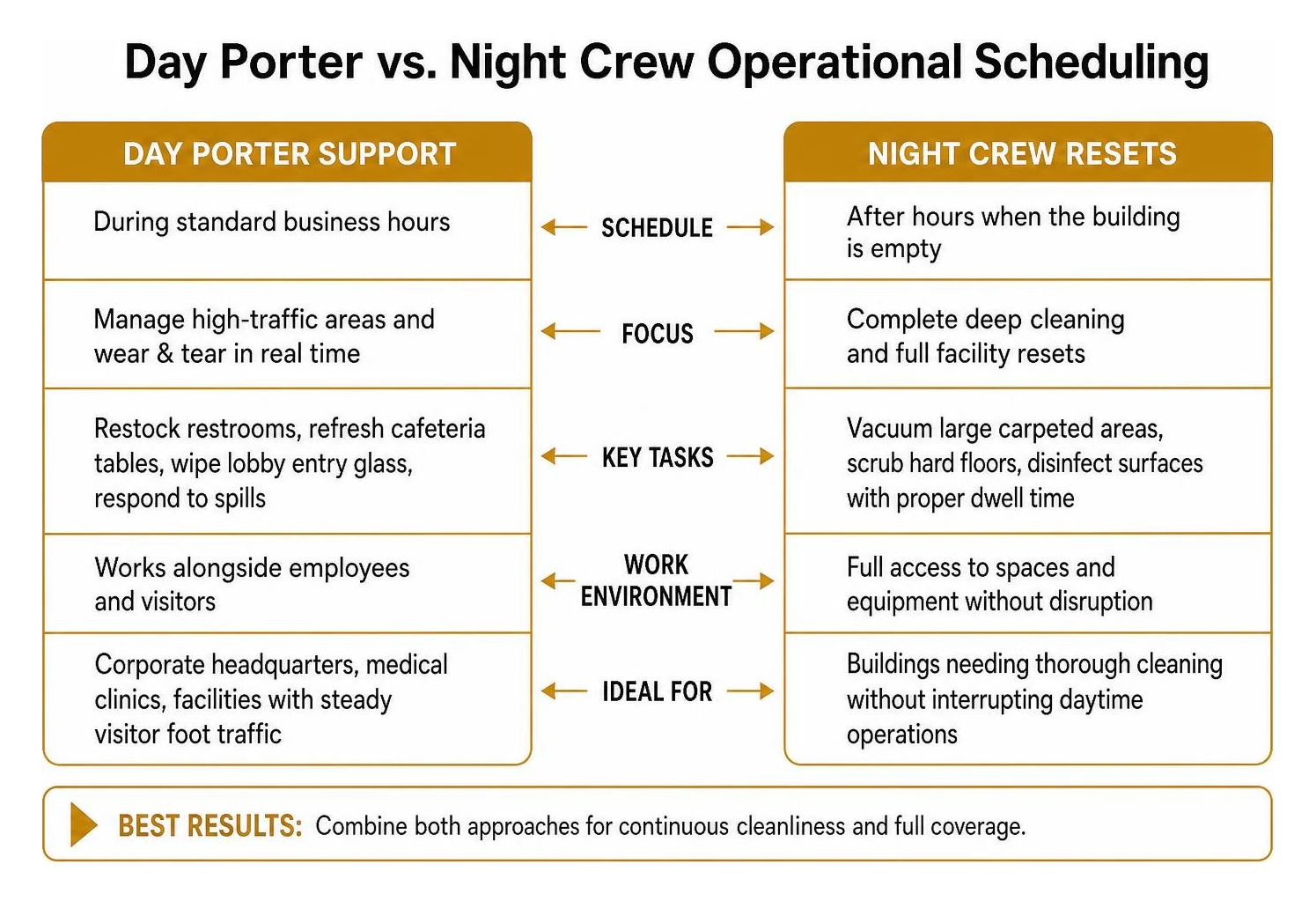
Day porters operate during standard business hours, blending seamlessly into your environment to manage high-traffic wear and tear in real time. They restock busy restrooms, refresh cafeteria tables after lunch rushes, wipe down lobby entry glass, and respond instantly to accidental spills. This approach is ideal for corporate headquarters, medical clinics, and facilities with steady visitor foot traffic.
Conversely, night crews perform comprehensive after-hours resets. Working when the building is empty allows technicians to move freely with heavy-duty equipment, thoroughly vacuum expansive carpeted suites, scrub hard floors, and allow disinfectants the proper dwell time on surfaces without interrupting your team's workflow.
Structuring Clear and Enforceable Service Agreements
A handshake agreement has no place in commercial property management. A formal contract sets realistic expectations, protects both parties legally, and establishes clear standards for quality control. Consulting a comprehensive commercial cleaning contracts guide 2026 will show you that a strong service agreement should clearly define:
- Detailed Scope of Work: A granular task checklist specifying what tasks happen daily, weekly, monthly, or quarterly.
- Access and Security Protocols: Explicit guidelines regarding keys, alarm codes, locking procedures, and designated entry doors. (After all, nobody wants to become an amateur locksmith because a vendor misplaced a master set!)
- Billing Terms and Invoicing: Payment schedules, accepted methods, due dates, and policies regarding late fees or disputed line items.
- Performance Benchmarks and Inspections: Routine audit procedures, supervisor check-ins, and corrective timelines if an area fails an inspection.
- Termination and Dispute Clauses: Clear 30-day or 60-day cancellation terms for both cause and convenience, alongside defined steps for resolving disagreements.
| Agreement Feature | Residential Cleaning Agreement | Commercial Cleaning Contract |
|---|---|---|
| Scope Definition | General room-by-room maintenance | Granular task checklists by zone and frequency |
| Operational Hours | Daytime hours during the week | Flexible scheduling (night crews, weekends, day porters) |
| Insurance Requirements | Basic general liability | Rigorous coverage (GL, Workers' Comp, Auto, Umbrella) |
| Security Clearances | Homeowner key/lockbox access | Strict building access, badge systems, alarm codes |
| Equipment & Chemicals | Standard household supplies | Commercial-grade HEPA equipment, OSHA/SDS-compliant chemicals |
| Cancellation Terms | Short notice (24-48 hours) | Formal written notice (30 to 60 days) |
Essential Licensing, Bonding, and Insurance Coverage
You should never allow an uninsured crew into your building. If a cleaner is injured on your property or a chemical spill damages an expensive surface, an unverified contractor can leave your business exposed to significant financial liability.
Ensure your service provider carries:
- General Liability Insurance: Protects against property damage and bodily injury claims (typically covering at least $1 million per occurrence).
- Workers' Compensation Insurance: Covers medical expenses and lost wages if a cleaning technician is injured on the job, shielding you from workplace injury lawsuits.
- Commercial Property Coverage: Protects the contractor's specialized gear and supplies stored on-site or in transit.
- Business Owner's Policy (BOP): Bundles property and liability protections for small-to-midsize operations.
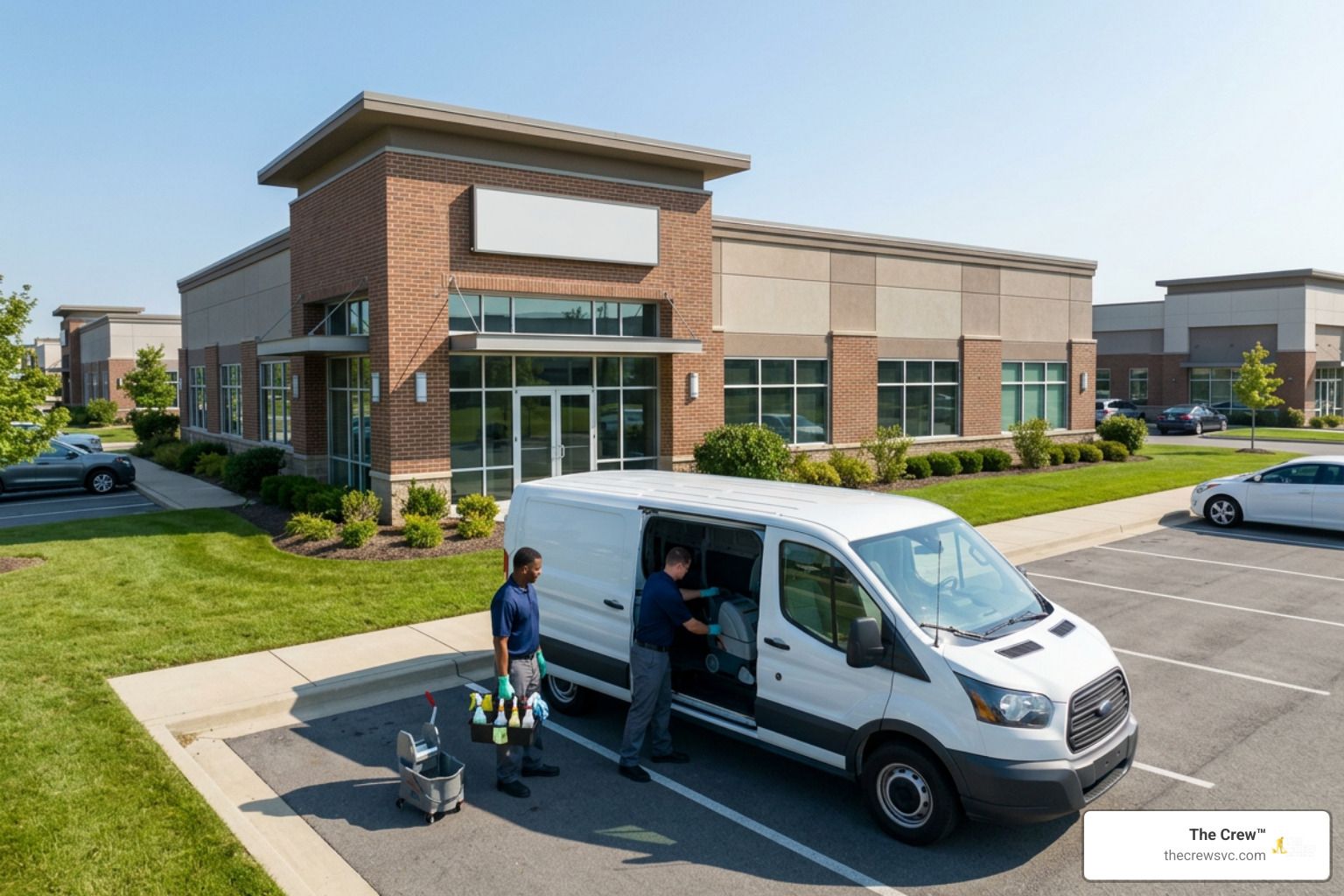
- Commercial Auto & Hired/Non-Owned Auto Insurance: Covers company transport vehicles, vans, and staff personal vehicles used while traveling between job sites.
- Commercial Umbrella Policy: Extends liability limits beyond standard policy caps for larger commercial office buildings.
- Janitorial Bonding: Protects your facility and assets against internal theft or property loss.
Analyzing Cost Models and Facility Estimates
Commercial cleaning rates are never one-size-fits-all. When reviewing bids, referencing our commercial cleaning pricing guide 2026 or analyzing common office cleaning charges helps you understand how contractors calculate estimates.
Estimates are primarily built around:
- Square Footage and Layout: Open-concept floor plans are faster to vacuum and sanitize than segmented layouts with dozens of private executive suites.
- Service Frequency: Daily service lowers the per-visit cost compared to infrequent bi-weekly visits that require heavy restoration.
- Facility Type & Surface Materials: Medical clinics or industrial offices require specialized sanitation chemicals and techniques compared to standard professional suites.
- Consumable Supplies: Clarify whether the proposal includes trash liners, paper products, and hand soaps, or if those are billed separately.
To avoid hidden fees, review our commercial cleaning costs guide 2026 before signing any long-term service agreements.
Strategic Vetting and Sourcing Methods
Finding a dependable janitorial provider requires looking across multiple channels. Many property managers start by searching for reputable office cleaning contracts near me, asking peers in local business networks, or consulting commercial real estate brokers and property managers who oversee large multi-tenant buildings.

Always conduct an on-site walkthrough before accepting a bid. A walkthrough allows the vendor to inspect high-traffic paths, assess restroom plumbing fixture counts, check floor conditions, and ask practical questions about your building's operational rhythms.
How to Vet and Select the Best Office Cleaning Contractor
When narrowing down your options, use this practical vetting checklist:
- [ ] Verify Verified Client References: Speak with current clients who operate facilities similar in size and industry to yours.
- [ ] Inspect Background Check Protocols: Confirm that all technicians undergo rigorous criminal background screenings before being assigned to your property.
- [ ] Evaluate Staff Retention Numbers: Ask about their staff turnover rate; low turnover directly translates to consistent, dependable quality.
- [ ] Review Quality Control Procedures: Ensure field supervisors conduct regular inspections and maintain documented logs of their audits.
- [ ] Confirm Emergency Availability: Make sure the contractor provides rapid-response support for unexpected plumbing leaks, biohazard spills, or urgent sanitization needs.
Frequently Asked Questions About Commercial Cleaning
What is typically included in an office cleaning agreement?
A standard commercial agreement covers dusting surfaces, emptying trash and recycling, sanitizing restrooms, restocking paper and soap products, vacuuming carpets, mopping hard floors, and wiping down high-touch points like door handles and switch plates. Many agreements also include breakroom cleaning and entrance glass maintenance. To evaluate standard inclusions against market pricing, review our overview of commercial cleaning service costs.
What is the difference between commercial and residential cleaning agreements?
Commercial cleaning agreements are tailored for workplaces, medical facilities, and commercial buildings. They require commercial-grade equipment (such as HEPA filtration vacuums and floor scrubbers), strict OSHA and Safety Data Sheet (SDS) compliance, higher liability insurance coverage, and flexible scheduling for night or weekend shifts. Residential contracts focus on standard domestic spaces during daytime hours and carry lower liability coverage requirements.
How are commercial cleaning rates determined in 2026?
Commercial cleaning rates are calculated based on usable square footage, traffic density, frequency of visits, specialized service requests (such as medical-grade terminal cleaning or hard-floor buffing), and labor hours required to complete the scope of work. For detailed regional benchmarks, review our average commercial cleaning rates guide 2026.
Conclusion
Keeping your workplace spotless, healthy, and inviting should not be a constant administrative headache. When you partner with a dedicated service provider that invests in verified personnel, transparent quality control, and dependable scheduling, your building stays consistently clean without requiring your daily oversight.
At The Crew, we specialize in providing tailored commercial janitorial solutions across the Denver Metro Area—including Aurora, Denver, Commerce City, Lakewood, Brighton, Longmont, Westminster, Henderson, Broomfield, Centennial, Parker, Golden, Englewood, Wheat Ridge, Littleton, Arvada, Erie, and Highlands Ranch. Our unique approach focuses on hiring, vetting, and retaining top-tier cleaning professionals with a zero-turnover standard, ensuring your facility receives dependable, first-class care every single day.
Ready to upgrade your workplace standards? Explore our specialized small office cleaning services to schedule your customized on-site walkthrough and receive a clear, comprehensive quote.