What Are the Standard Pricing Models Used for Janitorial Services?
When commercial cleaning companies prepare proposals, they typically rely on one of three foundational pricing structures: per-square-foot rates, flat monthly fees, or hourly billing. In many modern facilities, vendors also deploy hybrid models that combine fixed maintenance with variable labor.
Understanding how these pricing models function allows facility managers to evaluate proposals on an apples-to-apples basis rather than guessing whether a lower bid reflects genuine efficiency or disguised corner-cutting.
| Pricing Model | Average Rate Range | Best Used For | Billing Predictability | Scope Flexibility |
|---|---|---|---|---|
| Per-Square-Foot | $0.05 – $0.25+ / sq. ft. / month | Large facilities, standard offices, multi-tenant properties | Moderate to High | High (scales with facility footprint) |
| Flat Monthly Rate | $500 – $10,000+ / month (based on scope) | Recurring 3- to 5-night contracts with stable usage | Extremely High (fixed overhead) | Low (requires addendums for changes) |
| Hourly Rate | $25 – $50+ / cleaner hour | Day porters, irregular event support, fluctuating shifts | Variable (based on logged hours) | Extremely High (adjusts to daily demand) |
| Hybrid Model | Base flat fee + hourly/project add-ons | Mixed-use campuses, properties with seasonal surges | High baseline with flexible project billing | Balanced |
While square-footage rates offer a fast baseline for preliminary budgeting, experienced contractors rarely price a contract by multiplying total floor area by a single flat multiplier. Instead, they calculate production rate workloading —determining exactly how many square feet a trained cleaner can sanitize per hour based on room density, surface types, and fixture counts.
To explore how these variables shape baseline estimates for your specific facility, you can test different building parameters using our commercial cleaning rates per square foot calculator.
Square-Foot Pricing vs. Flat Monthly Rates
Square-foot pricing typically falls between $0.05 and $0.25 per square foot per month for commercial facilities, depending on frequency, traffic density, and sanitation depth.
This model standardizes budgeting across large corporate campuses and multi-tenant commercial properties. It allows property managers to forecast operating expenses easily across varying lease footprints.
However, routine service agreements are almost universally invoiced as flat monthly rates. A flat-rate structure amortizes the annual cost of labor, cleaning chemicals, consumables, and supervisor overhead into 12 equal monthly payments. This gives facility managers total budget predictability without seasonal invoice spikes.
To protect both the facility and the cleaning contractor, flat-rate agreements must include clear scope threshold clauses. These clauses define the baseline conditions—such as building occupancy, scheduled shifts, and trash volume—so that unexpected expansions (like adding a weekend shift or doubling staff headcount) trigger an equitable scope adjustment rather than service degradation.
Hourly Rates and Production Rate Workloading
Hourly pricing ranges from $25 to $50+ per cleaner hour for standard commercial maintenance, scaling up to $50 to $75+ per hour for specialized industrial or heavy deep-cleaning tasks.
Hourly billing is most effective for:
- Dedicated on-site day porters managing ongoing restroom replenishment and spill cleanup
- Facilities with fluctuating operating hours or sporadic event cleanup needs
- Specialized maintenance tasks with unpredictable labor requirements

Commercial estimators use production rate workloading to determine the precise labor hours required for a space. In a standard open-layout office, an experienced cleaner can service 2,500 to 4,000+ square feet per hour.
In contrast, in a dense healthcare environment or an industrial plant with heavy equipment degreasing, production rates drop to 800 to 1,500 square feet per hour.
Estimators multiply these required labor hours by local direct wage rates, payroll taxes, insurance, and equipment overhead to build a sustainable, accurate proposal.
How Do Janitorial Service Rates Vary Across Different Industries?
Commercial janitorial service is not a generic commodity. Cleaning a distribution center floor requires entirely different machinery, labor certifications, and dwell-time protocols than sanitizing an ambulatory surgical suite. Understanding standard janitorial service pricing structures by industry helps facility executives evaluate vendor proposals against real operational requirements.
Across the United States, commercial cleaning is a $112.4 billion industry in 2026, growing steadily as businesses place heightened emphasis on indoor environmental health, regulatory compliance, and asset preservation.
Because operational demands vary drastically across market sectors, baseline per-square-foot rates reflect distinct labor requirements and compliance standards:
| Industry Vertical | Routine Rate / Sq. Ft. (Monthly) | Standard Frequency | Primary Compliance & Standards | Dominant Cost Drivers |
|---|---|---|---|---|
| Corporate Offices | $0.09 – $0.17 | 3 to 5 nights / week | OSHA General Industry, IAQ | High fixture density, executive suites, carpet care |
| Healthcare & Clinics | $0.14 – $0.29 | 5 to 7 nights / week | CDC Guidelines, OSHA Bloodborne Pathogens, HIPAA | Terminal sanitization, EPA disinfectants, certified staff |
| Industrial & Plants | $0.08 – $0.20 | 2 to 5 visits / week | OSHA Hazard Communication, PPE, Lockout/Tagout | Heavy soil load, ride-on scrubbers, high-bay clearance |
| Education (K-12) | $0.07 – $0.14 | 5 nights / week | State Health Codes, Green Cleaning Mandates | Mass high-touch disinfection, locker rooms, tight budgets |
| Retail & Showrooms | $0.07 – $0.15 | 5 to 7 mornings / week | Slip-and-Fall Prevention, Brand Standards | Polished hard-floor maintenance, glass care, customer restrooms |
Corporate Offices and Commercial Buildings
General office environments represent the baseline for commercial cleaning benchmarks, with recurring rates ranging from $0.09 to $0.17 per square foot per month.
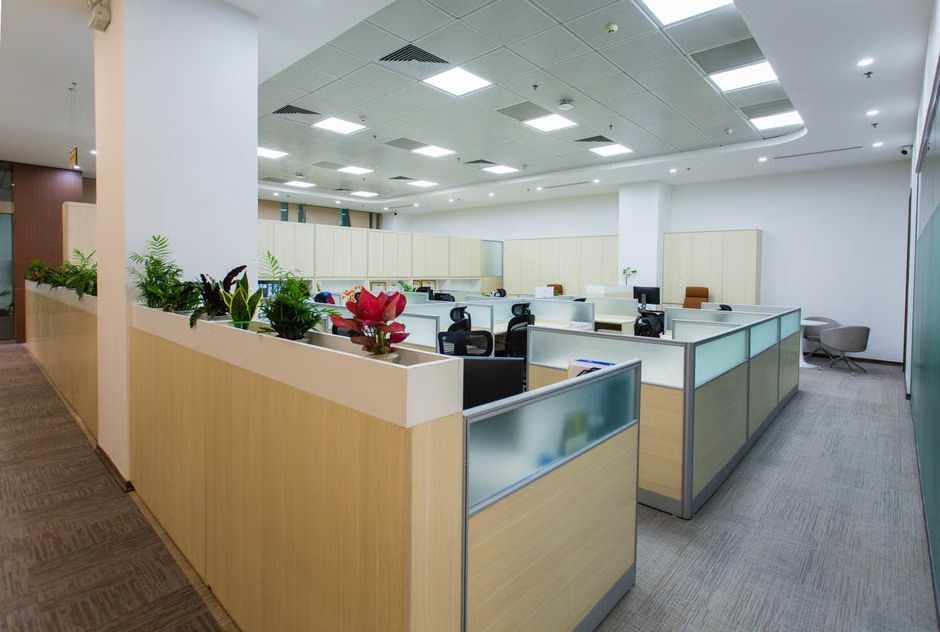
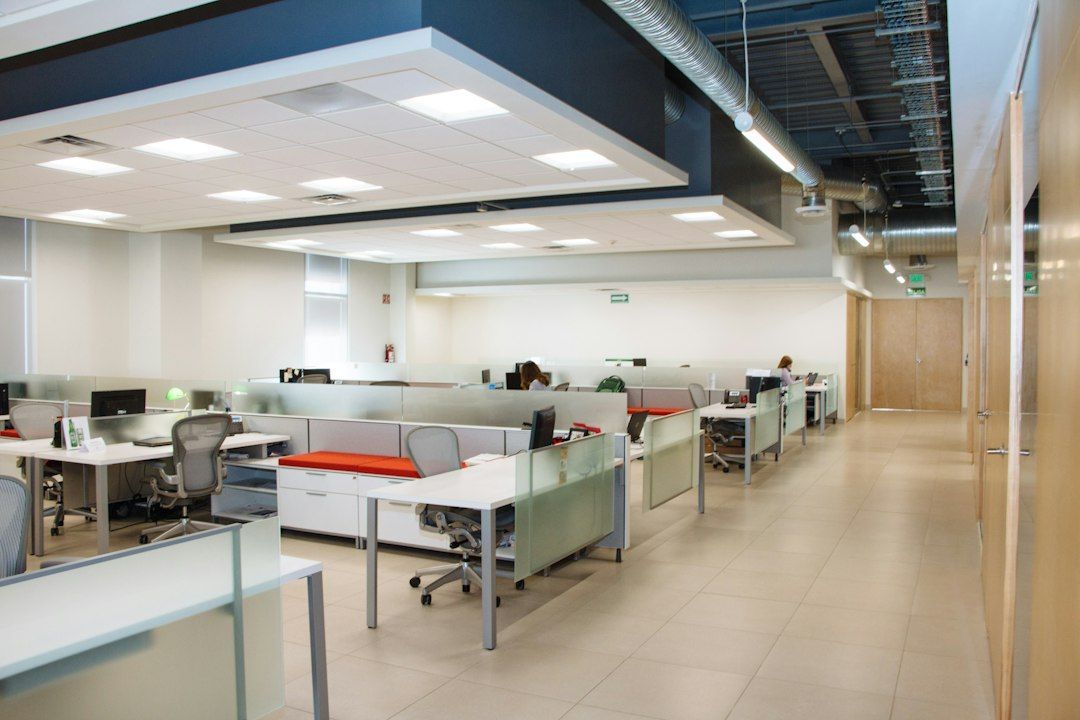
Costs within office spaces depend heavily on layout density. An open-concept tech office with 100 workstations per floor requires fewer labor minutes than a traditional legal or financial firm with dozens of enclosed private offices, conference suites, and executive restrooms.
Understanding baseline office cleaning charges helps facility managers evaluate whether a proposal adequately covers essential high-touch points, kitchenettes, breakrooms, and shared boardrooms.
For larger corporate buildings and multi-tenant properties across the Denver Metro Area, facility executives often combine evening janitorial crews with on-site day porter coverage($25 to $40 per hour).
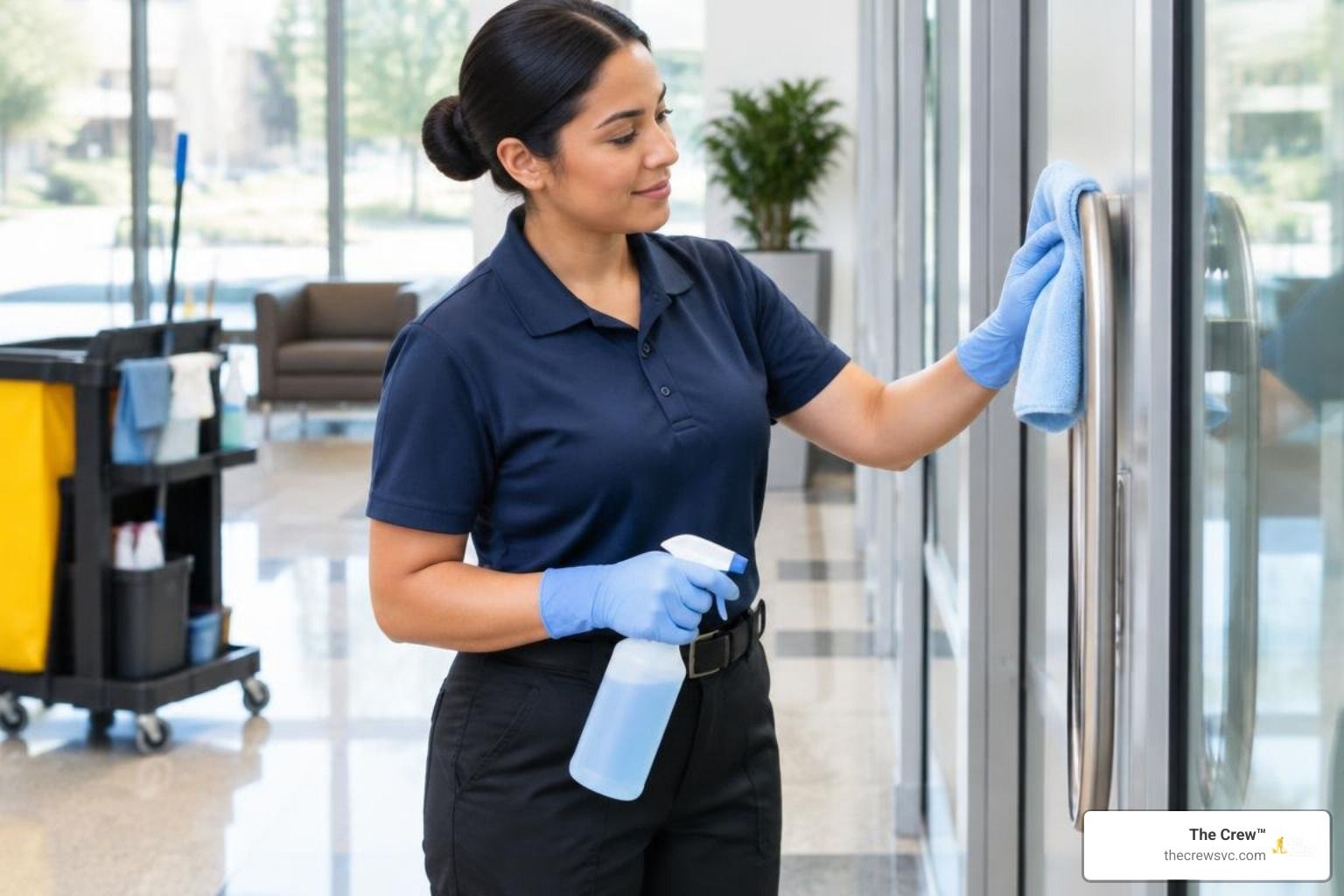
Day porters continuously monitor lobby glass, refresh high-traffic restrooms, restock paper products, and handle sudden spills, preserving a pristine corporate image throughout normal business hours.
Healthcare Facilities and Medical Clinics
Medical cleaning commands a premium, with rates ranging from $0.14 to $0.29 per square foot per month for general clinics and dental offices. Specialized surgical centers and cleanrooms exceed these baselines due to stringent sanitization protocols.
Healthcare environments require strict adherence to:
- CDC environmental infection prevention guidelines
- OSHA Bloodborne Pathogen standards
- Mandatory dwell-time enforcement for EPA-registered, hospital-grade broad-spectrum disinfectants
- Color-coded microfiber cross-contamination prevention programs
Cleaners assigned to medical facilities undergo rigorous, documented safety training. The heightened legal, clinical, and regulatory risks demand slower, meticulous production rates, making medical janitorial bids higher than standard office proposals.
Industrial, Warehousing, and Manufacturing Plants
Industrial pricing divides into two distinct operational categories: open storage environments and active manufacturing spaces.
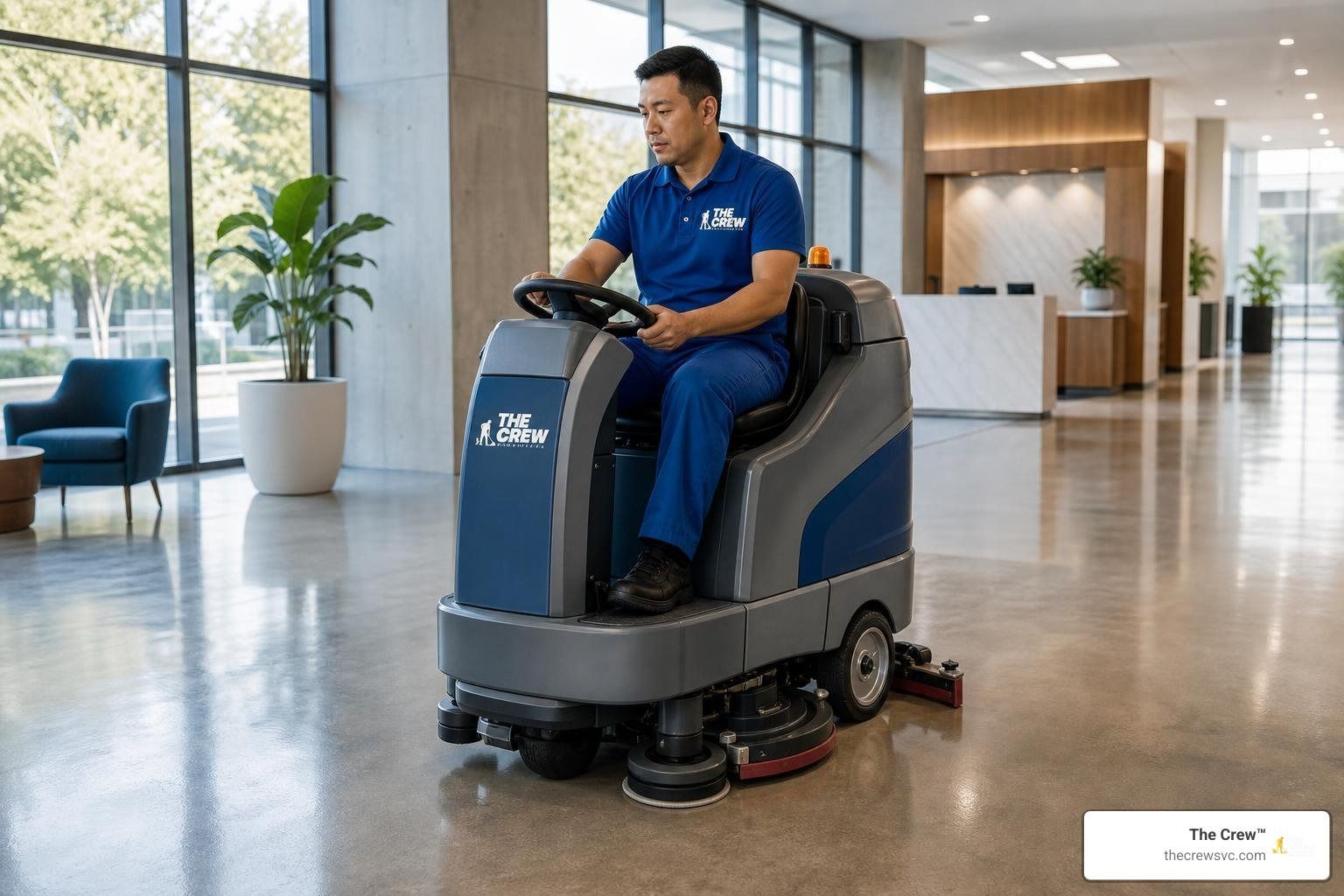
Routine maintenance for warehouses and distribution centers typically costs $0.08 to $0.15 per square foot per month. These spaces consist of wide-open concrete aisles serviced efficiently with industrial ride-on auto-scrubbers.
Manufacturing plants and active production environments run between $0.10 and $0.20 per square foot per month. Facilities subject to strict safety or sanitization mandates—such as food and beverage processing operations requiring FDA or USDA compliance—frequently range from $0.15 to $0.25 per square foot per month, accounting for heavy machinery sanitation, overhead high-dusting, and specialized chemical degreasing.
Educational Institutions and K-12 Schools
Public and private educational facilities operate under strict budget constraints, with cleaning costs generally averaging $0.07 to $0.14 per square foot per month.
Educational institutions present unique operational challenges:
- High foot-traffic density across classrooms, cafeterias, auditoriums, and gymnasiums
- Heightened germ transmission requiring rapid, comprehensive touchpoint sanitization (desks, door hardware, water fountains)
- Strict athletic facility and locker room hygiene requirements
- Scheduling structured around academic calendars, evening activities, and intensive deep-cleaning summer cycles
Cleaning contractors serving educational facilities must deploy background-checked, vetted personnel capable of managing rapid classroom turnovers while maintaining strict safety standards.
Retail Establishments and High-Foot-Traffic Spaces
Retail environments, automobile dealerships, and shopping centers average $0.07 to $0.15 per square foot per month.
In retail, the cleaning scope directly shapes the customer's brand perception and purchase experience. Priorities center on:
- Crystal-clear entryway glass and display windows
- Spotless, fully stocked customer restrooms
- High-gloss hard floor maintenance (buffing, burnishing, auto-scrubbing)
- Debris-free sales floors and checkout queues
Retail contracts often demand specialized scheduling windows, such as early-morning pre-opening cleans or late-night post-closing crews, ensuring daily operations remain uninterrupted.
What Key Cost Drivers Influence Janitorial Pricing Beyond Square Footage?
Square footage establishes the physical footprint of a building, but it represents only a baseline. Two buildings with an identical 25,000-square-foot footprint can receive wildly different proposals based on their interior architecture, usage patterns, and operating schedules.
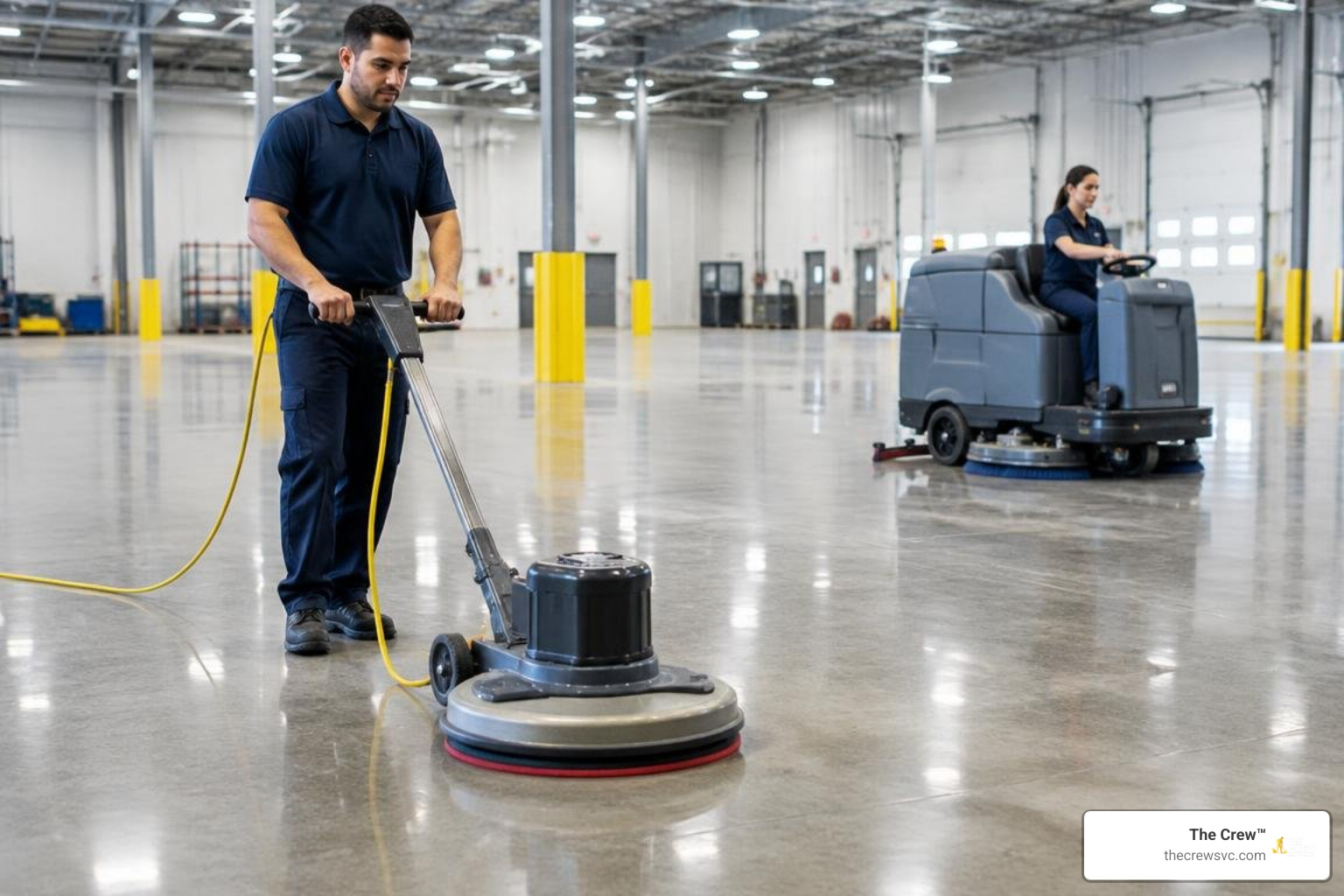
Facility managers can explore current cost structures across complex building configurations by reviewing an up-to-date commercial cleaning pricing guide 2026.
The primary operational drivers that alter contract pricing include:
- Fixture Density and Room Count: Open spaces clean much faster than compartmentalized layouts. A floor plan with 40 private offices, four breakrooms, and six multi-stall restrooms requires substantially more labor than an open-plan warehouse of the same size.
- Floor Surface Composition: Buildings with 80% carpet require different labor times, chemical treatments, and equipment passes than spaces with high-gloss vinyl composition tile (VCT), polished concrete, or ceramic tile.
- Daily Building Population: A facility with 300 daily on-site employees generates higher trash volume, restroom soil, and kitchen traffic than a hybrid-work office with 40 daily occupants.
Service Frequency and Day Porter Requirements
Service frequency significantly impacts the cost per clean versus the total monthly spend.
A 5-night-per-week cleaning schedule yields the lowest cost per individual visit. Regular cleaning prevents dirt, grime, and grease from bonding to surfaces, allowing crews to maintain high production rates.
A 1-night or 2-night-per-week schedule incurs a higher cost per individual visit because technicians must spend extra time addressing days of accumulated soil, overflowing trash receptacles, and heavily used restrooms.
| Schedule Type | Typical Visits / Week | Cost per Visit | Overall Monthly Spend | Primary Advantage |
|---|---|---|---|---|
| High Frequency | 5 to 7 nights | Lowest per visit | Standard monthly baseline | Pristine everyday appearance; minimal soil accumulation |
| Moderate Frequency | 3 nights (M/W/F) | Moderate per visit | 20% to 35% lower monthly | Balanced cost-to-cleanliness for medium-traffic offices |
| Low Frequency | 1 to 2 nights | Highest per visit | 50% to 65% lower monthly | Budget option for low-traffic storage or small satellite sites |
| Day Porter Hybrid | 5 nights + day shifts | Integrated rate | Higher overall investment | Real-time continuous maintenance for high-profile assets |
For facilities with heavy daily visitors, pairing evening janitorial work with a day porter keeps high-visibility areas consistently clean throughout the workday.
Regulatory Compliance, Background Checks, and Security
Facilities with stringent security requirements—such as banking branches, government offices, aerospace facilities, and medical laboratories—require specialized operational safeguards that influence contractor billing.
These safeguards include:
- Comprehensive background checks, drug screenings, and security clearances
- Multi-million-dollar general liability insurance policies and commercial surety bonding
- Documented safety compliance programs, including OSHA Hazard Communication and Bloodborne Pathogen certifications
- Secure keycard management, alarm code protocols, and lock-and-tag building procedures
Working with an insured, bonded, and certified cleaning organization eliminates liability risks for the property owner.
Specialty Periodic Add-On Services
Routine janitorial maintenance covers recurring daily tasks: emptying trash, dusting, vacuuming, and sanitizing restrooms. However, maintaining commercial real estate requires periodic restorative care.
These specialized services are scoped and priced separately on a per-square-foot or project basis:
- Carpet Hot-Water Extraction:$0.08 to $0.25 per sq. ft. ($0.20 to $0.40 for deep restorative extraction)
- Hard Floor Strip and Refinish (VCT):$0.25 to $0.60 per sq. ft.
- Hard Floor Scrub and Recoat:$0.20 to $0.40 per sq. ft.
- Deep Restorative Detail Cleaning:$0.10 to $0.30 per sq. ft.
- High-Dusting & Overhead Surface Cleaning:$0.15 to $0.35 per sq. ft.
How Do Cleaning Companies Calculate Quotes and Profitability?
To understand why contractor bids differ, facility executives should understand the bidding formulas reputable commercial janitorial providers use.
According to federal labor benchmarks, commercial cleaning represents a major national workforce sector. Data from the Cleaning Service Industry Statistics and Market Data indicates that over 2.1 million janitors and cleaners work across the country, with median annual wages hovering around $34,000.
A professional contractor builds a sustainable quote by calculating four direct financial components:
- Direct Labor Costs: Base employee wages, payroll taxes (FICA, FUTA, SUTA), workers' compensation insurance, and employee benefits. Labor represents 50% to 65% of a standard contract's total cost.
- Consumable Supplies & Equipment Depreciation: Commercial cleaning chemicals, microfiber supplies, HEPA-filter vacuums, floor scrubbers, and trash liners, typically accounting for 5% to 15% of monthly contract value.
- Operational Overhead: Field supervisor salaries, safety training programs, commercial fleet transportation, administrative support, software, and insurance coverage ( 15% to 25% of operating expenses).
- Target Gross Margin: Sustainable commercial contracts target a mature gross margin of 28% to 38%(often 22% to 30% during the initial 90-day phase-in). Bids structured below these margins often indicate an inexperienced vendor who will eventually cut corners or request mid-term price hikes.
As highlighted in current industry analytics covering Top 10 Sales KPIs for Commercial Janitorial and Cleaning Services in 2027, contract profitability also depends heavily on route density.
When a cleaning contractor serves multiple accounts within a concentrated geographical area—such as an office park or neighboring industrial corridors in Denver, Lakewood, or Aurora—supervisor drive time and supply transport costs drop significantly. These operational efficiencies allow the vendor to pass meaningful savings directly to the client.
The Direct Impact of Cleaner Turnover on Long-Term Costs
The national average annual turnover rate in the commercial cleaning industry exceeds 75%, with some high-churn franchise operators surpassing 200%.
High turnover creates severe, hidden costs for facility managers:
- Constantly rotating cleaners unfamiliar with your facility's security procedures and specific layout
- Missed tasks, inconsistent quality, and recurring compliance risks
- Increased management time spent submitting complaints, re-issuing access badges, and retraining replacement staff
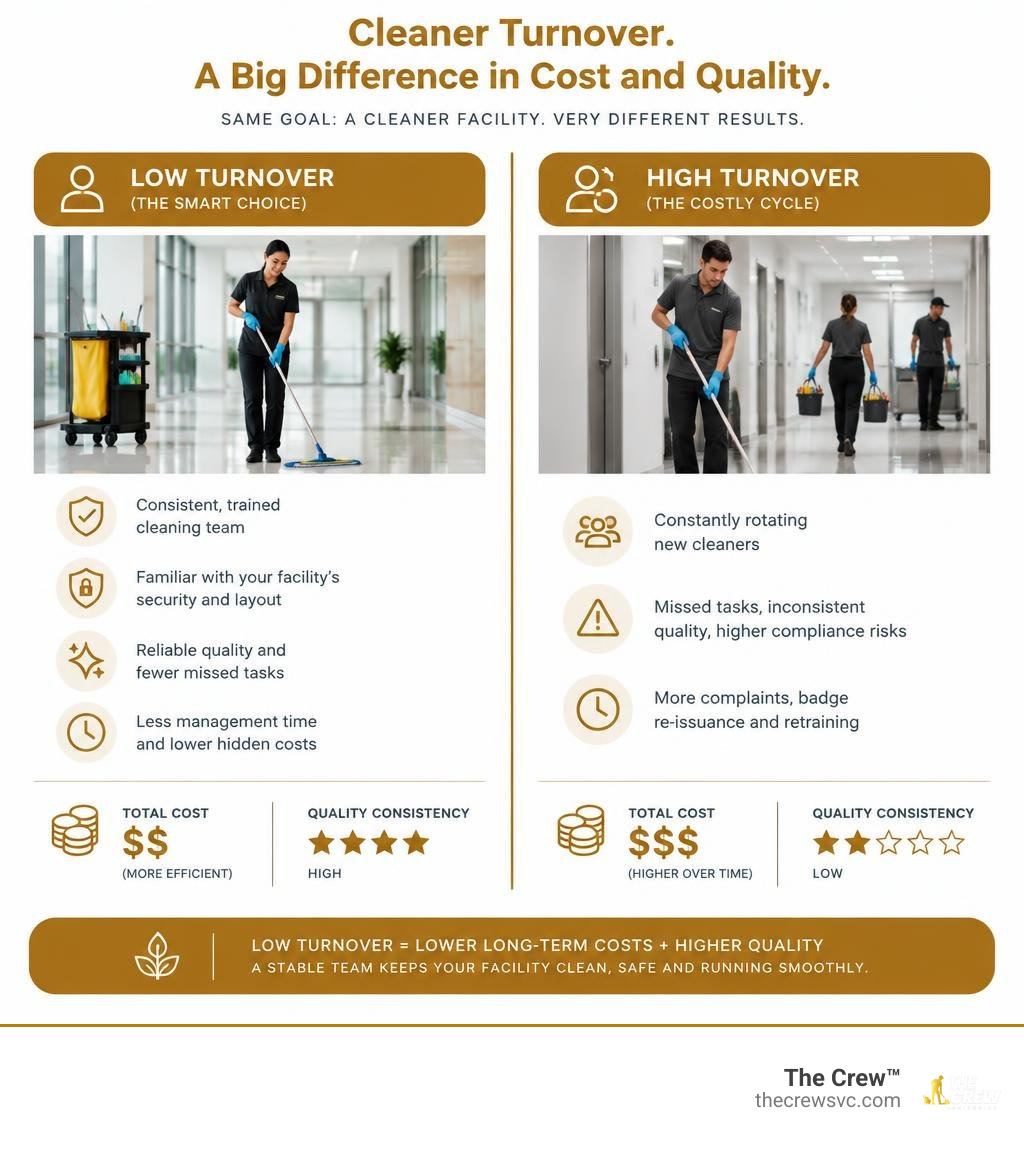
At The Crew™, we solve this industry problem by maintaining a 0% cleaner turnover rate. We hire vetted, background-checked commercial cleaning professionals and provide strong compensation, structured supervisor support, and clear accountability.
For facilities across the Denver Metro Area—including Centennial, Westminster, Englewood, and Broomfield—this zero-turnover approach ensures the same dedicated cleaning technicians service your building night after night, delivering consistent cleanliness and dependable security.
How Can Facility Managers Optimize Janitorial Costs Without Sacrificing Quality?
Controlling janitorial expenses does not require compromising indoor air quality, sanitation, or your building's professional appearance. Smart procurement strategies and strategic scheduling can reduce annual maintenance spend while maintaining high hygiene standards.
Facility directors can prepare for upcoming vendor evaluations by developing a structured checklist based on our commercial cleaning contracts guide 2026.
Effective cost-optimization strategies include:
- Transitioning from Transactional Work to Long-Term Recurring Agreements: Contracting for ongoing multi-year service allows vendors to amortize startup equipment costs, stabilize staffing schedules, and offer lower monthly rates.
- Consolidating and Bundling Facility Services: Consolidating standard nightly janitorial, day porter coverage, periodic carpet extraction, and hard-floor refinishing under a single provider lowers administrative overhead and unlocks bundled package discounts.
- Partnering with an Integrated Service Provider: Contracting comprehensive janitorial services for business ensures clear accountability under one dedicated operations supervisor.
Implementing Zone-Based Cleaning and Smart Scheduling
One of the most effective ways to lower contract labor hours is implementing zone-based cleaning.
Instead of treating every square foot of your building equally every night, zone-based scheduling focuses labor where soil and foot traffic actually accumulate:
- Zone A (High-Traffic / High-Visibility - Daily 5x/Week): Restrooms, main reception lobbies, primary conference rooms, executive boardrooms, and employee breakrooms/kitchens receive comprehensive cleaning, sanitization, and restocking every scheduled night.
- Zone B (Moderate-Traffic - 2-3x/Week): Main hallway corridors, secondary meeting rooms, and shared team workbenches receive alternating-night vacuuming and surface wiping.
- Zone C (Low-Traffic - 1x/Week): Private executive offices, archive rooms, secondary storage suites, and low-occupancy training halls are scheduled for weekly service.
Pairing zone cleaning with automated touchless soap, towel, and chemical dispensers reduces product waste and shortens cleaning times.
To see how tailored scheduling models can be adapted to your floor plan, review our full range of commercial services.
Evaluating RFP Proposals and Vendor Transparency
When comparing competitive RFP responses, the lowest bid frequently proves to be the most expensive over time. Bids submitted far below established market averages usually indicate that the contractor:
- Miscalculated production rates and will understaff your building
- Classifies cleaners as untrained, uninsured subcontractors
- Intends to introduce hidden fees or demand mid-contract price increases once the scope becomes unsustainable
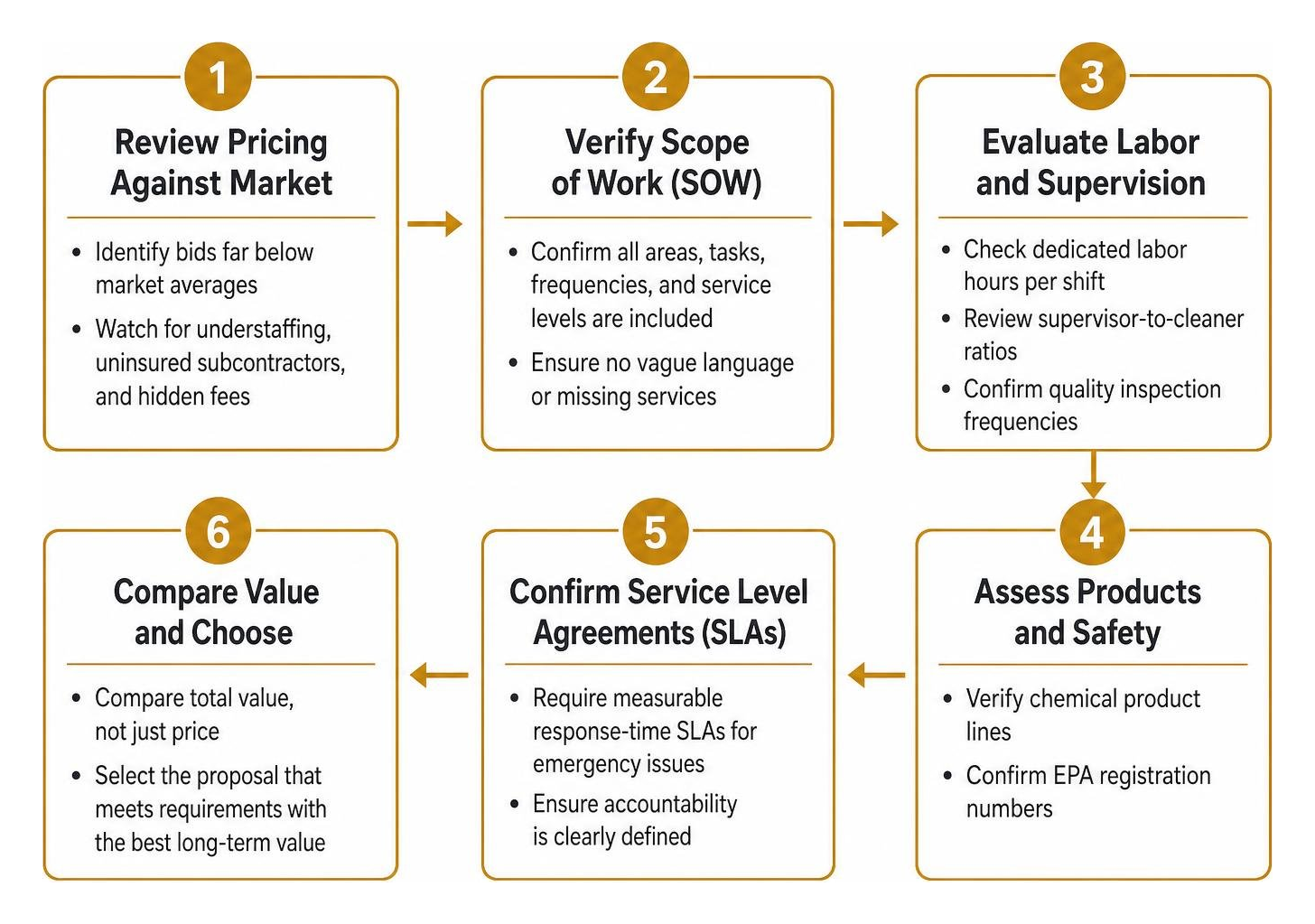
To protect your organization, require every bidding vendor to submit a detailed Scope of Work (SOW) that itemizes:
- Dedicated labor hours allocated per shift
- Supervisor-to-cleaner ratios and quality inspection frequencies
- Specific chemical product lines (including EPA registration numbers)
- Measurable response-time Service Level Agreements (SLAs) for emergency issues
We believe transparency builds lasting partnerships. Facility managers can review our published benchmarks and explore transparent janitorial pricing to evaluate proposals against reliable industry standards.
Frequently Asked Questions About Janitorial Pricing Structures
What is the average cost per square foot for commercial cleaning in 2026?
Commercial janitorial rates in 2026 typically average between $0.08 and $0.20 per square foot per month for recurring multi-night maintenance in standard office, retail, and commercial properties.
Pricing scales higher for compliance-intensive environments like healthcare clinics and surgical centers ($0.14 to $0.29 per sq. ft. per month) or lower for large, open industrial distribution warehouses ($0.08 to $0.15 per sq. ft. per month), depending on cleaning frequency and layout complexity.
Why is medical or industrial cleaning more expensive than general office cleaning?
Medical and industrial spaces require specialized regulatory compliance (OSHA, CDC, FDA), dedicated staff safety training, personal protective equipment (PPE), and EPA-registered hospital-grade disinfectants with verified dwell times.
These environments involve higher soil loads, contamination risks, or chemical handling protocols that lower cleaner production rates per hour, requiring more labor time and raising overall contract costs.
What is the difference between janitorial services and commercial project cleaning?
Janitorial services involve recurring, day-to-day maintenance tasks performed on a regular schedule (nightly or several times per week). These include trash removal, restroom sanitation, hard-floor damp mopping, carpet vacuuming, and touchpoint disinfection.
Commercial project cleaning refers to periodic restorative services performed once or twice a year—such as hot-water extraction carpet cleaning, VCT floor stripping and waxing, high-bay overhead dusting, or deep annual scrubbing. These are billed separately per square foot or as individual flat-rate projects.
Conclusion
Structuring a cost-effective commercial janitorial contract requires balancing cleanable square footage, industry-specific compliance requirements, and realistic labor workloading.
Whether you manage a corporate headquarters in Denver, an industrial facility in Commerce City, a medical office in Lakewood, or a retail showroom in Highlands Ranch, selecting the right pricing model ensures your facility remains clean, compliant, and cost-efficient.
By establishing a clear Scope of Work, using zone-based cleaning schedules, and partnering with an established, low-turnover cleaning provider, you protect your physical assets and give your occupants a healthy, productive workspace.
If you are reviewing your current commercial cleaning contract or planning an upcoming RFP for your facility in the Denver Metro Area—including Littleton, Golden, Longmont, Arvada, Parker, and Brighton—contact our team at The Crew™ to schedule a detailed on-site walkthrough and receive a customized, transparent proposal.