How to Deep Clean Tile Floors Without Leaving Grime Behind
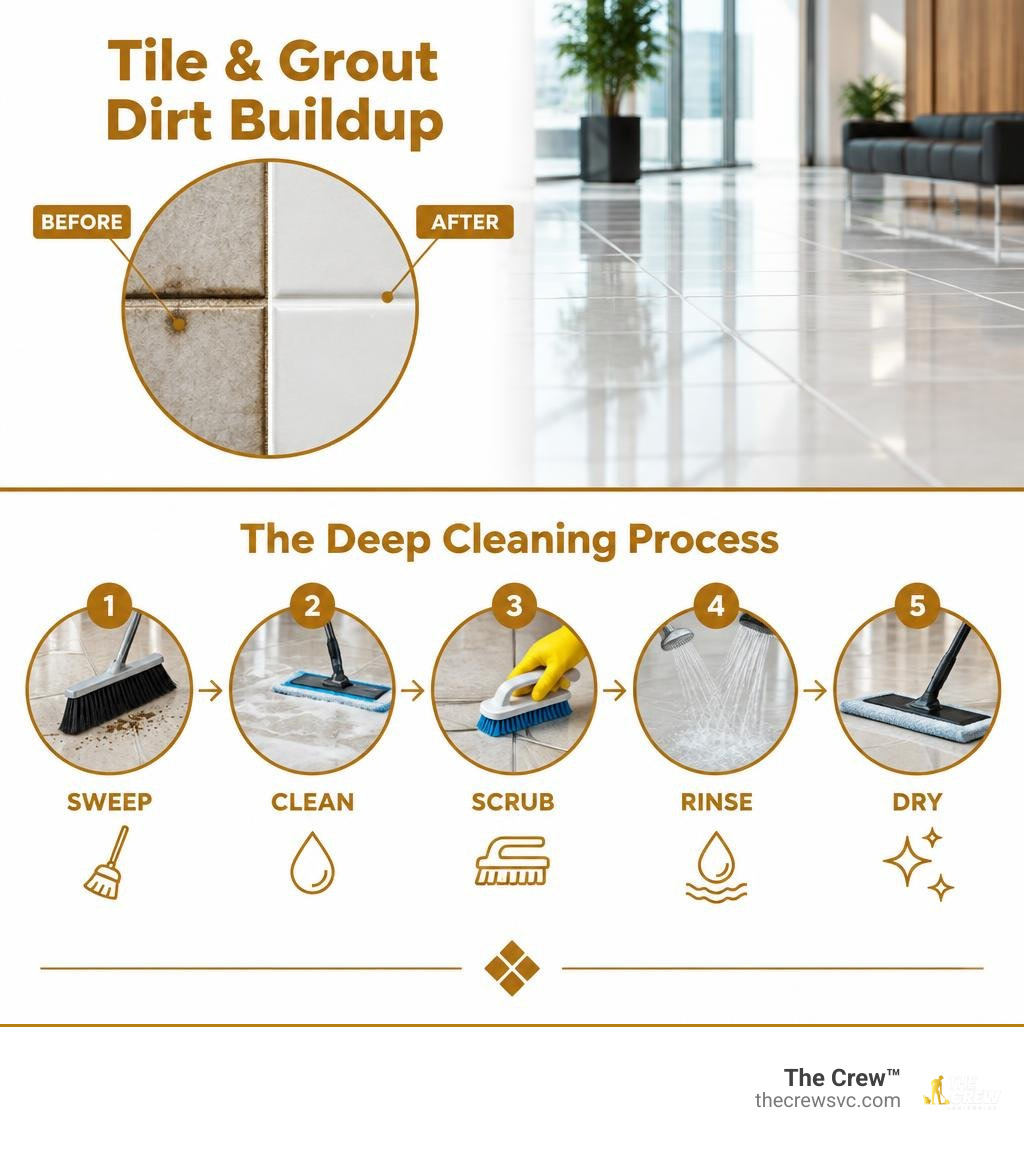
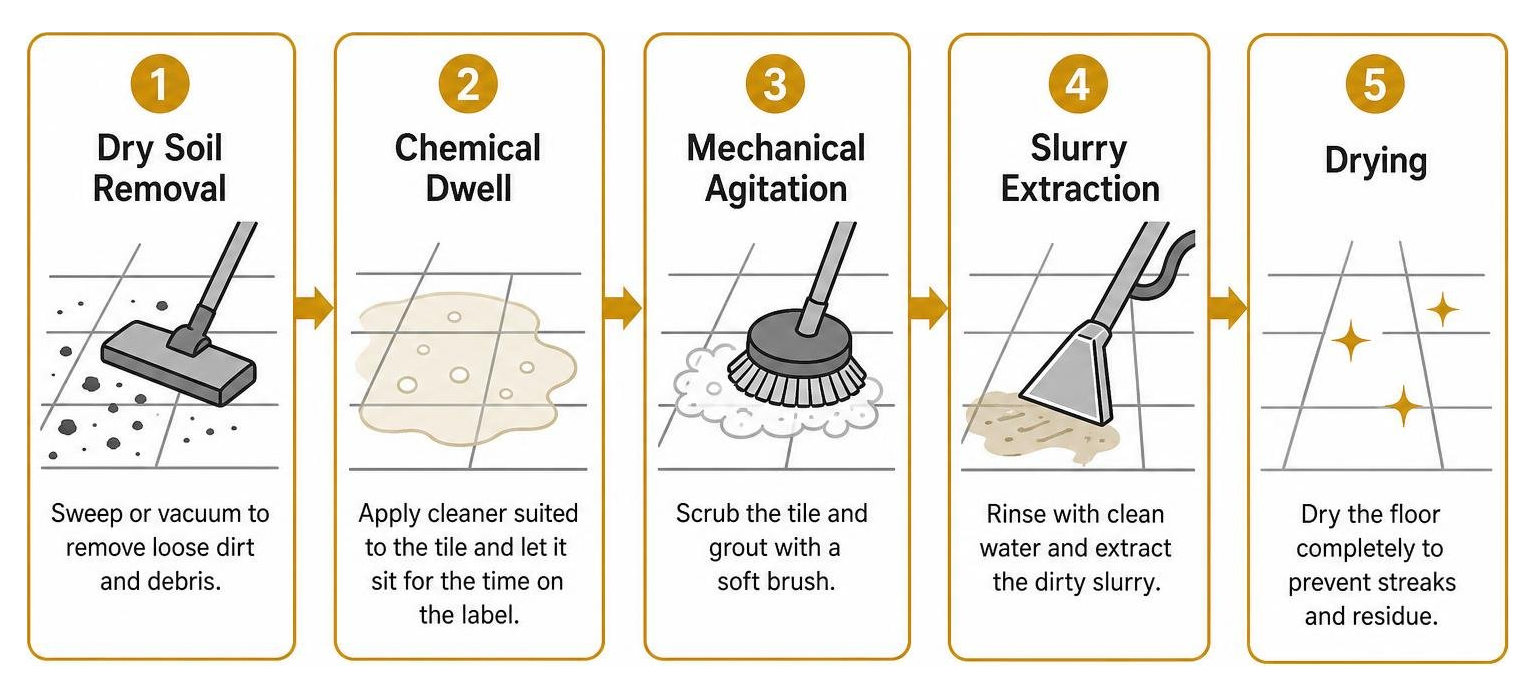
To deep clean a tile floor, sweep or vacuum first. Apply a cleaner suited to the tile, let it sit for the time on the label, then scrub the tile and grout with a soft brush. Rinse with clean water and dry the floor. For textured tile, pay extra attention to the grooves where dirt collects.
The tile may look clean after mopping while the grout stays dark. That is because grout can trap dirt that a mop leaves behind. In a busy lobby or office, cleaning both surfaces helps the floor look its best.
I'm Carlos Castillo II, owner of The Crew™, a family-run commercial cleaning company serving the Denver Metro Area. My work overseeing facility cleaning shapes this practical guide to tile floor deep cleaning, starting with the right prep and tools.
Essential Steps for Tile Floor Deep Cleaning
A successful deep clean requires a systematic approach. Spreading soapy water across a dirty floor only dissolves surface dust and deposits it straight into your porous grout lines. Achieving professional results requires lifting dry particulate soils first, giving chemistry time to work, agitating properly, and extracting the suspended grime.

Following proven strategies like those outlined in The Best Way to Clean Tile Floors ensures your flooring is thoroughly sanitized without causing surface degradation or leaving sticky residues behind.
Preparing the Surface and Dry Soil Removal
Every deep clean starts dry. When water mixes with dry dirt, it turns into liquid mud that packs tightly into the textured recesses of your tile and the open pores of your cement grout.
- Remove Clutter: Clear all movable furniture, floor mats, trash cans, and obstacles from the cleaning area.
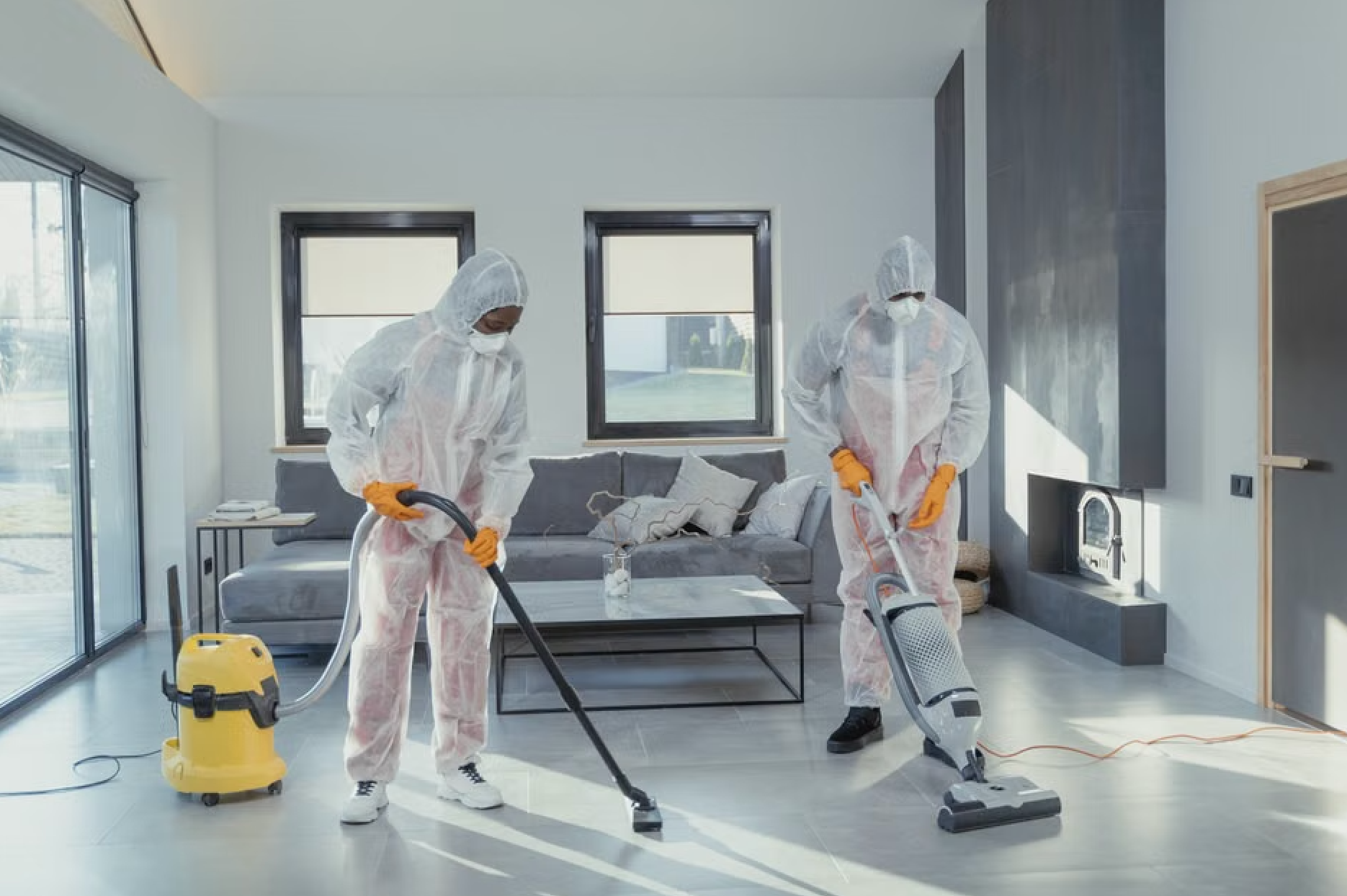
- Vacuum with HEPA Filtration: Use a commercial-grade stick or canister vacuum equipped with a HEPA filter. This captures micro-particulates, fine silica, and allergens rather than blowing them back into the air.
- Use Crevice Tools: Run a crevice nozzle along baseboards, corners, and deep grout channels where heavy grit settles.
- Soft-Brush Sweeping: If vacuuming is not feasible, use a soft-bristle broom or an electrostatic microfiber dust mop. Avoid stiff synthetic brooms that can flick grit across surfaces without collecting it.
Chemical Selection, Application, and Agitation Techniques
Once dry soil is removed, you can apply cleaning chemistry tailored to the specific type of grime present. Kitchens and entryways accumulate oils and grease that require alkaline degreasers (pH 9 to 11), while mineral deposits and soap scum respond best to mild descaling agents.
When choosing your daily or restorative chemistry, options like Bona Oxy Power Hard-Surface Floor Deep Cleaner utilize hydrogen peroxide to lift stubborn stains while maintaining indoor air quality standards. For heavy industrial soil, specialized professional ceramic tile cleaners break down high-traffic grime without degrading tile glazes.
Apply the diluted cleaning solution across manageable 4-foot by 4-foot sections using a pump sprayer. Allow a dwell time of 5 to 10 minutes. This dwell time allows surfactants to penetrate and break the chemical bonds holding grease and grime to the tile.
Agitate the surface thoroughly:
- Manual Scrubbing: Use a long-handled deck brush with stiff, crimped polypropylene bristles. The extended handle provides leverage while standing, preventing joint strain and concentrating downward pressure directly into grout joints.
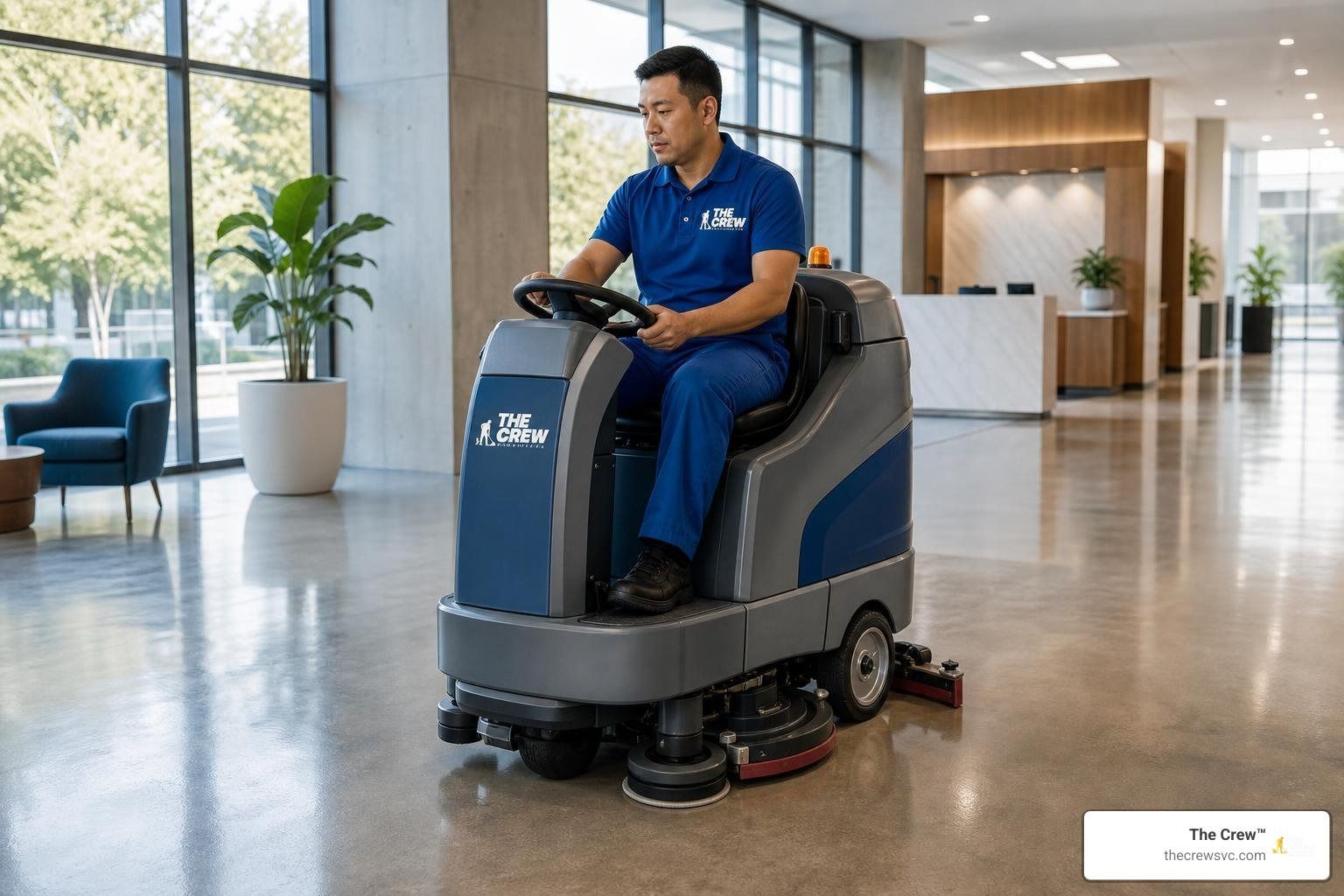
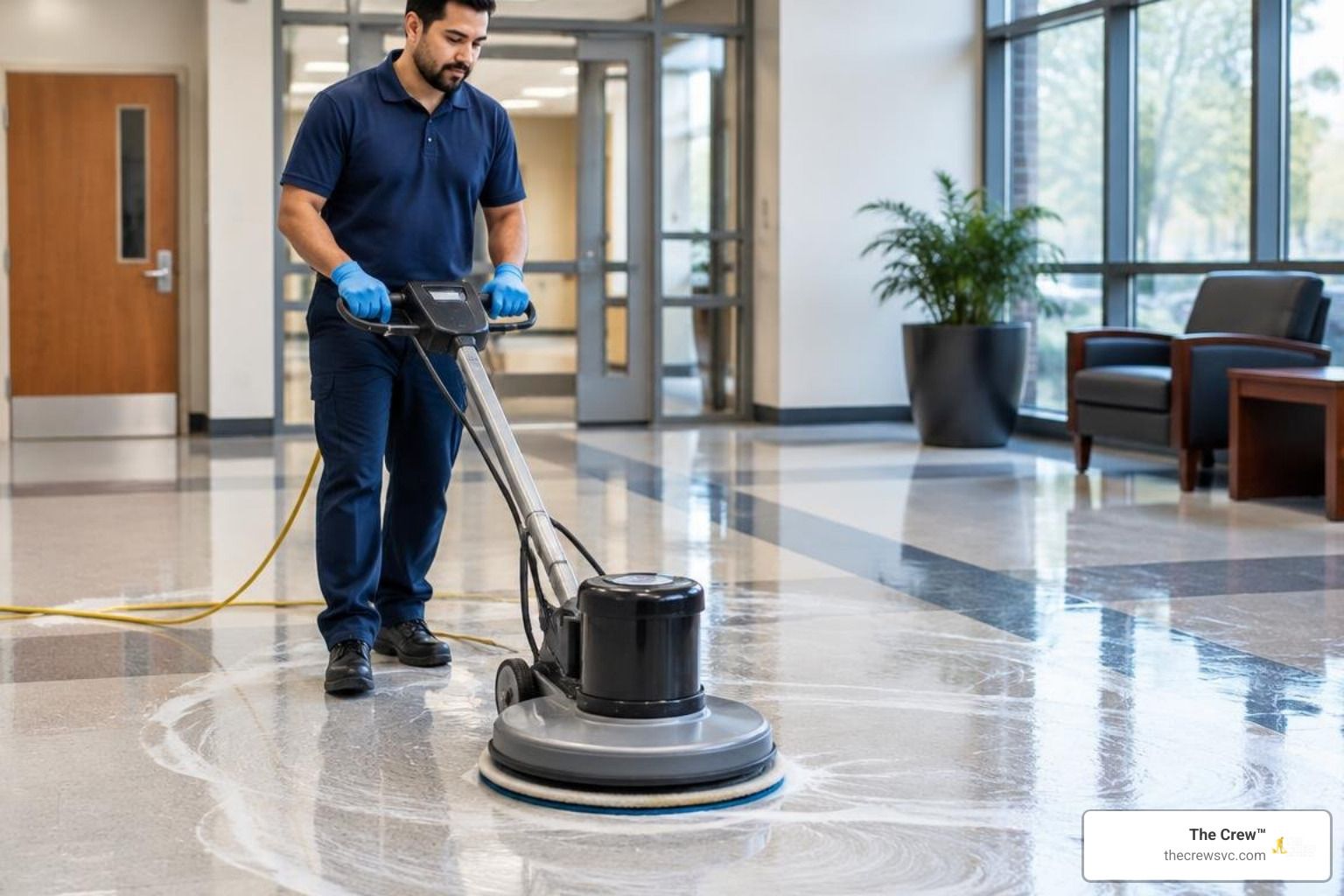
- Rotary Agitation: For large commercial spaces, a low-speed rotary floor buffer fitted with a scrubbing brush or a counter-rotating brush machine lifts stubborn soils from every microscopic crevice.
Rinsing, Neutralization, and Rapid Drying
Agitation loosens dirt into a suspended liquid slurry. If that slurry evaporates on the floor, the dirt simply re-attaches to the surface.
- Slurry Extraction: In commercial environments, extract the slurry immediately using a wet-vacuum or an extraction wand.
- The Two-Bucket Method: If using a manual system, use two buckets: one filled with clean rinse water and the other for wringing out dirty moisture.
- Figure-Eight Mopping: Work a clean flat microfiber mop in continuous figure-eight strokes. This motion traps residual suspended particles on the leading edge of the pad and prevents you from dragging dirt backward over clean tiles.
- Rapid Drying: Position commercial air movers or axial floor fans facing across the floor. Accelerating drying time prevents slip-and-fall hazards and stops airborne dust from clinging to damp surfaces.
Material-Specific Care: Ceramic, Porcelain, Stone, and Textured Tiles
Not all hard floors tolerate the same chemicals or scrubbing pads. Using an acid wash on marble creates permanent etching, while using wax-based soaps on vitrified porcelain leaves a cloudy film that attracts foot-traffic dirt.
| Flooring Material | Moisture Absorption Rate | Chemical Tolerance | Recommended Tools | Critical Precautions |
|---|---|---|---|---|
| Ceramic Tile | Low to Moderate (3%–7%) | Broad (Alkaline & Mild Acid) | Deck brush, flat microfiber mop, steam cleaner | Avoid steel wire brushes; protect glazed topcoats. |
| Porcelain Tile | Extremely Low (< 0.5%) | High (Alkaline, Mild Descalers) | Rotary scrubbers, nylon brushes, steam pads | Requires thorough rinsing to prevent detergent haze. |
| Textured / Non-Slip | Low to Moderate | Broad (pH-neutral to alkaline) | Multi-directional brushes, flat microfiber pads | Cotton string mops catch on ridges; avoid thick wax coatings. |
| Natural Stone | Variable / High | Strict (pH 7.0 Neutral Only) | Soft microfiber pads, non-abrasive nylon brushes | Never use vinegar, bleach, or acidic cleaners. |
Mastering Tile Floor Deep Cleaning on Textured Surfaces
Textured, slate-look, and non-slip safety tiles are designed with raised ridges, tumbled edges, and matte finishes to provide superior slip resistance in wet environments. However, those same protective ridges trap dirt, grease, and dirty mop water.
To clean textured surfaces effectively:
- Ditch Traditional Cotton Mops: Cotton string mops and sponge mops glide over the high points of textured tiles while pushing dirty water directly into the lower grooves.
- Employ Multi-Directional Agitation: Scrub in small circular patterns rather than straight back-and-forth strokes to dislodge soil caught against the ridges.
- Use Heavy-Duty Microfiber Pads: Microfiber pads possess millions of split synthetic hooks that dig into deep micro-textures to grab soils.
- Apply Steam: High-temperature steam loosens compacted debris from tight textures with minimal water volume, ensuring grooves dry quickly.
Deep Cleaning Porcelain and Ceramic Tile Floors
Porcelain tile is fired at temperatures exceeding 2,200°F, creating a vitrified surface with an absorption rate below 0.5%. This makes the face of porcelain tile virtually impervious to stains. However, hard-water mineral deposits (calcium and magnesium) can leave a persistent chalky film across the finish.
In high-traffic regions like Denver, Commerce City, or Centennial, our technicians at Denver floor maintenance services often encounter scale buildup on porcelain surfaces. A mild acidic descaler with a pH of 4 to 6 safely dissolves mineral scale without attacking the tile face. Always follow descalers with a thorough clean-water rinse to neutralize the surface completely.
Safe Techniques for Natural Stone Floors
Travertine, marble, slate, and limestone contain calcium carbonate, making them vulnerable to acid damage.
- The Acid Hazard: Household vinegar, lemon juice, ammonia, and conventional toilet bowl cleaners cause instant chemical etching on polished stone, turning smooth surfaces dull and rough.
- pH-Neutral Regimen: Clean natural stone using dedicated pH-neutral stone detergents (pH 7.0).
- Moisture Sensitivity: Highly porous stone such as unsealed slate or travertine must be dried rapidly to prevent water penetration from degrading underlying adhesives or carrying subfloor salts to the surface.
Deep Cleaning Grout Lines Naturally and Effectively
Grout is a porous cementitious matrix that acts like a structural sponge. While tile repels water, standard grout lines absorb dirty water, grease, and bacteria, leading to dark discoloration and foul odors.
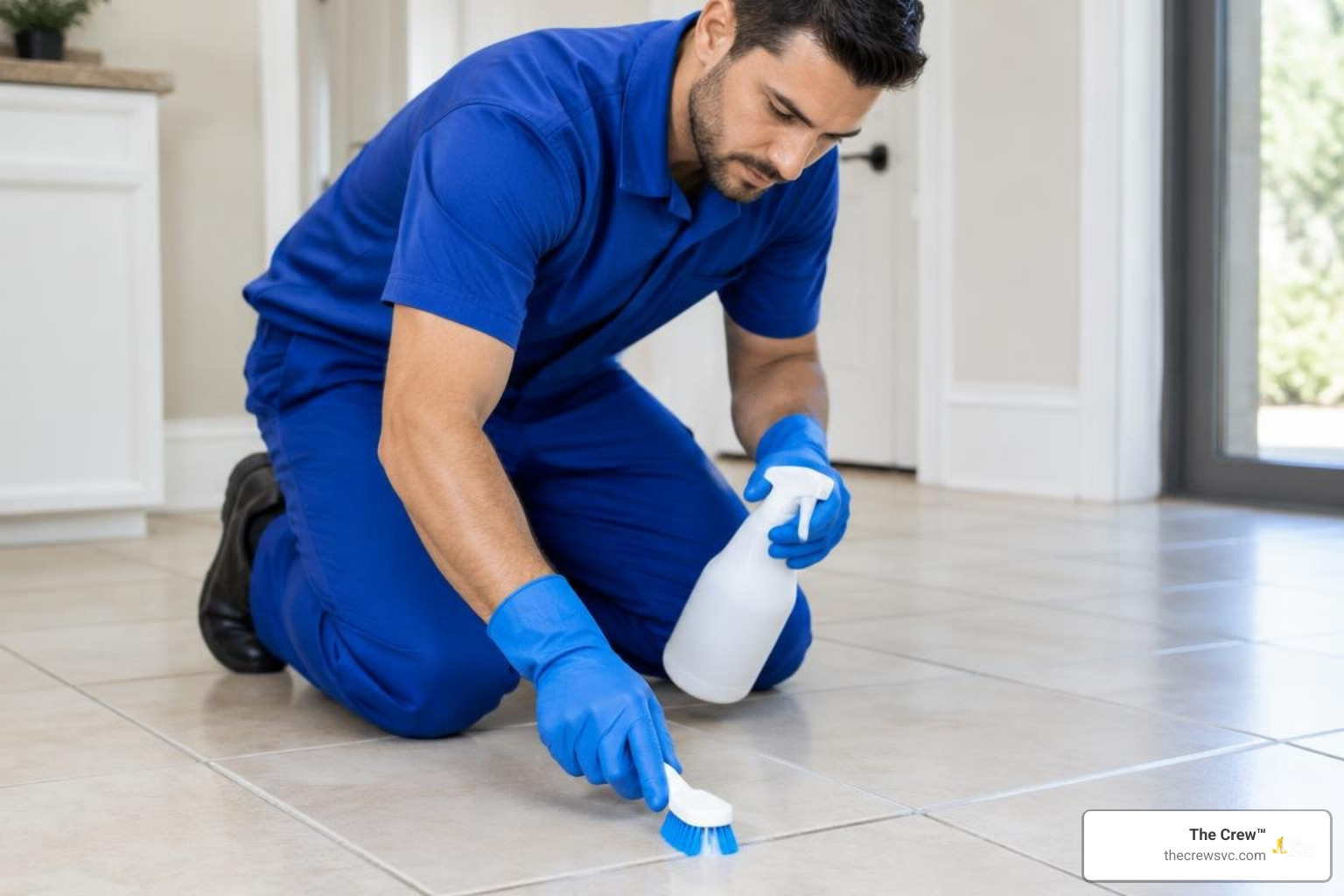
Adopting natural methods such as those detailed in The Best Way to Clean Bathroom Grout Naturally restores discolored joints without releasing harsh VOCs into your facility.
Eco-Friendly Grout Solutions and Dwell Times
You do not need caustic chemicals to lift deep grime out of grout pores. A targeted, natural approach breaks down organic matter safely:
- Hydrogen Peroxide and Baking Soda: Mix two parts baking soda with one part 3% hydrogen peroxide and a splash of non-oil dish detergent to create a spreadable paste. Apply the paste directly to grout lines and allow a 15-minute dwell time. The peroxide bubbles lift trapped oils to the surface, while the baking soda provides gentle, non-abrasive mechanical cleaning.
- Oxygen Bleach (Sodium Percarbonate): For widespread grout staining across large floor areas, dissolve oxygen bleach powder in hot water. Apply the solution to grout joints and let it sit for 20 to 30 minutes before scrubbing with a stiff nylon brush.
- Specialized Non-Acidic Cleaners: Safe formulations outlined in guides on How to Clean Grout with Simple Green penetrate deep into cement pores to lift soils without corroding the cement binder.
Note: Avoid mixing vinegar and baking soda together in cleaning solutions. When combined, their acid-base reaction cancels out their cleaning properties, leaving you with simple saltwater and carbon dioxide bubbles that have little cleaning power.
The Role of 212°F Steam Cleaning in Tile Floor Deep Cleaning
Commercial steam cleaners are among the most effective chemical-free tools for hard-surface restoration. Operating at boiler temperatures above 212°F, steam machines deliver pressurized vapor directly into tile micro-pores and grout channels.
- Thermal Breakdown: High-heat vapor liquefies hardened grease, soap scum, and adhesive residues on contact.
- Sanitization: Steam kills 99.9% of bacteria, mold spores, and viral contaminants embedded in unsealed grout without leaving chemical residues behind.
- Residue Removal: Steam breaks down built-up detergent layers left behind by past mopping sessions. Wipe the liquefied soil away immediately with a clean microfiber cloth to prevent it from settling back down.
Restoring, Sealing, and Maintenance Schedules
Deep cleaning opens up the pores of your grout lines and stone tiles. Leaving these pores exposed will cause the floor to absorb new dirt and spills even faster than before. Sealing after a deep clean provides essential protection.
- Penetrating (Impregnating) Sealers: These sub-surface sealers soak into the microscopic capillaries of the grout or stone, depositing fluoropolymer barrier resins that repel water and oil-based liquids while allowing vapor transmission.
- Moisture Testing: Never seal a damp floor. Trapped water creates a cloudy, milky haze under the sealer that requires chemical stripping to fix. Allow the floor to dry for 24 hours, and verify dryness using a pinless moisture meter before application.
- Application: Apply the penetrating sealer evenly along grout lines using an applicator bottle or roller wheel. Allow it to soak in for 10 minutes, then buff all excess sealer off the tile face with a dry cloth to prevent sticky streaks.
To maintain your commercial floors, consider scheduling routine commercial tile and grout cleaning to keep surfaces protected and extend the life of your tile.
DIY vs. Professional Commercial Floor Care
While manual scrubbing works well for residential touch-ups, commercial facilities and heavily stained spaces benefit significantly from commercial-grade equipment.
| Factor | DIY / In-House Maintenance | Professional Commercial Restoration |
|---|---|---|
| Primary Equipment | Deck brushes, spray mops, consumer steam units | Turbo-hybrid rotary extractors, counter-rotating brush machines |
| Water Pressure & Heat | Ambient tap water, gravity pressure | 800–1,200 PSI heated water extraction (up to 230°F) |
| Soil Recovery | Manual towel drying, wet mops (leaves residue) | Continuous high-flow vacuum extraction (100% slurry recovery) |
| Time Investment | 4 to 8 hours per 500 sq ft | 1 to 2 hours per 1,000 sq ft |
| Estimated Cost | $30–$80 in consumer chemicals & rentals | $0.50–$3.00 per sq ft based on surface condition |
Professional restorative treatments remove deep, set-in stains that manual brushing cannot reach. Understanding commercial cleaning services cost helps facility managers balance in-house maintenance with scheduled professional deep cleanings.
Common Mistakes to Avoid During Deep Cleaning
Avoid these frequent mistakes that can cause permanent damage to your floors:
- Using Wire or Steel Brushes: Metal bristles scratch protective tile glazes and tear away cementitious grout, causing premature crumbling. Always use stiff nylon or poly-bristle brushes.
- Mopping with Dirty Water: A single mop bucket quickly becomes saturated with soil. When you continue mopping, that dirty water settles directly into low grout joints, darkening the grout as it dries.
- Applying Harsh Acids to Stone: Never use vinegar, muriatic acid, or acidic descalers on marble, travertine, or limestone floors.
- Overusing Detergents: Adding extra soap to your bucket does not make the floor cleaner. It leaves behind a sticky surfactant film that grabs dirt off shoes, turning floors dingy within days.
- Sealing Over Dirty Grout: Applying a sealer over uncleaned grout locks in stains, requiring complete chemical stripping to correct.
Frequently Asked Questions
How often should tile floors and grout undergo deep cleaning?
Commercial facilities should deep clean high-traffic tile floors monthly, while standard office corridors and residential living areas benefit from a deep clean every 3 to 6 months. Daily dry dust-mopping and weekly microfiber damp mopping maintain the surface between restorative visits. Grout sealers should be evaluated and reapplied annually to keep moisture out of the porous cement joints.
Why do tile floors look hazy or cloudy after deep cleaning?
A cloudy film typically indicates one of three issues:
- Detergent Residue: Using too much cleaner or failing to rinse with clean water leaves a surfactant layer behind.
- Hard-Water Minerals: Mineral deposits from untreated rinse water dry on the surface, creating a hazy appearance.
- Dirty Slurry Dry-Down: Dirty wash water dried on the tile instead of being extracted with a wet vacuum or clean microfiber pad.
To fix hazy floors, mist the area with clean, warm water and buff dry using a clean microfiber cloth.
Can vinegar or bleach damage tile grout over time?
Yes. Vinegar is an acid that slowly dissolves the alkaline cement binders inside grout, causing joints to crack, pit, and turn into loose powder over time. Chlorine bleach strips colors from dyed grout, weakens moisture barriers, and releases harsh fumes. Always opt for pH-neutral cleaners, hydrogen peroxide solutions, or oxygen bleach for safe and effective maintenance.
Conclusion
Deep cleaning preserves your tile flooring, brightens your rooms, and creates a hygienic environment for employees, clients, and guests. By clearing dry soil, using appropriate cleaning solutions, agitating grout joints with the right tools, and applying protective sealers, you can keep your floors looking pristine for years to come.
When managing high-traffic commercial facilities across the Denver Metro Area—including Lakewood, Aurora, Littleton, and Broomfield—maintaining clean floors requires reliable, consistent care. At The Crew™, our background-checked cleaning specialists operate with 0% turnover to deliver reliable, high-standard results every single shift.
Explore our comprehensive commercial floor service to see how our customized maintenance programs protect your flooring investment and keep your facility looking its best.