Why Office Lobby Cleaning Matters From the First Step Inside
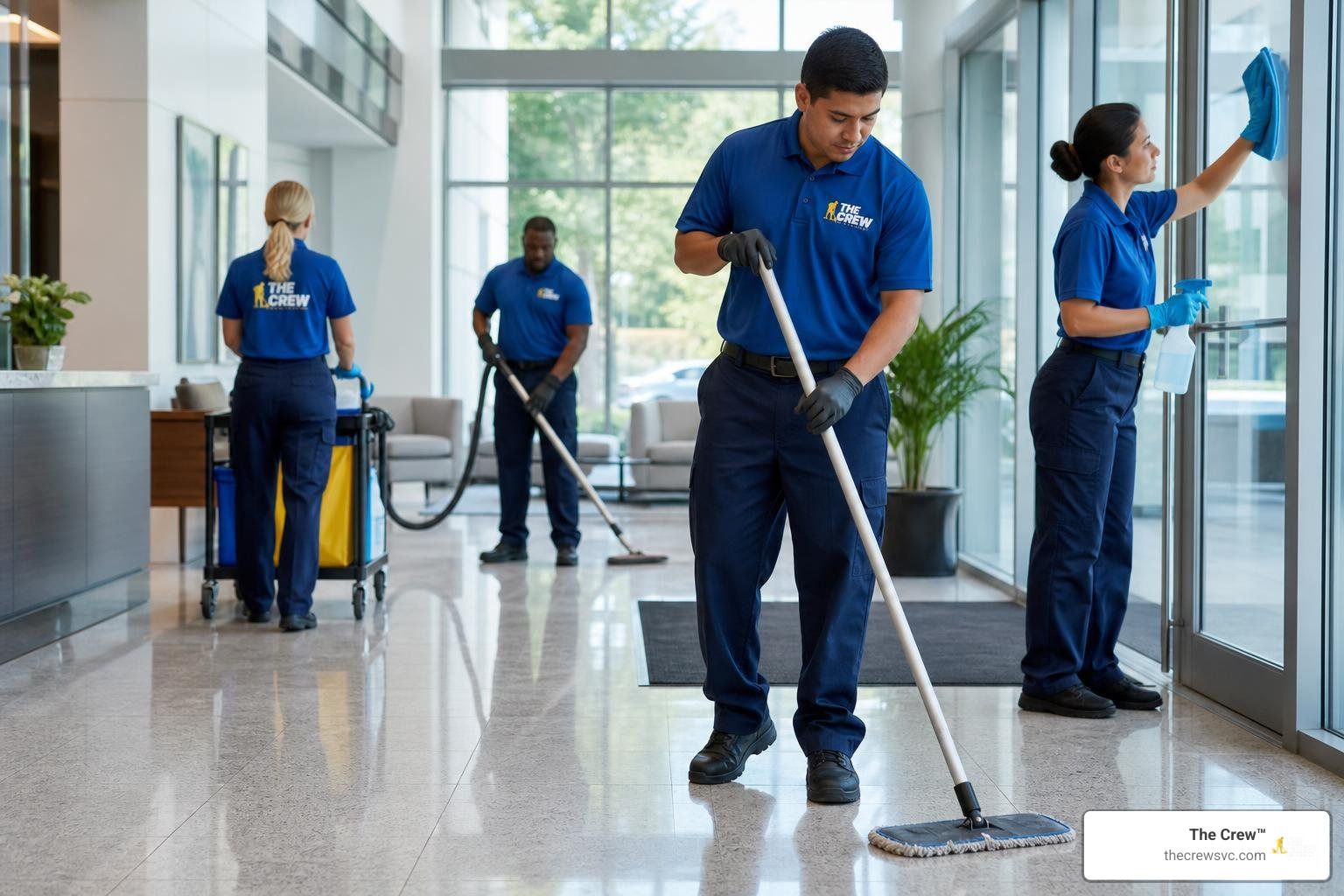
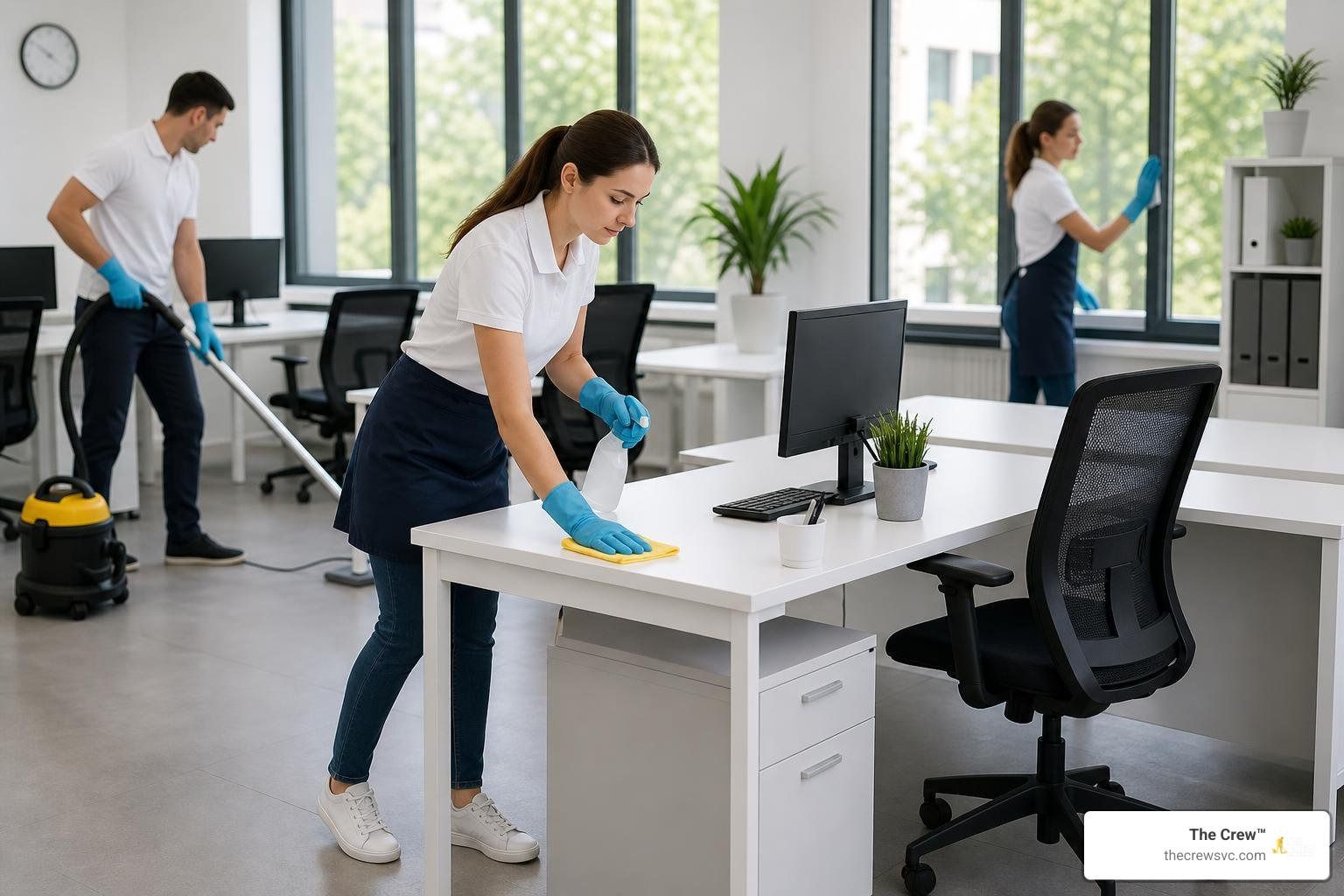
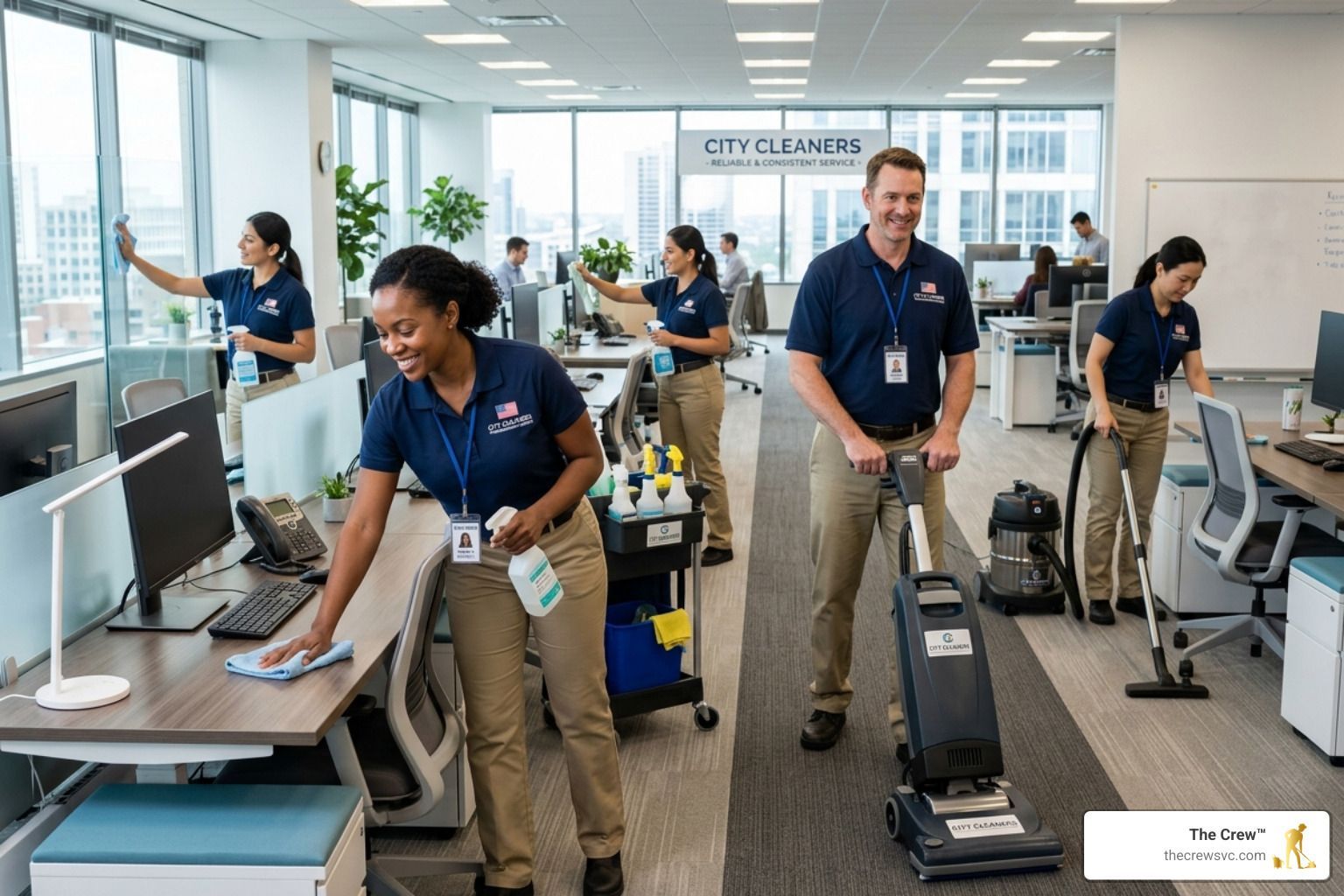
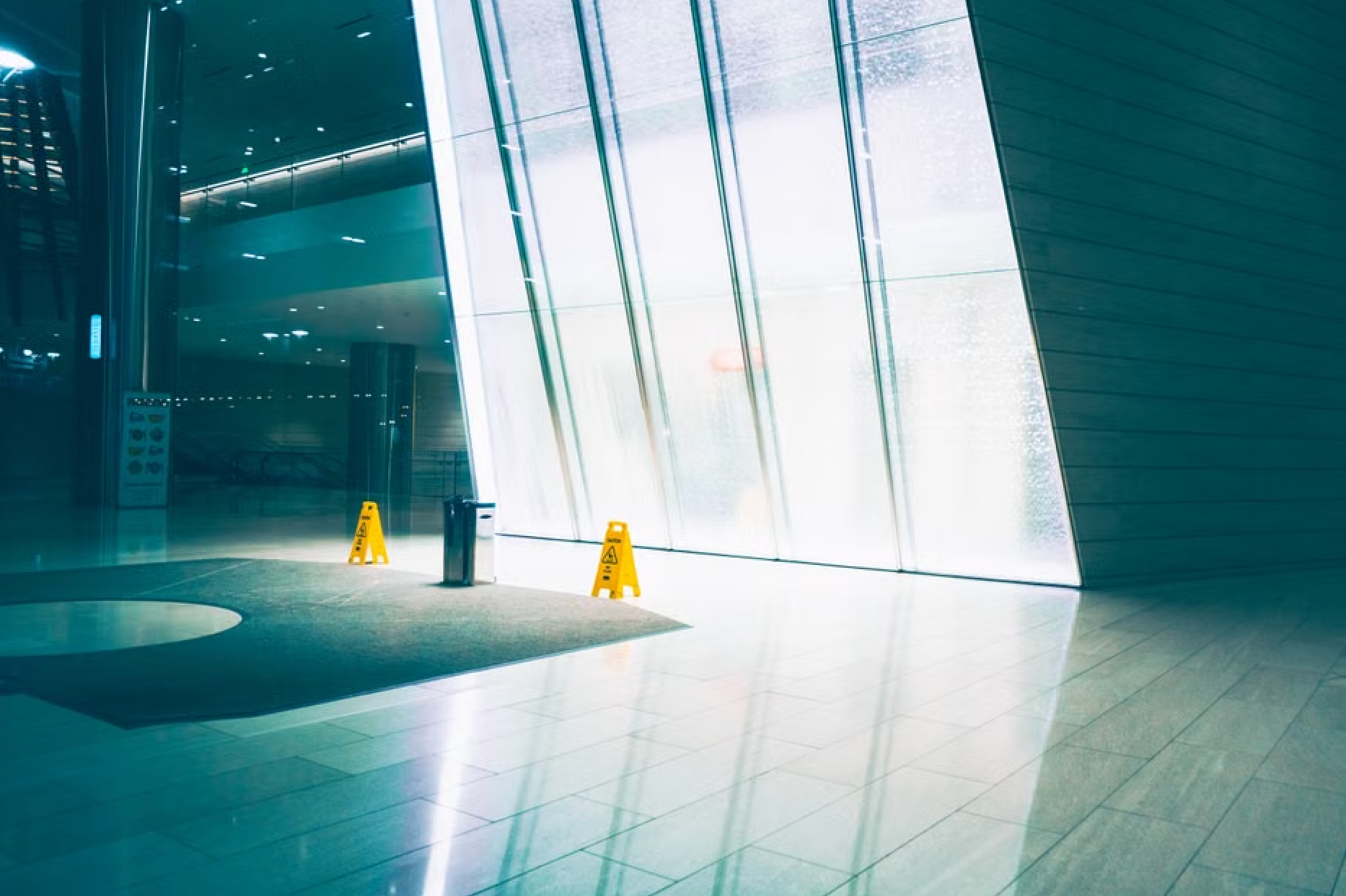
Effective office lobby cleaning means more than making the reception area look neat. It requires a daily routine that removes soil, disinfects frequently touched surfaces, maintains safe floors, and keeps the space ready for employees and visitors all day. According to the U.S. Centers for Disease Control and Prevention, cleaning high-touch surfaces regularly is one of the most effective ways to reduce the spread of germs in shared spaces.
Start with these priorities:
- Clean and disinfect door handles, elevator buttons, reception counters, shared pens, and check-in screens.
- Vacuum or sweep entryways, service spills quickly, and maintain walk-off mats to limit dirt tracked in from outside.
- Empty trash, clean glass, dust visible surfaces, and restock hand sanitizer.
- Use a checklist with assigned tasks and completion times so no critical area is missed.
A lobby is where visitors form an early opinion of your business. It is also a high-traffic zone where shoes, hands, packages, and shared surfaces can spread dirt and germs. Cleanliness supports a safer workplace and signals that your company pays attention to details. In workplace surveys, 94% of workers said they feel more productive in a clean environment.
I am Carlos Castillo II, owner of The Crew™, a family-run commercial cleaning company serving the Denver Metro Area since 1982. My experience with office lobby cleaning focuses on dependable processes, trained and background-checked teams, and customized service that keeps front-of-house spaces consistently ready for business.
Terms related to office lobby cleaning:
- office building cleaners
- office cleaning
- office cleaning services denver
The Core Pillars of Office Lobby Cleaning: Clean, Sanitize, and Disinfect

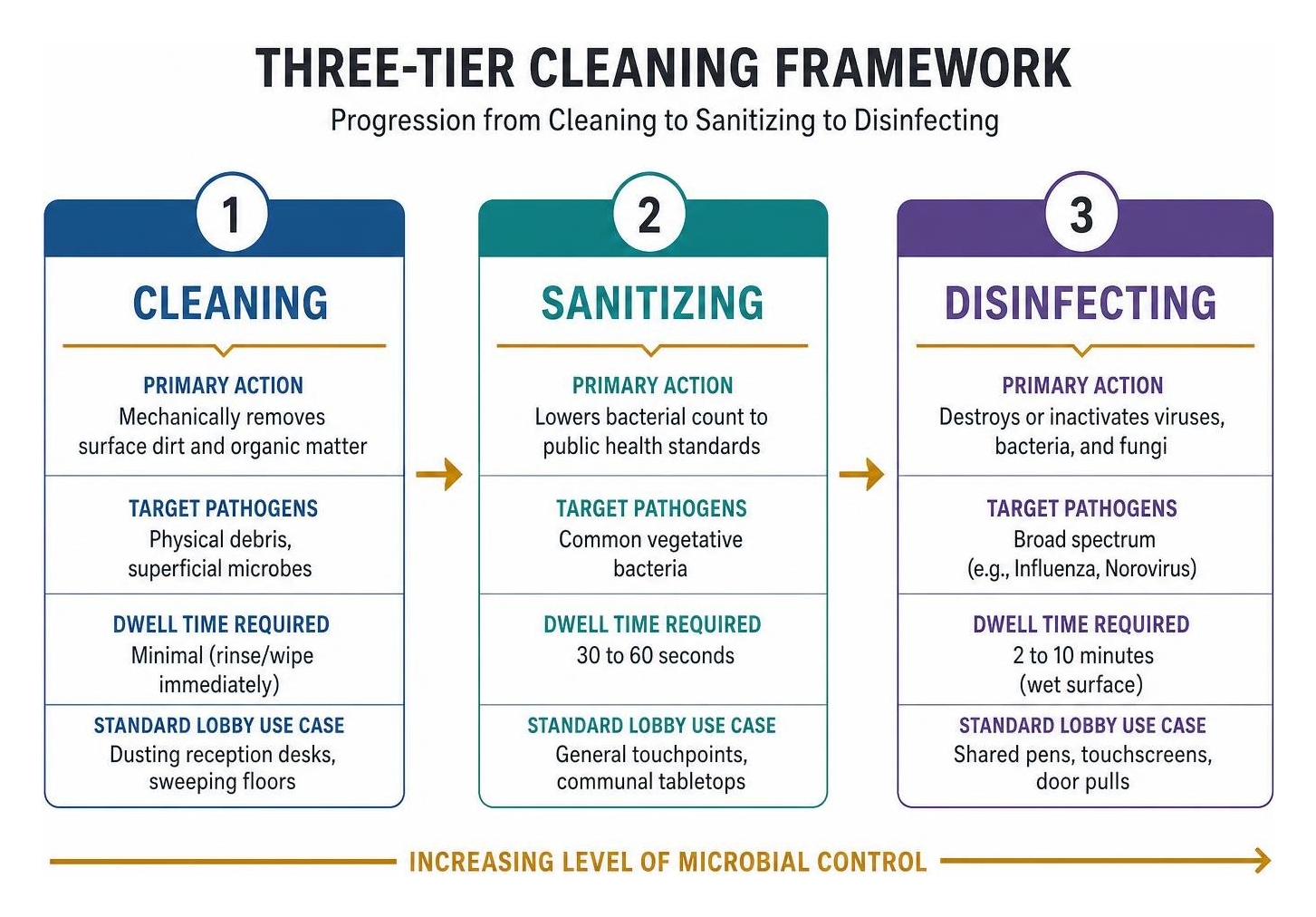
Maintaining a truly clean office space requires an understanding of the fundamental differences between cleaning, sanitizing, and disinfecting. In facility management, these terms represent distinct tiers of microbial control. Conflating them can leave an entry area looking visually spotless while remaining biologically contaminated.
- Cleaning is the physical removal of organic matter, loose soil, dust, and debris from surfaces. It relies on water, detergents, and mechanical action like wiping or scrubbing. While cleaning reduces microbial load by washing away contaminants, it does not reliably kill pathogens on its own.
- Sanitizing reduces bacteria on a surface to levels deemed safe by public health standards, typically achieving a 99.9% reduction. It is ideal for food-contact zones and general communal touchpoints.
- Disinfecting uses specialized, EPA-registered chemical agents to destroy or permanently inactivate targeted pathogens—including bacteria, fungi, and viruses. Disinfection requires proper pre-cleaning and strict adherence to label contact times, often referred to as dwell time.
| Process | Primary Action | Target Pathogens | Dwell Time Required | Standard Lobby Use Case |
|---|---|---|---|---|
| Cleaning | Mechanically removes surface dirt and organic matter | Physical debris, superficial microbes | Minimal (rinse/wipe immediately) | Dusting reception desks, sweeping floors |
| Sanitizing | Lowers bacterial count to public health standards | Common vegetative bacteria | 30 to 60 seconds | General touchpoints, communal tabletops |
| Disinfecting | Destroys or inactivates viruses, bacteria, and fungi | Broad spectrum (e.g., Influenza, Norovirus) | 2 to 10 minutes (wet surface) | Shared pens, touchscreens, door pulls |
High-Touch Office Lobby Cleaning Protocols
High-touch reception surfaces are primary transmission vectors for contagious illnesses. Studies show that flu viruses can survive on uncleaned hard surfaces for 24 to 48 hours. When hundreds of employees and visitors pass through a building entrance every morning, unaddressed hardware accelerates cross-contamination throughout the facility.
Target these critical lobby hotspots daily:
- Exterior and interior door pulls, panic bars, and revolving door trim
- Elevator call buttons and internal floor selector panels
- Digital guest check-in kiosks, stylus pens, and sign-in tablets
- Reception desk countertops and plastic protective transaction shields
- Communal pens, clipboards, and security badge scanners
- Stairway handrails and access control keypads
For disinfectants to perform effectively, surfaces must be wiped clean of surface oils and dirt first. Apply an EPA-registered disinfectant and ensure the treated surface remains visibly wet for the full dwell time specified on the label before wiping it dry with a clean microfiber cloth.
Floor Care and Entryway Mat Maintenance
Floors endure the highest physical wear and contamination burden in any commercial entrance. Research shows that over 420,000 different types of bacteria can live on the soles of shoes. During adverse weather across our Colorado service areas—from winter slush in Denver and Lakewood to dust storms in Commerce City—shoes track heavy grit and moisture directly into your building.
To protect flooring assets and preserve indoor air quality, implement a dedicated floor service strategy:
- Maintain Proper Walk-Off Matting: Position at least 10 to 15 feet of commercial walk-off matting at every public entrance. This captures up to 85% of tracked-in soil before it reaches interior hard surfaces.
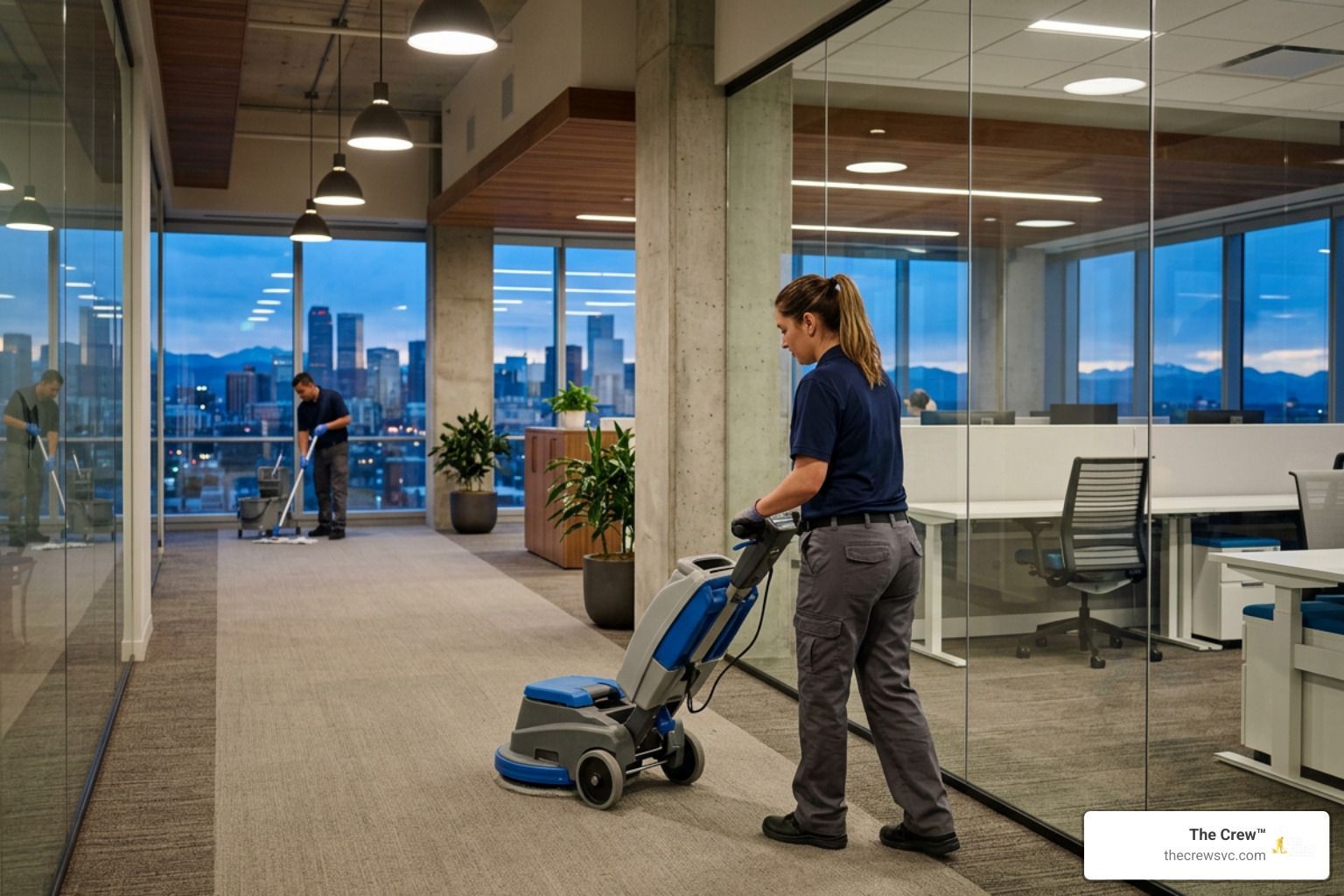
- Vacuum Mats Regularly: Daily vacuuming of entry mats prevents trapped abrasive particulate from acting like sandpaper on surrounding finishes.
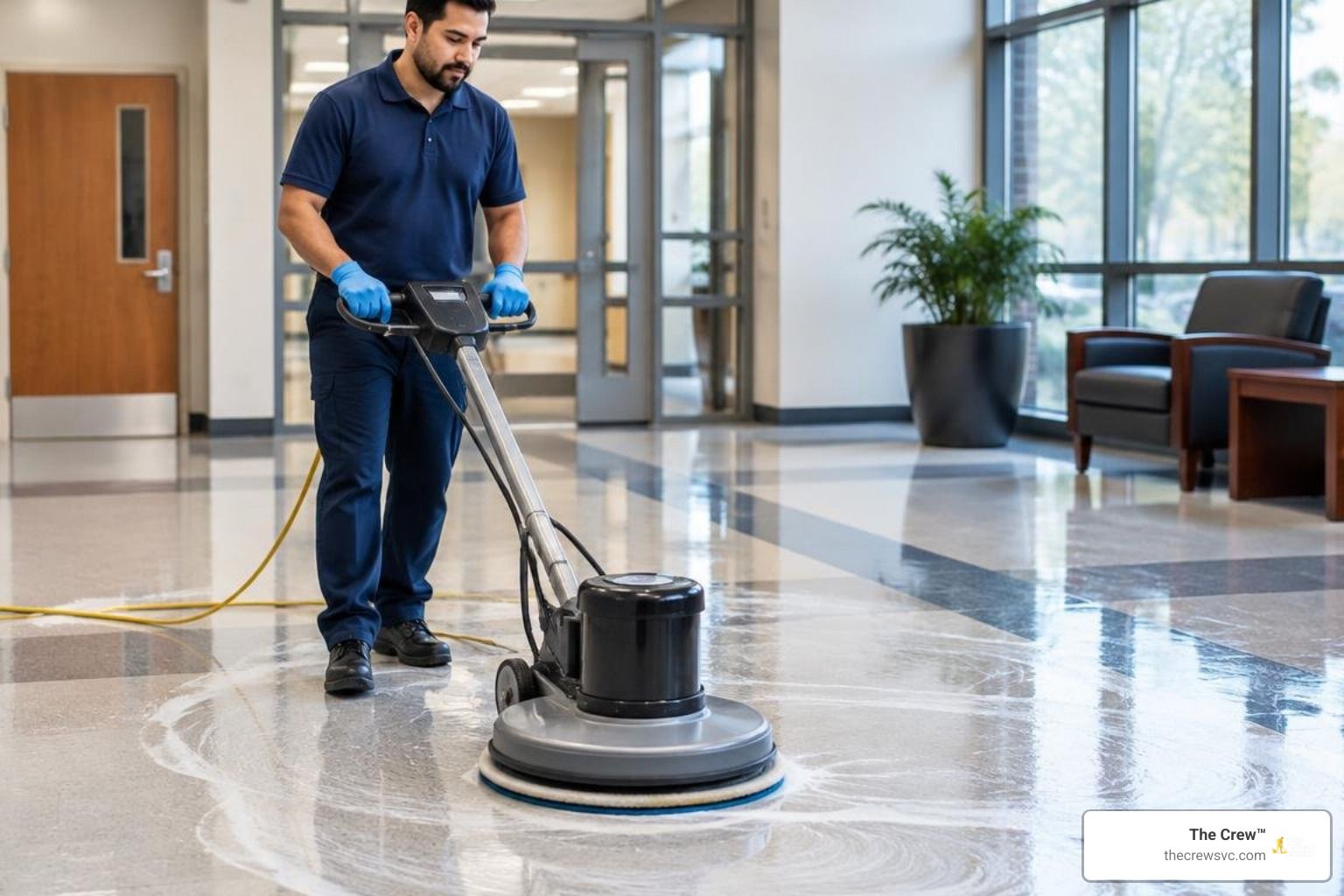
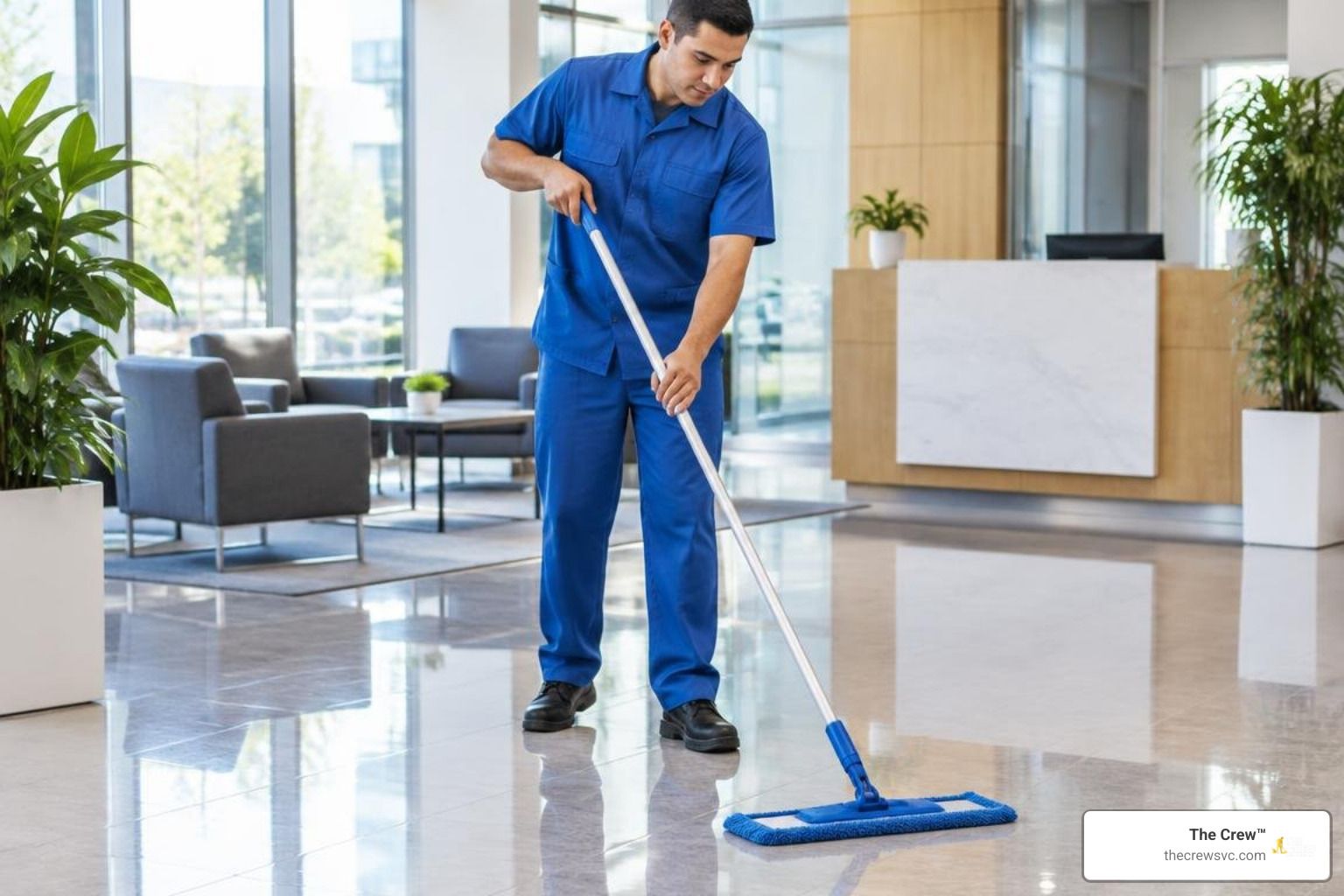
- Daily Hard-Floor Care: Sweep and damp-mop tile, stone, and luxury vinyl tile using neutral pH cleaners that lift grime without stripping protective sealants or leaving slippery residues.
- Periodic Deep Floor Restoration: Schedule comprehensive denver floor maintenance services for high-traffic stone honing, tile and grout scrub-downs, and hot-water carpet extraction to prevent permanent fiber matting and discoloration.
Daily, Weekly, and Periodic Lobby Maintenance Schedules
A consistent schedule ensures that routine daily upkeep prevents long-term asset deterioration. Relying on professional commercial cleaning eliminates guesswork by standardizing service frequencies across all front-of-house areas.
By organizing tasks into daily, weekly, and seasonal cadences, our building office cleaning teams keep lobbies pristine without disrupting normal business hours.
Daily Front-of-House Maintenance Tasks
Daily front-of-house tasks preserve a sharp, professional appearance from 8:00 a.m. to close:
- Clean glass entry doors inside and out to eliminate fingerprints, smudges, and dog nose prints.
- Empty all waste receptacles, replace liners, and wipe down exterior bin surfaces.
- Dust-mop hard surface floors and vacuum all entry mats and carpeted runners.
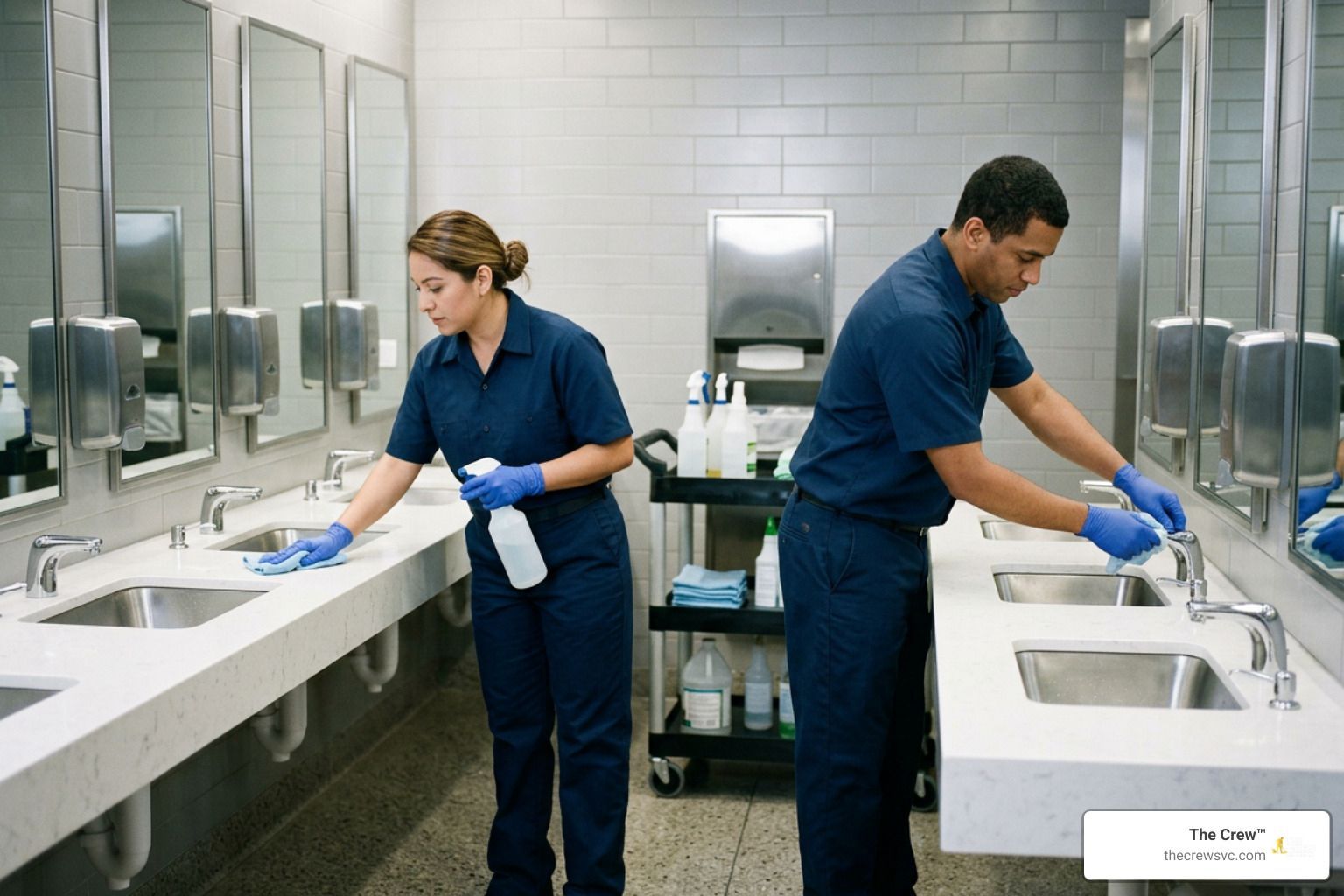
- Sanitize reception counter surfaces, guest pens, and touch check-in tablets.
- Restock wall-mounted and freestanding hand sanitizer stations, ensuring dispensers are clear of clogs.
- Spot-clean lobby lounge seating to address minor spills immediately.
- Inspect architectural lighting, resetting timers or reporting dead bulbs.
Routine vs Deep Office Lobby Cleaning Schedules
While daily maintenance controls surface dust, deeper periodic tasks protect expensive architectural materials from premature wear. For a full breakdown of facility-wide upkeep, consult our detailed guide to building office cleaning.
- Weekly Schedules: Detailed high and low dusting of baseboards, picture frames, and HVAC return vents; deep vacuuming along carpet edges and under modular lounge furniture; machine buffing of high-gloss tile and terrazzo.
- Monthly Schedules: Spot-cleaning fabric acoustic panels; applying wood conditioner to architectural millwork; polishing brass, bronze, or stainless-steel elevator surrounds.
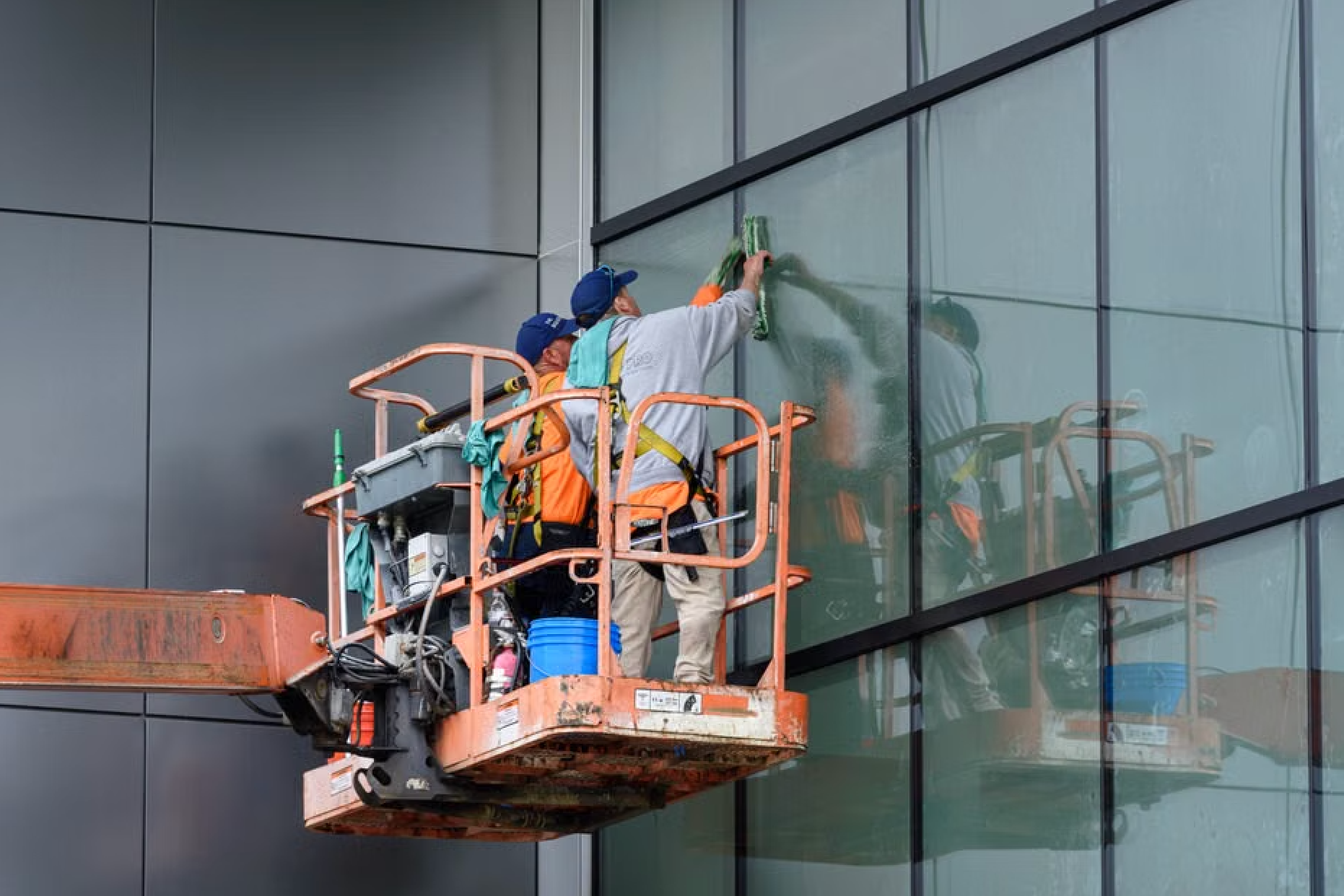
- Quarterly and Bi-Annual Deep Cleaning: Commercial hot-water extraction on all lobby upholstery and carpets; professional interior and exterior high-reach window washing; deep grout scrubbing and protective sealing for natural stone.
Essential Equipment, Materials, and Delicate Surface Care

Commercial lobbies feature an array of upscale materials—from reclaimed hardwood and brushed architectural metals to soft Italian leathers and honed marble. Cleaning these finishes requires commercial-grade equipment and specialized chemical knowledge. Partnering with established commercial cleaning contractors ensures your facility investments are protected rather than damaged by improper techniques.
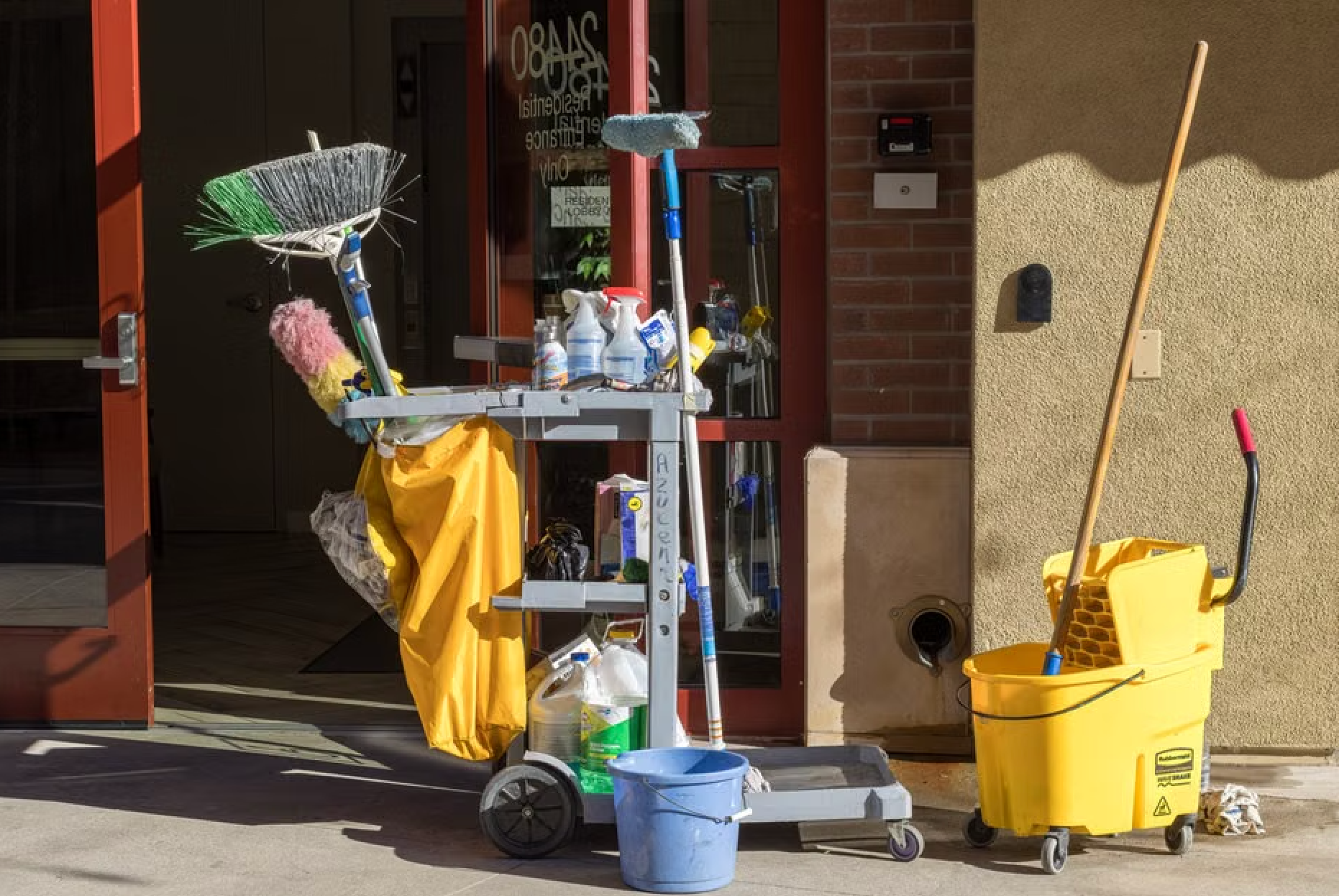
Our teams rely on proven equipment and specialized protocols:
- HEPA Filtration Backpack Vacuums: Commercial vacuums equipped with genuine HEPA filtration capture 99.97% of particulates down to 0.3 microns, preventing fine dust from recirculating into the lobby's breathing zone.
- Color-Coded Microfiber Systems: Using dedicated red, yellow, blue, and green microfiber cloths eliminates cross-contamination between restrooms, break rooms, and front-of-house surfaces.
- Neutral pH Cleaning Formulations: Acidic or harsh alkaline chemicals will etch polished marble, strip tile finishes, and degrade wood topcoats. We deploy pH-neutral detergents that lift soils safely.
- Fine Leather and Upholstery Care: Leather seating requires pH-balanced conditioners that remove body oils without drying the hide, while delicate woven fabrics require low-moisture encapsulation extraction.
- Architectural Metal Maintenance: Brushed stainless steel, brass, and bronze fixtures demand non-abrasive polishes applied strictly with the grain to avoid micro-scratching.
Investing in tailored business cleaning safeguards your finishes while presenting a clean environment for clients and executive leadership.
Operational Management: Digital Tracking, Quality Audits, and Business Impact
Lobby cleaning requires systematic operational oversight. Paper checklists left on clipboards behind desks are easily overlooked and difficult to audit. Modern commercial facilities rely on digital task management and real-time verification to maintain quality standards across every shift.
At The Crew™, we back our processes with exceptional operational stability. Because we hire background-checked cleaners and maintain an industry-leading zero turnover rate through our office cleaning zero turnover employment model, our clients work with consistent, familiar professionals who know their buildings inside and out.
Lobby hygiene delivers tangible business returns:
- Fewer Sick Days: By routinely addressing lobby high-touch vectors, businesses interrupt seasonal viral chains before pathogens reach interior workstations, where desks average 400 times more bacteria than a toilet seat.
- Enhanced Employee Productivity: In national surveys, 77% of workers reported producing higher quality work in clean environments.
- Elevated Brand Perception: Visitors form an impression of your brand within seconds of crossing the threshold. A sparkling, well-managed lobby communicates competence, order, and organizational pride.
Facilities throughout Aurora, Centennial, Broomfield, Golden, and beyond trust our teams for the best commercial cleaning in denver.
Frequently Asked Questions About Lobby Maintenance
What are the most germ-prone surfaces in an office reception area?
The most contaminated surfaces in an office reception area are high-touch communal items: exterior door handles, elevator push buttons, digital check-in touchscreen kiosks, reception counters, shared pens, and water dispenser buttons. Because these surfaces experience hundreds of hand contacts daily, they should be cleaned and disinfected at least once every 24 hours.
How often should commercial lobby carpets and upholstery undergo deep cleaning?
High-traffic lobby carpets and fabric seating should undergo professional hot-water extraction or low-moisture encapsulation every 3 to 6 months. In high-density office towers or regions with heavy winter snowfall and summer grit—such as Westminster, Arvada, and Littleton—quarterly carpet extraction is recommended to prevent soil from permanently grinding down fiber backing.
Why is digital task tracking essential for lobby cleaning consistency?
Digital task tracking provides real-time verification that every cleaning and disinfecting step was completed according to schedule. It eliminates human oversight, records required chemical dwell times, generates audit trails for property managers, and ensures accountability across daytime porter and night-shift custodial teams.
Conclusion
Your office lobby is the frontline of your company's physical brand. Keeping it impeccably maintained protects your interior finishes, supports worker wellness, and leaves visitors with immediate confidence in your operation. Achieving consistent results requires trained personnel, professional equipment, and structured maintenance schedules.
For dependable front-of-house care backed by four decades of family-run service across the Denver Metro Area, explore our comprehensive commercial facility services today.