Which Battery Powered Commercial Vacuum Cleaners Fit a Full Shift?
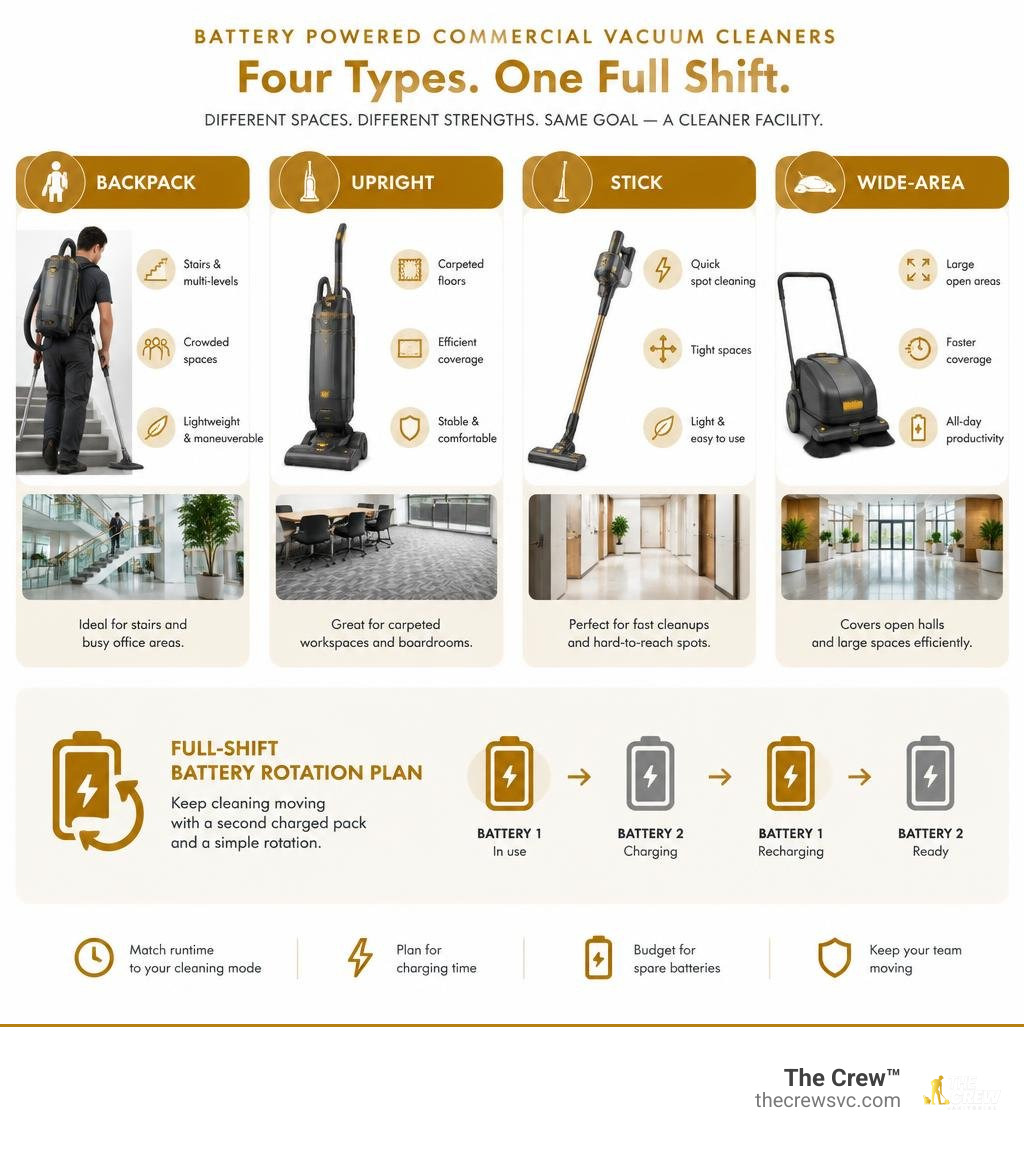
The best battery powered commercial vacuum cleaners depend on the space: backpack models suit stairs and crowded offices, uprights handle carpeted floors, sticks make quick spot cleaning easy, and wide-area machines cover open halls faster. For all-day work, compare runtime in the mode you will use, charging time, and the cost of spare batteries. A second charged pack can keep cleaning moving, but only if it recharges before the pack in use runs out.
Cordless equipment also removes cord-related pauses and trip hazards. It does not remove the need to plan around battery life, filter changes, and operator comfort. This guide compares those trade-offs so you can choose equipment that fits your facility and cleaning schedule.
I’m Carlos Castillo II, owner of The Crew™, a family-run commercial cleaning company serving the Denver Metro Area. My hands-on work leading janitorial operations informs how I evaluate battery powered commercial vacuum cleaners for daily use.
Core Categories and All-Day Cleaning Applications
Selecting the right commercial cleaning equipment begins with understanding the physical environment you are maintaining. Facilities are rarely uniform; an office tower in Denver might feature dense cubicle layouts on one floor, carpeted executive boardrooms on another, and wide marble corridors on the ground level.
Every equipment profile offers a distinct balance of floor coverage rates, maneuverability, and operator ergonomics.
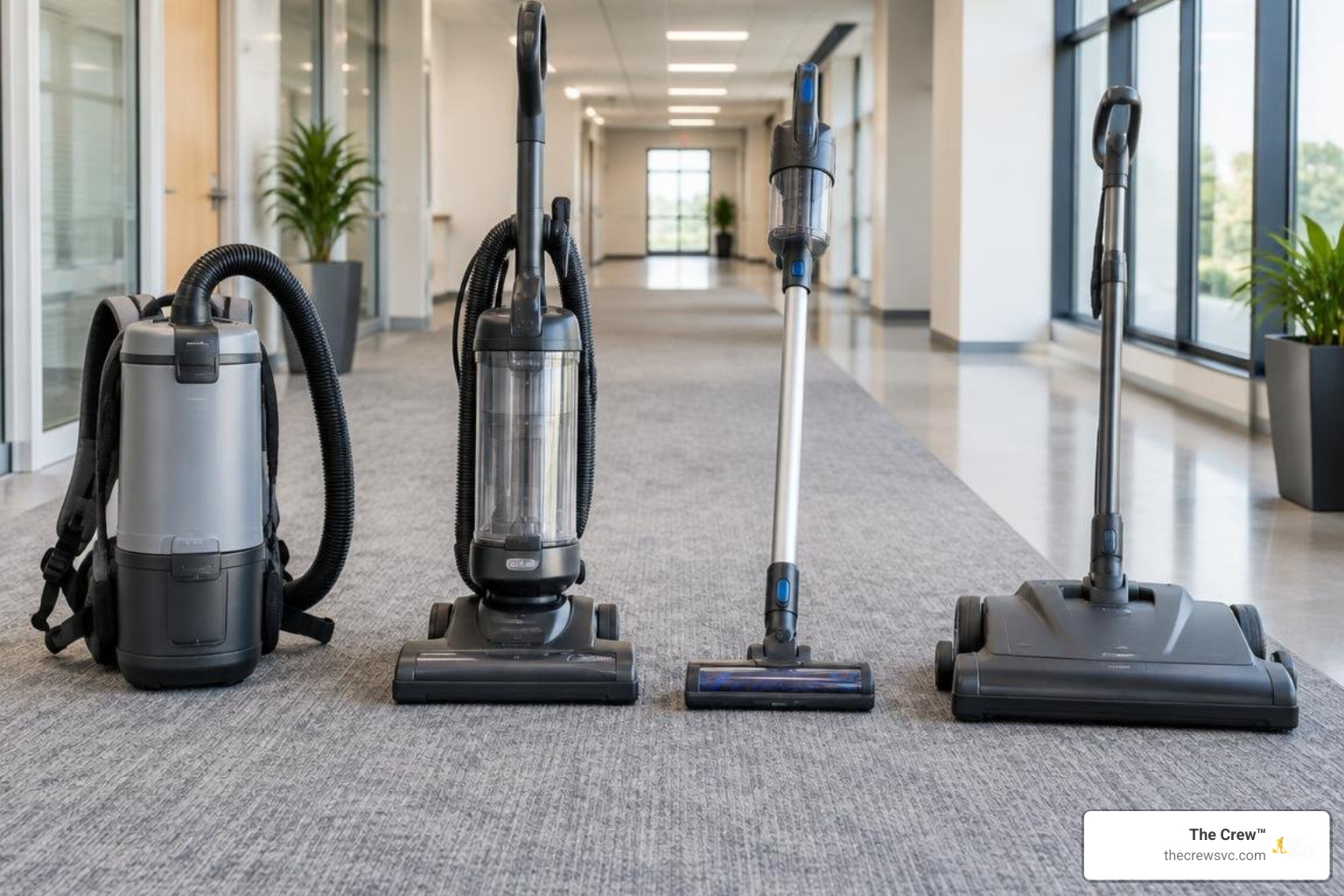
Categories of Battery Powered Commercial Vacuum Cleaners
Cordless commercial vacuums fall into four primary equipment profiles:
- Backpack Vacuums: Designed for rapid multi-surface cleaning, backpack units transfer the weight of the motor and battery to the operator’s hips and shoulders. They excel in navigating congested areas, stairwells, tight office cubicles, and classroom aisles. With specialized floor tools, operators can transition seamlessly from commercial carpet to hard flooring without missing a beat. High-capacity battery models, such as units analyzed in cordless backpack vacuum technical data, can deliver runtimes up to 105 minutes when paired with extended amp-hour battery packs.
- Upright Vacuums: Traditional uprights remain the gold standard for dedicated, deep carpet maintenance. Cordless uprights utilize motorized brush rolls that agitate carpet fibers to pull deeply embedded grit out of the pile. Modern battery-operated uprights eliminate the strain of managing 50-foot heavy-gauge cords while maintaining the aggressive agitation needed in high-traffic hospitality corridors and commercial entranceways.
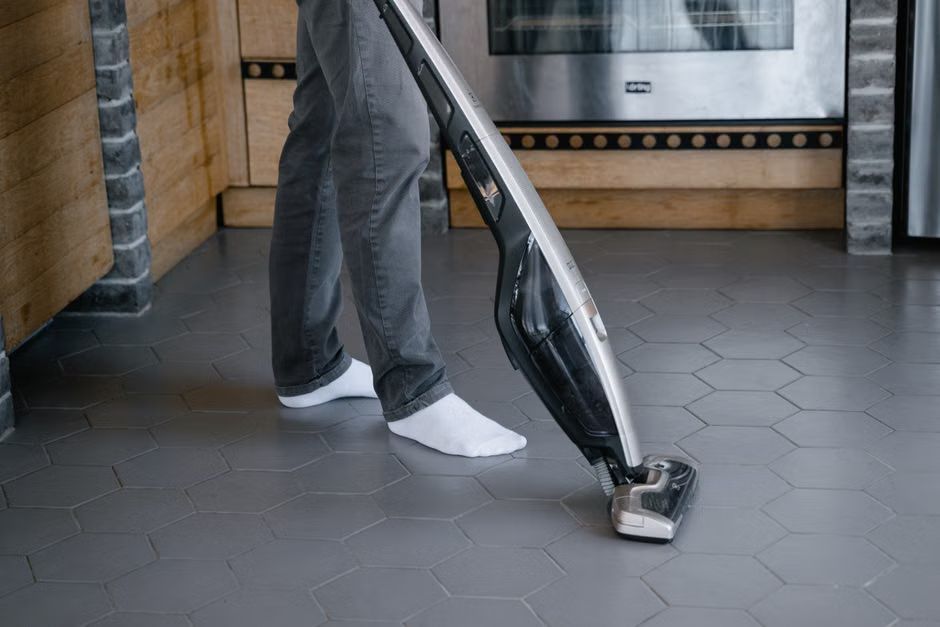
- Stick and Handheld Vacuums: Compact, ultra-lightweight stick vacuums provide an agile solution for daytime spot cleaning, spill response, and above-floor dusting. Ranging from 6 to 9 pounds, these tools convert rapidly into handheld units to clean upholstery, ceiling vents, and vehicle fleets. Stick units are ideal for swift touch-ups in retail boutiques, medical waiting rooms, and conference rooms between meetings.
High-Capacity Wide-Area and Sweeper Platforms
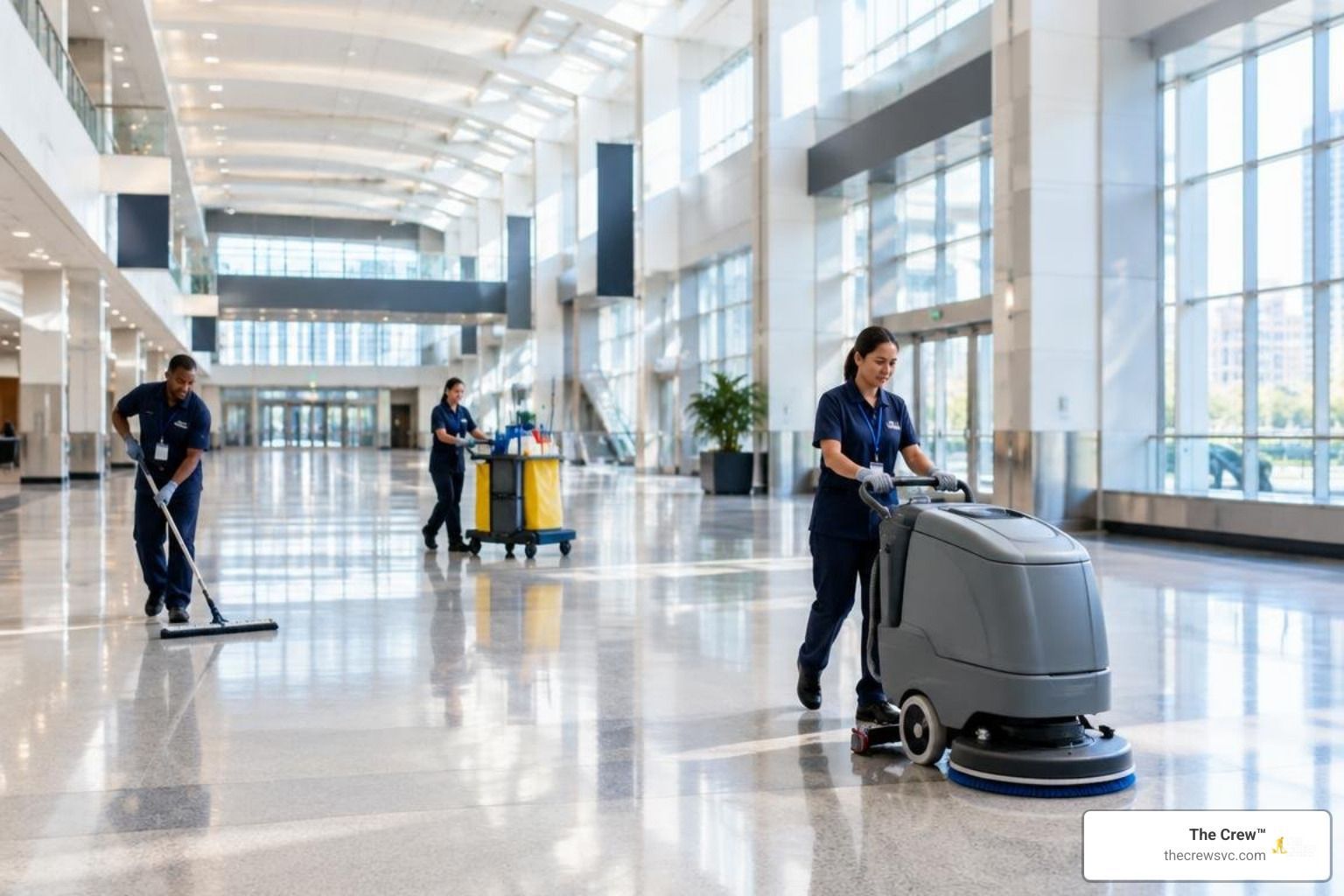
For expansive footprints—such as convention centers, airport terminals, sports complexes, and logistics facilities—standard 12-to-14-inch cleaning paths require too many passes to be cost-effective. This is where wide-area cordless vacuums and walk-behind battery sweepers become essential.
Battery-operated wide-area vacuums feature sweeping paths up to 28 inches, covering more than twice the width of a standard upright in a single pass. In a 10,000-square-foot facility, a 28-inch cleaning deck reduces the required walking passes by roughly two-thirds, dramatically lowering labor time.
Industrial walk-behind sweepers, such as the IPC Eagle SmartVac series with paths ranging from 24 to 32 inches, boast recovery rates exceeding 38,000 square feet per hour. For facilities balancing manual and autonomous workflows, pairing wide-area platforms alongside automated commercial robotic vacuum systems delivers comprehensive floor coverage across massive square footages without straining your janitorial crew.
Performance Benchmarks for Battery Powered Commercial Vacuum Cleaners
Evaluating commercial cordless vacuums requires looking past consumer marketing metrics and analyzing verified mechanical specifications.
| Vacuum Category | Typical Cleaning Width | Airflow Range (CFM) | Static Lift (Inches) | Average Noise Level | Ideal Commercial Setting |
|---|---|---|---|---|---|
| Cordless Backpack | 12" – 14" (Tool Deck) | 65 – 115 CFM | 65" – 86" | 62 – 72 dBA | Stairwells, Cubicles, Classrooms |
| Cordless Upright | 10" – 14" | 50 – 85 CFM | 60" – 80" | 68 – 78 dBA | Hotel Hallways, Carpeted Offices |
| Commercial Stick | 9" – 11" | 35 – 60 CFM | 45" – 65" | 70 – 76 dBA | Spot Cleaning, Retail, Upholstery |
| Wide-Area Battery | 24" – 28" | 120 – 200 CFM | 70" – 90" | 65 – 74 dBA | Arenas, Large Hallways, Warehouses |
Airflow, Static Lift, and Suction Ratings
Vacuum performance is governed by two interconnected physical forces: airflow (measured in Cubic Feet per Minute, or CFM) and static water lift (measured in inches).
- CFM (Cubic Feet per Minute): Measures the volume of air moved through the machine. Higher CFM translates directly to faster debris collection and the ability to capture loose particles across a wider area around the floor tool. Commercial units typically operate between 60 and 120+ CFM.
- Static Water Lift: Measures the pure lifting suction power of the vacuum motor when airflow is restricted. High static lift (70 inches or more) is critical for pulling heavy sand, winter salt, and deep soil out of dense commercial carpet pile.
- Air Watts and Brushless Motors: Air Watts quantify the overall motor output efficiency (combining airflow and suction pressure). Modern commercial battery vacuums rely on brushless DC motors that generate higher torque and Air Watts while drawing less energy from the lithium-ion cells, extending runtimes without sacrificing extraction strength. For specialized facility needs, aligning your fleet with industrial cordless vacuum standards guarantees that the equipment delivers sufficient lift for heavy soil recovery.
Noise Levels and Day Cleaning Compliance
As commercial facilities shift from evening janitorial schedules toward daytime cleaning programs to reduce energy costs and enhance building security, operating sound levels have become a primary purchasing criterion.
Standard corded commercial uprights frequently operate between 78 and 85 dBA, which disrupts office phone calls, classroom instruction, and patient recovery in healthcare wings. Battery-powered commercial vacuums are engineered with sound-dampening motor baffles and specialized multi-speed controls. In low-power or "hush" modes, quality cordless units operate at sound levels as low as 62 to 67.5 dBA—well below normal conversational volume.
Operating below 70 dBA complies with LEED (Leadership in Energy and Environmental Design) green building requirements and CIMS-GB (Cleaning Industry Management Standard - Green Building) standards, allowing cleaning crews to work seamlessly in occupied spaces.
Advanced Multi-Stage and HEPA Filtration Systems
Commercial vacuuming is as much about indoor air quality (IAQ) as it is about visible soil removal. A vacuum that expels fine particulate dust back into the ambient air creates respiratory hazards and settles on surfaces immediately after cleaning.
Commercial battery vacuums utilize multi-stage filtration trains consisting of:
- A primary multi-layer synthetic or cloth collection bag.
- A pre-motor filter to capture rogue debris and protect the motor fan.
- A certified post-motor exhaust filter, typically rated H13 HEPA.
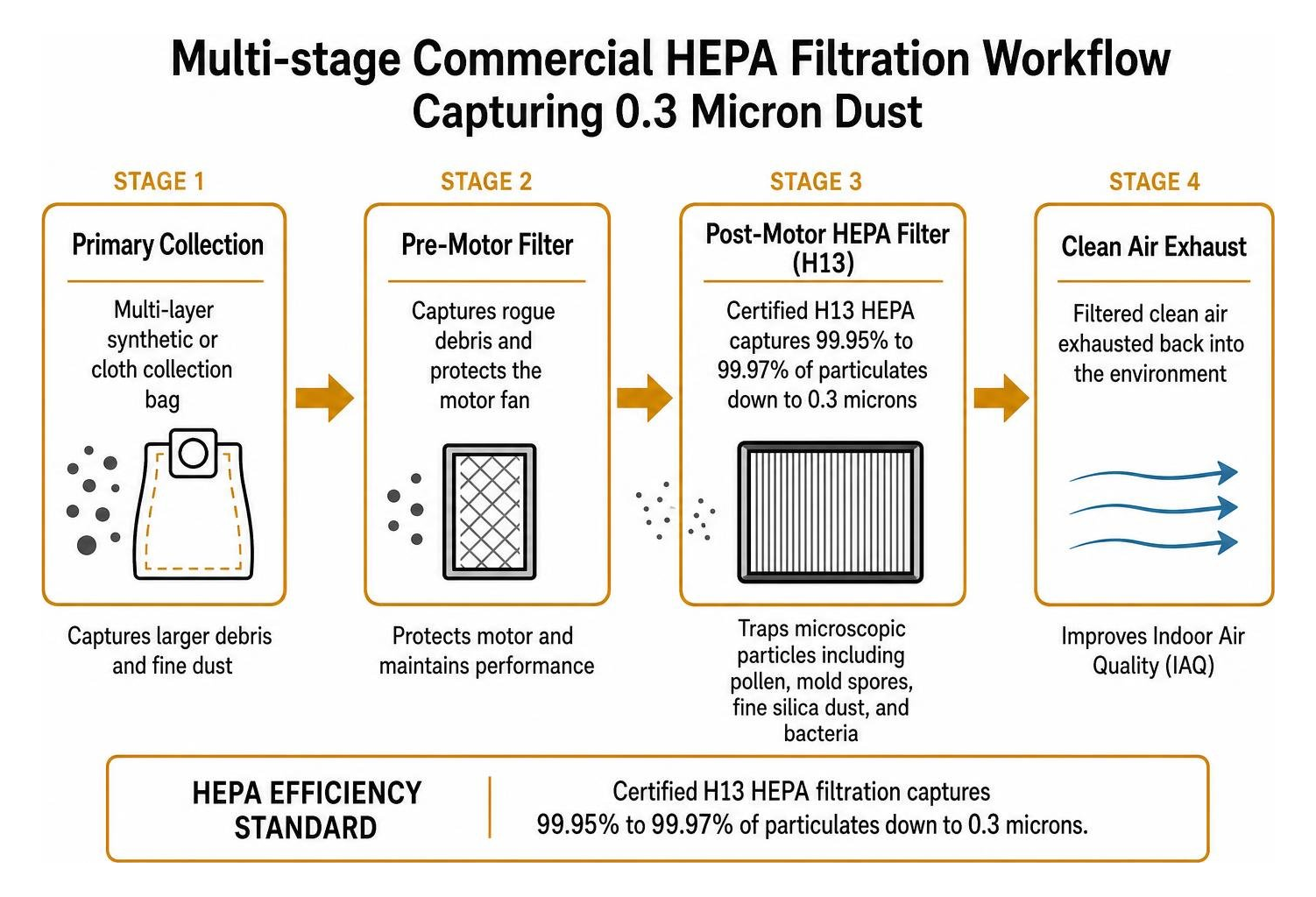
Certified H13 HEPA filtration captures 99.95% to 99.97% of microscopic particulates down to 0.3 microns, including pollen, mold spores, fine silica dust, and bacteria. Maintaining high-efficiency synthetic bags and clean HEPA cartridges ensures the vacuum breathes freely, preventing motor overheating and maintaining peak suction power. For janitorial teams seeking to optimize facility hygiene, adhering to comprehensive commercial vacuuming standards preserves both carpet longevity and healthy indoor environments.
Battery Management Strategies for Continuous Full-Shift Operation
Transitioning a commercial cleaning team to cordless machinery requires an operational shift in power management. Without a deliberate battery rotation strategy, equipment will sit idle while batteries recharge, defeating the productivity gains of cordless mobility.
Runtime Variables and Multi-Speed Mode Efficiency
Lithium-ion battery platforms used in commercial vacuums generally operate on 24V, 36V, 40V, or 43V architectures, with capacities ranging from 6.0 Ah to 12.0 Ah. The actual runtime an operator achieves depends directly on the selected motor power mode:
- Eco / Hush Mode: Regulates motor power draw, delivering extended runtimes from 60 up to 105 minutes. This mode provides ample suction for daily maintenance on hard flooring, thin commercial carpet tiles, and general dust removal. Units like the Sensor Bp cordless specifications demonstrate how optimized power management provides up to an hour of continuous operation while reducing sound output for daytime environments.
- Boost / Turbo Mode: Channels maximum current to the motor to pull stubborn soil or heavy debris from plush carpeting, walk-off mats, and high-traffic entryways. Boost mode typically shortens runtime to 20 to 40 minutes per charge.
- Intelligent Floor Sensors: High-end units incorporate dynamic resistance sensors within the brush roll that automatically ramp suction power up on thick carpet and dial it back on smooth vinyl or tile, extending usable battery life automatically.
Dual-Battery Swapping and Fast Charging Workflows
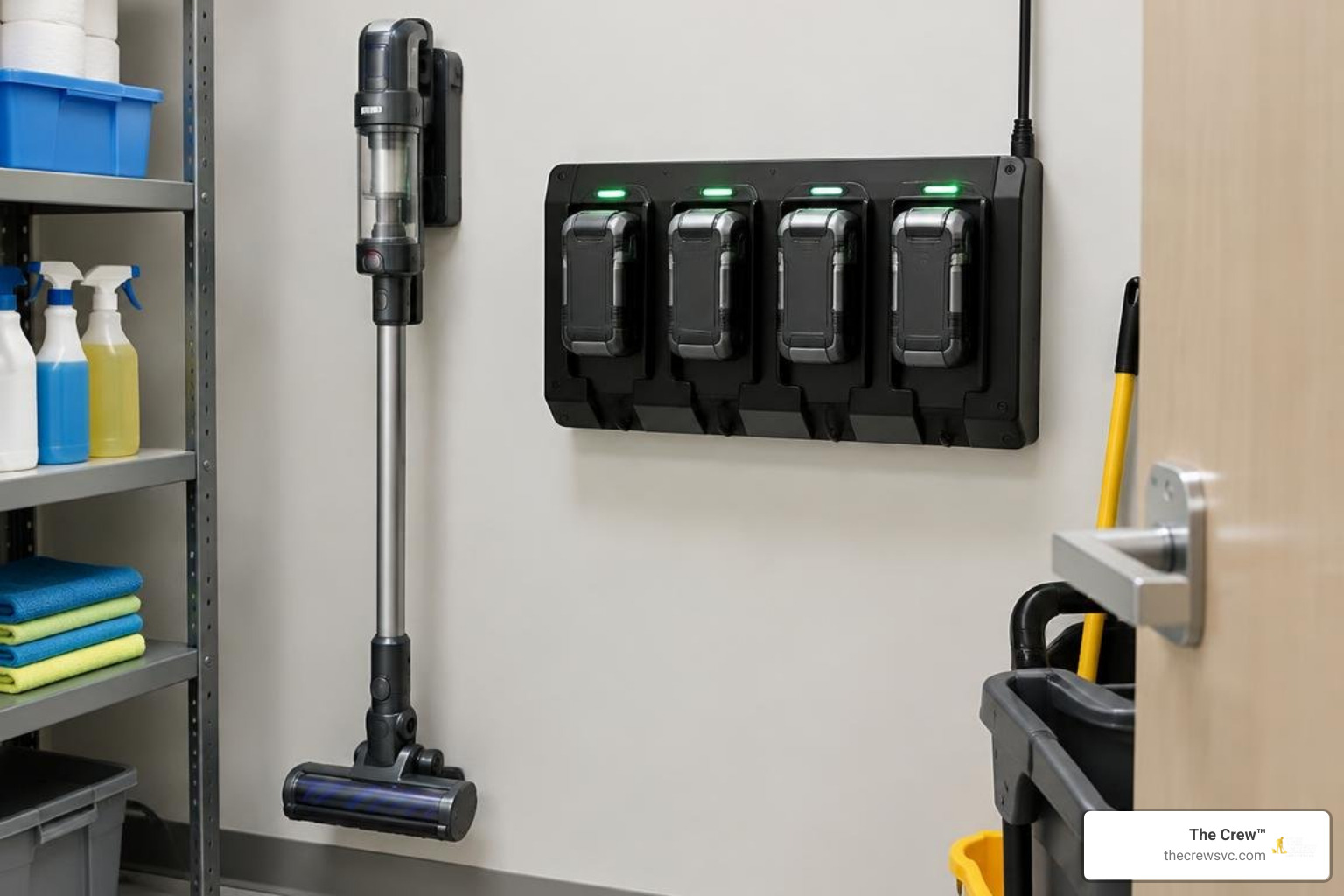
To achieve continuous, uninterrupted cleaning across an 8-hour shift, janitorial teams must maintain a balanced 1:1 or 2:1 battery-to-charger workflow. When battery charge time is equal to or faster than operating discharge time, a crew can clean indefinitely by rotating packs.
Systems like the Cleanstar 36V dual-battery system supply two operational battery pairs: one pair powers the machine for 40 to 70 minutes while the second pair replenishes on a rapid desktop charger in 60 minutes.
To maintain optimal fleet performance, implement these operational practices:
- Label Battery Pairs: Mark matching batteries (e.g., "Set A", "Set B") to ensure cells age symmetrically and discharge evenly.
- Avoid Thermal Extremes: Lithium-ion cells feature thermal protection circuits that lock out charging if a battery is too hot immediately after high-draw operation. Allow batteries 5 to 10 minutes to cool before placing them on high-output rapid chargers.
- Stage Charging Pods: For large multi-story buildings, place charging stations in centralized janitorial closets on key floors to minimize technician transit time when swapping packs.
Total Cost of Ownership: Cordless vs. Corded Vacuums
While cordless commercial vacuums carry a higher initial purchase price than corded equivalents, analyzing the Total Cost of Ownership (TCO) over a 3- to 5-year lifecycle reveals substantial financial advantages. In commercial janitorial operations, labor accounts for roughly 80% to 90% of overall cleaning costs. Minimizing labor minutes per square foot yields direct operational savings. For contractors structuring fleet budgets, managing vacuum equipment for your cleaning business requires balancing equipment investments against measurable labor recovery.
Productivity Gains and Labor Cost Offsets
Operating a traditional corded upright involves repetitive, non-productive tasks: searching for functioning wall outlets, uncoiling cords, moving cords around furniture legs, untangling snags, and rewinding 50-foot cables when moving between rooms.
Studies by the International Sanitary Supply Association (ISSA) show that:
- A standard corded upright vacuum cleans approximately 2,500 to 3,000 square feet per hour.
- A cordless backpack vacuum cleans between 7,000 and 10,000+ square feet per hour in similar office layouts.
Eliminating cord management saves cleaning crews up to 30% to 50% of their operational vacuuming time. In an office complex requiring 4 hours of daily vacuuming, saving 1.5 hours per shift recovers hundreds of labor hours annually—paying off the initial machine and battery investment within the first few months of deployment.
Furthermore, eliminating trailing cords removes one of the leading causes of slip, trip, and fall worker compensation claims in commercial facilities.
Maintenance, Replacement Parts, and Fleet Warranties
Maintaining a commercial cordless fleet requires budgeting for predictable wear components:
- Lithium-Ion Battery Packs: Quality commercial battery cells typically sustain 500 to 1,000 full charge cycles before dropping below 80% capacity. For a daily cleaning operation, expect battery packs to deliver 2 to 3 years of reliable service before requiring replacement.
- Filters and Dust Bags: Never compromise motor life with low-grade filtration. Multi-layer synthetic bags protect internal motors from micro-dust penetration, extending motor lifespan significantly compared to standard paper bags.
- Brush Rolls and Belts: Commercial brush rolls accumulate hair and carpet fibers that increase motor resistance. Choosing vacuums with tool-free brush removal simplifies daily end-of-shift maintenance.
- Warranty Protection: Major commercial manufacturers generally provide 1- to 3-year commercial warranties on vacuum bodies and motors, with 1- to 2-year dedicated warranties on battery packs and chargers. For specialized wet-dry and utility tasks, janitorial fleets often supplement uprights with durable cordless commercial shop vacuum tools covered under industrial tool warranties.
Facility-Specific Selection Guide for Janitorial Teams
Matching equipment to your building layout ensures maximum operational efficiency and prevents premature equipment breakdown.
Deploying Battery Powered Commercial Vacuum Cleaners Across Varied Workplaces
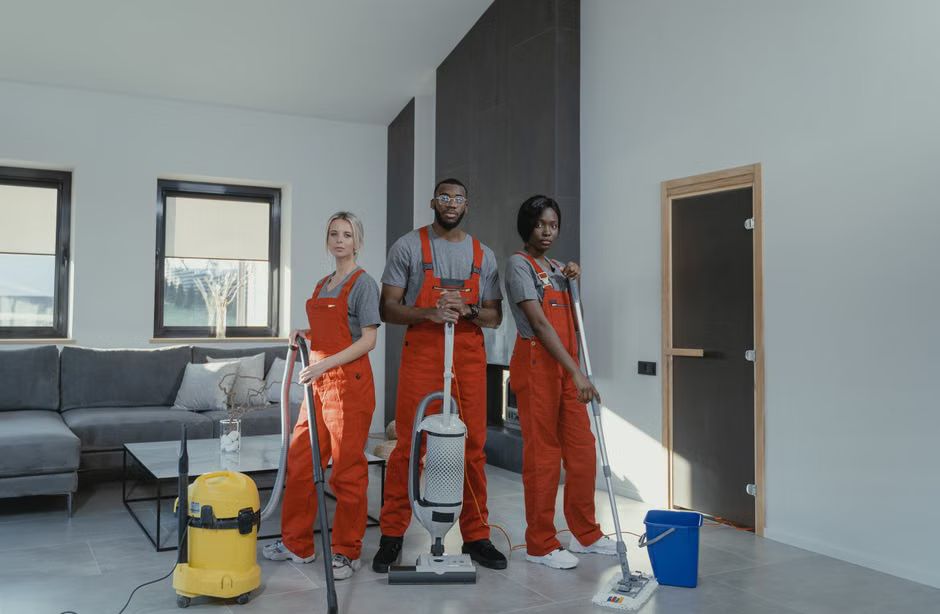
- Corporate Offices & Co-Working Spaces: Open-plan offices filled with desks, rolling chairs, and power strips are notoriously difficult to clean with corded uprights. Lightweight cordless backpacks and agile stick vacuums maneuver under workstations without tangling cables or disrupting employees.
- Healthcare & Clinical Facilities: Medical office buildings and clinics demand quiet operation and strict particulate containment. Battery backpacks and uprights equipped with sealed H13 HEPA filtration and quiet hush modes (under 68 dBA) allow thorough cleaning around patient rooms and reception areas without noise disruption or airborne contamination.
- Schools & Educational Campuses: Multi-story educational facilities feature endless stairwells, auditoriums with tiered seating, and tightly packed classrooms. Cordless backpacks cut cleaning times in half across lecture halls and eliminate cord trip hazards in busy hallways during passing periods.
- Hospitality & Hotels: Fast room turnover is critical for hospitality housekeeping. Cordless uprights with lie-flat handles clean under guest beds and furniture quickly, while quiet sound profiles prevent disturbing guests in adjacent rooms.
- Retail Corridors & Showrooms: High foot traffic brings in constant outdoor dirt and debris. Compact cordless stick vacuums allow retail staff to conduct instant spot cleanings without closing aisles or dragging out extension cords.
Ergonomics, Weight Distribution, and Harness Design
Operator comfort is directly linked to cleaning thoroughness and injury prevention. A heavy, poorly balanced vacuum leads to operator fatigue, poor posture, and repetitive strain injuries.
When evaluating backpack vacuums, focus on units featuring engineered harness systems (such as those developed with ergonomic outdoor backpack manufacturers). The harness must transfer 80% to 90% of the unit's weight directly to the operator's hips and pelvis via a padded waist belt, leaving the shoulders and upper back free from downward compression.
Modern commercial cordless backpack vacuums, such as the Cleanstar Prostar at 5 kg (11 lbs) or the Hoover HVRPWR at under 10 lbs (bare tool), dramatically reduce operator strain. Integrated waist-strap control switches allow cleaners to adjust power modes or power the unit down instantly without twisting their spine to reach the machine.
Frequently Asked Questions About Commercial Cordless Vacuums
How do battery powered commercial vacuums maintain suction throughout a full shift?
Unlike older nickel-cadmium batteries that experienced gradual power drop-offs as the charge drained, modern commercial lithium-ion battery packs maintain a steady, regulated voltage discharge. This ensures fade-free suction from 100% capacity down to 1% capacity. Pairing these steady-voltage batteries with efficient brushless motors and multi-layer filtration bags prevents internal airflow restriction, ensuring consistent static lift and soil extraction throughout the cleaning cycle.
What is the lifespan and replacement cycle for commercial lithium-ion batteries?
Under normal commercial daily use, premium lithium-ion battery packs deliver between 500 and 1,000 complete charge/discharge cycles. For most janitorial teams operating on a daily schedule, this translates to an operational lifespan of 2 to 3 years. To maximize battery longevity, avoid storing batteries in unconditioned vehicles during extreme winter freezes or hot summer days, and avoid running battery cells to absolute zero percent discharge whenever possible.
Are cordless commercial vacuums suitable for high-traffic healthcare environments?
Yes, provided they are equipped with sealed HEPA filtration systems and meet Carpet and Rug Institute (CRI) standards for soil removal and dust containment. In healthcare settings, cordless vacuums provide significant safety benefits by eliminating trailing cords that pose tripping hazards for patients, staff, and medical rolling carts. Their low noise levels (often below 68 dBA in quiet mode) ensure minimal disruption in sensitive clinical environments.
Conclusion
Transitioning to a fleet of battery-powered commercial vacuums is one of the most effective equipment upgrades a facility manager or cleaning crew can make. By removing the physical constraints of electrical cords, commercial cleaning teams can double their hourly square footage coverage, enhance safety compliance by removing trip hazards, and easily maintain occupied spaces with whisper-quiet, HEPA-filtered operation.
Selecting the right equipment comes down to matching the machine profile to your flooring layout, balancing CFM and static lift to your soil levels, and establishing a structured battery-swapping system for continuous all-day operation. For facilities looking to streamline dust containment and maintenance workflows, pairing these cordless strategies with high-performance commercial bagless vacuums provides a flexible, cost-effective cleaning operation built for the modern workspace.