A – Z Guide to Vacuum Cleaner Business
Why the Vacuum Cleaner Business Is More Than Just Cleaning Floors
Starting or running a vacuum cleaner business means stepping into one of the most resilient corners of the cleaning industry — whether you're selling equipment, repairing machines, or operating a professional cleaning service.
Here's a quick snapshot of what this business looks like:
| Business Model | What It Involves | Who It's For |
|---|---|---|
| Equipment Sales | Selling commercial vacuums to businesses | Dealers, distributors |
| Repair & Servicing | Maintaining and fixing vacuums | Technicians, franchisees |
| Commercial Cleaning | Using vacuums as part of a cleaning service | Cleaning companies |
| Cleaning Franchise | Operating under a proven brand system | New entrepreneurs |
| Niche Services | Bin cleaning, carpet care, specialty cleaning | Operators seeking repeat customers |
The demand is real. Over 92% of consumers say cleanliness affects whether they return to a business. Productivity losses from dirty workplaces cost U.S. employers over $225 billion annually. And the U.S. home services market alone is projected to surpass $1 trillion in the coming years.
Yet many business owners still underestimate how much the right vacuum equipment — or the right cleaning business model — can change their bottom line.
This guide covers it all: equipment types, franchise models, total cost of ownership, air quality benefits, and industry trends shaping 2026 and beyond.
I'm Carlos Castillo II, owner of The Crew Janitorial, a family-run commercial cleaning company serving the Denver Metro Area since 1982 — and with a finance degree from CU Boulder, I've seen how smart equipment choices and reliable systems drive long-term profitability in the vacuum cleaner business. Whether you're choosing equipment for your facility or exploring a new business model, this guide gives you the practical information you need.

Understanding the Commercial Vacuum Cleaner Business Landscape

When we look at the broader vacuum cleaner business landscape, we see a highly segmented industry. On one side, you have manufacturers and independent retail dealers who supply the hardware. On the other side, you have service-oriented businesses—like repair shops, specialized franchises, and commercial cleaning companies—that rely on these machines daily to generate revenue.
For any business operating in the Denver Metro Area—from the industrial hubs of Commerce City and Aurora to the corporate offices in Englewood and Lakewood—understanding the tools of the trade is the first step toward operational efficiency.
To understand why commercial-grade machinery is a necessity rather than a luxury for businesses, we must look at how these models differ from the standard vacuums found in most homes.
| Feature | Commercial Vacuums | Residential Vacuums |
|---|---|---|
| Motor Lifespan | 1,000 to 2,000+ hours | 50 to 150 hours |
| Power Cord Length | 35 to 50+ feet (often double-insulated) | 20 to 25 feet |
| Filtration Standards | HEPA standard (often standard or optional) | Basic filtration (HEPA is rare or low-grade) |
| Capacity | 10 to 20+ quarts | 1 to 3 quarts |
| Repairability | Highly modular; parts easily replaced | Often cheaper to replace than repair |
| Casing Material | High-impact ABS plastic or reinforced metal | Lightweight, thin plastics |
Commercial vs Residential Models in a Vacuum Cleaner Business
In a professional setting, residential vacuums simply cannot keep up. A standard household vacuum is designed to run for perhaps 30 to 45 minutes, once or twice a week. In contrast, a commercial vacuum used by a professional cleaning crew must run for several hours every single day.
- Durability and Construction: Commercial models are built with rugged components, such as high-impact polymers, reinforced bumpers, and heavy-duty aluminum or steel brush rolls. They are designed to survive being bumped into metal desk legs, dragged across threshold strips, and loaded into service vans daily.
- Motor Lifespan: The heart of any vacuum is its motor. Residential vacuums typically utilize cheaper motors that burn out after roughly 100 hours of cumulative use. Commercial vacuums feature heavy-duty, commercial-grade motors (often bypass or dual-stage motors) built to run for 1,000 to 2,000 hours.
- Filtration and Airflow: Commercial vacuums are designed to maximize airflow (measured in Cubic Feet per Minute, or CFM) rather than just raw sealed suction (measured in water lift). This allows them to pull deeply embedded dirt out of carpet fibers rapidly. Furthermore, their filtration systems are sealed to prevent dust from escaping back into the room.
Key Features of High-Performance Commercial Vacuums
If you are purchasing equipment for your own vacuum cleaner business or selecting fleet vacuums for a commercial facility, you should prioritize several critical features:
- HEPA Filtration: True HEPA (High-Efficiency Particulate Air) filters capture 99.97% of particles as small as 0.3 microns. This includes dust, pollen, mold, and bacteria. In high-traffic environments like schools in Westminster or medical offices in Centennial, HEPA filtration is crucial for maintaining indoor air quality and reducing employee absenteeism.
- Suction Power and Airflow: Look for a balance of water lift (the motor's lifting power) and CFM (the volume of air moved). High CFM is ideal for quickly clearing large, open carpeted areas, while high water lift is necessary for pulling heavy soil out of dense carpets or extracting liquids.
- Capacity: Minimizing down-time is key to productivity. A vacuum with a larger collection capacity—such as a 10-quart backpack vacuum—allows operators to clean longer without stopping to empty bags or dirt cups.
- Ergonomics: Operator fatigue is a major cause of workplace injuries and declining productivity. Ergonomically designed backpack harnesses distribute weight evenly across the hips rather than pulling on the shoulders. Lightweight uprights with ergonomic handles reduce wrist strain.
- CRI Gold Certification: The Carpet and Rug Institute (CRI) tests vacuums rigorously. A "CRI Gold" seal of approval means the vacuum excels in soil removal, dust containment, and carpet fiber preservation.
- SONAR Technology: Some modern commercial uprights feature advanced SONAR technology. This system automatically detects changes in floor types (e.g., transitioning from low-pile carpet to luxury vinyl tile) and adjusts the brush roll speed and height instantly, protecting floors and optimizing battery or motor efficiency.
- Bagged vs. Bagless: While bagged vacuums offer superior dust containment during emptying, bagless models have gained popularity due to lower ongoing operating costs. If you are considering a bagless setup for your business, check out our detailed guide on the Commercial Vacuum Bagless to weigh the pros and cons of this technology.
Selecting the Right Equipment for Different Business Environments

No single vacuum is perfect for every environment. A machine that excels in a wide-open retail showroom in Aurora will likely fail or prove highly inefficient in a multi-story office building in Lakewood or a workshop in Commerce City. Matching the equipment to the facility layout directly impacts cleaning times and overall productivity.
Upright and Backpack Vacuums for Offices and Retail
For offices, retail stores, and educational facilities, the choice usually comes down to upright vacuums versus backpack vacuums.
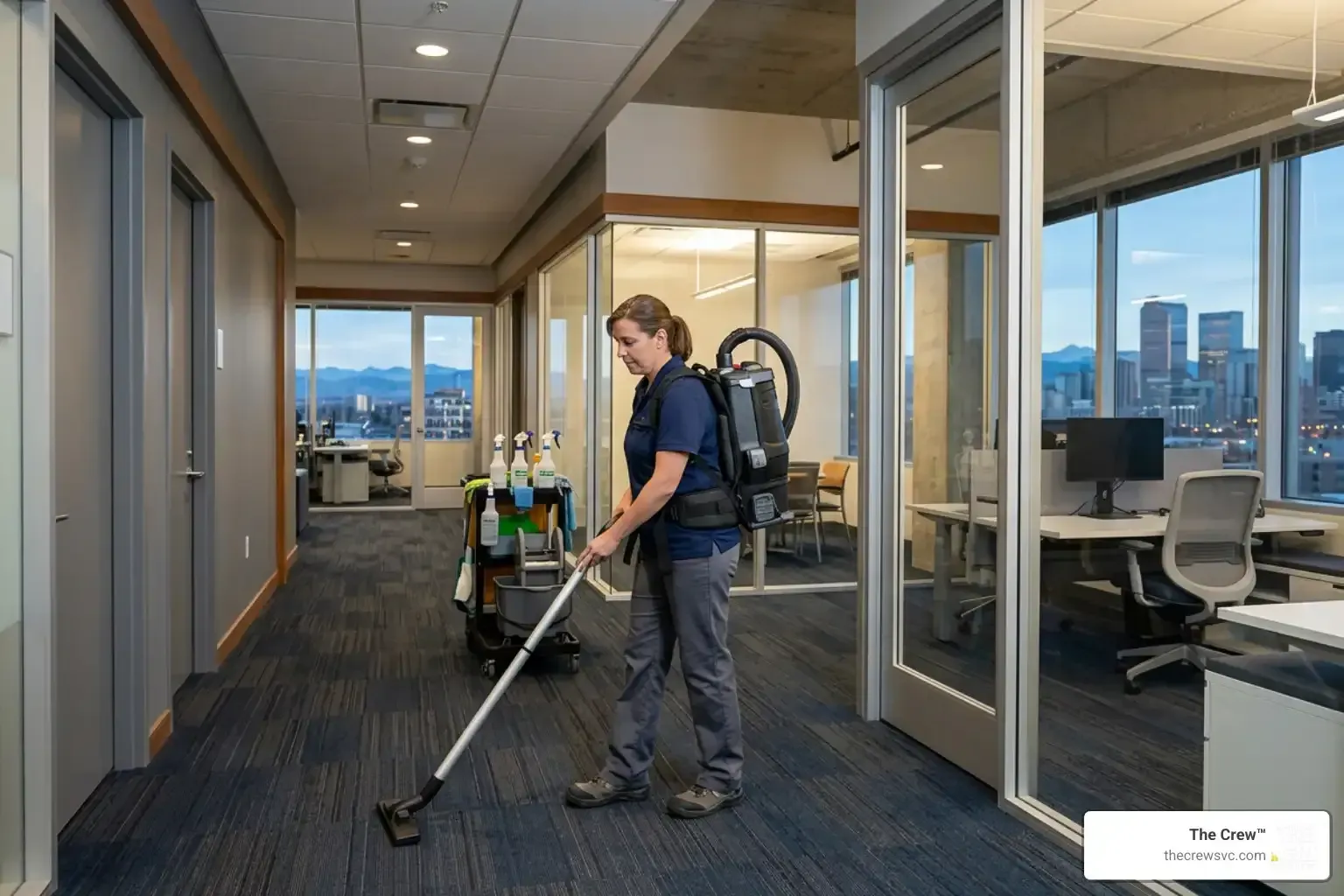
- Backpack Vacuums (The Productivity Champions): In spaces filled with desks, chairs, stairs, and tight corners, backpack vacuums are unmatched. Because the operator carries the vacuum on their back, their hands are free to navigate obstacles with a lightweight wand. Studies show that backpack vacuums can reduce cleaning times by up to 50% compared to traditional uprights in complex office layouts. They are highly mobile, making them perfect for cleaning stairwells in Broomfield office parks or lobby areas in Englewood.
- Upright Vacuums (The Carpet Specialists): Upright vacuums remain the go-to choice for large, open carpeted spaces. Their heavy brush rolls agitate carpet fibers, loosening deeply embedded dirt that suction alone cannot remove. If your facility features extensive carpeted corridors, a wide-track upright vacuum (offering a 16-inch or wider cleaning path) can increase cleaning productivity by over 33% per pass.
- Noise Levels: For day-porter services or businesses operating during normal working hours, noise is a major concern. Look for "QuietClean" models that operate at 69 dBA or lower. This allows cleaning crews to vacuum offices and retail spaces without disrupting employees or customers.
Canister and Wet-Dry Vacuums for Industrial and Hospitality Settings
In tougher or more specialized settings, uprights and backpacks may not cut it.
- Canister Vacuums: Popular in the hospitality sector (such as hotels in Denver and Golden), canister vacuums are highly versatile. They feature a low-profile cleaning head that easily slides under beds, desks, and low furniture. They are also exceptionally quiet and stable, making them ideal for cleaning guest rooms and quiet corridors.
- Wet-Dry Vacuums: For industrial settings, warehouses in Henderson, or commercial kitchens in Wheat Ridge, wet-dry vacuums are indispensable. These rugged machines can handle both dry debris (like wood shavings, metal filings, or drywall dust) and liquid spills. Some advanced wet-dry models feature continuous pump-out systems, allowing them to vacuum up large volumes of water and pump it directly down a drain simultaneously—a lifesaver during plumbing emergencies or deep floor-stripping projects.
Franchise, Dealership, and Service Business Models
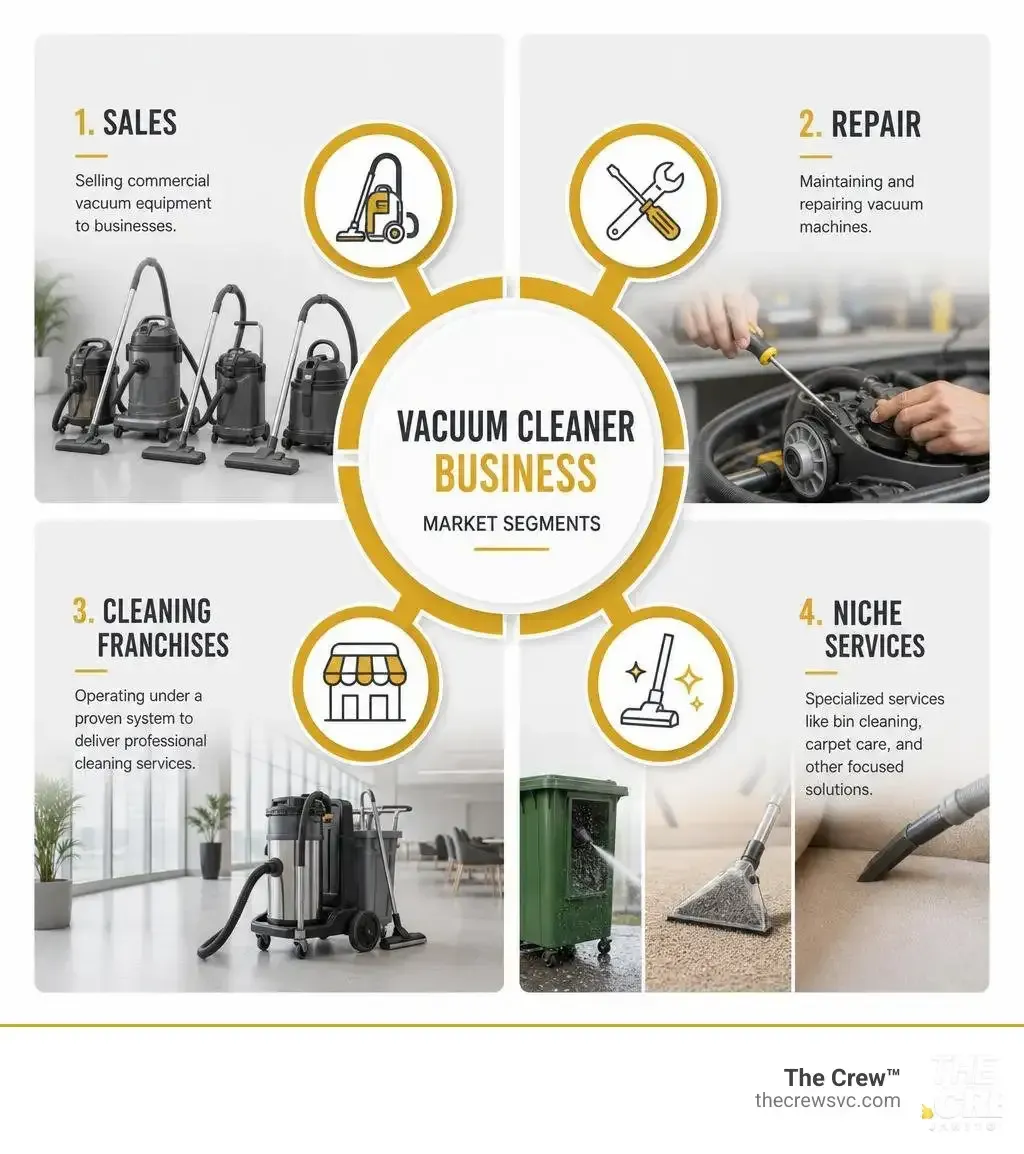
For entrepreneurs looking to enter the vacuum cleaner business, there are several pathways to profitability. You can focus on hardware sales and repairs, invest in a specialized cleaning franchise, or build a commercial cleaning service.
Let's look at how these business models operate, their startup costs, and their potential return on investment (ROI).
Starting a Vacuum Cleaner Business: Sales vs. Repair Services
Operating a brick-and-mortar vacuum shop combines retail sales with technical repair services.
- The Dealership Model: As an authorized dealer for major commercial brands, you sell equipment directly to local cleaning companies, schools, hospitals, and offices. This model requires establishing relationships with manufacturers and securing inventory.
- The Repair and Servicing Model: Selling the hardware is only half the battle; vacuums break down and require regular maintenance. Offering repair services, stocking replacement parts (belts, bags, filters, brush rolls, and motors), and providing warranty work creates a highly profitable, recurring revenue stream.
- Local Success Examples: Independent shops, such as Longmont Vacuum, have built decades-long reputations in communities like Longmont, Colorado, by providing specialized repair services, hard-to-find parts, and expert advice that big-box online retailers simply cannot match.
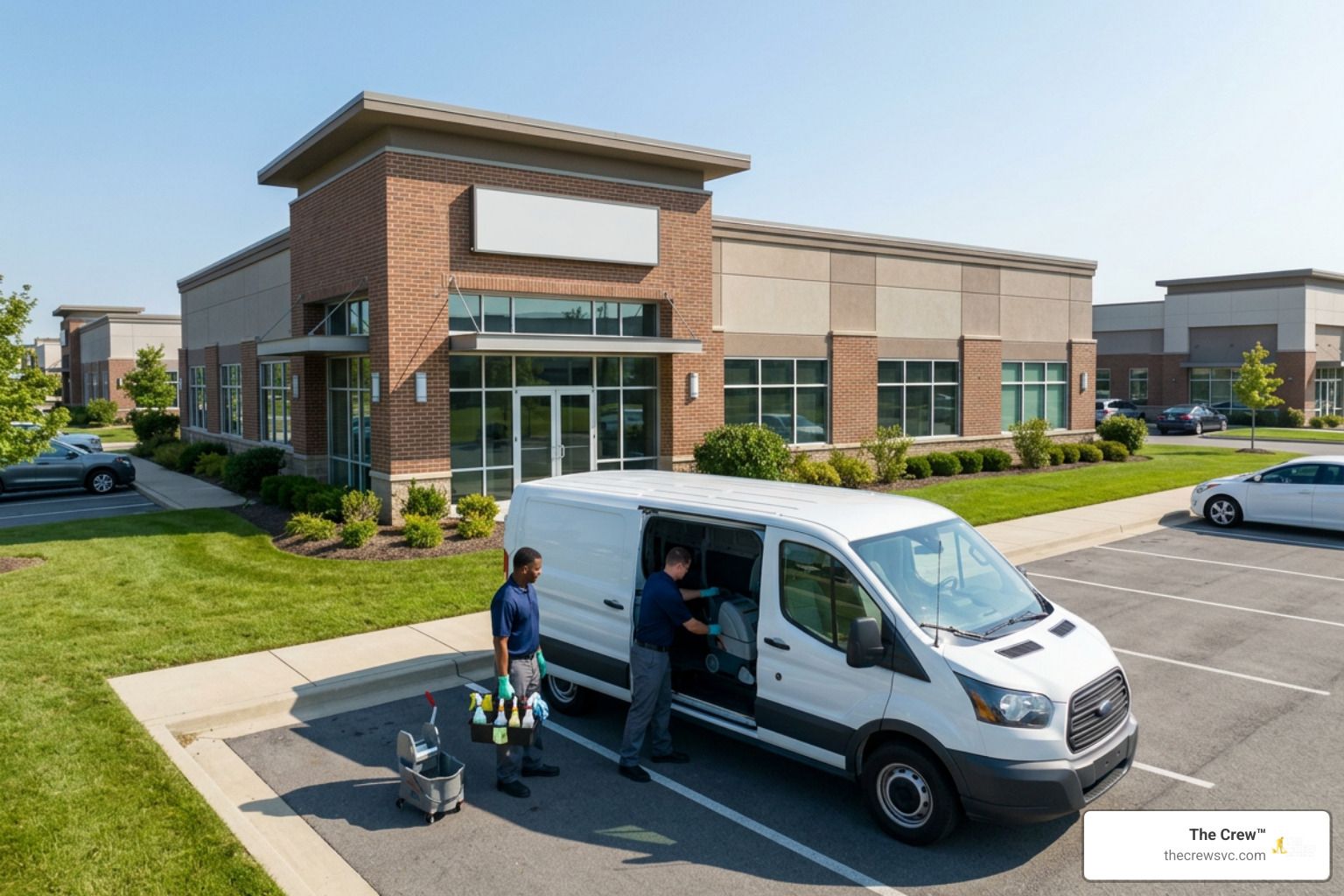
- Mobile Service Franchises: If you prefer a business model with lower overhead, mobile vacuum repair franchises are an emerging trend. For example, the Franchise Opportunity - PHC Service model demonstrates how a business can operate using a fleet of mobile vans. Technicians travel directly to customers' homes or businesses to service high-quality vacuums on-site, eliminating the need for expensive retail storefronts.
Specialized Cleaning Franchises and Niche Opportunities
If you prefer to use vacuum technology and specialized equipment to provide a service rather than fixing the machines yourself, several niche franchise models offer high margins and structured playbooks.
- Carpet Cleaning Franchises: Carpet cleaning is a multi-billion-dollar industry. Investing in a franchise like the one offered by Own Your Future with Zerorez® Franchising | Zerorez Franchising allows you to tap into a growing market. These models leverage patented cleaning technologies, national brand recognition, and robust marketing systems to achieve high profit margins and rapid scalability.
- Specialized Niche Franchises: There are also highly specialized outdoor cleaning models. For instance, you can Start a Wheelie Bin Cleaning Business | Green Cleen Franchise, which utilizes specialized, van-mounted hydraulic wash systems to clean and sanitize trash bins. With over 60 million bins in the UK alone (and millions more across North America), these highly automated, route-based businesses offer incredible recurring revenue and high customer retention rates.
- Franchise vs. Solo Business Success Rates: When deciding whether to start an independent vacuum or cleaning business or buy into a franchise, the survival statistics are eye-opening. Industry data shows that 95% of solo cleaning businesses fail within 10 years, whereas 97% of franchise-based businesses are still operating after a decade. Franchises provide a proven playbook, established brand authority, and immediate operational systems that dramatically reduce the risks of business ownership.
Total Cost of Ownership and Maintenance Best Practices
Whether you operate a single vacuum or manage a massive fleet across multiple properties in Arvada, Highlands Ranch, or Littleton, focusing solely on the initial purchase price of a vacuum is a financial mistake. To run a profitable operation, you must understand the Total Cost of Ownership (TCO).
Calculating Total Cost of Ownership (TCO)
TCO looks at the complete financial impact of a piece of equipment over its entire operational lifespan. The formula looks like this:
$$\text{TCO} = \text{Purchase Price} + \text{Maintenance & Repairs} + \text{Consumables (Bags/Filters)} + \text{Energy Costs} - \text{Residual/Salvage Value}$$
- Initial Purchase Price: Cheap residential or low-end commercial vacuums cost between $100 and $250. High-quality, durable commercial uprights or backpacks range from $400 to $800+. However, a cheaper machine that breaks down every six months will quickly cost more than a high-quality machine that runs flawlessly for five years.
- Consumables: Bagged vacuums require ongoing purchases of replacement bags. If your cleaning crews change bags twice a week, those costs add up over a year. Switching to a high-quality Commercial Vacuum Bagless model can eliminate bag costs entirely, though you must still factor in periodic filter replacements.
- Maintenance and Downtime: When a vacuum breaks, your labor costs increase because cleaning takes longer without proper equipment. Buying vacuums with easily accessible parts—where a brush roll or belt can be swapped out in under two minutes without tools—saves hundreds of dollars in labor and repair bills.
- Energy Consumption: Energy-efficient motors lower your monthly utility bills, which is a major factor for large facilities operating dozens of vacuums daily.
Environmental and Air-Quality Benefits of Eco-Friendly Vacuums
In 2026, sustainability is no longer just a buzzword; it is a core business requirement. Selecting eco-friendly commercial vacuums offers distinct advantages:
- Improved Indoor Air Quality (IAQ): Using HEPA-filtered vacuums prevents fine dust, allergens, and pet dander from being kicked back into the air. This is crucial for securing LEED (Leadership in Energy and Environmental Design) certification for commercial buildings in areas like Broomfield and Denver.
- Recycled Materials: Many leading manufacturers now build vacuum casings using up to 75% recycled plastics, reducing the environmental footprint of your equipment fleet.
- Energy Efficiency: Modern eco-friendly vacuums utilize advanced motor designs that deliver high suction power while drawing fewer watts, helping businesses meet carbon-reduction goals and lower energy expenditures.

Frequently Asked Questions about Vacuum Cleaner Businesses
What are the startup costs for a vacuum cleaner business?
Startup costs vary wildly depending on the business model. A mobile vacuum repair service or a small, independent commercial cleaning business can be started for $2,000 to $10,000, covering basic equipment, licensing, insurance, and initial marketing. A brick-and-mortar retail and repair dealership typically requires $50,000 to $100,000+ for storefront leasing, inventory, diagnostic tools, and staff. Purchasing a reputable home services or commercial cleaning franchise generally requires a total investment of $75,000 to $150,000.
How long do commercial vacuum cleaners typically last?
With proper maintenance, a high-quality commercial vacuum cleaner should last between 2 and 5 years in a heavy-use commercial environment. In contrast, residential models often fail within 3 to 6 months under the same workload. Regular maintenance—such as clearing brush roll obstructions, replacing filters on schedule, and checking cords for damage—can extend a commercial vacuum's lifespan beyond 5 years.
Is a specialized cleaning franchise more profitable than a traditional vacuum shop?
Generally, yes. Traditional vacuum retail shops face intense competition from online e-commerce giants, forcing them to rely heavily on repair services and parts sales to survive. Specialized cleaning franchises (such as commercial cleaning, carpet restoration, or bin cleaning) benefit from high-margin, recurring service contracts. Because services cannot be outsourced online, these businesses offer more predictable cash flow and higher scalability, with top-performing franchisees achieving $300K to $700K+ in annual revenue within their first 24 to 36 months.
Conclusion
Navigating the vacuum cleaner business —whether you are selecting a fleet of commercial uprights for your corporate facility, launching a mobile repair shop, or hiring a service provider—requires a deep understanding of durability, total cost of ownership, and operational efficiency.
At The Crew, we understand that a clean business environment is critical to your brand's success, employee health, and bottom line. That is why we do not cut corners. We provide premium commercial cleaning and janitorial services throughout the Denver Metro Area, including Aurora, Commerce City, Lakewood, Brighton, Longmont, Westminster, Henderson, Broomfield, Centennial, Parker, Golden, Englewood, Wheat Ridge, Littleton, Arvada, Erie, and Highlands Ranch.
Our unique strength lies in our people: we hire and retain top-tier, fully background-checked cleaners and maintain a 0% turnover rate, ensuring you receive consistent, reliable, and highly professional service every single time. We use state-of-the-art commercial equipment, including HEPA-filtered vacuums, to keep your facilities spotless and your indoor air clean.
Ready to experience a higher standard of clean without the hassle of managing equipment and staff yourself? Contact us today to request a customized bid for your facility.