
How to Clean and Polish Hardwood Floors Like a Pro

June 10, 2026

Share this article

Why Hardwood Floor Cleaning Is Worth Getting Right

Hardwood floor cleaning done correctly keeps your floors looking sharp, extends their lifespan, and protects a significant financial investment.

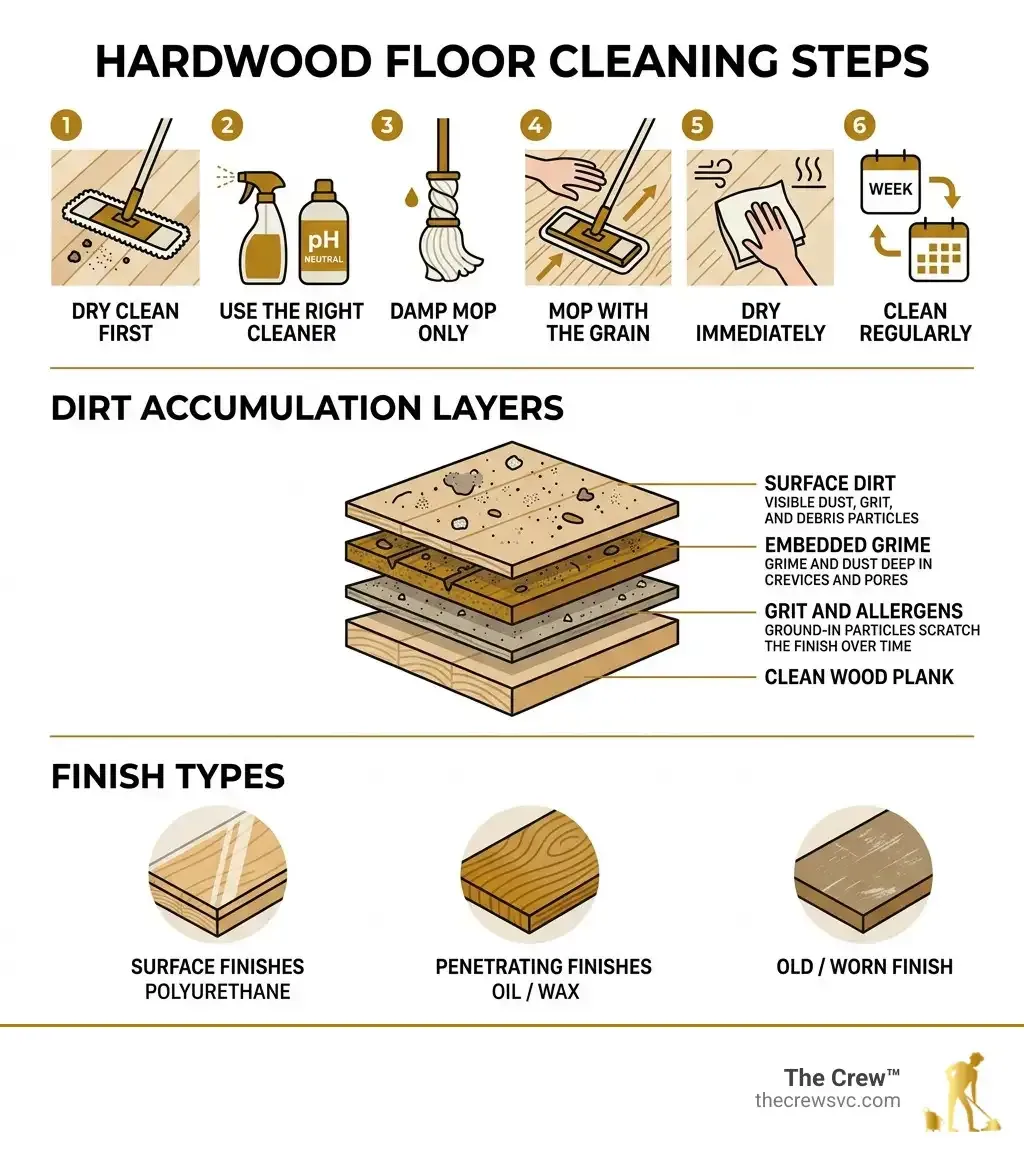
Here's a quick overview of the right way to clean hardwood floors:

  1. Dry clean first- Sweep or dust mop to remove grit and debris before any liquid touches the floor
  2. Use the right cleaner- Choose a pH-neutral cleaner made for hardwood; avoid vinegar, bleach, and ammonia
  3. Damp mop only- Wring your mop thoroughly; standing water warps and damages wood
  4. Mop with the grain- Always move in the direction of the wood planks to avoid streaks
  5. Dry immediately- Wipe up excess moisture right away with a dry microfiber cloth
  6. Clean regularly- Light cleaning weekly, deeper cleaning once a month

Hardwood floors are durable and beautiful, but they're also unforgiving. Use the wrong product once, and you can dull or etch the finish permanently. Use too much water, and the wood can warp, swell, or start squeaking underfoot. In fact, the average home collects up to 40 pounds of dirt, dust, and allergens every year — and a lot of that ends up ground into your floor's surface and crevices.

The stakes are even higher in commercial spaces. A dull, grimy floor in a lobby or office sends the wrong message to clients and employees before anyone says a word.

I'm Carlos Castillo II, owner of The Crew™ Janitorial, a family-run commercial cleaning company serving the Denver Metro Area since 1982. Hardwood floor cleaning is one of the most common and most mishandled services we see — and this guide covers exactly how to do it right.

Infographic showing hardwood floor cleaning steps, dirt accumulation layers, and finish types - hardwood floor cleaning

Hardwood floor cleaning helpful reading:

Essential Tools and Safe Products for Hardwood Floor Cleaning

To achieve a professional-grade result, you need to start with the right arsenal. We often see people grabbing whatever is under the kitchen sink, but hardwood floor cleaning requires a more surgical approach.

microfiber mop and pH-neutral cleaner - hardwood floor cleaning

The Pro-Tool Kit

  • Microfiber Mops: Forget the old-fashioned string mop. Microfiber is the gold standard because it uses less water and traps more dirt. Dual-sided covers are even better—one side for scrubbing and one for drying.
  • Soft-Bristle Brooms: Avoid stiff, plastic bristles that can leave micro-scratches. A soft-bristle broom or a dedicated dust mop is essential for daily maintenance.
  • Vacuum with Hard Floor Settings: Vacuums are great for pulling dust out of the cracks between planks, but you must disable the beater bar (the rotating brush). If you don't, those stiff bristles will act like sandpaper on your finish.

Choosing Safe Cleaning Agents

When it comes to liquid cleaners, pH-neutral is the name of the game. Consumer Reports recently tested 12 popular cleaners, and while some multi-surface cleaners performed well, the best results consistently came from products specifically formulated for wood.

  • pH-Neutral Solutions: These won't strip your wax or etch your polyurethane.
  • Castile Soap: A few drops of natural Castile soap in warm water is a gentle, effective DIY option.
  • Tannic Acid: Some old-school pros swear by using tea bags. The tannic acid in tea can help create a beautiful sheen, though we recommend this only for darker wood tones.

For more technical details on product selection, check out this guide on How to Deep Clean Hardwood Floors the Right Way.

Preparing Your Space for Hardwood Floor Cleaning

Before any liquid touches the floor, you have to clear the "abrasive grit." Think of dirt as tiny rocks; if you mop without dusting first, you're just dragging those rocks across your expensive finish.

  1. Remove Furniture: If you can, move chairs and small tables. Use furniture sliders to prevent deep gouges.
  2. Dust and Vacuum: Use your soft-bristle attachment to clear the perimeter and the joints between boards.
  3. The Spray Bottle Method: Never pour a bucket of water onto wood. Instead, use a spray bottle to lightly mist a small section of the floor or the mop head itself. This keeps moisture levels under control.

Hardwood Floor Cleaning for Neglected Surfaces

If your floors haven't seen a mop since the last decade, a simple wipe-down won't cut it. For neglected surfaces, we recommend a "multi-pass technique."

Start by vacuuming twice to ensure all loose debris is gone. Use a manufacturer-approved deep cleaner and work in very small sections (about 3x3 feet). Apply the cleaner, let it sit for no more than 60 seconds to break down the grime, then mop it up and dry the area immediately. For ground-in dirt in textured wood, a light bristle brush can be used to gently agitate the grain lengthwise. For more on this, see this How to Clean Hardwood Floors: Deep Clean Guide.

The Professional Approach to Hardwood Maintenance

In the Denver Metro Area—from Aurora to Lakewood—our climate is dry, which can make wood more susceptible to shrinking and cracking if not maintained. While DIY cleaning is great for weekly upkeep, there is a massive difference between surface mopping and professional extraction.

Professional hardwood floor cleaning removes an average of 96% of common household allergens. Considering the average home collects 40 lbs of dust annually, that's a lot of microscopic "gunk" that a standard mop simply can't reach.

Why Professional Extraction Matters

Standard mopping often just pushes dirt into the pores and crevices of the wood. Professional teams use auto-scrubbers that apply a specialized solution and immediately vacuum it back up. This "extraction" process ensures that dirt is actually removed from the building, not just relocated.

  • Air Quality: By removing embedded allergens, you're literally helping everyone breathe easier.
  • Longevity: Regular professional deep cleaning can significantly extend the time between expensive sanding and refinishing jobs.
  • Consistency: Our team at The Crew™ maintains a 0% turnover rate, meaning the same experts who know your floor's quirks are the ones servicing them every time.

Curious about the investment? Don't Get Swept Away by Floor Cleaning Services Cost provides a breakdown of what to expect.

Common Mistakes: What to Avoid on Your Wood Floors

We've seen it all—from "Pinterest hacks" that ruined a dining room to well-intentioned employees using the wrong chemicals.

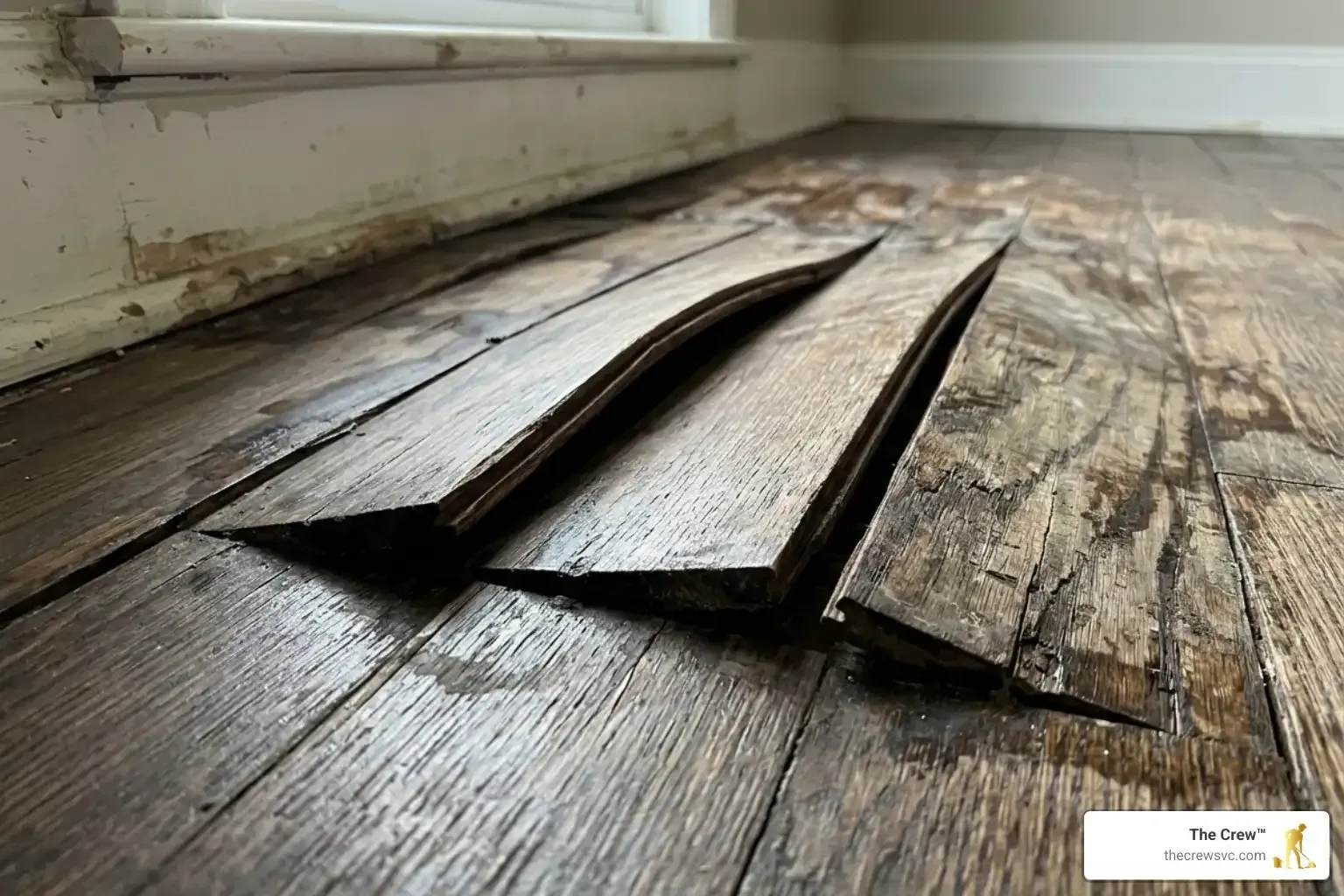
warped wood boards due to water damage - hardwood floor cleaning

The "No-Go" List

  1. Steam Mops: This is the big one. Many manufacturers will explicitly void your warranty if you use a steam mop. The high heat and pressurized moisture can force water deep into the wood fibers, causing "cupping," warping, and permanent swelling.
  2. Vinegar and Lemon: They might be "natural," but they are highly acidic. Over time, vinegar will chemically break down your polyurethane finish, leaving it dull and susceptible to water damage.
  3. Standing Water: Never use a dripping wet mop. If you see puddles, you've used too much. Standing water is the primary cause of floor squeaking and wood rot.
  4. Oil Soaps and Waxes: Products like Murphy Oil Soap can leave a sticky residue that makes it nearly impossible to "screen and recoat" the floor later. You'll end up having to sand the wood down to the bare timber just to get a new finish to stick.
  5. Bleach and Ammonia: These are far too harsh and will discolor almost any wood species.

Protecting Your Investment: Prevention and Stain Removal

Cleaning is only half the battle; the other half is defense.

Preventative Habits

  • Entryway Mats: Place mats both inside and outside every door. This catches rocks and grit before they enter your home or office.
  • Shoe-Off Policy: If possible, implement a "no shoes" rule. Stiletto heels are particularly notorious—they can exert enough pressure to dent solid oak.
  • Pet Care: Keep those claws trimmed! Pet scratches are one of the leading causes of finish degradation.
  • Furniture Pads: Every leg of every chair and table should have a felt protector. Check them every few months, as they tend to collect grit and need replacing.

Quick Fixes for Common Stains

  • Scuff Marks: Use a tennis ball or a dry microfiber cloth to buff out rubber heel marks.
  • Water Spots: For white "cloudy" spots, a small amount of baking soda paste can sometimes lift the moisture out of the finish.
  • Scratches: For minor nicks, you can actually use a color-matched crayon. Rub it into the scratch, melt it slightly with a hair dryer, and buff it smooth.

For those looking for that "wow" factor, How to Get That Mirror Finish with Floor Polishing Services explains how to safely restore shine.

Professional Secrets for Long-Lasting Hardwood Luster

Not all wood is created equal. Knowing what you're standing on changes how you should clean it.

Surface vs. Penetrating Finishes

Feature Surface Finish (Polyurethane) Penetrating Finish (Oil/Wax)
Appearance Shiny, plastic-like coating Matte, natural wood feel
Water Test Water beads/pools on top Water soaks in/darkens wood
Cleaning pH-neutral water-based cleaners Solvent-based waxes/No water
Commonality Standard in homes built after 1970 Common in historic (pre-1920) homes

Solid vs. Engineered Wood

Solid hardwood is a single piece of timber. Engineered wood is a thin veneer of real wood over a plywood base. While they look the same on top, engineered wood cannot be sanded down many times. This makes proper hardwood floor cleaning even more critical for engineered floors—you only have a few "lives" before the floor must be replaced entirely.

The "Inconspicuous Area" Rule

Before trying any new cleaner, test it in a closet or behind a door. Wait 24 hours to ensure it doesn't leave a film or change the color of the finish.

When to Refinish

  • Maintenance Coat (Screen and Recoat): Every 3–5 years. This involves lightly scuffing the top layer and adding a fresh coat of polyurethane.
  • Full Refinish: Every 10–15 years. This is the big job where the wood is sanded down to the bare grain.

If you have other floor types in your building, don't neglect them— Stop Being a Floor Bore with Professional Vinyl Cleaning covers your other surfaces.

Frequently Asked Questions about Hardwood Care

Can I use a steam mop on hardwood floors?

No. Most professionals and manufacturers strongly advise against it. The heat can break down the finish, and the moisture can cause the wood to warp or cup. It may also void your flooring warranty.

Is vinegar safe for cleaning wood finishes?

While it’s a popular DIY tip, vinegar is acidic and will eventually dull and etch your floor's protective finish. For long-term health, stick to pH-neutral cleaners specifically designed for wood.

How often should I deep clean my hardwood?

For residential homes, a deep clean once a month is usually sufficient. For high-traffic commercial spaces in cities like Denver or Centennial, we recommend a professional deep extraction every 6 to 12 months to remove embedded grit and allergens.

Conclusion

At The Crew™, we know that your floors are one of the first things people notice when they walk into your business. Whether you are in Aurora, Commerce City, or Highlands Ranch, providing consistent, high-quality hardwood floor cleaning is what we do best.

We pride ourselves on our USP: hiring and retaining top-tier, background-checked cleaners. Our 0% turnover rate means you get reliable, expert service from people who actually care about the longevity of your property. We don't just "mop and go"—we protect your investment using the same professional-grade techniques outlined in this guide.

Ready to see your floors shine like new? From Arvada to Parker and everywhere in between, we’re here to help.

Get more info about our professional floor services

Recent Posts

flexible office cleaning schedules
By The Crew June 19, 2026
Discover how flexible office cleaning schedules adapt to hybrid work and real-time occupancy for spotless, disruption-free spaces.
daily office cleaning denver
By The Crew June 18, 2026
Discover daily office cleaning Denver services: cut sick days 30%, boost productivity 20%, choose day porter or nightly pros for spotless workspaces.
hardwood floor cleaning service
By The Crew June 17, 2026
Discover how a professional hardwood floor cleaning service restores shine, removes 96% of allergens, and protects your wood investment.
best commercial cleaning in denver
By The Crew June 16, 2026
Find the best commercial cleaning in Denver with vetted crews, consistent results, and flexible scheduling for your business.
commercial cleaning service costs office lobby
By The Crew June 12, 2026
Discover what commercial cleaning service costs you'll actually pay in 2026 with our pricing guide and cost-saving tips.
reliable janitorial denver business
By The Crew June 11, 2026
Discover a reliable janitorial Denver business: consistency, compliance, local expertise. Choose The Crew™ for spotless offices. Get your quote now!
commercial ceiling cleaning services near me
By The Crew June 9, 2026
Discover commercial ceiling cleaning services near me that improve air quality, safety, and efficiency—schedule your professional cleaning today.
A diverse team of professional cleaners smiling, wearing clean uniforms, and holding cleaning suppli
By The Crew June 8, 2026
Discover which commercial cleaning firms in Denver are known for their rigorous hiring processes and background checks. Ensure security and quality now!
vetted staff cleaning services
By The Crew June 5, 2026
Discover vetted staff cleaning services: Spot top cleaners with rigorous vetting, background checks & reliability for secure facilities.
commercial cleaning with porters
By The Crew June 4, 2026
Discover vetted commercial cleaning with porters for spotless facilities. Boost ROI, safety & productivity. Request a Denver quote today!
Show More