Gym Floor Refinishing in Denver: When to Refinish and When to Recoat
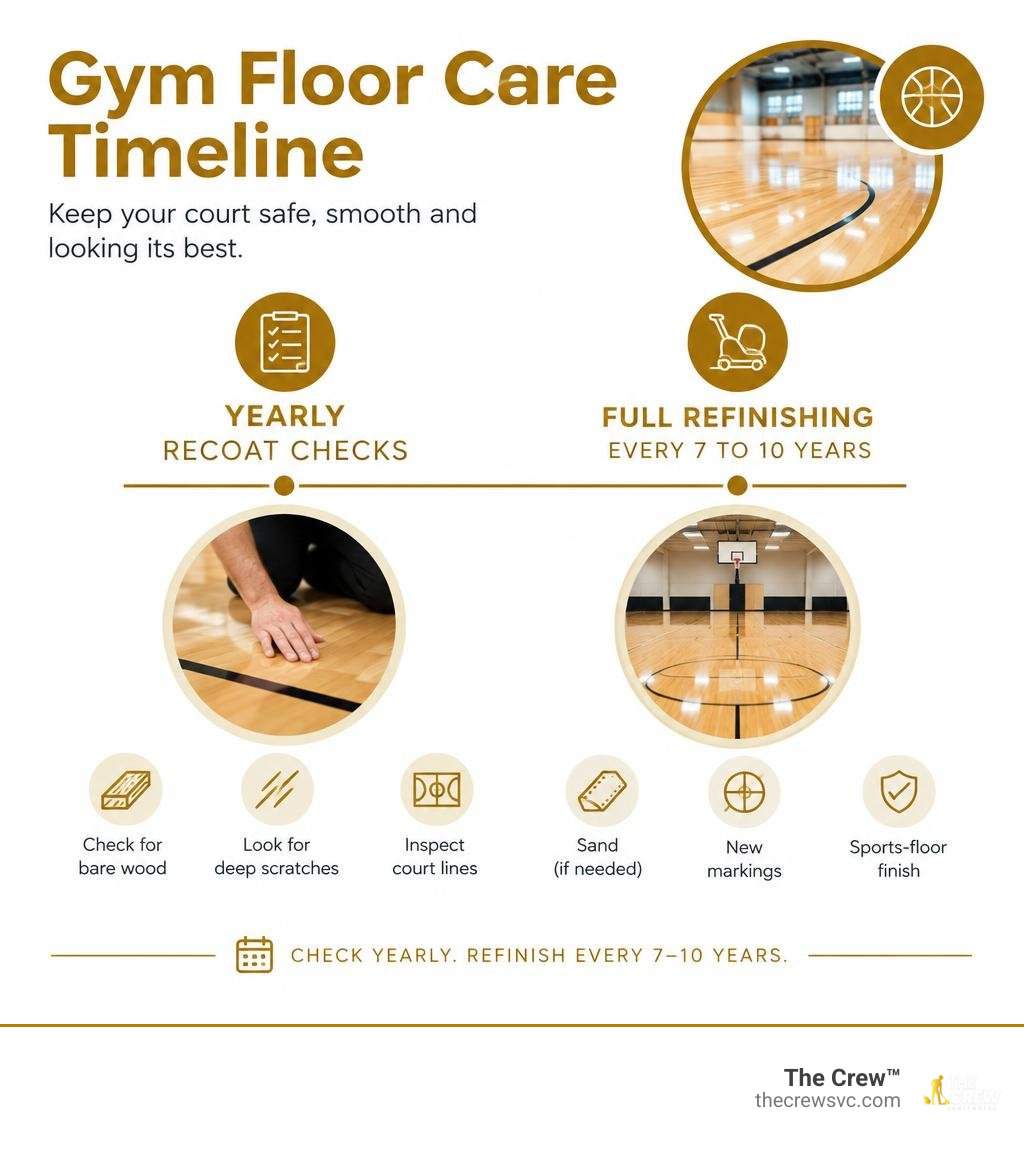
For gym floor refinishing in Denver, start by checking for bare wood, deep scratches, and worn court lines. If the finish has worn through, ask an athletic-floor specialist to assess whether the court needs sanding, new markings, and a sports-floor finish. If the wood is sound and the finish is only dull, a screen-and-recoat may be enough. Plan for a full refinish about every 7 to 10 years, depending on use, and review the need for recoating each year.
Denver's dry air also makes steady indoor humidity important. A fresh finish will not fix moisture damage or problems beneath the wood.
I'm Carlos Castillo II, owner of The Crew™, a Denver Metro commercial cleaning company founded by my grandfather in 1982. My facility-cleaning experience shapes this guide to gym floor refinishing Denver managers can plan for and the routine care that protects the result.
Understanding Athletic Hardwood: Maintenance vs. Full Resurfacing
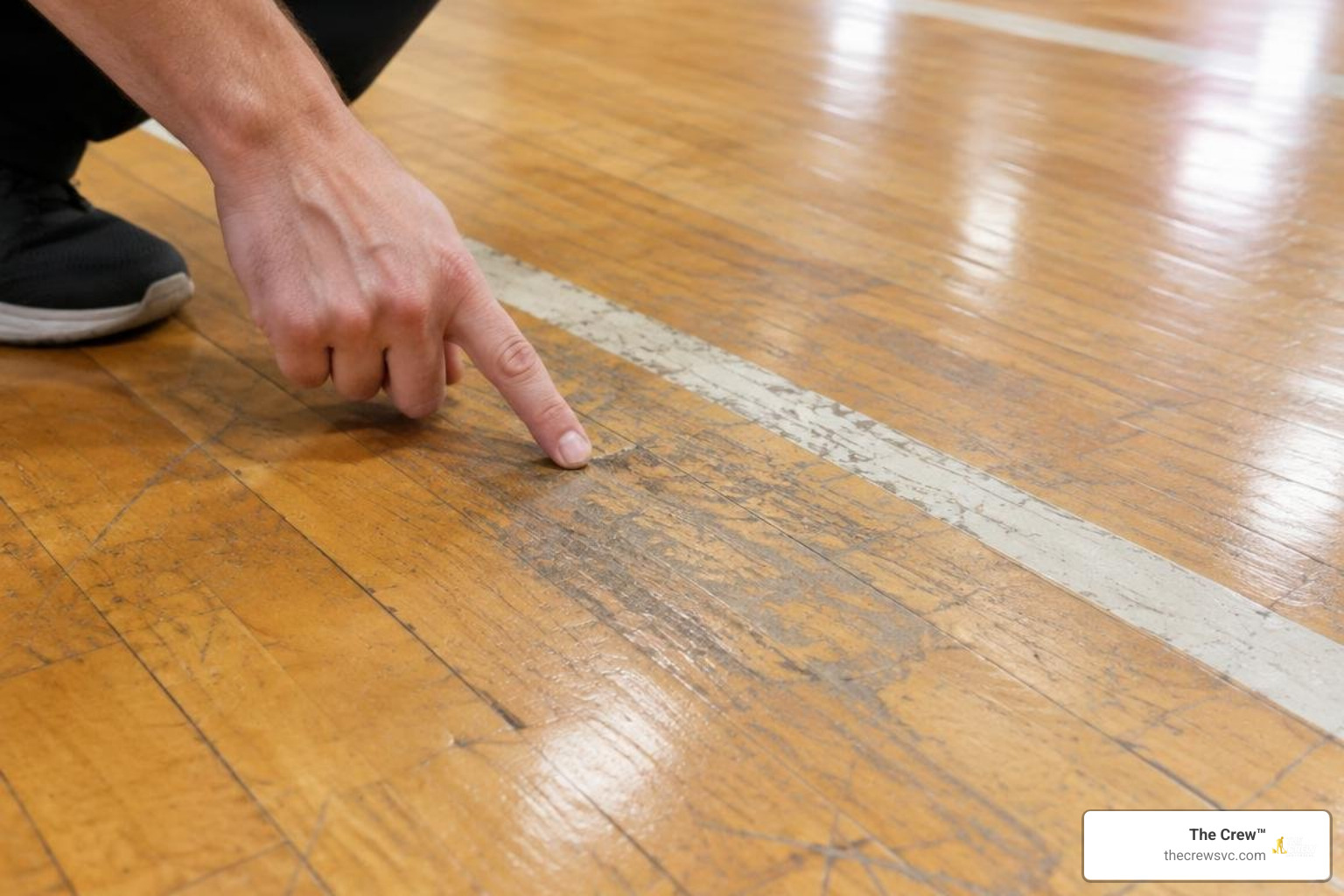
Athletic hardwood floors are major investments. Most modern sports surfaces are built with northern hard maple—a dense, tight-grained wood designed to handle heavy foot traffic, pivots, and ball bounces. However, the timber itself relies entirely on its protective topcoat.
Over time, daily play, sweat, foot friction, and UV exposure wear down that topcoat. As the finish degrades, two things happen: the clear coat turns an amber, yellowish shade, and the floor loses its grip. When athletes start slipping or the underlying wood is exposed to moisture and dirt, the floor needs professional attention.
Facility directors often confuse a routine maintenance coat with a full refinishing project. Knowing the difference saves money and keeps your court in championship shape.
- Screen and Recoat (Annual Maintenance): Also known as a buff and coat, this process scuffs the very top micro-layer of existing finish using an abrasive screening pad. It does not strip down to raw timber. A technician then applies one to two fresh coats of athletic polyurethane. This restores the required slip resistance (coefficient of friction) and gloss while leaving existing court lines and logos intact.
- Full Sand and Refinishing: This complete restoration sands away all old finish, paint, and game lines down to bare, natural maple. It levels out board imperfections, addresses minor cupping, and provides a fresh canvas for new stain, court markings, school logos, and multiple coats of durable sports finish.
When balancing athletic department schedules and long-term facility budgets, selecting the right service is critical:
| Feature | Screen and Recoat (Maintenance) | Full Gym Floor Refinishing |
|---|---|---|
| Primary Goal | Restore traction and gloss | Complete structural surface restoration |
| Depth of Abrasion | Scuffs top clear coat only | Sands down to bare maple timber |
| Removes Game Lines? | No (can add new lines over top) | Yes (all paint/logos stripped completely) |
| Recommended Frequency | Annually (every 12 months) | Every 7 to 10 years |
| Typical Downtime | 2 to 4 days | 7 to 14 days |
| Corrects Wood Damage? | No | Yes (levels surface, removes surface scratches) |
Athletic governing bodies, including the Maple Flooring Manufacturers Association (MFMA), emphasize that adhering to consistent recoating schedules helps courts reach a lifespan of several decades or more. If your facility needs regular cleaning or periodic restoration, pairing dedicated janitorial care with a comprehensive commercial floor service keeps your surfaces safe, clean, and durable.
Complete Guide to Gym Floor Refinishing in Denver
Refinishing sports hardwood along the Colorado Front Range—from Littleton and Highlands Ranch up through Lakewood, Westminster, and Longmont—presents distinct regional challenges. Denver sits 5,280 feet above sea level, where our semi-arid mountain climate produces low baseline humidity and sharp seasonal weather swings.
Wood behaves like a sponge: it expands when absorbing moisture during humid summer thunderstorms and shrinks during dry, heated winters. In our climate, indoor relative humidity inside an athletic facility can easily drop below 20% without dedicated humidification systems. This causes boards to contract, opening visible gaps between maple strips. Conversely, unexpected moisture infiltration can lead to cupping or crowning.
Before scheduling a major sand-down, athletic directors must ensure their HVAC systems maintain indoor relative humidity between 35% and 50% year-round. Refinishing a gym floor that is excessively dry or wet will result in uneven finish absorption, cracked seams, or premature finish peeling.
For facilities managing multiple surface types alongside their athletic courts, coordinating scheduled Denver floor maintenance services ensures consistent indoor air quality, clean entryways, and well-regulated moisture levels across the entire property.
Step-by-Step Gym Floor Refinishing Denver Process
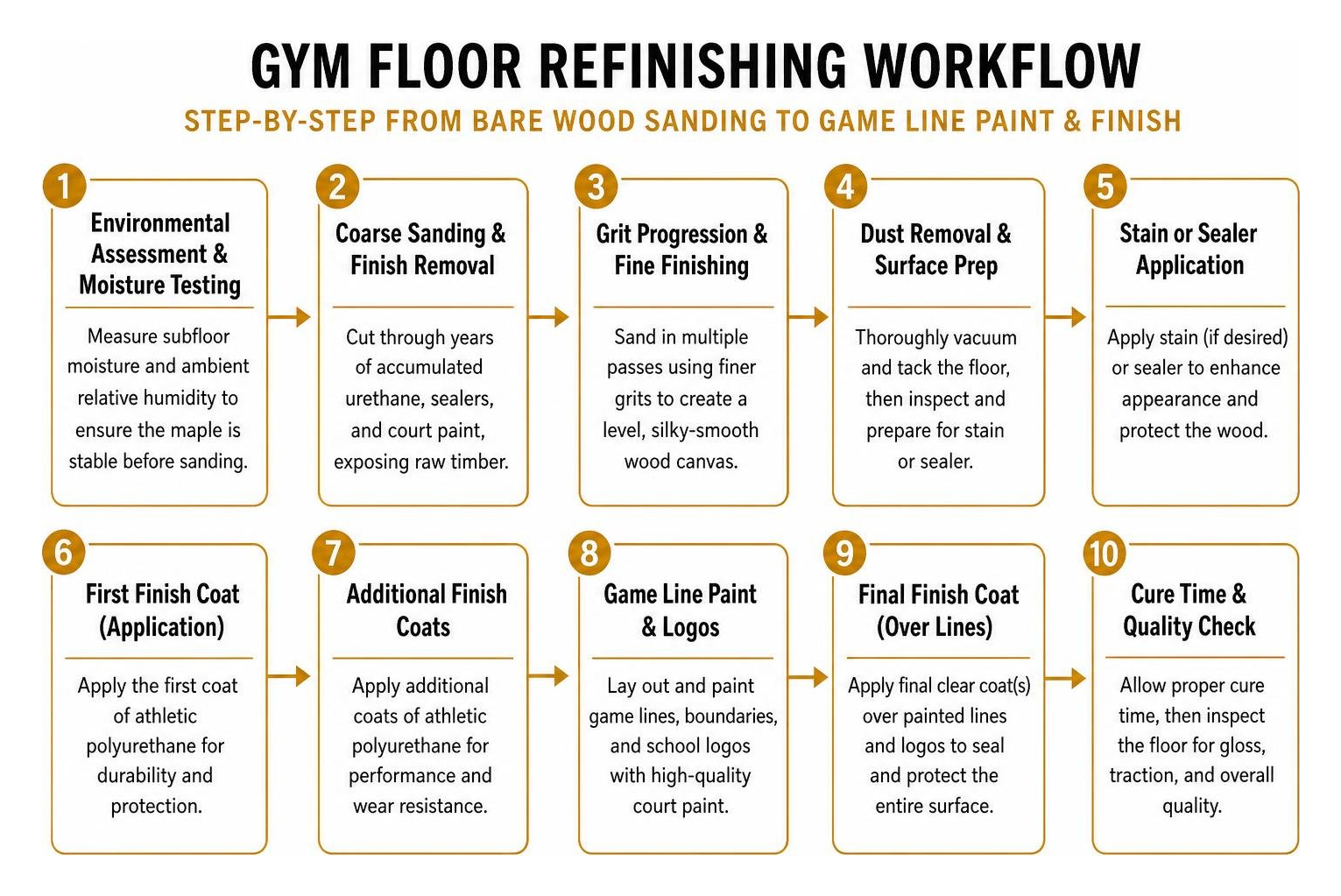
A successful full court restoration follows a clear, methodical sequence:
- Environmental Assessment & Moisture Testing: Technicians measure subfloor moisture and ambient relative humidity to ensure the maple is stable before sanding.
- Coarse Sanding & Finish Removal: Heavy-duty riding sanders or walk-behind drum machines cut through years of accumulated urethane, sealers, and court paint, exposing raw timber.
- Grit Progression & Fine Finishing: The team sands the court in multiple passes using finer sandpaper grits (from coarse grit down to fine screening) to create a level, silky-smooth wood canvas.
- Deep Vacuuming & Tack Cleaning: Every trace of fine wood flour is vacuumed and wiped with specialized solvent or water-based tack rags.
- Sealer Application: Technicians apply one to two coats of dedicated sports wood sealer to prime the bare timber, lock out moisture, and create a strong bonding layer for paint.
- Layout, Line Striping & Custom Art: Crews mark regulation boundaries (basketball, volleyball, pickleball) and paint center-court logos or school branding using precision masking tapes and exact Pantone color matches.
- Multi-Coat Polyurethane Topcoats: Once the court paint dries, technicians apply two or more heavy coats of commercial-grade athletic polyurethane to seal in the graphics and deliver durable traction.
Benefits of Dustless Sanding for Gym Floor Refinishing Denver Facilities
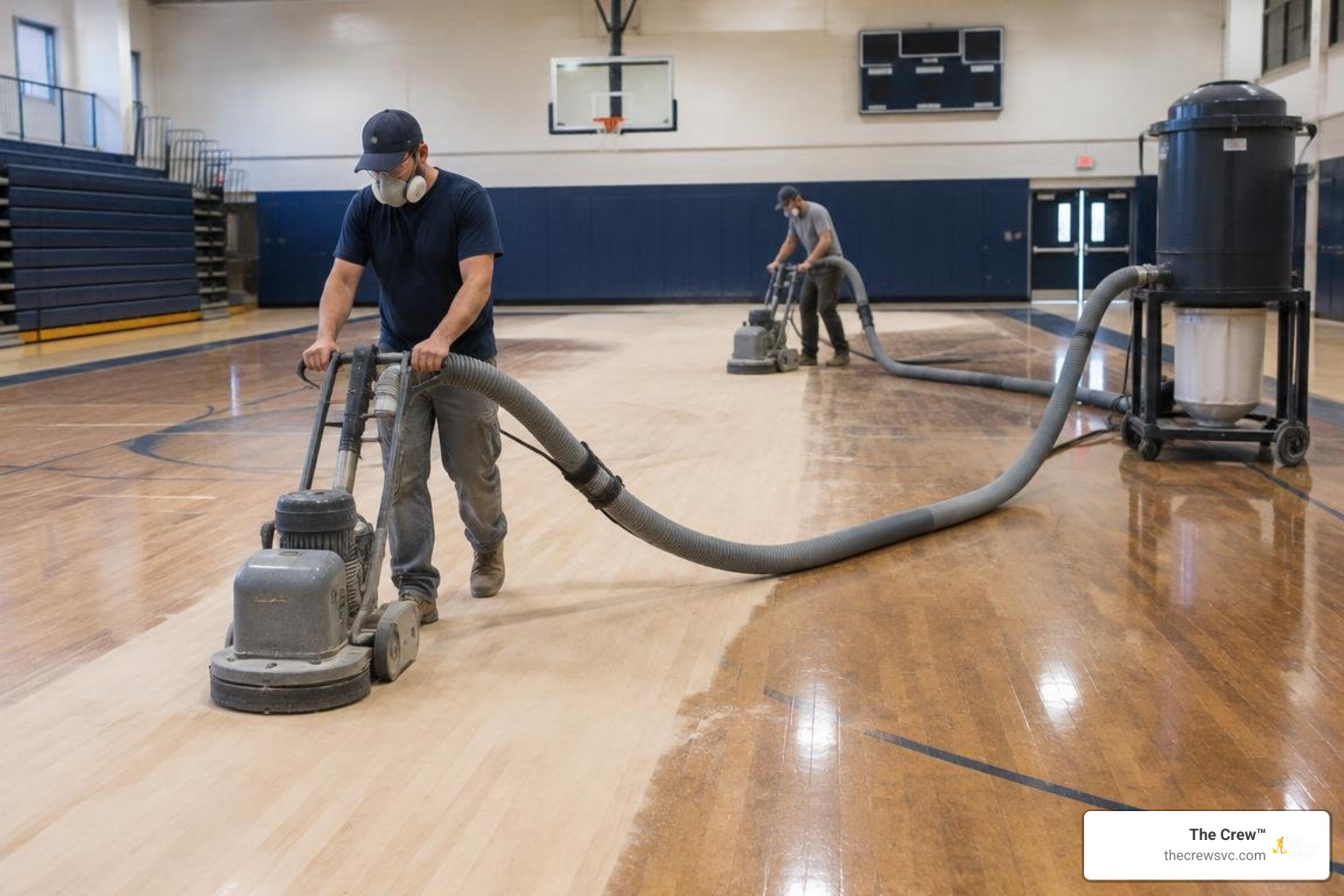
Traditional hardwood sanding produces hundreds of pounds of fine, airborne wood particulate. Fine wood dust is an established respiratory irritant and occupational health hazard. In an enclosed gymnasium, airborne dust quickly migrates into return air vents, settling across ductwork, bleachers, scoreboard electronics, acoustic wall baffles, and adjacent hallways.
Modern athletic contractors use trailer-mounted or high-powered portable dust containment systems (often driven by 27 HP engines producing up to 400 CFM of continuous suction).
These heavy-duty extraction vacuums offer three main advantages for Front Range schools and facilities:
- HVAC and Equipment Protection: By capturing 99% of wood particulate directly at the sanding drum, dust cannot enter facility ventilation systems or settle on electronics.
- Superior Finish Quality: Airborne dust settling into wet polyurethane causes rough nubs and hazy blemishes. Containment systems keep the air clean for a smooth, high-gloss finish.
- Faster Turnaround: Facilities avoid days of post-sanding cleaning, allowing athletic directors to resume regular scheduling much sooner.
Selecting the Best High-Performance Finish Systems for Mile High Courts
Choosing the right finish formulation depends on your facility's athletic demands, ventilation systems, and schedule. The two main options are waterborne sports polyurethane and oil-modified urethane.
- Two-Component Waterborne Polyurethane: Water-based systems (catalyst-cured) are the gold standard for high schools, universities, and commercial recreation centers. They emit very low VOCs (volatile organic compounds), have minimal odor, and dry rapidly. Waterborne formulas stay crystal clear, preventing the natural maple wood from yellowing over time. Most importantly, two-part waterborne coatings cure to full athletic hardness within 48 to 72 hours.
- Oil-Modified Polyurethane: Oil-based finishes provide a warm amber glow and excellent flow leveling. However, they carry higher VOC levels and stronger odors that require extensive air ventilation. Oil-modified coatings also take significantly longer to cure—often requiring 7 to 14 days before intense athletic competition can resume.
- UV-Curable Finishes: Some commercial facilities use specialized mobile ultraviolet light machines to instantly cure coats upon application. While this reduces downtime, it requires specialized contractor machinery and higher initial budgets.
Regardless of the finish chemistry chosen, every athletic topcoat must meet rigorous MFMA slip resistance standards (typically maintaining an athletic slip coefficient between 0.5 and 0.7) to allow athletes to cut, stop, and pivot safely without slipping.
Preserving Your Investment: Routine Care and Janitorial Protocols
A freshly refinished gym floor can look immaculate, but its long-term performance depends on daily cleaning practices. Dirt, gravel, and outdoor grit tracked into the gymnasium act like sandpaper under athletes' sneakers, quickly wearing down the new topcoat.
To protect your investment and extend the time between full refinishes, establish these daily cleaning protocols:
- Frequent Microfiber Dust Mopping: Dust mop the gym floor at least two to four times per day using wide, untreated microfiber sports mops. Never use oily mop treatments, as they leave a slick, hazardous film that ruins court traction.
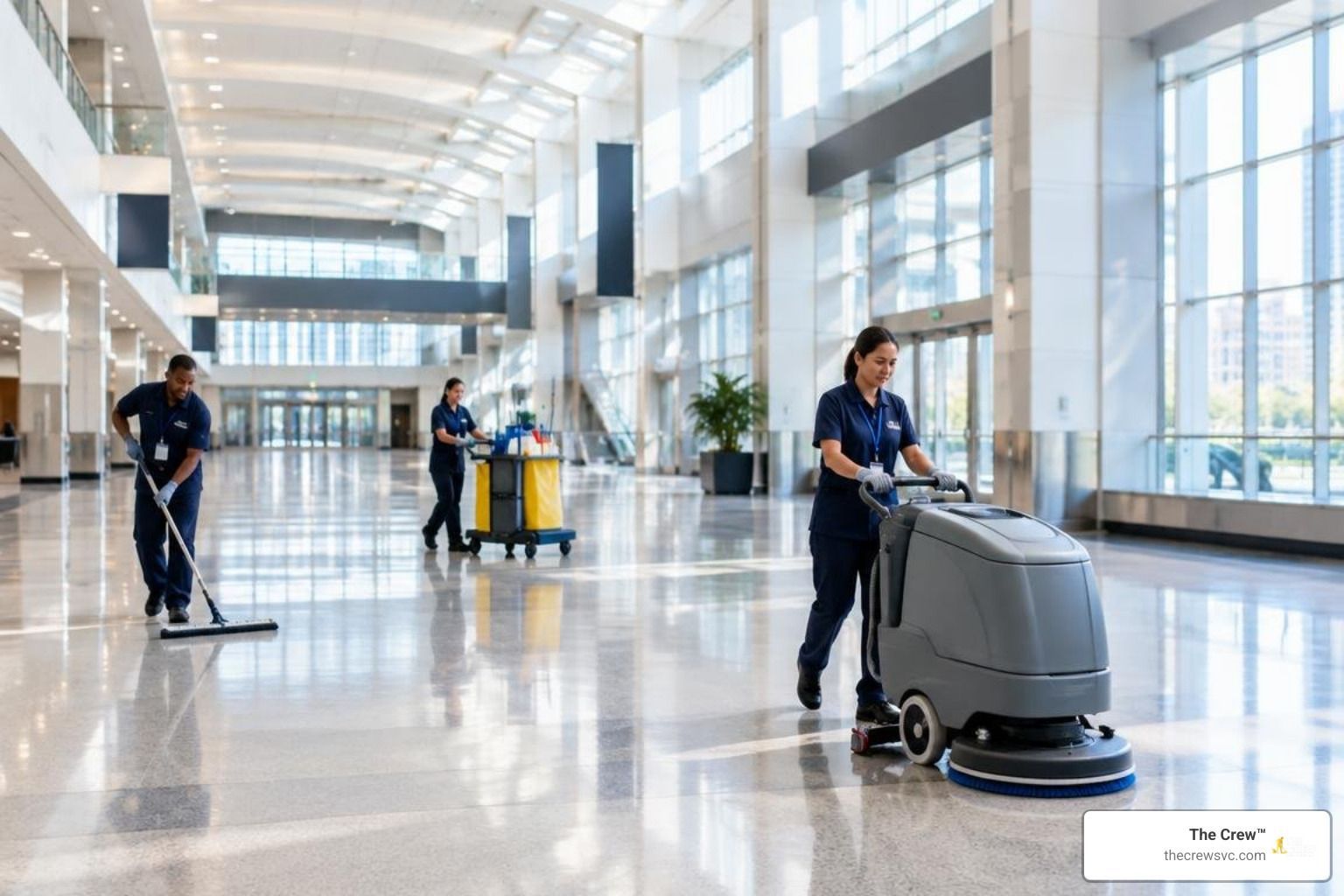
- Automated Scrubbing with Proper Detergents: When wet cleaning, use an auto-scrubber equipped with soft white pads and a neutral-pH, residue-free sports floor cleaner. Avoid harsh degreasers, ammonia, or excessive water volume.
- Walk-Off Mat Strategy: Place high-quality walk-off mats at every entrance (exterior doorways, locker room connections, and bleacher corridors) to catch grit and moisture before shoes reach the wood.
- Dedicated Athletic Footwear Policies: Require gym users and student-athletes to wear non-marking court shoes, keeping street shoes off the playing surface.
Learning how to clean and polish hardwood floors like a pro helps custodians avoid common mistakes, such as using excessive water or applying standard commercial wax, which destroys athletic traction and voids flooring warranties.
Frequently Asked Questions About Gym Floor Refinishing
How often should a Denver gymnasium floor be fully refinished?
Most athletic maple gym floors require full sanding and refinishing every 7 to 10 years. However, this depends on facility traffic, humidity control, and janitorial consistency. Facilities that schedule annual screen-and-recoat applications and perform disciplined daily dust mopping can often extend their full sand-down cycle past 10 years. If the top finish wears down to raw wood, or if court lines are peeling and chipping, a full refinish is necessary.
What is the typical downtime and curing timeline for court refinishing?
A full gym floor sand, seal, line painting, and topcoat project typically takes 7 to 10 business days of active on-site work.
Once the final protective finish is laid down:
- Light Foot Traffic (Sock Foot Only): 24 hours after final coat.
- Normal Walking & Custodial Inspections: 48 hours.
- Full Athletic Competition (Basketball, Volleyball): 72 hours for two-part waterborne finishes, or 7 to 14 days for traditional oil-modified urethane systems.
Can custom logos and game lines be updated without sanding to bare wood?
Yes. If your existing maple and baseline finish are in good condition, you do not need to sand down to bare timber to update court striping. During a routine annual screen-and-recoat, technicians abrade the top clear coat, apply precision-taped line paint or graphic updates directly over the existing surface, and lock the new artwork under two fresh coats of athletic topcoat.
Conclusion
Your gymnasium floor is the centerpiece of your athletic program. Whether you operate a recreation center in Aurora or Broomfield, a high school in Centennial or Arvada, or a sports complex in Commerce City, proper wood floor maintenance protects athlete safety, preserves school pride, and saves thousands in premature replacement costs.
While specialized sports floor contractors handle deep bare-wood sanding, maintaining that immaculate finish day in and day out requires reliable cleaning. At The Crew™, our background-checked cleaning professionals deliver reliable day porter, janitorial, and commercial floor maintenance services with 0% staff turnover across the Denver Metro Area.
Keep your facility running at peak performance year-round. Connect with us today for complete athletic floor service and customized commercial cleaning solutions tailored to your building.