Why Office Sanitizing Matters More Than You Think
Office sanitizing is the process of reducing harmful germs on workplace surfaces to protect employee health and prevent illness from spreading. Here's a quick breakdown of what it involves:
- Clean first — remove dirt and debris with soap or detergent
- Sanitize — reduce germs to safe levels on cleaned surfaces
- Disinfect high-touch areas daily — door handles, keyboards, phones, copiers, and elevator buttons
- Use the right product — check contact time (some wipes need 4 minutes of wet time to work)
- Protect electronics — use non-corrosive, alcohol-free disinfectants applied with a damp cloth
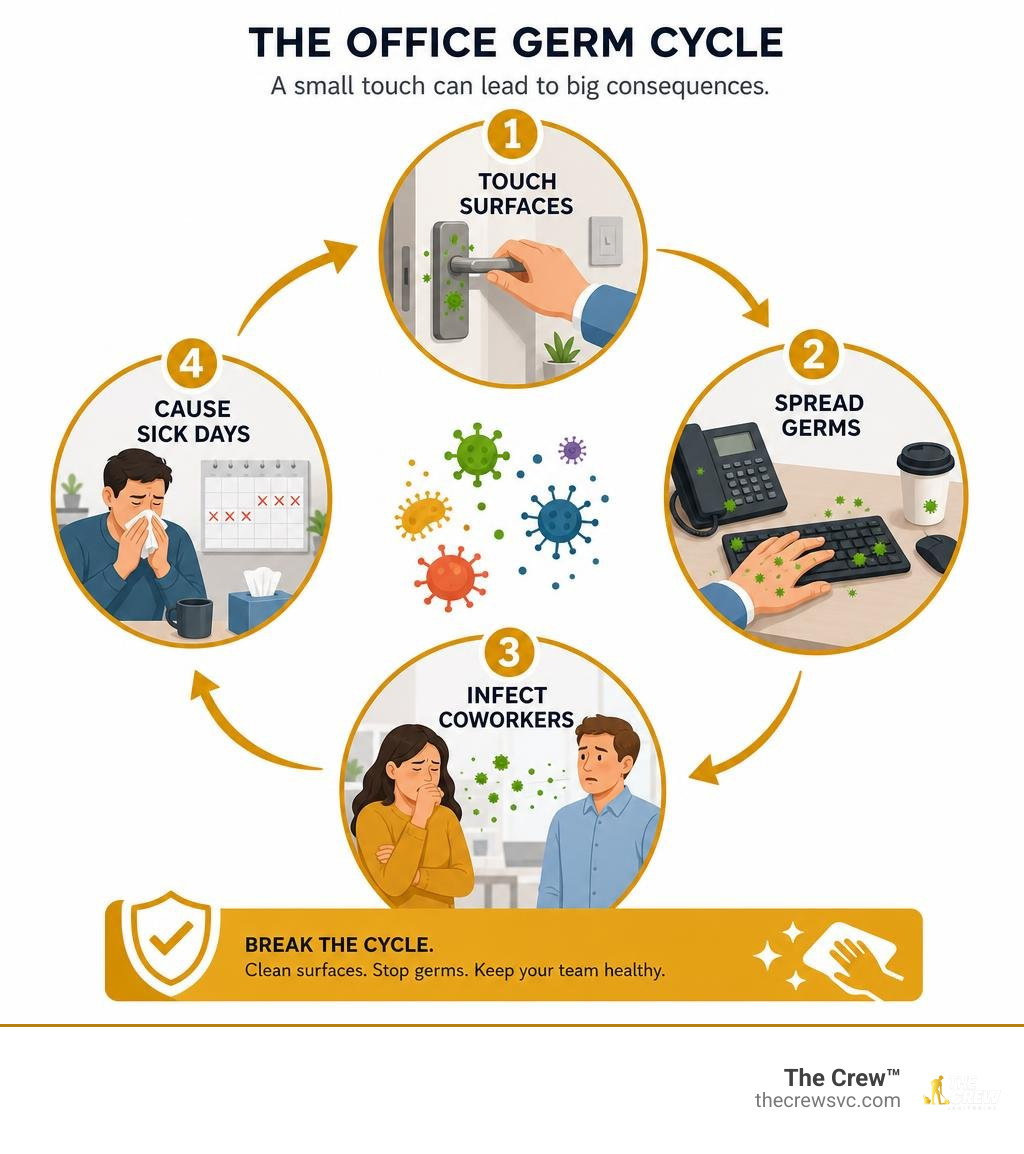
When one person comes in sick, shared surfaces become express lanes for germs. Recirculated air and close quarters do the rest. The result: a whole team calling out sick, deadlines missed, and productivity lost.
It doesn't have to work that way.
This guide walks you through exactly how to sanitize an office the right way — from high-touch hotspots to soft surfaces to electronics — so your workplace stays healthy year-round.
I'm Carlos Castillo II, owner of The Crew Janitorial, a commercial cleaning company serving the Denver Metro Area since 1982, and office sanitizing is something my team handles every day across hundreds of workspaces. I'll share what actually works, based on decades of hands-on experience.
Cleaning, Sanitizing, and Disinfecting: What is the Difference?
When we walk into an office to keep it in tip-top shape, we often hear people use the words "cleaning," "sanitizing," and "disinfecting" interchangeably. It is a common mistake! While they all play a vital role in maintaining a healthy workplace, they are actually three distinct steps in the hygienic process. Understanding the difference is the first step toward a truly healthy office.

Let's break down these three concepts with a simple comparison table:
| Feature | Cleaning | Sanitizing | Disinfecting |
|---|---|---|---|
| Primary Goal | Removes visible dirt, dust, and organic matter. | Reduces bacteria on surfaces to safe public health levels. | Kills almost 100% of viruses, bacteria, and fungi on surfaces. |
| Method | Physical scrubbing with soap, water, or general detergents. | Chemical solutions or heat application. | Hospital-grade chemical agents designed to destroy pathogens. |
| Germ Reduction | Lowers germ count by physically washing them away. | Kills 99.9% of targeted bacteria. | Destroys 99.999% of viruses, bacteria, and fungi. |
| Pre-requisite | Always the first step in any sanitation protocol. | Must be performed on a pre-cleaned surface. | Requires a pre-cleaned surface to work effectively. |
Cleaning: The Foundation of Workplace Hygiene
Cleaning is the physical removal of dirt, dust, grease, and organic matter from surfaces. When we clean, we use soap or detergent mixed with water to scrub surfaces down.
While cleaning does not necessarily kill germs, it physically removes them from the surface, lowering their numbers and reducing the risk of spreading infection.
Crucially, you cannot skip this step. Dirt and organic impurities act as a physical shield for microscopic pathogens. If you try to sanitize or disinfect a dusty desk, the chemicals will bind to the dust instead of killing the bacteria underneath.
Sanitizing: Lowering the Count to Safe Levels
Sanitizing is designed to reduce the number of germs to levels deemed safe by public health standards. It is a milder chemical process than disinfecting.
Sanitizing is typically used on food-contact surfaces (like the office breakroom countertops or microwave trays) where you want to lower germ counts without using harsh, heavy-duty chemicals that could be harmful if ingested.
Disinfecting: The Heavy Artillery Against Pathogens
Disinfecting is the process of using EPA-registered chemicals to completely destroy or permanently inactivate viruses, bacteria, and fungi on hard, non-porous surfaces.
Disinfectants do not necessarily clean dirty surfaces, but by destroying the cellular structure of pathogens, they stop the spread of illnesses like the flu, colds, and other common workplace bugs.
To keep your office safe during peak sickness seasons, daily disinfection of critical areas is your best line of defense.
High-Touch Hotspots: The Core of Effective Office Sanitizing
If you want to stop viruses from tearing through your team like wildfire, you have to focus your efforts where they will make the biggest impact. Mopping the lobby floors is great for appearance, but floors rarely make people sick. Instead, we must look at the "express lanes for germs" — the high-touch surfaces that dozens of people touch every single day.
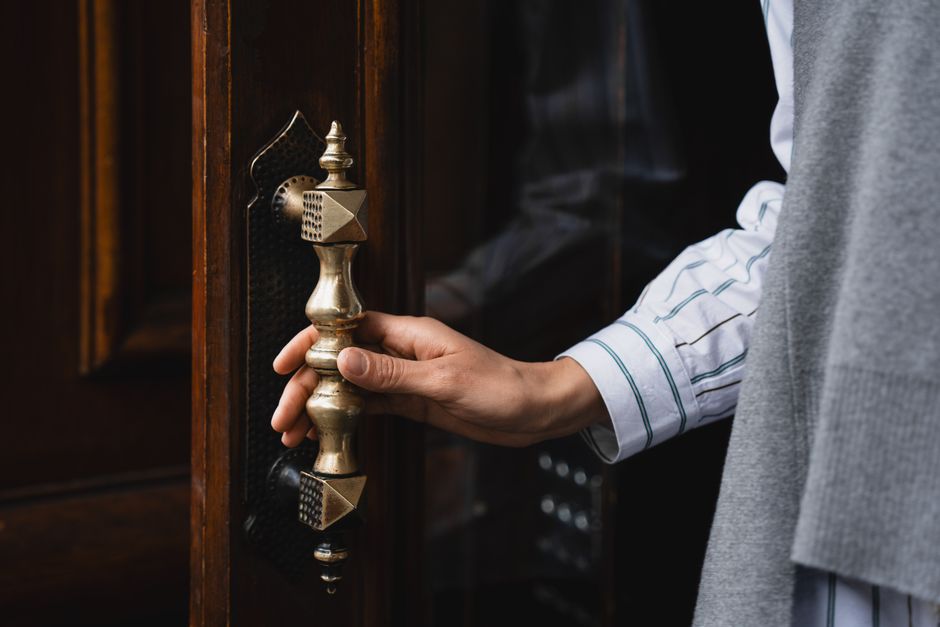
When we set up an office sanitizing routine, we prioritize these major germ hotspots:
- Door Handles and Push Plates: From the front entrance to the restroom doors, these are touched by literally everyone who enters the building.
- Elevator Buttons: A classic bottleneck point where germs from multiple floors are concentrated onto tiny plastic squares.
- Shared Keyboards and Mice: In hot-desking setups or shift-work environments, keyboards are notorious breeding grounds for bacteria.
- Office Phones: Landline receivers sit directly in front of employees' mouths and noses, collecting respiratory droplets all day long.
- Copiers and Printers: Touchscreens and paper trays are touched by dozens of hands hourly.
- Coffee Machines and Water Dispensers: The breakroom is a social hub, but the handles on the coffee pot and the buttons on the water cooler are prime real estate for cross-contamination.
- Meeting Tables: Conference rooms host visitors and staff alike, making the tabletops a central exchange point for seasonal bugs.
Establishing a Successful Daily Morning Routine
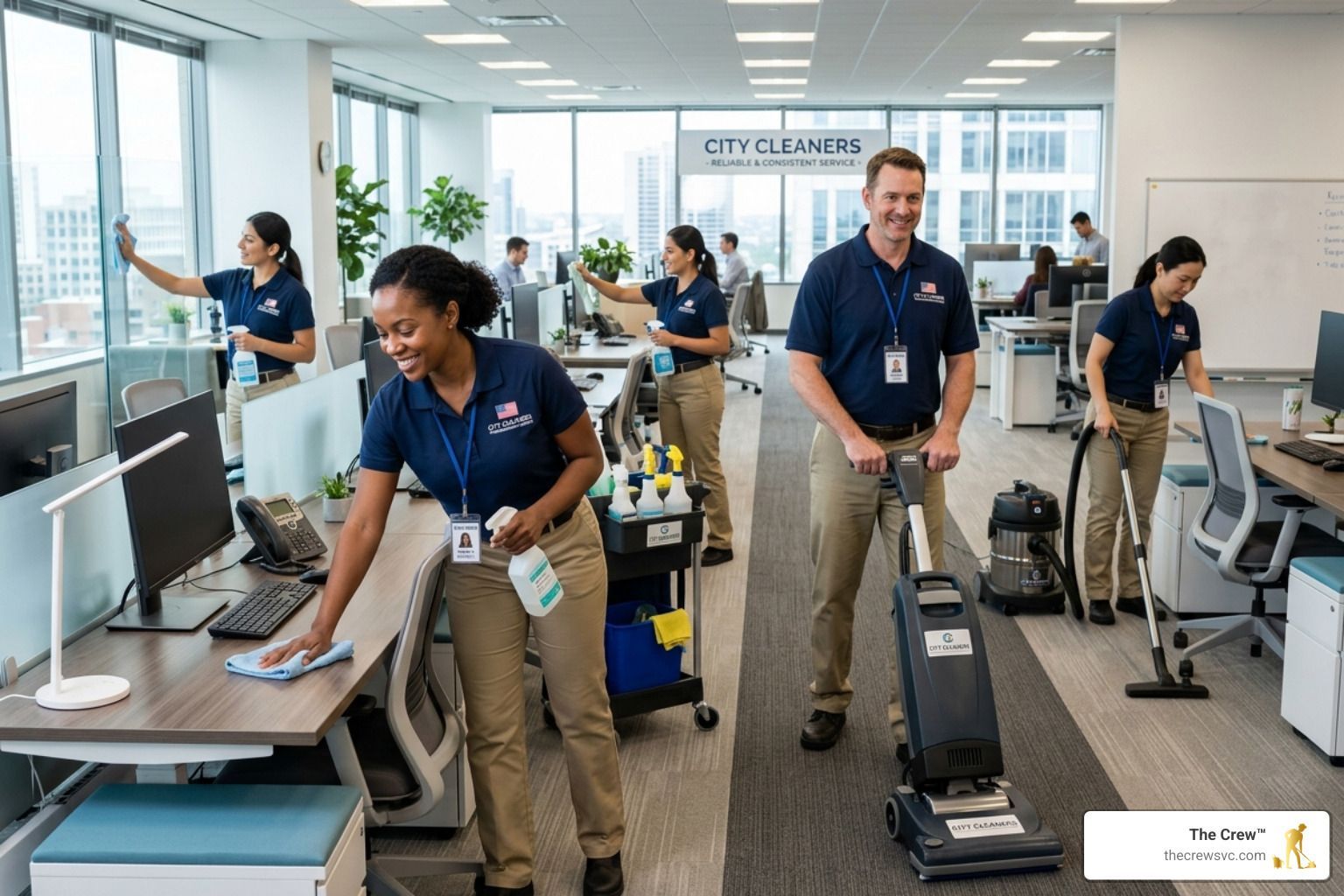
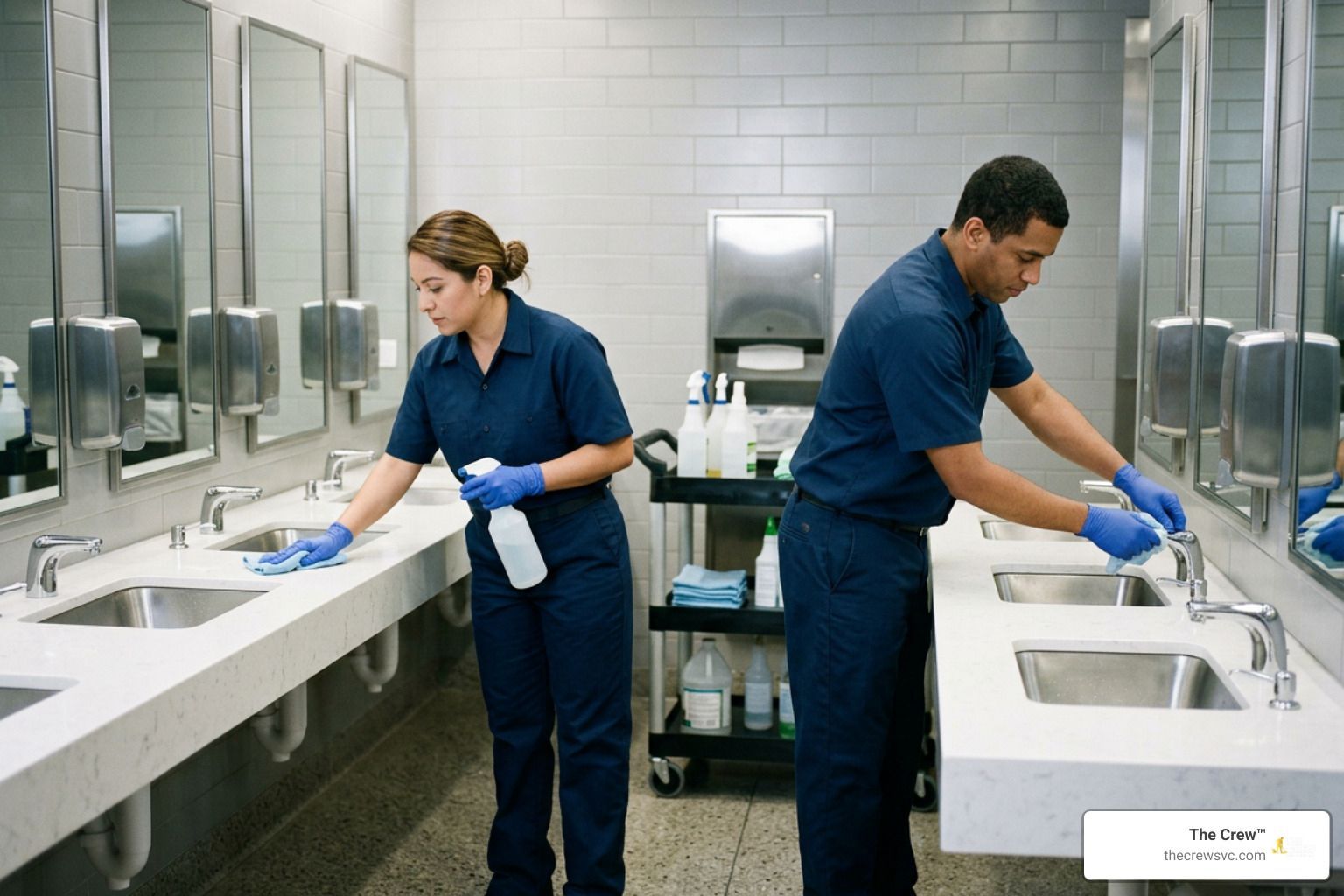
To keep these hotspots from becoming biological hazards, we recommend establishing a daily morning routine. Disinfecting these shared touchpoints first thing in the morning, before the hustle and bustle of the workday begins, ensures that employees start their day with a clean slate.
During peak cold and flu seasons, a second pass by a dedicated day porter in the early afternoon can cut down germ transmission rates dramatically.
Safe Protocols for Electronics and Soft Surfaces
Not all office surfaces are created equal. While you can easily wipe down a laminate desk with a standard disinfectant spray, doing the same to a $2,000 laptop or a fabric-covered office chair can lead to expensive damage. Protecting your physical assets while destroying microscopic threats requires specialized protocols.
Best Practices for Office Sanitizing of Keyboards and Electronics
Electronics are delicate, expensive, and highly susceptible to moisture damage. Here is the step-by-step process we use to sanitize them safely:
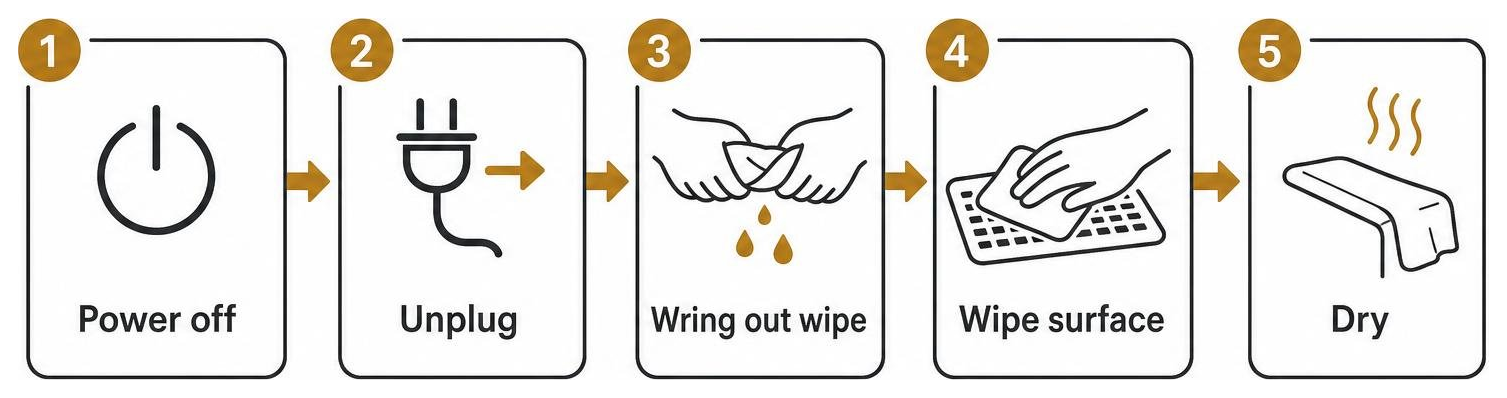
- Power Off and Unplug: Always turn off the device, unplug it from the wall, and remove any batteries if possible. This prevents short circuits.
- Use the Right Disinfectant: Always select non-corrosive, alcohol-free disinfectants. High concentrations of isopropyl alcohol can strip away protective coatings on screens and degrade plastics over time.
- Wring Out Your Wipes: If you are using disinfecting wipes, wring out any excess liquid before touching the device. The wipe should be damp, not dripping wet. You must prevent liquid from seeping into keyboard seams, ports, or casing cracks.
- Wipe Gently: Wipe all exterior surfaces of the keyboard, mouse, or phone. Let the surface dry naturally according to the product's recommended contact time.
- Consult Manufacturer Instructions: When in doubt, consult the device manufacturer's guidelines to prevent voiding warranties.
Soft Surface Office Sanitizing: Carpets, Upholstery, and Drapes
Soft surfaces like carpets, fabric room dividers, drapes, and upholstered office chairs present a different challenge. Germs can sink deep into the fibers, making standard liquid disinfectants ineffective.
- Bleach-Free Disinfecting Mists: To sanitize soft surfaces without saturating them, we use bleach-free disinfecting mists. These specialty products sanitize and deodorize fabrics without leaving behind chemical residues or causing discoloration.
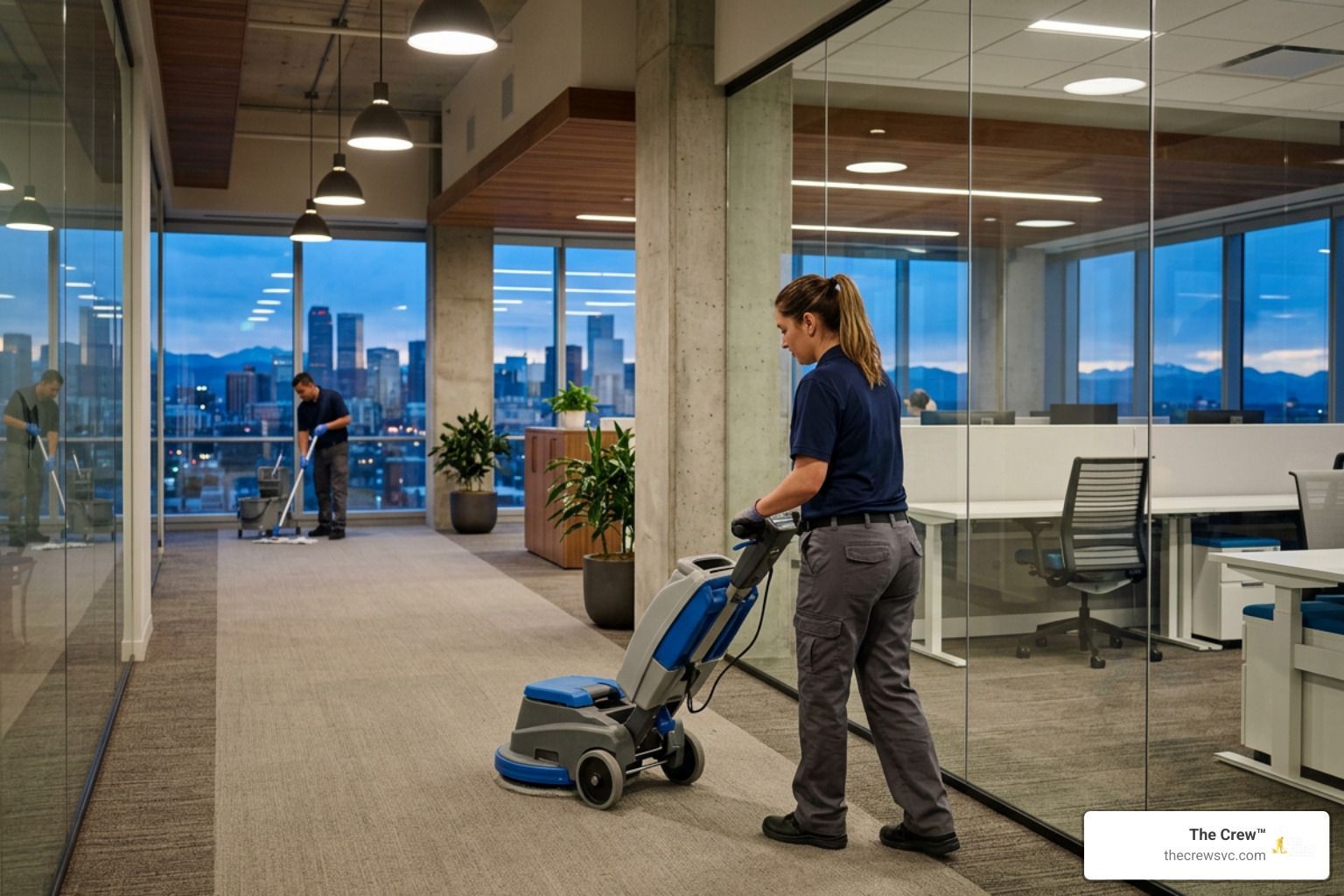
- Regular Carpet Care: Vacuuming with a HEPA-filter vacuum removes deep-seated dust and allergens. For true sanitization, periodic hot-water extraction (steam cleaning) kills bacteria embedded deep in the carpet pile.
- Laundering Washable Items: For drapes, kitchen towels, or removable cushion covers, launder them using the warmest appropriate water setting recommended by the manufacturer, and ensure they are dried completely before reinstalling them.
Contact Time, Product Selection, and Safety Protocols
When it comes to office sanitizing, speed is not always your friend. One of the most common mistakes people make is spraying a surface and immediately wiping it dry with a paper towel. When you do this, you aren't disinfecting; you are simply giving the germs a quick bath.
The Power of "Wet Time"
Every disinfectant has a required "contact time" (also known as wet time). This is the exact amount of time the chemical must remain visibly wet on a surface to kill the targeted pathogens.
For many standard household disinfecting wipes, the surface must remain wet for a full four minutes to achieve proper disinfection. If the liquid evaporates before that time is up, the chemical reaction stops, and resilient germs survive.
Choosing the Right Product: CHEMGENE HLD4H vs. Standard Wipes
When selecting products for your office, you have several choices. Standard retail wipes are convenient for personal desks, but they are often inefficient for large-scale office use due to their long contact times.
For high-performance environments, we highly recommend medical-grade solutions. You can Reduce Office Disease Spread with CHEMGENE HLD4H.
This hospital-grade disinfectant kills 99.99% of viruses, bacteria, and fungi within about 1 minute.
Even better, it provides ongoing surface protection for up to 14 days, significantly reducing germ buildup over time. It is also non-corrosive and biodegradable, making it highly cost-effective and safe for office electronics.
Why We Avoid Fogging and Electrostatic Spraying as Primary Methods
While wide-area chemical fogging, fumigation, and electrostatic spraying became popular trends in recent years, health agencies generally do not recommend them as primary methods of surface disinfection.
These methods can aerosolize harsh chemicals, posing respiratory risks to employees in occupied offices. Furthermore, without physical pre-cleaning, sprays and fogs cannot penetrate layers of dust and dirt, leaving the germs beneath alive and active. Physical wiping remains the gold standard.
Frequently Asked Questions About Workplace Hygiene
Keeping an office clean involves navigating a lot of unique situations. Here are the answers to some of the most common questions we receive about maintaining workplace hygiene standards.
How do we handle office disinfection after an employee gets sick?
If an employee becomes visibly ill at work (such as coughing uncontrollably or vomiting), swift action is required to prevent a full-blown office outbreak.
- Immediate Isolation: Politely ask the sick employee to head home to rest and recover.
- Isolate the Area: Temporarily close off the immediate workspace, restroom stall, or breakroom area they used.
- Increase Air Circulation: If possible, open nearby windows or adjust your HVAC settings to introduce fresh outdoor air and exhaust contaminated indoor air.
- Targeted Disinfection: Have your cleaning crew perform a deep clean and disinfection of all surfaces within a 10-foot radius of the sick employee's desk, paying extra attention to their chair, keyboard, phone, and nearby trash cans.
- Promote Hand Hygiene: Remind the rest of the team to wash their hands thoroughly with soap and water for at least 20 seconds.
Why is cleaning a surface necessary before disinfecting it?
As we mentioned earlier, impurities like dirt, dust, and organic matter act as a physical barrier. If a surface is dirty, the disinfecting chemicals will spend their energy reacting with the dirt rather than attacking the cell walls of the viruses and bacteria underneath.
Always wipe away visible dust and grime with soap and water before applying your disinfectant. It ensures the chemical can make direct contact with the surface and do its job effectively.
What safety precautions should be taken when disinfecting an occupied office?
Using chemical disinfectants in an active, occupied office requires careful safety protocols to protect both your cleaning staff and the office employees.
- PPE Requirements: Anyone applying disinfectants should wear appropriate Personal Protective Equipment (PPE), including gloves and safety goggles, as outlined in Section 8 of the product's Safety Data Sheet (SDS).
- OSHA Compliance: Ensure your office complies with OSHA's Hazard Communication Standard (29 CFR 1910.1200) by keeping clear labels on all cleaning chemical containers and maintaining accessible SDS sheets.
- Proper Ventilation: Keep HVAC systems running during cleaning to prevent chemical fumes from building up.
- Correct Dilution: If you are diluting concentrated disinfectants, always use room-temperature water unless the product label explicitly states otherwise.
- Secure Storage: Store all cleaning chemicals securely out of reach of visitors or unauthorized staff.
- Select Low-Odor Products: Choose disinfectants with a mild, non-disruptive scent to avoid triggering headaches or asthma attacks in sensitive employees.
Conclusion
A clean office is a productive office. Investing in a structured office sanitizing routine does more than just keep your desks looking pristine — it protects your team's health, reduces costly sick days, and keeps your operations running smoothly.
At The Crew™, we understand that consistency is the key to a healthy workplace. Serving businesses across the Denver Metro Area — including Aurora, Lakewood, Centennial, Westminster, and Arvada — we pride ourselves on our unique approach to commercial cleaning. We hire and retain top-tier, background-checked cleaners and maintain a 0% turnover rate, meaning you get the same reliable, high-quality service every single visit.
Whether you need a dedicated day porter to keep your high-touch hotspots sanitized throughout the day or a comprehensive nightly janitorial service, we have you covered.
Ready to upgrade your workplace hygiene? Contact us today to learn more about our commercial cleaning services and let us handle the dirty work so you can focus on what you do best.