How to Find Reliable Commercial Cleaning Vendors in Denver
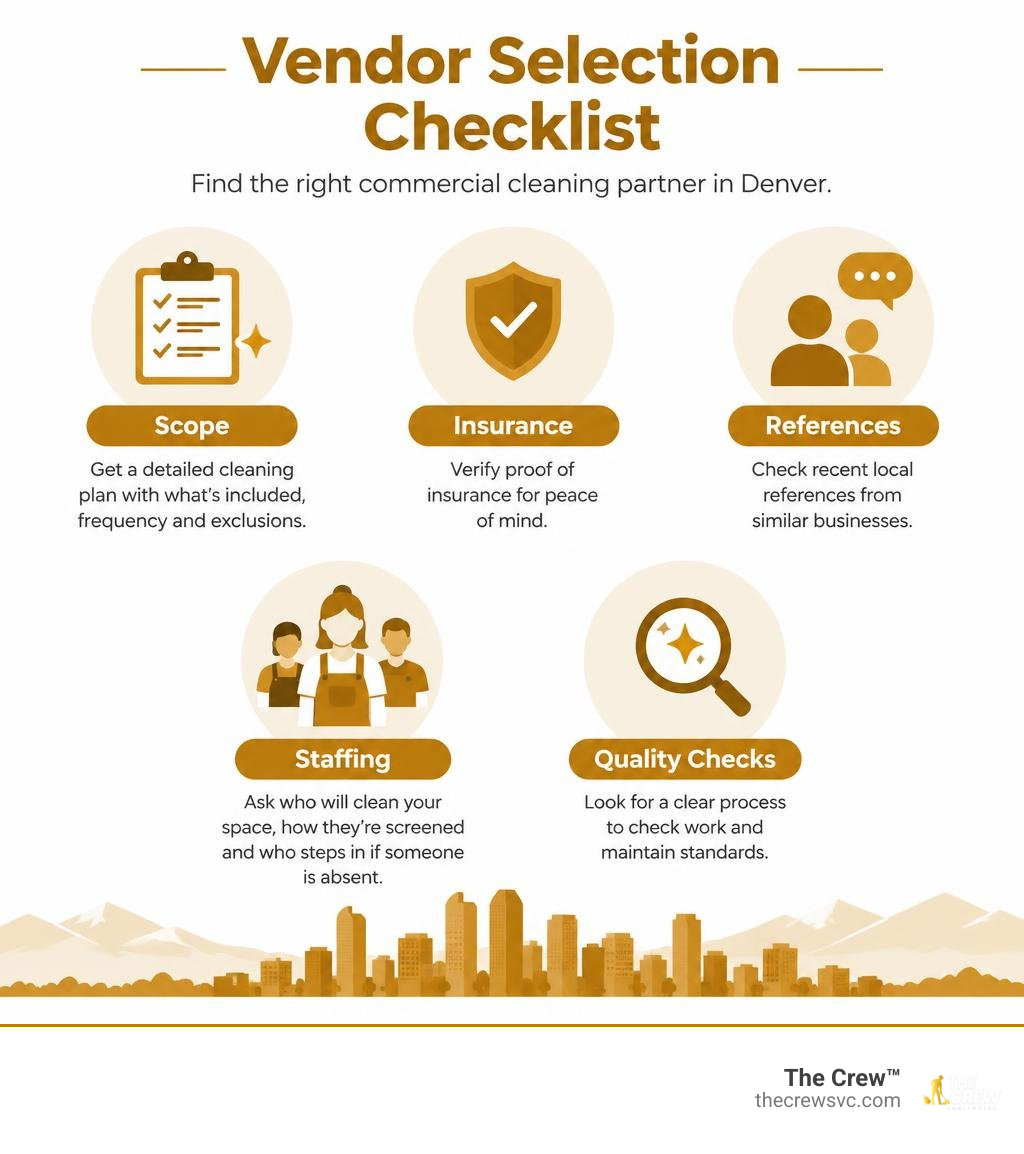
To choose commercial cleaning vendors in Denver, ask for a written cleaning plan, proof of insurance, recent local references, and a clear process for checking work. Compare quotes for the same tasks and schedule. Then ask who will clean your space, how they are screened, and who steps in if someone is absent.
Denver offices also need a plan for dust, winter slush, and busy entryways. A vendor that can adjust the cleaning plan as conditions change is more useful than one that simply promises a spotless space.
I'm Carlos Castillo II, owner of The Crew™, a family-run cleaning company serving the Denver Metro Area since 1982. My hands-on experience helps me explain what businesses searching for "commercial cleaning vendors denver" should check before they sign a contract.
How to Choose Commercial Cleaning Vendors in Denver
A reliable cleaning plan should match how your business uses its space, not just its square footage. Use these seven criteria to compare vendors:
- Scope of work: Request a task list that says what gets cleaned, how often, and what is excluded. “Clean the office” is not a detailed plan.
- Relevant experience: Ask whether the vendor has worked in spaces like yours, such as offices, shared workplaces, or buildings with high-traffic common areas.
- Staffing and screening: Find out who will be assigned to your site, how workers are screened, and how absences are covered.
- Communication: Confirm who handles questions, complaints, and urgent requests, and how quickly you can expect a response.
- Scheduling and access: Agree on cleaning hours, key or access-card procedures, alarm protocols, and any restricted areas.
- Customization: Your needs may change with occupancy, seasons, or events. Ask how the vendor updates the plan and pricing when they do.
- Quality controls: Look for routine inspections, documented checklists, clear standards, and a process for correcting missed work.
Our guide to vetting cleaning firms in Denver offers a reliability-focused way to think through your options. It also helps to set clear expectations for a commercial cleaning contractor before service begins.
| Factor | Local Denver vendor | National vendor |
|---|---|---|
| Local knowledge | May be familiar with nearby buildings, weather patterns, and service-area logistics | May rely on local teams to provide area-specific knowledge |
| Decision-making | May offer direct access to local managers or owners | May use centralized systems or multiple management layers |
| Service consistency | Depends on staffing, training, and quality checks | May have established procedures, but site-level execution still matters |
| Best way to compare | Ask who supervises your account and how coverage works | Ask the same questions, including who handles local issues |
Neither size guarantees quality. Focus on the team assigned to your building and the system that supports them. A local vendor can offer easier communication and flexibility, while a national provider may have standardized processes. Verify how either one performs at your site.
How to Verify a Vendor’s Reliability and Reputation
Ask for references from recent commercial clients in the Denver Metro Area. A useful reference can tell you whether the vendor shows up as scheduled, keeps the agreed scope, communicates about problems, and corrects issues promptly. If possible, request a visit to a similar site, with the client’s permission.
Check recent reviews across more than one platform. Look for patterns rather than treating one glowing or angry review as the whole story. Do comments mention recurring missed tasks, poor communication, or frequent changes in cleaning staff? Ask the vendor about any concerns you find and listen for a specific, practical response.
Staff consistency is worth discussing directly. Ask about background checks, training, turnover, supervision, and backup coverage. A written service guarantee can be helpful, but only if it explains how to report a problem, how quickly the vendor will respond, and what corrective action is available.
What Insurance and Credentials Should You Check?
Request current proof of general liability insurance and workers’ compensation coverage. Ask the vendor or insurance provider to confirm that the policies are active and appropriate for the work. If a vendor offers bonding, ask what it covers; bonding does not replace liability or workers’ compensation insurance.
Confirm whether the company needs a business license or other local registration for its specific services and location. Requirements can depend on the jurisdiction and business activity, so do not assume that one license applies throughout the metro area. Ask about staff safety training and certificates relevant to the tasks they perform. Keep copies of key documents and check renewal dates.
What Services Do Commercial Cleaning Vendors in Denver Offer?
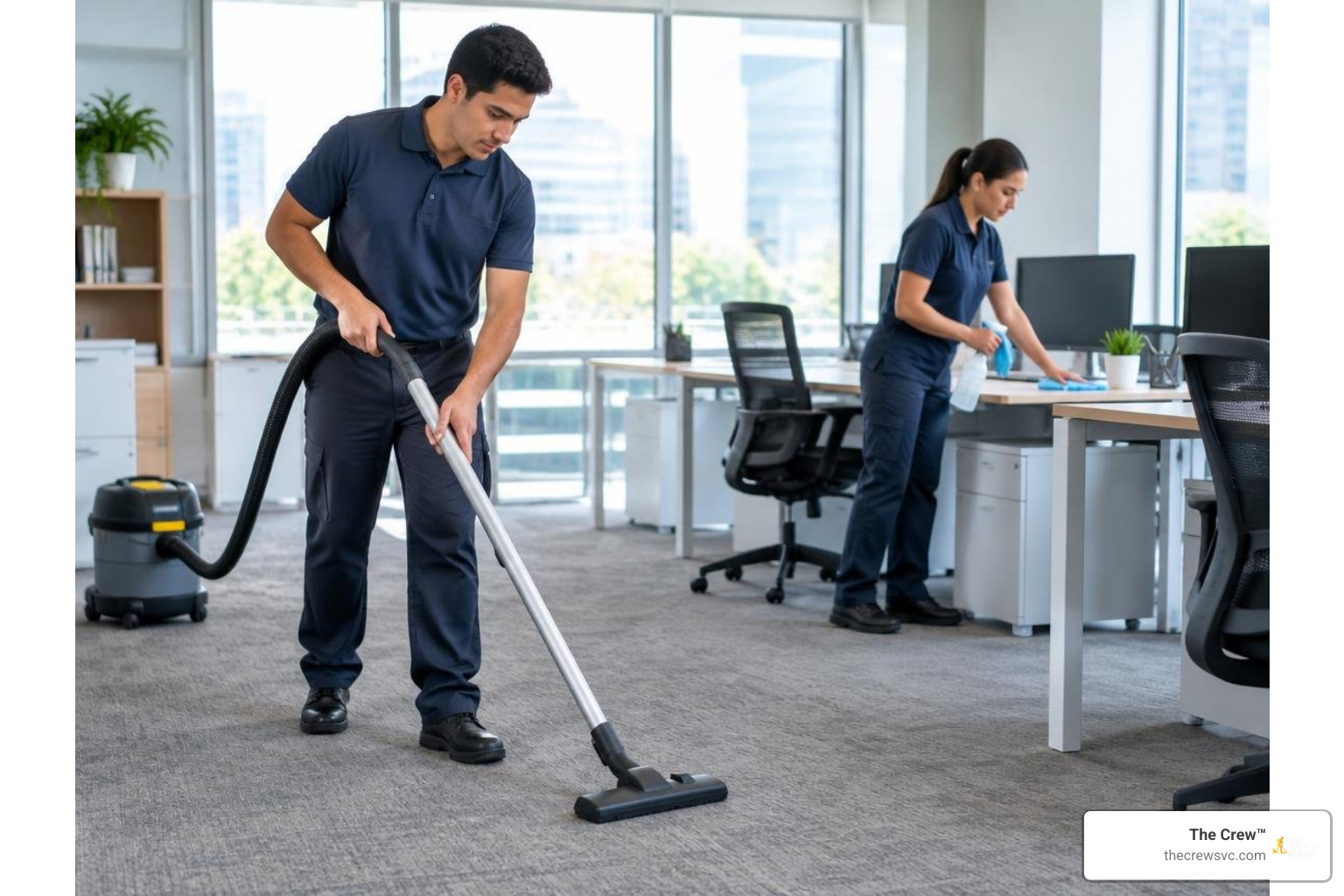
Commercial cleaning plans commonly combine scheduled janitorial work with additional tasks based on the building. The commercial cleaning services a vendor offers may include:
- Routine cleaning of offices, shared areas, kitchens, and other workspaces
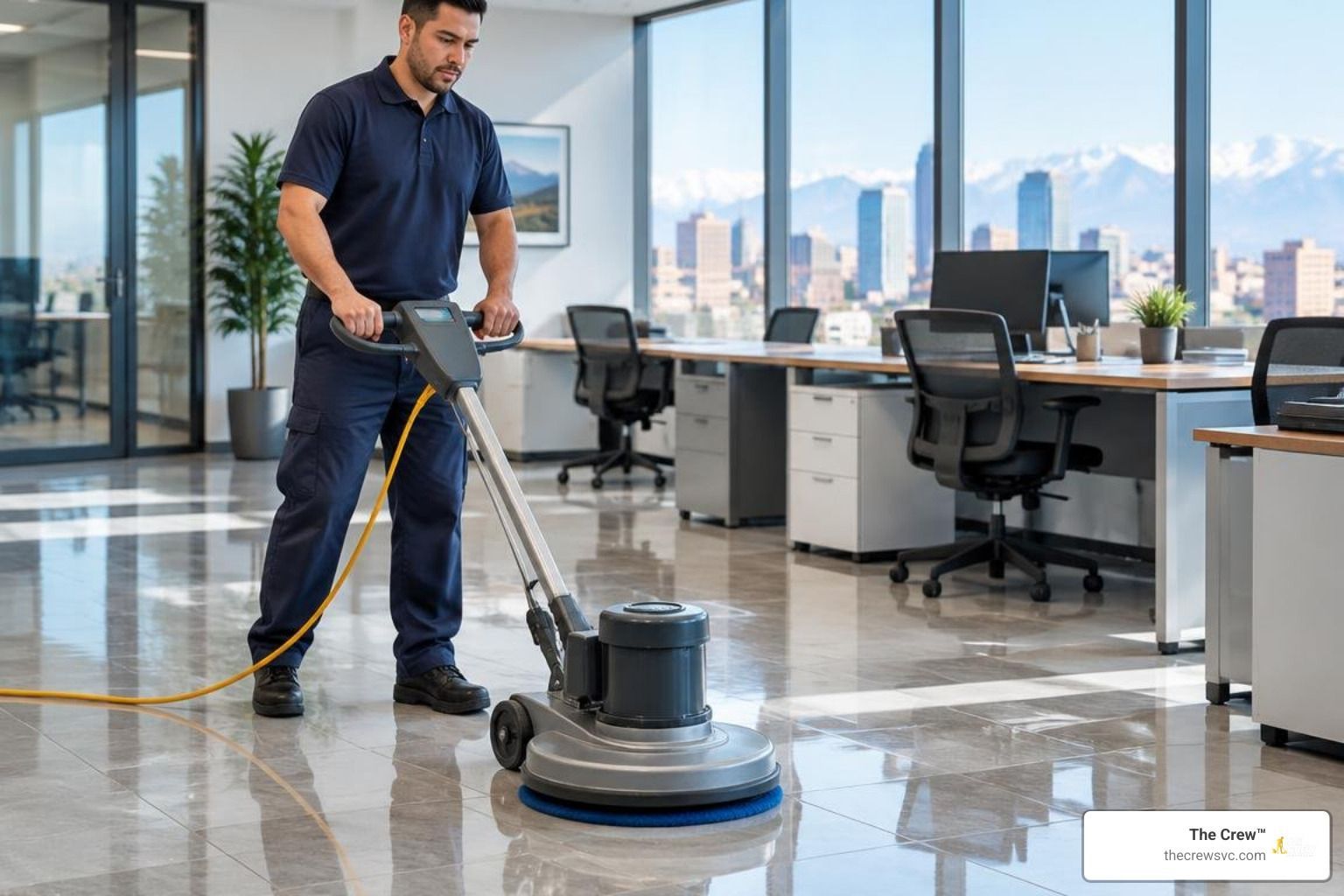
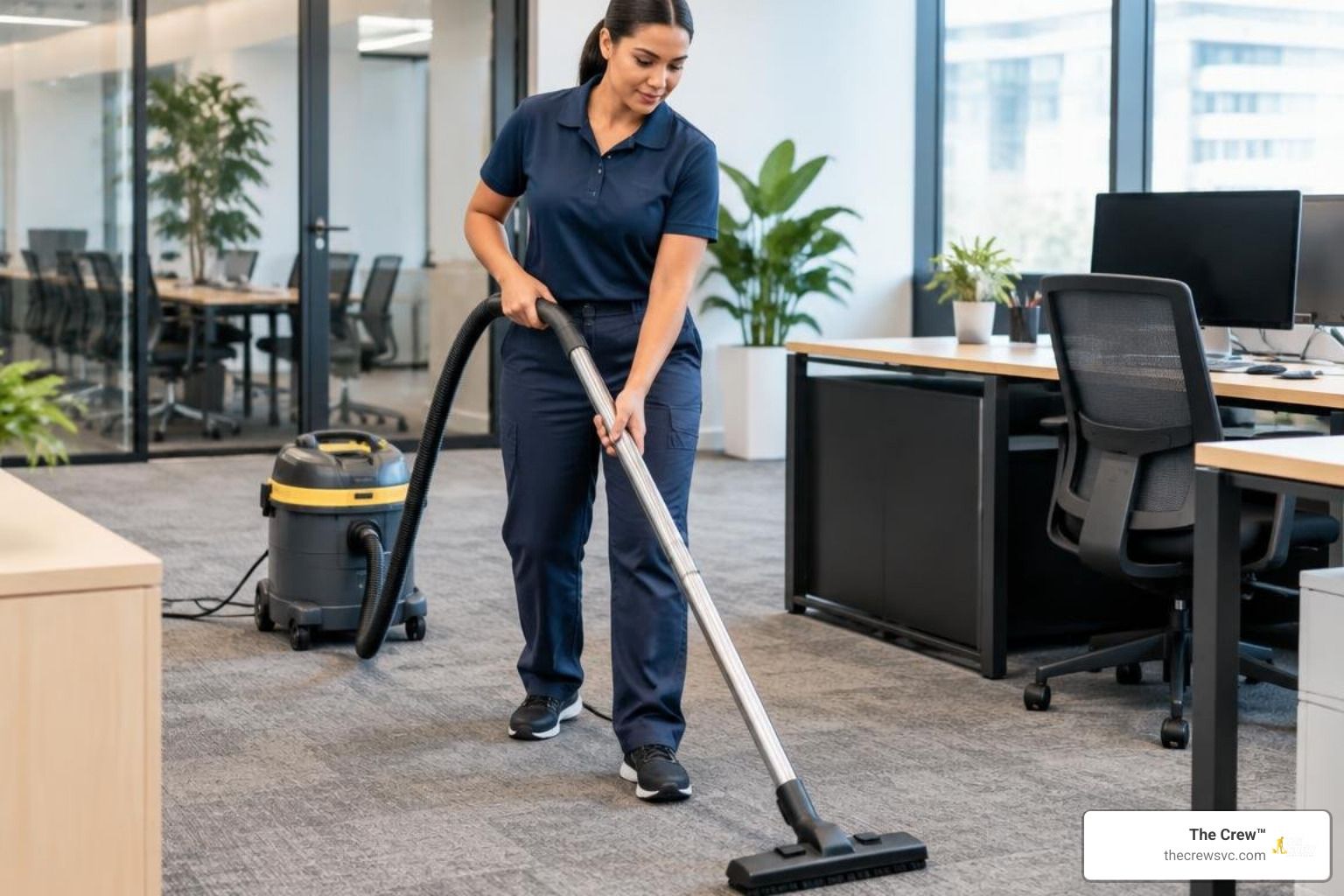
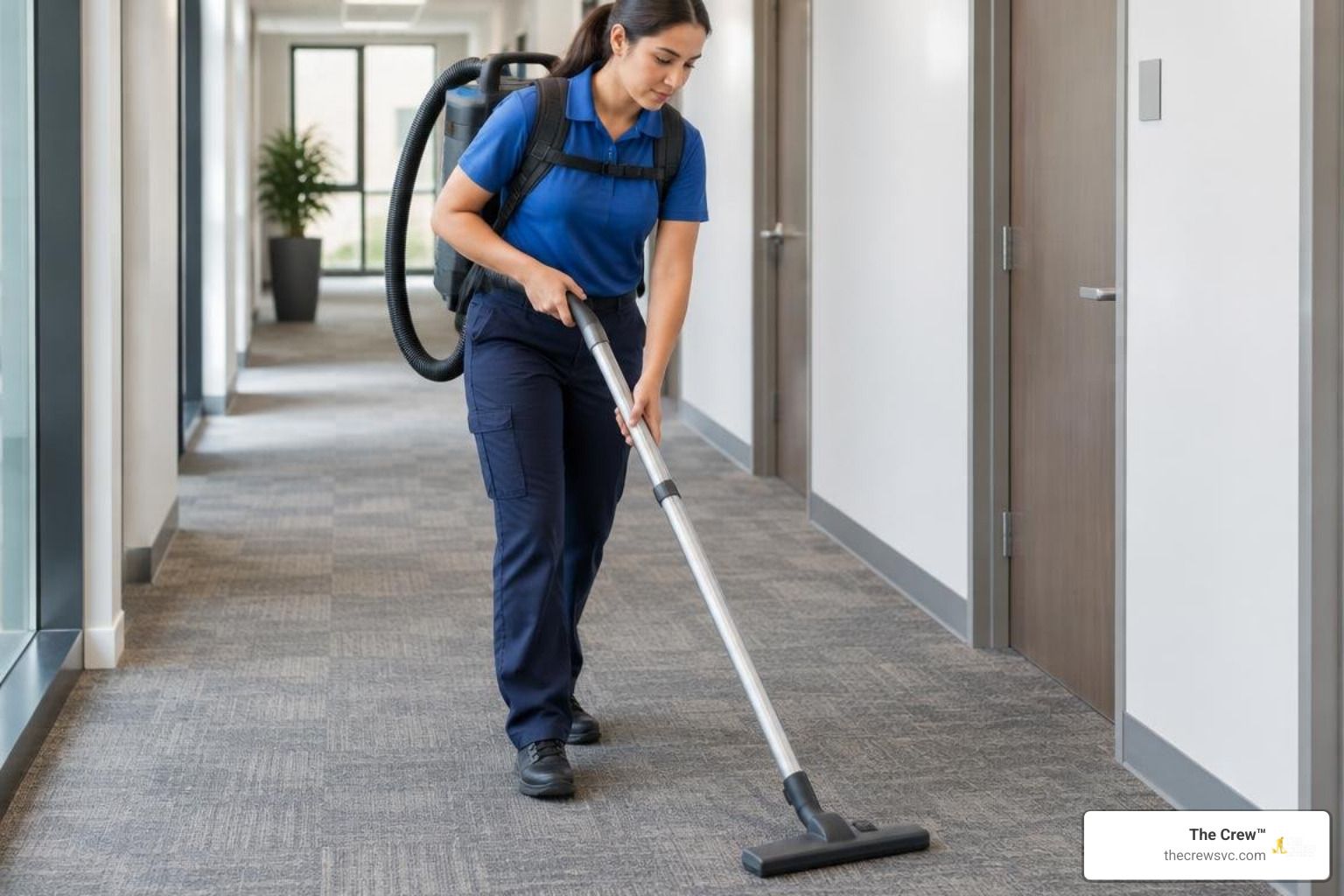
- Dusting, vacuuming, and hard-floor cleaning
- Carpet care and window cleaning
- Restroom cleaning and sanitation
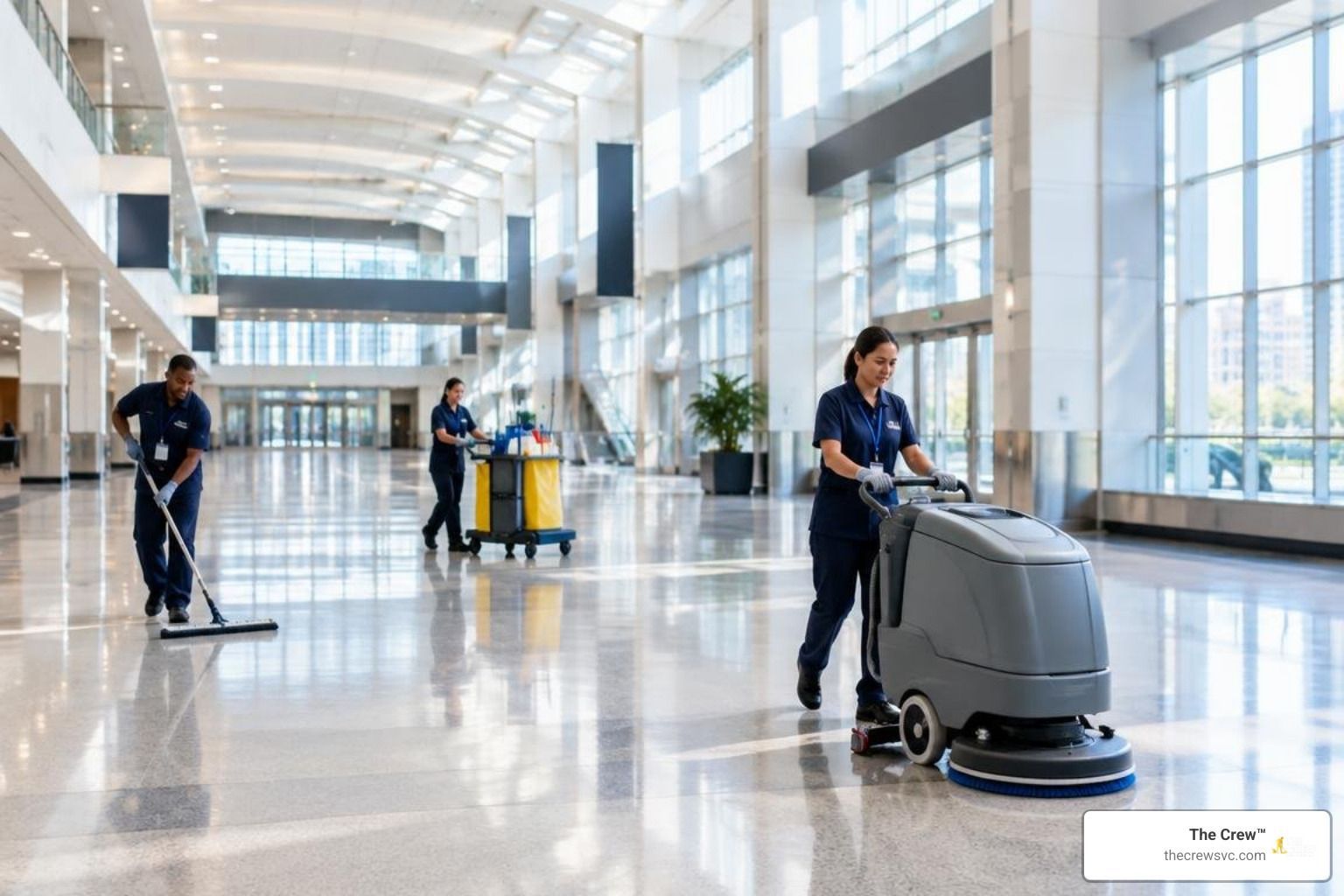
- Day porter service for visible, ongoing upkeep during business hours
- Disinfection of high-touch surfaces
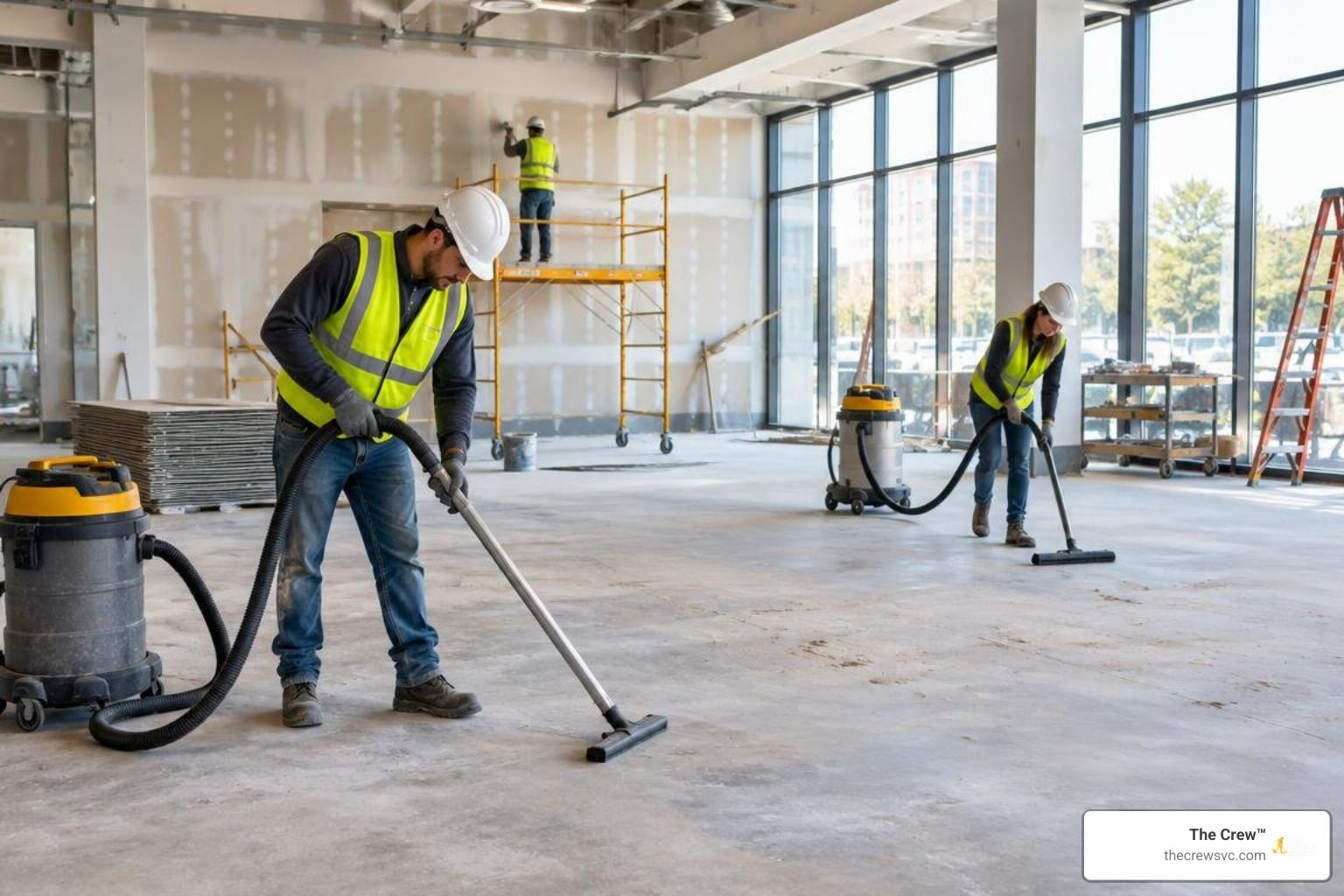
- Post-construction cleaning, where offered
Not every vendor provides every service, and some specialized work may need separate scheduling or pricing. Ask what supplies and equipment are included, whether the work happens during or after business hours, and how often each task is performed. Compare plans using the same task list so you can distinguish a lower price from a smaller scope.
Businesses looking at business cleaning options should also consider how their space is used. A busy reception area may need more frequent attention than a private office, while a shared kitchen or restroom can require a different schedule from low-traffic rooms.
How Denver’s Climate and Local Requirements Shape Cleaning Needs
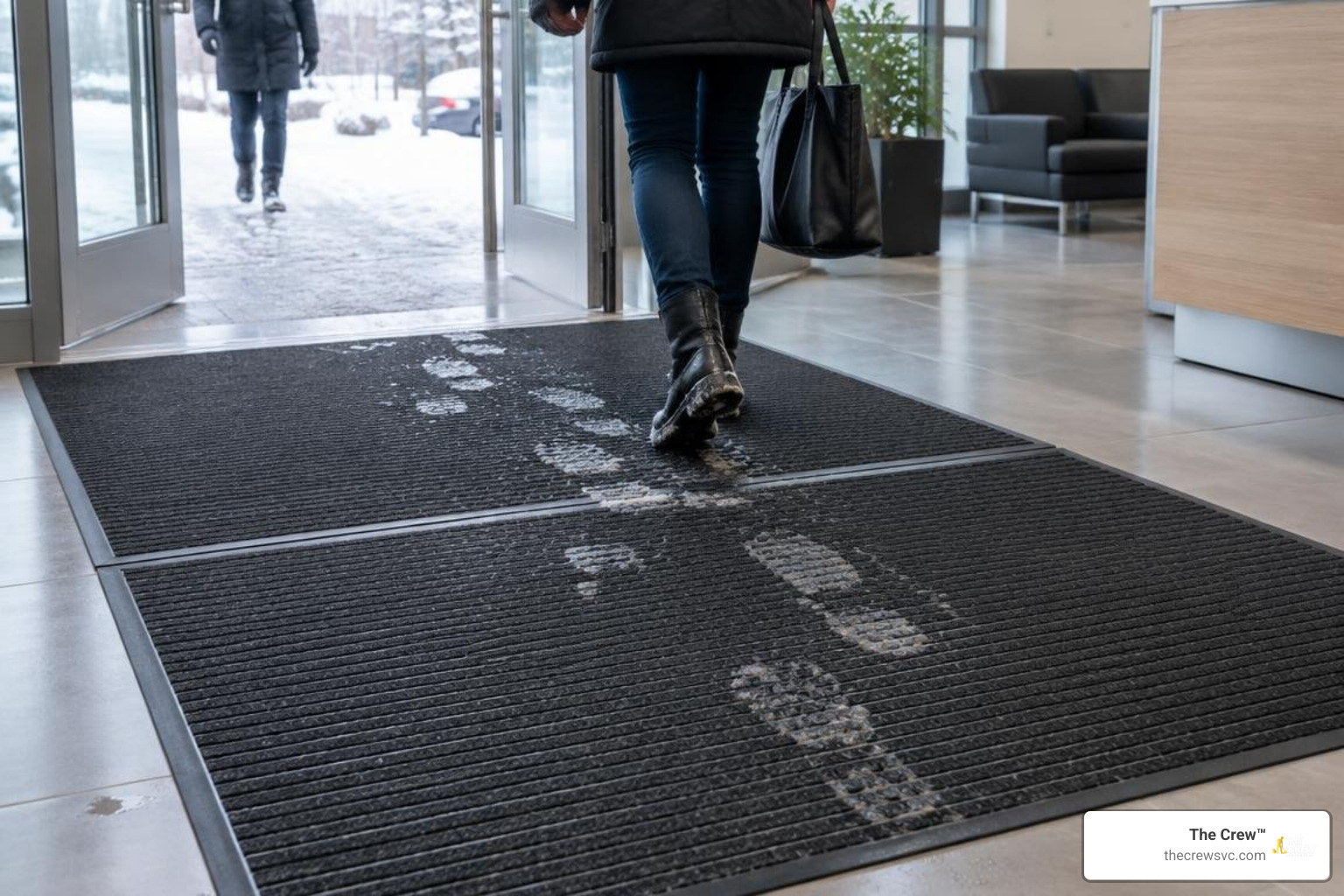
Denver’s dry conditions can make dust more noticeable, while snow and ice bring slush, grit, and moisture into entryways during winter. Seasonal pollen and wildfire smoke can also add particles to the environment. A practical plan puts extra attention on entrances, mats, floors, and high-touch areas when conditions call for it.
Ask how the vendor adapts the schedule by season. Entry mats need to be positioned and maintained to capture dirt and moisture; floors may need more frequent attention during snowy periods. Regular dusting and vacuuming can help manage everyday buildup. If outdoor smoke affects the area, ask how the vendor handles surfaces and visible dust without making unsupported promises about improving indoor air quality.
Cleaning products and procedures matter, too. Request product names and safety data sheets, and ask how chemicals are stored, diluted, labeled, and used around employees. The EPA’s Safer Choice guidance can help you identify products assessed against environmental and human-health criteria. Green cleaning may involve more than choosing a product: ask about microfiber use, waste reduction, and whether the plan is compatible with your building’s surfaces and needs.
For workplace chemical communication, the vendor should have a process for providing hazard information and training workers. OSHA’s hazard communication guidance explains requirements for communicating chemical hazards in covered workplaces. Follow your organization’s procedures for building access, chemical storage, and waste handling, and clarify responsibilities with the vendor. Local requirements may vary by jurisdiction and task, so ask the relevant authority when a specific rule applies.
What Do Commercial Cleaning Vendors in Denver Cost—and How Can You Maintain Quality?
The market estimate provided for this guide places many Denver commercial cleaning services at $0.10 to $0.25 per square foot. Treat that as a broad planning range, not a guaranteed quote. Pricing depends on how often the vendor visits, which tasks are included, the building’s condition, and whether specialty services are needed.
Ask for a written proposal that defines the service frequency, task scope, supplies, and any extra charges. Review contract terms, inspection records, and the process for resolving missed work before signing. A clear scope protects both sides: your team knows what to expect, and the vendor knows what it is responsible for.
How Much Do Commercial Cleaning Vendors in Denver Cost?
Vendors may price work by square footage, a flat rate, or hourly labor. Each method can be reasonable if the proposal clearly states what the price covers. With square-foot pricing, confirm the area included and the period the price applies to. With a flat rate, check the task list and visit frequency. With hourly pricing, ask how hours are tracked and whether there is a minimum.
Common cost drivers include:
- Building size and layout: More area, separate floors, or many rooms can affect labor time.
- Service frequency: More visits generally mean more labor and supplies.
- Task scope: Restrooms, kitchens, floor care, and high-touch areas can take different amounts of time and attention.
- Building use and condition: High traffic, changing occupancy, or heavy soil may require more frequent work.
- Specialty tasks: Carpet, window, or post-construction cleaning may be priced separately.
- Labor and supplies: Staffing, equipment, and product needs influence the proposal.
Compare estimates line by line. A quote that omits tasks or assumes fewer visits is not directly comparable to a more complete plan. Green products or other sustainability requests may affect pricing, but the amount varies. Specify the products and practices you want and ask for their actual cost rather than assuming every green option carries a premium.
How to Ensure Consistent Cleaning Quality
Consistency comes from clear standards and a reliable way to check the work. Use a site-specific checklist that names tasks and frequency, then agree on how inspections will be recorded. A service-level agreement can document expectations such as response times, scheduled visits, and the process for addressing missed work.
Set up a feedback channel that employees or facilities staff can use without confusion. Decide who reviews comments, who contacts the vendor, and how urgent issues are escalated. Regular site inspections can catch small problems before they become recurring complaints.
Ask what happens when a cleaner is absent, a task is missed, or the building’s needs change. A dependable vendor should explain its backup staffing plan, corrective actions, and how it will keep service records. Review performance periodically and update the scope when occupancy or business operations shift.
What Are Common Vendor Challenges in Denver?
Cleaning vendors may face staffing gaps, winter travel disruptions, supply delays, changing building occupancy, and schedule conflicts. These issues can affect service, but they should not leave your business guessing.
Ask how the vendor plans for absences and severe weather, whether it keeps backup supplies, and how it notifies clients about delays. Agree on priority areas if a visit needs to be shortened or rescheduled. When occupancy changes, review the task frequency and scope rather than assuming the original plan still fits. Clear communication and a practical contingency plan help protect essential cleaning tasks.
What Should You Ask Before Signing a Contract?
Before you sign, confirm:
- Which tasks are included, how often they are completed, and what is excluded
- Whether supplies, equipment, and specialty work are included or billed separately
- Who supervises the cleaners and how backup staffing is arranged
- How building access, keys, alarms, and restricted areas are handled
- How inspections and client feedback are documented
- How quickly the vendor responds to a complaint and corrects a missed task
- How price changes, schedule changes, renewals, and cancellation work
Ask for the final scope and pricing in writing. If a promise matters to your operation, it belongs in the agreement rather than only in a sales conversation.
Conclusion
Choosing a commercial cleaning vendor is about more than getting a low quote. Look for a clear scope, verified insurance, screened and supported staff, and a quality process that can adapt to Denver’s changing conditions.
At The Crew™, we provide commercial cleaning and janitorial services, including day porter and business cleaning, across the Denver Metro Area. We hire background-checked cleaners and maintain 0% turnover, supporting consistent service for the businesses we serve. For smaller workspaces, explore our small-office cleaning services to find an approach suited to your needs.